Dwain Northey (Gen X)
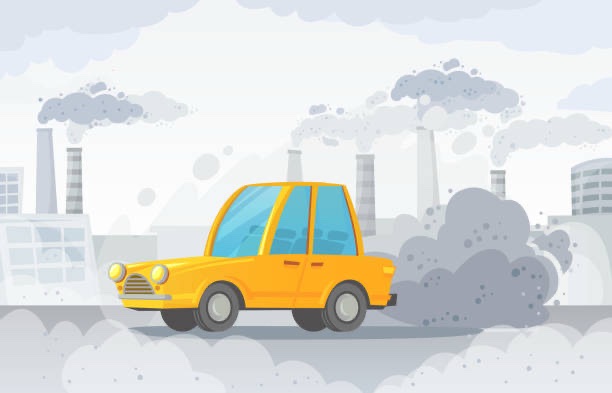
There is a little-known irony about living in a place like Phoenix, Arizona: sometimes the cleaner the sky looks, the easier it is to forget that the atmosphere is doing things you probably don’t want it doing.
Phoenix is famous for sunshine. We don’t merely have sunshine; we have industrial-strength sunshine. The kind of sunshine that makes you question whether the Sun has a personal vendetta against your windshield. And if you’re driving east in the morning, you already know the annual ritual: visor down, sunglasses on, squinting like you’re trying to read the fine print on a contract written by the Devil.
But here’s the part people don’t necessarily think about: a high-pollution day can actually make that glare worse.
It sounds counterintuitive. You would think pollution would block sunlight and make things darker. And technically, some particulate matter does reduce the amount of direct sunlight reaching the ground. But the atmosphere isn’t just a window. It’s more like a very dirty, poorly maintained lampshade.
Fine particulate matter—PM2.5, dust, smoke and other aerosols—scatters sunlight. Instead of all that sunlight traveling neatly from the Sun to your windshield, some of it gets bounced around the atmosphere and redirected toward your eyes. The result can be a bright, hazy field of scattered light surrounding the Sun.
So there you are, driving east at 7:30 in the morning, staring directly into the sunrise, thinking, Well, this is pleasant.
Except now the entire sky around the Sun can become a giant diffuser.
The problem isn’t necessarily that the Sun itself has gotten brighter. It’s that there is more stray light coming at you from the atmosphere, reducing contrast and making it harder for your eyes to adjust. The bright sky becomes a giant glowing backdrop, while everything you’re actually trying to see—the road, traffic lights, pedestrians, other cars—can become harder to distinguish.
And Phoenix has a particularly interesting relationship with this phenomenon because we already have plenty of ingredients for atmospheric haze: desert dust, vehicle emissions, industrial pollution, construction, and, depending on the season, smoke from regional wildfires. Add a nearly cloudless sky and a low morning Sun directly in front of you, and you’ve basically created nature’s worst possible lighting configuration for commuting.
It’s one of those things you don’t necessarily notice until you notice it.
You might think, Why is the glare so damn bad today?
Maybe the answer isn’t simply, “Because the Sun is in front of me.”
Maybe it’s because you’re looking through an atmosphere full of tiny particles that are scattering sunlight in every direction.
And that’s the strange little paradox of air pollution: sometimes pollution doesn’t make the day look darker. Sometimes it makes the world look brighter, hazier, flatter and harder to see.
So the next time you’re driving east through Phoenix in the morning, squinting through your windshield while wondering why the sunrise appears to have been upgraded to the world’s largest flashlight, remember:
It may not just be the Arizona sunshine.
It might be the atmosphere helping the Sun with the special effects.
Because apparently, in Phoenix, even the pollution wants to make sure you get the full Arizona experience.

