Dwain Northey (Gen X)
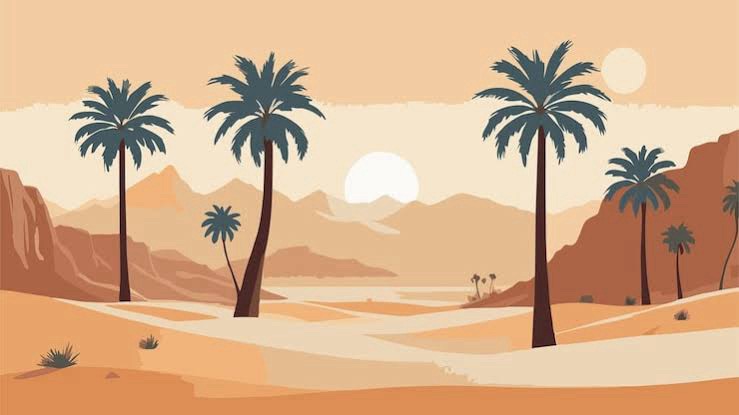
The Utterly Useless Palm Tree: Phoenix’s Most Overrated Stick
When I was a kid growing up in Colorado—and in various other places that actually experienced things like seasons—palm trees meant something.
Palm trees meant vacation.
They meant tropical islands, expensive resorts, ocean breezes, umbrella drinks, and some guy named Chad telling you he was “just taking some time to find himself.”
You saw a palm tree and immediately thought: Paradise.
Then I moved to Phoenix.
And apparently, nobody told the palm trees.
Because here, the palm tree isn’t a symbol of luxury.
It is a 30-to-60-foot-tall wooden middle finger to common sense.
You drive around Phoenix long enough and you start noticing something fascinating. The taller and more pathetic the palm tree is, the more likely you are to find it in a place that looks like it hasn’t received a meaningful investment since the Reagan administration.
Trailer parks? Palm trees.
Semi-abandoned shopping centers? Palm trees.
Strip malls where three of the five storefronts are empty and the remaining two are a payday lender and a vape shop? Palm trees.
Somewhere, there will inevitably be one of these magnificent botanical disasters standing proudly in the parking lot.
Except “proudly” may be giving it too much credit.
I’m talking about those enormous Phoenix palms that consist of approximately one 50-foot stick with six confused fronds attached to the top.
They look like something the Muppets would construct if they were given a landscaping contract.
You look at one and think, Is that a tree or did someone leave a broom standing vertically in the desert?
And here’s the really remarkable part:
They provide absolutely nothing.
No meaningful shade.
No edible fruit worth eating.
No cooling canopy.
No protection from the sun.
No privacy.
No windbreak.
Nothing.
They just stand there.
For decades.
Drinking water.
Because apparently Phoenix looked at a desert and thought:
“You know what this place needs? A giant plant whose entire personality is consuming water while providing the shade equivalent of a cocktail umbrella.”
And we have hundreds of thousands of them.
Possibly millions.
We have spent enormous amounts of water keeping giant decorative sticks alive in a city where people are constantly being reminded that water is a finite resource.
This is especially hilarious when you compare them to the palm trees found in genuinely luxurious places.
Go to a resort somewhere tropical and look at the palms.
They’re full.
They’re lush.
They’re magnificent.
They’re surrounded by greenery.
Their fronds actually extend far enough to make something resembling shade.
They look like they belong in a postcard.
Phoenix’s luxury palms can be impressive too, because someone actually maintains them.
But the neglected ones?
Holy hell.
Those aren’t palm trees.
Those are botanical survivors of a nuclear apocalypse.
And somehow, the worse the neighborhood looks, the more likely you are to find these towering skeletons of former landscaping ambition.
There’s something almost poetic about it.
The shopping center is falling apart.
The asphalt is cracked.
The stucco is fading.
Half the signs are missing.
There’s a shopping cart abandoned in the parking lot.
The air conditioner on the building died sometime during the Bush administration.
And standing majestically above the entire scene is a 45-foot palm tree with six leaves.
Because priorities.
Apparently the landlord couldn’t afford to fix the roof, but by God, we’re keeping the giant decorative asparagus alive.
And let’s talk about shade.
Phoenix.
A city where summer temperatures routinely turn the outside world into the surface of the sun.
A city where you can literally get second-degree burns from sitting on a car seat.
A city where walking across a parking lot in July feels like crossing the Sahara while carrying a hair dryer.
So what do we plant?
Something with a massive trunk and a canopy approximately the size of a dinner plate.
Meanwhile, the trees that actually provide shade—the broad-canopied desert-adapted trees that can make sidewalks, homes and parking lots meaningfully cooler—are apparently expected to fight for their lives for landscaping space.
The palm tree gets a free pass.
Because it looks tropical.
And apparently looking tropical is enough.
This is the great Phoenix landscaping contradiction.
We live in a desert, so we’ve learned to pretend we don’t.
We build enormous air-conditioned buildings.
We install artificial grass.
We construct swimming pools.
We fill neighborhoods with palm trees.
Then we look at the water situation and say:
“Well, this is unexpected.”
The Phoenix palm tree may be the perfect metaphor for the city itself: expensive, thirsty, completely out of context and designed primarily to create an illusion.
Because when you’re from Colorado, a palm tree makes you think you’re somewhere special.
Vacation.
Paradise.
Luxury.
In Phoenix, you eventually learn that a palm tree can just as easily mean:
“Welcome to the parking lot behind the abandoned Kmart.”
And that’s the thing about nostalgia.
As a kid, I thought palm trees were exotic.
I thought they represented someplace better.
Someplace warmer.
Someplace beautiful.
Now I drive around Phoenix and see a 60-foot palm tree towering over a collection of aging mobile homes, providing exactly enough shade for a squirrel’s left testicle, and I realize:
The palm tree wasn’t the symbol of paradise.
It was just a really good marketing department.
And Phoenix bought the entire campaign.
At least the palm trees are consistent.
They’ll be here long after the shopping centers have been abandoned, the strip malls have been demolished and the water restrictions have become so severe that we’re all fighting over who gets to flush the toilet on Tuesday.
There they’ll stand.
Fifty feet tall.
Six sad fronds.
No shade.
No useful purpose.
Drinking precious desert water.
Looking vaguely embarrassed.
Phoenix’s magnificent monuments to the proposition that just because you can grow something doesn’t mean you damn well should.

