Dwain Northey (Gen X)
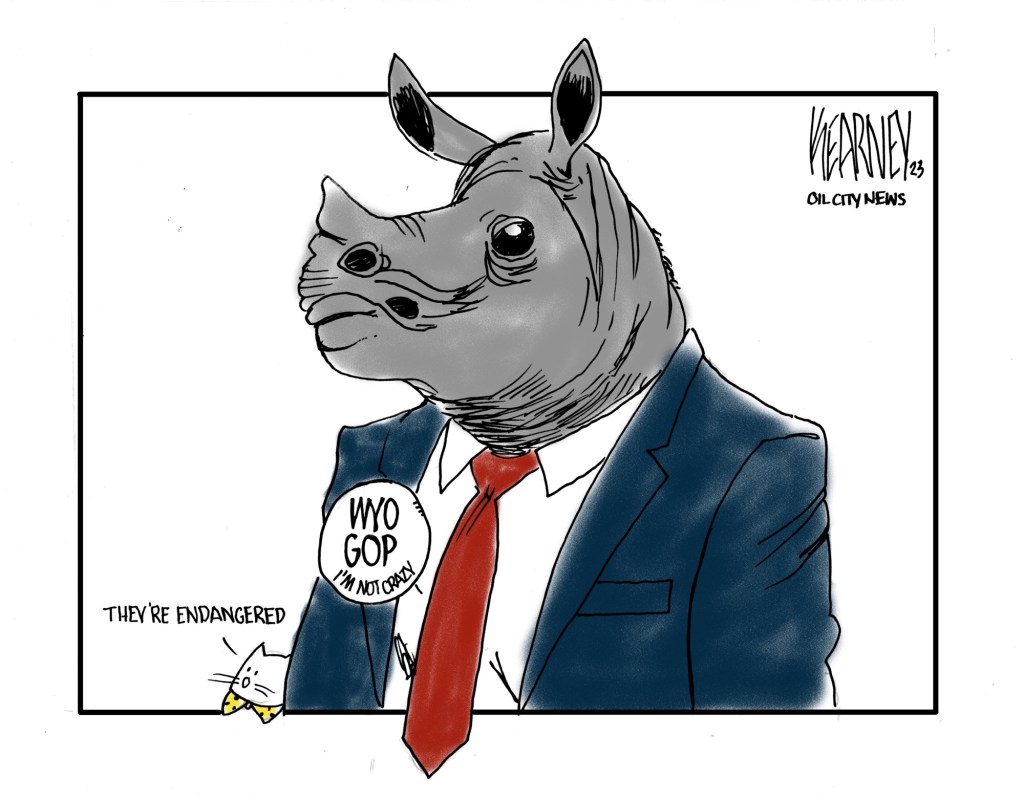
The Republican Party Has Apparently Lost the Meaning of Republican
I confess, I am becoming increasingly confused by the term RINO—Republican in Name Only.
Apparently, according to the modern Republican Party, a RINO is no longer someone who secretly wishes to join the Democratic Party, worships at the altar of socialism, or spends their evenings knitting Bernie Sanders sweaters.
No. A RINO is now a Republican who believes in traditional Republican ideas.
You know—the quaint, old-fashioned stuff.
Smaller government. Lower taxes. Personal responsibility. Individual liberty. Limited government intrusion into people’s private lives. Fiscal restraint. Strong national defense. Free markets. Federalism. The general concept that government should probably stay out of your business unless there is a compelling reason for it to be there.
Apparently, those ideas have become dangerously radical.
The truly remarkable part is watching the modern, increasingly radicalized right accuse the people who still believe in those traditional principles of being Republican in Name Only.
Wait a minute.
If someone is a Republican who believes in the Republican philosophy Republicans have been selling for decades, how exactly does that make them a Republican in Name Only?
Wouldn’t that make the people who abandoned those principles the RINOs?
I mean, if we are going to play this game, let’s at least use the English language correctly.
Imagine walking into a Republican meeting from, say, 1985 and telling Ronald Reagan, George H. W. Bush, Bob Dole, or any number of traditional conservatives that someday Republicans would demand that the government involve itself in what books children can read, what medical decisions families make, what happens in people’s bedrooms, what businesses can say, what universities can teach, what companies can sell, and what private citizens are allowed to do with their own lives.
They might reasonably ask:
“Wait…isn’t the whole point of conservatism supposed to be getting government OUT of people’s lives?”
And that’s where things get wonderfully absurd.
The party that once lectured Democrats about government overreach now has a growing faction that seems to believe government isn’t involved in enough things.
Apparently, the new conservative philosophy is:
Government should be small enough to fit in your wallet—unless we’re talking about someone else’s personal life. Then we need the full federal government, three committees, six agencies, a task force, and possibly a SWAT team.
And then comes the accusation:
RINO!
That’s the part I genuinely don’t understand.
If you are a Republican who says, “I want lower taxes, smaller government, fewer regulations, fiscal responsibility, individual liberty, and a strong military,” and someone responds, “You’re not a real Republican,” perhaps the problem isn’t with your Republican credentials.
Perhaps the problem is that the definition of Republican has moved.
Maybe the people screaming “RINO” at everyone haven’t noticed that they have wandered so far away from the original Republican philosophy that they now have to redefine the people standing in the middle as impostors.
It’s like showing up to a family reunion and discovering that someone has remodeled the house, knocked down all the walls, moved the kitchen into the garage, painted everything purple, installed surveillance cameras in the bedrooms, and then accused you of not belonging because you remember where the living room used to be.
And here’s the part that truly baffles me:
Why aren’t traditional Republicans turning the RINO accusation around?
Why aren’t they saying:
“Hold on. I’m the Republican who still believes in limited government, lower taxes, fiscal responsibility, individual liberty, free markets, and personal responsibility. You’re the one who has turned the Republican Party into a vehicle for government intervention in nearly every aspect of American life. Maybe I’m not the RINO. Maybe you are.”
Because that’s the obvious counterargument.
The traditional Republican should be asking the radicalized Republican:
“Which part of Republicanism did I abandon?”
Was it the smaller government?
No.
Lower taxes?
No.
Personal liberty?
No.
Limited government?
No.
Fiscal responsibility?
No.
Free markets?
No.
Strong national defense?
No.
So what exactly makes me the RINO?
Apparently, the answer increasingly seems to be:
“You didn’t agree with me.”
And there it is.
The definition of ideological purity has replaced the definition of political philosophy.
You aren’t a Republican anymore because you believe in Republican principles.
You’re a Republican only if you believe in everything the current Republican faction believes today.
And tomorrow, of course, those requirements may change.
That’s the funny thing about purity tests. Eventually, everyone fails one.
Today you’re a conservative hero.
Tomorrow you’re a RINO.
Next week you’re a communist sympathizer because you suggested balancing the budget.
By next month, you’re apparently a socialist because you think the government shouldn’t be reading your neighbor’s text messages.
At this rate, the Republican Party may eventually consist of one person standing in an empty room shouting “RINO!” at the mirror while demanding that the government regulate the mirror’s political opinions.
And honestly, that may be the ultimate irony.
The people who claim to be defending the Republican Party from RINOs may actually be driving away the very Republicans who built the philosophical foundation of the party they claim to love.
Maybe it’s time for traditional Republicans to stop accepting the label as an insult.
Maybe they should proudly say:
“Yes. I’m a RINO—if by RINO you mean I still believe in the traditional Republican principles you abandoned.”
Because if believing in limited government makes you a Republican in Name Only, then perhaps we need to stop asking who the RINOs are.
Maybe we should start asking:
Who changed the definition of Republican—and why are the people who stayed Republican being accused of leaving?
Now that is a political identity crisis worthy of the modern Republican Party.
And somewhere, Ronald Reagan is probably looking down and wondering why the party that once told America, “Government is not the solution to our problem,” now seems determined to make government everyone’s problem.
Progress, apparently, comes in many forms.
Sometimes it even comes with a four-letter acronym.
RINO.
Funny how quickly Republican in Name Only can become a description of the people shouting it the loudest.

