Dwain Northey (Gen X)
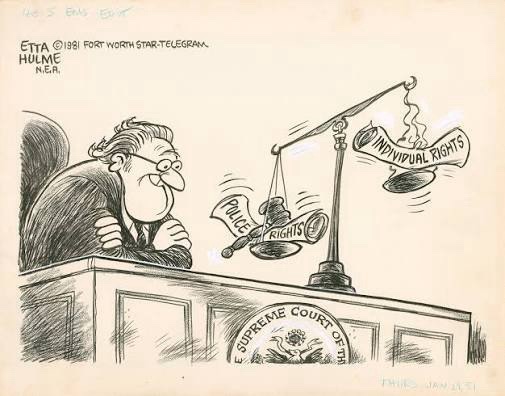
There is a strange American habit of treating rights as though they come with an asterisk.
We like to talk about our rights in very grand language. We have freedom of speech. We have the right to vote. We have the right to bear arms. We have freedom of religion. We have due process. We have all these beautiful constitutional promises that supposedly separate us from the old world of kings, emperors and authoritarian rulers.
And then, somewhere along the way, we quietly add: “Well, unless…”
Voting is a right—unless your state makes it unnecessarily difficult to register, limits when and how you can vote, removes you from the rolls, closes polling places in your neighborhood, or decides that your particular circumstances make exercising that right inconvenient.
Meanwhile, owning a gun is treated by some people almost as though it were handed down on stone tablets from Mount Sinai.
The Second Amendment says the right of the people to keep and bear arms shall not be infringed. Fine. But apparently even that right has historically come with an asterisk. When the Black Panthers legally carried firearms into the California State Capitol in 1967 to protest proposed gun-control legislation, Ronald Reagan—then governor of California and a strong supporter of gun rights—supported legislation restricting the carrying of loaded firearms in public. The Mulford Act followed.
And there is the uncomfortable lesson buried in that history: sometimes our passionate defense of a “right” becomes considerably less passionate when the people exercising it are people we don’t particularly like.
Funny how that works.
We supposedly believe in freedom of speech, too.
The First Amendment doesn’t say, “Congress shall make no law abridging freedom of speech, unless the person speaking is saying something the president doesn’t like.”
It doesn’t say, “You may criticize the government, provided the government appreciates your criticism.”
It doesn’t say, “Freedom of the press shall be protected unless the press becomes annoying.”
Yet we increasingly hear political rhetoric that treats constitutional rights as conditional privileges. You can speak—unless you’re saying the wrong thing. You can protest—unless you’re protesting the wrong person. You can publish—unless the government decides you’re dangerous, disloyal, inconvenient or sufficiently irritating.
And that’s where the whole concept begins to fall apart.
Because a right that exists only when the person in power approves of how you exercise it isn’t really a right.
It’s permission.
And permission is something fundamentally different.
A monarch can give you permission to speak. An authoritarian government can give you permission to vote. A dictator can allow you to worship whatever god you want. A government can even allow you to own a firearm.
But if all of those things disappear the moment you challenge the person holding power, then what you possess isn’t a constitutional right. You possess a temporary privilege granted by someone who has decided you’re sufficiently obedient to deserve it.
That’s not liberty.
That’s compliance with better marketing.
This is where Americans sometimes confuse having rights with being allowed to exercise them.
We love the mythology of American exceptionalism because it makes the story wonderfully simple. America is the land of the free. We fought a revolution against a king. We wrote a Constitution. We created a government of the people, by the people and for the people.
And then we spend an astonishing amount of time arguing about which people deserve the “of the people” part.
The real test of a constitutional democracy isn’t whether the government protects the rights of people who agree with it.
That’s easy.
The real test is whether the government protects the rights of people it absolutely fucking despises.
The protester.
The dissenter.
The journalist.
The political opponent.
The minority.
The unpopular religious group.
The person whose opinion makes you want to put your head through drywall.
That’s the point of rights.
If I only have freedom of speech when I’m saying something you agree with, then you don’t believe in freedom of speech. You believe in agreement.
If voting is sacred only when the people voting produce the outcome you want, then you don’t believe in democracy. You believe in winning elections.
If the Second Amendment protects gun ownership only when the people carrying guns look, think and vote like you do, then you don’t believe in a universal right. You believe in a privilege for your tribe.
And if constitutional protections disappear whenever someone becomes politically inconvenient, then we’re no longer discussing rights at all.
We’re discussing power.
That’s the uncomfortable question America has never completely answered:
Where exactly do our rights come from?
Do they come from the government?
If so, the government can take them away.
Do they come from whoever happens to control Congress?
Then congratulations, your liberty has a six-year expiration date.
Do they come from the president?
Then we haven’t built a constitutional republic. We’ve built a monarchy with elections.
The entire philosophical premise of American constitutionalism is that certain rights exist before government. Government doesn’t create them. Government is supposed to protect them.
That’s why the Constitution is supposed to restrain government rather than merely instruct citizens.
And that’s why the phrase “you have that right, but…” should make every American uncomfortable.
Because sometimes the “but” is where authoritarianism begins.
It rarely arrives wearing a black uniform and announcing, “I am now your dictator.”
It usually arrives much more politely.
We’re just going to make this one exception.
We’re only doing this because of an emergency.
We’re only restricting these people.
We’re only silencing dangerous speech.
We’re only preventing the wrong people from voting.
We’re only enforcing the law against people who deserve it.
And eventually somebody discovers that “the wrong people” can be expanded to include anyone who gets in the way.
That’s how rights become privileges.
That’s how privileges become permissions.
And that’s how permissions become obedience.
The difference between a free society and an authoritarian one isn’t necessarily whether the government allows you to do things.
Authoritarian governments allow people to do plenty of things.
The difference is whether the government recognizes that there are things it is not allowed to take away from you simply because it doesn’t like you.
That’s the entire fucking point.
Rights aren’t supposed to be rewards for good behavior.
They’re not participation trophies handed out to citizens who stay on the approved path.
They’re protections precisely for the moments when you leave the approved path.
So perhaps the better question isn’t “What rights do Americans have?”
It’s this:
What rights are we willing to defend when we hate the person exercising them?
Because that’s where the rubber meets the road.
It’s easy to defend my freedom.
It’s considerably harder to defend yours when you think you’re an asshole.
But if I only defend freedom when it’s convenient, then I haven’t defended freedom.
I’ve defended myself.
And eventually, if we keep treating constitutional rights as privileges that can be revoked whenever someone crosses an invisible line established by whoever happens to hold power, we may wake up one morning and discover that the American promise didn’t disappear in some dramatic coup.
We simply gave it away, exception by exception, while insisting that everything was perfectly constitutional.
A right isn’t a right because the government lets you have it.
It’s a right because the government isn’t supposed to be able to decide whether you’re worthy of having it.
And if our rights depend on obedience, political affiliation, skin color, popularity, ideology or the current occupant of the White House, then maybe we should stop congratulating ourselves for living in the land of the free.
Because at that point, we’re not free.
We’re just well-behaved.

