Dwain Northey (Gen X)
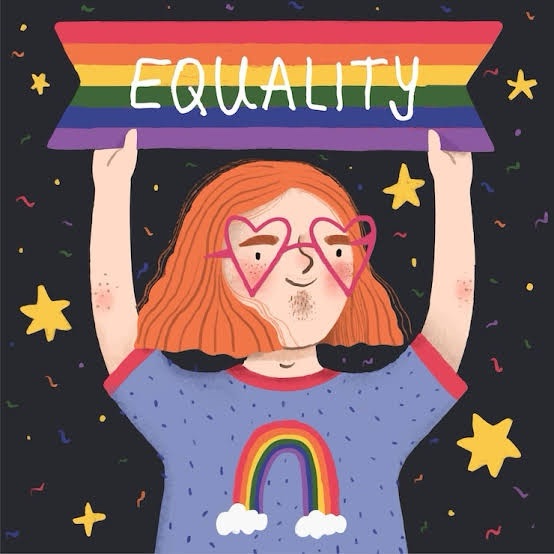
Equality Isn’t a Pie
Apparently, we’re having the conversation again.
You know the one. The conversation about women’s rights, equality, civil rights, who deserves what, who had it harder, who is supposedly taking something away from whom, and the apparently revolutionary concept that maybe—just maybe—every human being should be treated like a human being.
And somehow, after all these decades, we still have people who hear “women should have equal rights” and translate that into “women should take over the world and men should live in caves.”
Because apparently equality is a zero-sum game.
Apparently, if someone else gets more rights, dignity, opportunity, representation, or freedom, there must be a corresponding deduction from my personal account.
Congratulations! Someone you don’t know just received equal pay. Your freedom balance has been reduced by 14 points.
That’s not how this works.
Gloria Steinem wasn’t arguing that women should become the new ruling class. The women’s movement wasn’t fundamentally about replacing one hierarchy with another. It was about challenging the idea that gender should determine what opportunities you’re allowed to have, what you’re allowed to do with your life, what you’re paid, how you’re treated, or how much control you have over your own existence.
And that’s really no different from what Martin Luther King Jr. was fighting for.
He wasn’t asking America to give Black Americans some special collection of rights that white Americans didn’t have. He was asking America to stop pretending that the rights it claimed were universal somehow came with an asterisk.
Equal rights means equal rights.
That’s the part that seems so remarkably difficult for some people to understand.
If I’m a middle-aged white guy—and I happen to be one—my rights don’t become smaller because a Black woman has the same rights I do.
My freedom doesn’t diminish because a gay man can marry the person he loves.
My citizenship doesn’t become less valuable because an immigrant becomes an American.
My voice doesn’t become quieter because another person finally gets a microphone.
And my manhood certainly doesn’t become threatened because a woman doesn’t need my permission to determine what happens to her own life.
Rights aren’t a pizza.
There isn’t a finite number of slices sitting on the table with a bunch of minorities standing around waiting for their piece. If somebody gets another slice, I don’t suddenly have less pizza.
That’s the bizarre psychological trap we’ve created around equality: the assumption that fairness must mean somebody is losing.
But that’s only true if the original arrangement was inherently unfair.
And perhaps that’s the uncomfortable part.
If you’ve spent your entire life benefiting from a system that automatically gave you certain advantages because of the color of your skin or the sex you were born with, equality can sometimes feel like discrimination.
Not because you’re actually being oppressed.
Because you’re no longer receiving the automatic head start.
There is a difference.
And here’s another inconvenient historical fact: many of the people who have fought for equality weren’t asking for domination. They were asking to be included in the promise America had already made.
Life, liberty, equality, justice.
Those aren’t supposed to be members-only benefits.
And this is where the whole conversation gets particularly strange when people wrap themselves in Christianity while simultaneously arguing that equality somehow threatens them.
Because the guy they’re supposedly trying to follow wasn’t exactly a wealthy white American businessman.
Jesus was a Middle Eastern Jew living under Roman occupation.
He spent an extraordinary amount of his time talking about compassion, humility, helping the marginalized, caring for the poor, loving your neighbor and treating other people as you would want to be treated.
He didn’t spend much time explaining how important it was for the people at the top to make absolutely certain nobody below them accidentally received the same rights.
Which makes the modern interpretation of Christianity occasionally fascinating.
Apparently Jesus said, love your neighbor.
And somewhere along the way, we translated that into:
Yes, but only if your neighbor looks, thinks, votes, worships and lives exactly like you do.
That’s quite an editorial revision.
The truth is, equality doesn’t require me to surrender anything that was legitimately mine.
It requires me to surrender the idea that something belongs to me simply because someone else was denied it.
That’s a completely different proposition.
I don’t lose my humanity when another person gains theirs.
I don’t become less free because somebody else becomes freer.
And I don’t need to be afraid of equality unless the thing I’m afraid of losing is inequality.
That’s the uncomfortable question worth asking.
When someone says, “If they get equal rights, what happens to me?”
My answer is pretty simple:
Nothing.
You still get to be you.
You still get your rights.
You still get your freedom.
You just don’t get extra rights because you happened to be born with less melanin in your skin or with a particular collection of chromosomes.
And honestly, as a middle-aged white guy, I’m perfectly comfortable with that.
Because I’ve never believed my rights were valuable because somebody else had fewer.
I’ve always thought they were valuable because they’re supposed to belong to everybody.
That’s the whole fucking point.
Equality isn’t about taking something from me.
It’s about finally admitting that it was never mine to own in the first place.

