Dwain Northey (Gen X)
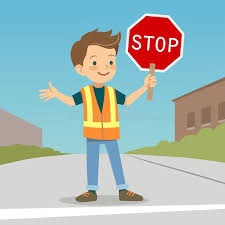
The Orange Vest of Responsibility
School starting back up this year hit me with one of those Gen X flashbacks that you don’t see coming.
It wasn’t the smell of freshly sharpened pencils. It wasn’t the sound of the school bus. It wasn’t even the sight of kids walking around with backpacks that cost more than my first car.
It was the crossing guards.
There they were, standing at elementary schools, junior highs, even high schools, making sure children safely crossed the street.
And I thought, Wait a minute… when the hell did we decide kids needed adults to do this?
Because when I was in elementary school in the 1970s, you didn’t necessarily need an adult to make sure you crossed the street. You needed a fifth or sixth grader.
That’s right.
Fifth graders.
We were apparently considered mature enough to be entrusted with the lives of smaller children while simultaneously being considered immature enough that we probably shouldn’t be trusted with a pair of scissors.
Somewhere around fifth grade, you could get handed an orange crossing-guard vest and suddenly you had a job.
No badge.
No certification.
No reflective stop sign on a giant stick.
Hell, half the time you didn’t even have a stop sign.
You just stood there, stuck your hand out into traffic and apparently that was enough.
“STOP!”
And remarkably, people stopped.
There you were, eleven years old, holding your hand up to a two-ton automobile like some miniature traffic cop with absolutely no authority whatsoever.
And nobody questioned it.
Your parents didn’t demand to know the qualifications of the crossing guard.
There wasn’t a committee meeting.
There wasn’t a background check.
There wasn’t a laminated handbook explaining your responsibilities.
There was just:
“You’re a fifth grader now. Here’s an orange vest. Make sure those first graders don’t get run over.”
And apparently, we did.
But crossing children wasn’t even the weirdest part.
We were given responsibility for ourselves.
We walked to school.
We walked home.
We went outside.
We disappeared for hours.
We rode bikes without helmets.
We drank water from garden hoses.
We were expected to know where we were supposed to be and when we were supposed to be home.
And somewhere along the way, we apparently decided that childhood needed to become a fully supervised corporate internship.
Today, we have adults standing outside schools making sure teenagers cross the street safely.
Teenagers.
These are people who are old enough to drive a car, hold a job, enlist in the military, and, depending on the state, vote.
But apparently crossing 25 feet of asphalt requires adult supervision.
I’m not saying children shouldn’t be protected. Obviously they should.
And I’m not saying there aren’t legitimate reasons for having professional crossing guards. Traffic is different. Roads are busier. Cars are bigger. Distracted driving is a real thing.
But there’s something else we’ve lost along the way.
Responsibility.
We used to give children responsibility as a way of teaching them how to become adults.
You weren’t expected to magically become responsible at eighteen.
You practiced.
You were given something to do.
You were trusted with something.
You learned that somebody smaller than you was counting on you.
You learned that if you screwed up, there were consequences.
And maybe that’s the part that sticks with me.
We didn’t have a lot of supervision, but we had expectations.
You didn’t need somebody standing over you every second because somebody had already told you what was expected.
You took care of the little kids.
You watched your siblings.
You walked home.
You had chores.
You figured things out.
And if you came home with a scraped knee, your parents probably didn’t call a lawyer.
They got you a Band-Aid.
Maybe some hydrogen peroxide that felt like Satan himself had been poured into the wound.
Then they told you to quit whining.
We were given freedom before we were given adulthood.
And perhaps that’s the difference.
Today’s kids are often protected from every possible risk, while we were often expected to learn how to navigate those risks ourselves.
Neither extreme is necessarily perfect.
But sometimes I wonder if, in our effort to keep children safe, we’ve forgotten that learning responsibility requires actually being responsible for something.
Because when I look at those crossing guards today, I can’t help but think about that orange vest.
Some fifth grader in the 1970s would put it on, walk out to the curb, hold up his hand and think:
“Well, I guess I’m in charge now.”
And somehow, for an entire generation, that was pretty much how adulthood began.
Not with a ceremony.
Not with an app.
Not with a permission slip.
Just somebody handing you an orange vest and saying:
“Don’t let those kids get hit by a car.”
And you didn’t.
Because you were a kid.
But for that ten minutes every morning, somebody trusted you to be an adult.
 Esoteric Meandering Shouting Into the Void