Dwain Northey (Gen X)
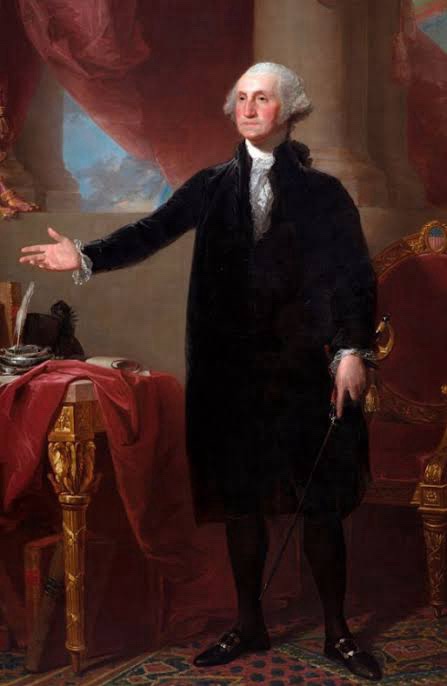
There are some things in American history that you would think even Donald Trump might understand. George Washington is one of them. Not because Trump has demonstrated a particular interest in history beyond the parts that can be used to make himself look important, but because Washington’s entire legacy is built around something Trump apparently finds difficult to comprehend: the president is not a king.
Yet here we are, with Trump wanting to immortalize George Washington in a 30-foot statue in Washington, D.C. Because nothing says “I understand the founding principles of this republic” quite like turning the man who refused a crown into a 30-foot monument to presidential grandeur.
I’m sure the intention is to honor Washington. I’m sure there are people involved who genuinely believe this is a fitting tribute to the father of our country. And if you want to build a statue of George Washington, go right ahead. The man did, after all, lead the Continental Army, preside over the Constitutional Convention, and serve as the first president of the United States.
But perhaps we should pause long enough to remember what made Washington historically significant in the first place.
It wasn’t that he was the most powerful man in America. It was that he understood power was supposed to belong to the country, not to the man occupying the office.
Washington had already demonstrated that understanding before he became president. After leading the Continental Army to victory, he resigned his commission and returned to private life. There was no coronation. No declaration that the man who had won the war was now entitled to rule the nation he had helped create.
When he became president, he served two terms and then voluntarily left office. At a time when the world was full of leaders who treated power as something to be accumulated, protected, and passed down to their own families, Washington walked away.
That decision helped establish the tradition of peaceful transfers of power that became one of the defining features of American democracy.
Washington could have been a king. He had the military prestige, the public admiration, and the opportunity. Instead, he helped establish a republic in which the president was an elected servant of the people.
And now, centuries later, we have a president who seems determined to surround himself with the trappings of royalty while claiming to be honoring the very man who rejected them.
The irony is so thick you could carve it into a monument.
Trump’s fascination with grand buildings, oversized portraits, gilded interiors, and the general aesthetic of a man who believes the nation should be impressed by his personal magnificence is hardly a secret. But a 30-foot George Washington statue in the capital? That’s not just a matter of taste. It’s a question of what we choose to celebrate.
Because the message matters.
When you elevate a president into a towering figure of national reverence, you risk turning the office into a personality cult. And when the president proposing the monument has spent considerable time treating the presidency as an extension of his personal brand, perhaps the symbolism deserves a little scrutiny.
Washington’s legacy wasn’t that he was larger than the country. It was that he understood the country was larger than him.
He didn’t need to be immortalized as a king. He became immortalized by refusing to act like one.
There is a difference between honoring a founding father and building a monument that makes the president look like a ruler from some ancient empire. One celebrates the creation of a republic. The other risks celebrating the individual.
And that distinction is not merely academic.
The peaceful transfer of power Washington helped establish was tested throughout American history, including when he left office and when the nation faced later crises. The idea that a president serves a limited term and then leaves is not some quaint tradition from a simpler time. It is one of the central safeguards against authoritarianism.
The president is supposed to be temporary. The Constitution is supposed to endure.
Washington understood that. He understood that the office was bigger than the officeholder, and that the country could not depend on the personal virtue of every man who occupied the White House. The system had to be stronger than the individual.
That’s why the symbolism of a towering statue matters.
If you want to honor George Washington, perhaps the most appropriate monument would be one that reminds Americans that he could have held onto power but chose not to. That he could have been crowned but wasn’t. That he helped establish a country where the president was elected, not ordained.
Maybe a statue of Washington handing the presidency to his successor. Maybe a monument to the peaceful transfer of power. Maybe something that reminds us that the greatness of the first president was not measured in feet.
Because if we’re going to build a 30-foot statue of George Washington, let’s at least make sure we understand why we’re doing it.
Otherwise, we might as well put a crown on his head and call it a day.
And somewhere, George Washington is probably rolling over in his grave.
Not because someone wants to honor him.
Because someone still doesn’t understand what he was trying to accomplish.

