Dwain Northey (Gen X)
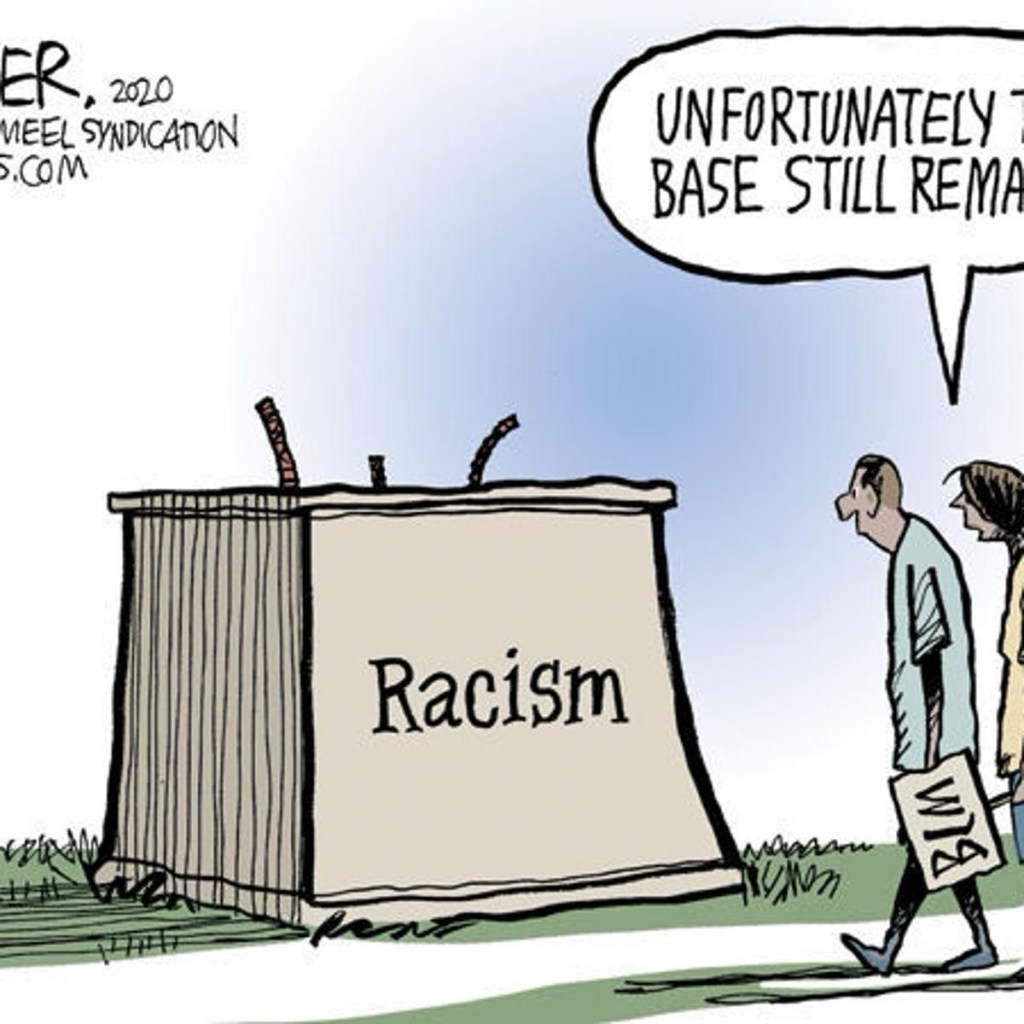
I have a question for my Republican friends who insist they are Christians, have never had a racist thought in their entire lives, and would like you to know that they love everybody equally.
If race doesn’t matter, why is it on the application?
If sex doesn’t matter, why is it on the application?
Why do I have to check a box identifying myself as one of several officially recognized versions of a human being every time I apply for a job, fill out a government form, or do just about anything else that requires paperwork?
And before somebody gets their Christian underwear in a bunch, I’m not suggesting that checking a box makes somebody racist. I’m asking why we’ve built a society that keeps reminding us that race and sex exist, then acts surprised when people notice.
We have spent generations telling people that race shouldn’t matter. Yet the government, employers, schools, and institutions have developed entire systems for collecting information about it.
Now, there is a legitimate reason for some of this. The Census Bureau explains that racial and ethnic data help measure disparities, evaluate government programs, and monitor compliance with civil rights laws. The Equal Employment Opportunity Commission says employers may collect demographic information to identify discriminatory hiring practices. (Census.gov)
In other words, you can’t determine whether a system is discriminating against people if you refuse to collect information about who is being discriminated against.
That part makes sense.
But here’s where my question comes in.
If the information is so important that we need to collect it, analyze it, report it, and use it to determine whether discrimination exists, then why do some people act as though the very acknowledgment of race is the problem?
You can’t simultaneously say, “Race doesn’t matter,” and “We need to know everybody’s race so we can make sure race isn’t affecting anything.”
That’s not necessarily hypocrisy. Sometimes it is the practical consequence of trying to correct a problem that society created in the first place. But it does make for an interesting conversation.
Especially when the same people who say race shouldn’t matter suddenly have very strong opinions about who belongs in this country, who gets to play on which sports team, who should receive assistance, and whether certain people deserve the same opportunities as everybody else.
Apparently, race doesn’t matter until somebody wants to talk about race.
Then it matters a great deal.
And sex? Same basic question.
If sex doesn’t matter, why are we still asking people to identify it on government forms, employment records, and other official paperwork?
Again, there are practical reasons. Demographic information can help institutions understand who is being served, identify disparities, and determine whether policies are affecting people differently. But the existence of a legitimate reason for collecting information doesn’t mean every use of that information is legitimate.
The distinction matters.
The problem isn’t necessarily that the box exists. The problem is when somebody checks a box and the system decides that person is worth more, worth less, more qualified, less qualified, more deserving, or less deserving because of it.
And that’s the part my Christian friends seem to have trouble reconciling.
Because if you believe every person is created in the image of God, then the logical conclusion is that the color of somebody’s skin, the sex they were born with, or the category they check on a government form should not determine their value as a human being.
Not their worth.
Not their dignity.
Not their right to be treated fairly.
You don’t get to say you believe that on Sunday and then spend Monday explaining why certain people should have fewer rights, fewer opportunities, or less consideration because of something they didn’t choose.
That’s not Christianity. That’s just selective application of the manufacturer’s warranty.
And before somebody tells me that institutional racism and sexism don’t exist because they personally have never discriminated against anybody, I would like to introduce them to the concept of institutions.
An institution doesn’t need to have a racist sitting in a room rubbing his hands together like a cartoon villain to produce unequal results.
Sometimes it is a policy. Sometimes it is a tradition. Sometimes it is a hiring practice that nobody has questioned in 40 years. Sometimes it is a system designed for one group that never bothered to account for everybody else.
The EEOC recognizes both intentional discrimination and certain policies that appear neutral but disproportionately disadvantage protected groups without sufficient job-related justification. (EEOC)
You don’t have to hate somebody to participate in a system that treats them differently.
You just have to be comfortable enough with the system that you never bother asking who it was built for.
And that is where I think we have confused equality with blindness.
Equality doesn’t mean pretending we are all identical.
It means recognizing that our differences should not determine whether we receive the same basic rights, opportunities, and dignity.
If the system needs to know our race to determine whether it is treating us fairly, then maybe we should stop pretending race is irrelevant.
If the system needs to know our sex to determine whether it is treating us fairly, then maybe we should stop pretending sex is irrelevant.
And if we are going to ask those questions, perhaps we should be honest about why we are asking them.
Not because one race is better than another.
Not because one sex is more deserving than another.
But because history has demonstrated that people in positions of power have not always treated everybody equally.
And if you don’t measure the problem, you can always pretend it doesn’t exist.
Which brings me back to my original question.
If race didn’t matter, you wouldn’t ask.
If sex didn’t matter, you wouldn’t ask.
The fact that we have institutionalized the collection of this information tells us something important: These categories have mattered in the way our society has been organized, and they still matter when we measure whether people are being treated fairly.
The goal shouldn’t be to pretend those differences don’t exist.
The goal should be to make sure they don’t determine who gets to live a full and equal life.
And if that sounds like a radical concept to somebody who claims to follow Jesus, perhaps they should spend a little less time checking everybody else’s boxes and a little more time reading the part about loving your neighbor.
Because apparently, even the Son of God couldn’t get through to some people without a government form.

