Dwain Northey (Gen X)
Maybe “Fix You” Was Never About You
There are songs we hear a hundred times before we actually listen to them.
Fix You by Coldplay is one of those songs for me.
For years, I heard it the way most people probably hear it: as a song about comforting someone you love when they’re hurting. You’ve lost something. You’re exhausted. You’re trying to hold yourself together. And someone comes along and says, I’m going to fix you.
It sounds romantic.
It sounds like rescue.
But the older I get, the less convinced I am that the song is actually about fixing somebody else.
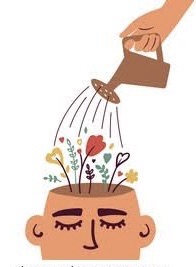
Maybe it’s about fixing yourself.
And maybe that is a much more difficult thing to admit.
The song begins with failure. Not someone else’s failure. Your failure.
You try your best and it isn’t enough. You get what you want, but it doesn’t feel like what you thought it would feel like. You lose something you can’t replace. You become tired, frustrated, and emotionally empty.
That doesn’t sound much like somebody standing outside another person’s life with a toolbox.
It sounds like someone staring at the wreckage of his own.
And then comes the line everyone remembers:
“Lights will guide you home.”
Home.
That’s an interesting word.
Not I’ll carry you home.
Not I’ll save you.
Not I’ll make everything better.
I’ll help you find your way home.
There is a difference.
Because sometimes home isn’t a physical place. Sometimes home is the person you were before life knocked enough pieces off of you that you stopped recognizing yourself.
Maybe “fixing” isn’t about repairing another human being at all.
Maybe it’s about finding the parts of yourself you abandoned along the way.
That’s the uncomfortable part of getting older. Eventually you realize nobody is coming with the magic wrench.
Nobody is going to crawl underneath your hood, replace the defective parts, tighten a few bolts and send you back onto the highway with a reassuring thumbs-up.
Unfortunately, there is no emotional Jiffy Lube.
You have to do some of the repairs yourself.
And that’s where I think Fix You becomes much more introspective than romantic.
The song isn’t necessarily saying, “You are broken, and I will make you whole.”
It can just as easily be saying, “I know what it feels like to be broken because I am broken too.”
That’s a different kind of love.
Maybe even a more honest one.
Because there is a dangerous idea buried inside the notion that we can “fix” another person. It assumes we know what is wrong with them. It assumes we know what they need. It assumes their healing is somehow our responsibility.
But people aren’t appliances.
You can’t replace somebody’s emotional alternator.
You can’t tighten their self-esteem with a socket wrench.
You can’t install a new childhood.
And you certainly can’t love somebody hard enough to make them choose healing if they’re not ready to do it themselves.
What you can do is stand beside them.
You can hold the flashlight.
You can remind them where the road is.
You can say, “You’re not alone.”
And sometimes that’s what love actually looks like.
But the deeper interpretation of Fix You is that the person holding the flashlight may need it too.
Because we’re all carrying things we don’t talk about.
Regrets.
Failures.
Lost relationships.
Things we said that we wish we hadn’t.
Things we didn’t say when we should have.
Dreams that didn’t happen.
People who left.
People we left.
Versions of ourselves that disappeared somewhere between who we thought we would become and who we actually became.
And at some point, you look around and realize that the person who needs fixing isn’t necessarily the person sitting across from you.
It might be the person looking back at you in the mirror.
That’s a harder realization.
It’s easy to believe we can fix somebody else. It gives us a job. A purpose. Something outside ourselves to concentrate on.
Fixing ourselves requires something much less comfortable:
Honesty.
It requires admitting that maybe we’re tired.
Maybe we’re lonely.
Maybe we’re angry about things we thought we’d gotten over.
Maybe we’re still carrying wounds we learned to hide so well that eventually we forgot they were there.
Maybe we’re not actually unhappy.
Maybe we’re just not sure what happiness is supposed to feel like anymore.
And maybe that’s okay.
Maybe healing isn’t some dramatic transformation where you wake up one morning and suddenly everything makes sense.
Maybe it’s smaller than that.
Maybe it’s getting out of bed when you don’t particularly want to.
Maybe it’s forgiving yourself for things you can’t change.
Maybe it’s accepting that some doors aren’t going to reopen.
Maybe it’s realizing that the person you were at twenty, thirty, forty, or fifty doesn’t have to be the person you are now.
Maybe fixing yourself isn’t becoming the person you were.
Maybe it’s becoming comfortable with the person you are.
That’s why I hear Fix You differently now.
I don’t hear a savior promising to repair somebody else’s life.
I hear somebody who understands the wreckage.
Somebody who knows what it is to lose.
Somebody who knows what it is to fail.
Somebody who knows what it is to hurt.
And perhaps somebody finally learning that healing isn’t about returning to the person you used to be.
It’s about finding your way home.
Maybe the song isn’t saying, “Let me fix you.”
Maybe it’s saying:
“I’ve been broken too. Let’s find our way back.”
And at this point in my life, I think that’s a much more meaningful promise.
Because sometimes the person we spend our entire lives waiting for to save us…
is the person we’ve been avoiding in the mirror.
Maybe that’s who we were supposed to fix all along.
Ourselves.

