Dwain Northey (Gen X)
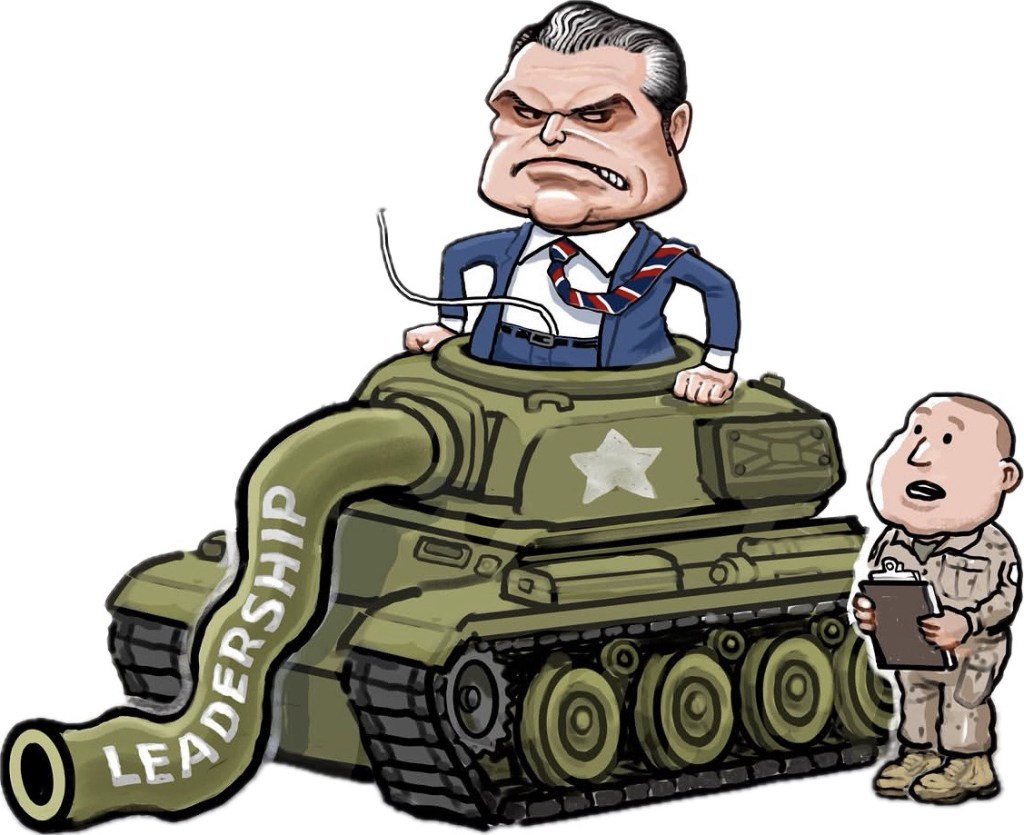
There is something almost performance-art ridiculous about the priorities coming out of the Pentagon—or, as Pete Hegseth insists on calling it now, the Department of War. At a time when the United States is dealing with actual wars, military deployments, geopolitical threats and the very real business of keeping people alive, the secretary of war has apparently decided that one of our great national-security emergencies is whether the troops over 30 are getting sufficiently enthusiastic about waking up in the morning.
The Pentagon has now issued guidance requiring male service members 30 and older to be screened for testosterone deficiency as part of their annual health assessments. The guidance lists loss of spontaneous morning erections among the symptoms clinicians should consider. It also allows for testosterone-replacement treatment when medically appropriate.
And yes, I realize low testosterone can be a legitimate medical condition. Nobody is arguing that soldiers shouldn’t receive appropriate medical care. If a soldier has symptoms, gets properly evaluated, has genuinely low testosterone and needs treatment, by all means treat the damn condition.
That’s called medicine.
What makes this so bizarre is the obsession with turning testosterone into some sort of military masculinity metric.
Because apparently the new definition of a warrior isn’t simply Can you do the job?
Now it’s apparently:
How’s your T? How’s your muscle mass? How’s your libido? And, soldier, completely unrelated question: how’s your morning wood?
Because nothing says military readiness quite like Uncle Sam conducting a quarterly inventory of America’s erections.
Medical experts have questioned the wisdom of blanket screening. Testosterone naturally varies, and established medical practice generally focuses testing on people who have symptoms rather than assuming everyone over 30 has a hormone deficiency simply because birthdays happened. Experts have also warned that testosterone replacement isn’t a harmless performance supplement and can affect fertility and other aspects of health.
But here’s where the whole thing becomes particularly surreal.
This is the same administration that has made a tremendous issue out of transgender people serving in the military.
The argument against transgender service has repeatedly invoked the need for strict physical and medical standards and the supposed burden of hormone treatment. Yet now the military is creating a system specifically designed to identify testosterone deficiencies and potentially provide testosterone therapy to service members.
A federal judge actually noticed the obvious contradiction and asked the administration to explain why testosterone replacement can be offered to one group of service members while hormone treatment is used as part of the argument for excluding another.
That doesn’t require a political scientist to understand.
It requires about thirty seconds and a functioning bullshit detector.
And then there’s the larger irony.
We’ve apparently decided that transgender Americans who have served their country for years—people who may have spent much of their adult lives wearing the uniform—somehow threaten the military’s warrior ethos because their gender doesn’t conform to somebody else’s preferred definition of masculinity.
Meanwhile, the Pentagon is literally checking the testosterone levels of men over 30 to determine whether they have enough of the hormone associated with being sufficiently manly.
At some point you have to wonder whether we’re defending the country or auditioning for the world’s most expensive fraternity.
There is a profound difference between military readiness and performative masculinity.
Readiness means having trained personnel, functioning equipment, competent leadership, adequate logistics, intelligence, medical support and troops who are physically and mentally capable of accomplishing their missions.
It does not mean everybody has to conform to somebody’s 1950s fantasy of what a warrior looks like.
And if somebody wants to argue that testosterone deficiencies can affect physical performance, fine. That’s a medical question. Study it. Treat people who need treatment. Establish evidence-based standards.
But let’s not pretend that a soldier’s worth is somehow measured in nanograms per deciliter.
The military needs people who can fly aircraft, maintain engines, analyze intelligence, operate communications systems, treat wounded soldiers, command units, write software, defuse bombs, repair equipment and make sound decisions when everything has gone spectacularly to hell.
Some of those people will have high testosterone.
Some will have low testosterone.
Some will be men.
Some will be women.
Some will be transgender.
And none of those biological or personal characteristics magically determine whether somebody can do the job.
Which brings me back to the name.
The Department of Defense became the Department of War in 2025, according to the department’s own history. Hegseth is now officially the Secretary of War.
I’m old enough to remember when the whole point of having a Department of Defense was that the military existed to defend the country.
Apparently we’ve now gone from defending America to defending the Warrior Ethos, defending masculinity, defending testosterone levels and—presumably if the next memo is sufficiently enthusiastic—defending the sacred right of every 31-year-old infantryman to demonstrate that his endocrine system remains adequately patriotic.
Maybe someday we’ll get around to defending the country.
But first, apparently, somebody needs to check whether Private Johnson is awake.
And that, ladies and gentlemen, is where we’re spending our national-security genius.

