Dwain Northey (Gen X)
Apparently, the Emperor Needs an Editor
Well, congratulations, America.
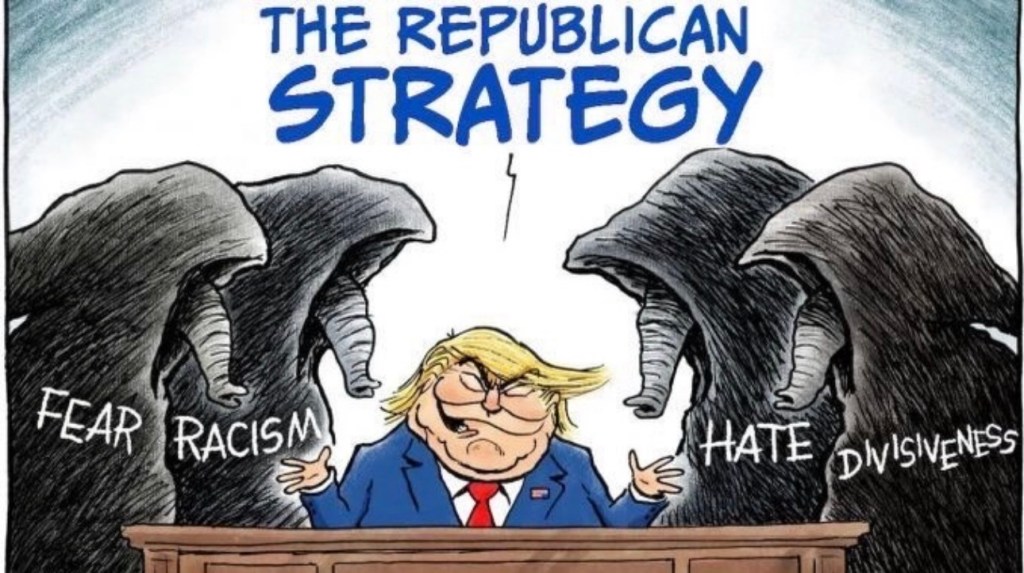
We appear to have reached the next level of authoritarianism: the president apparently doesn’t just want the news. He wants the news edited to his specifications.
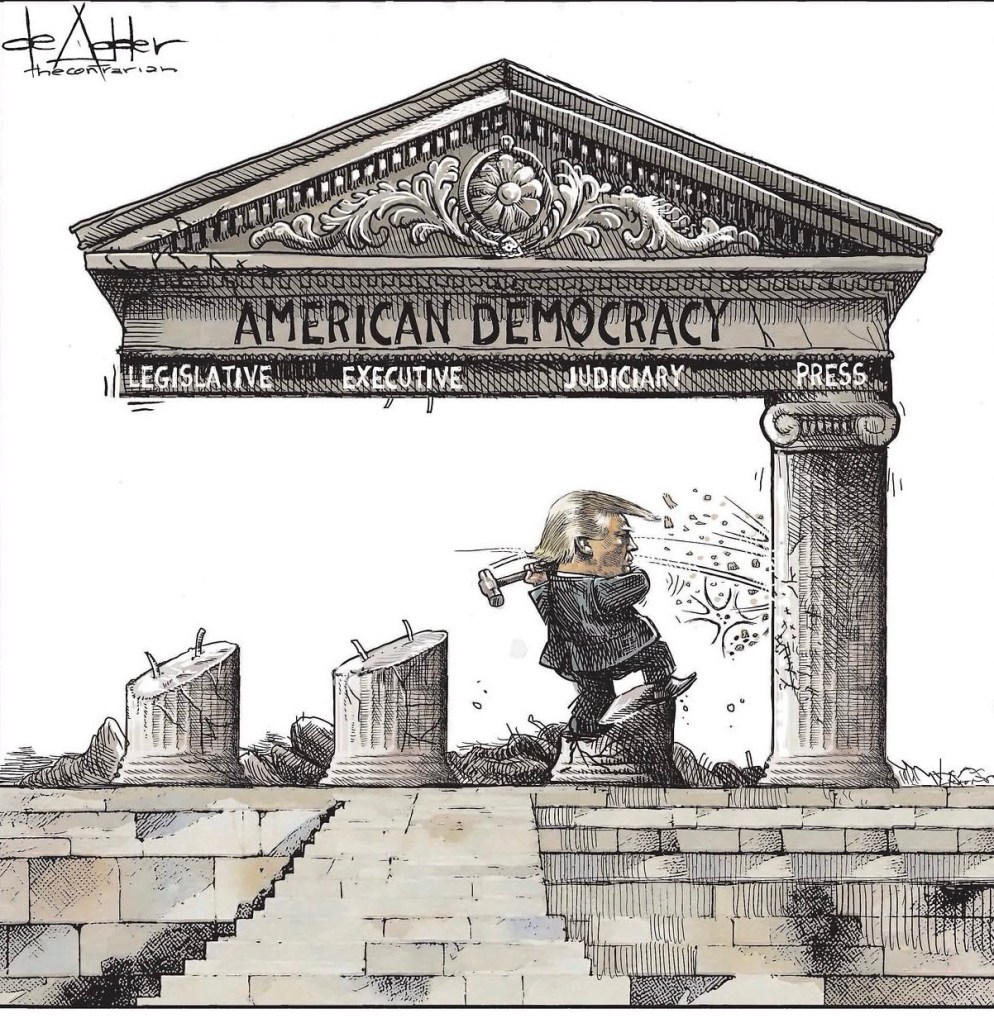
Donald Trump has now barred CNN, MS NOW and Politico from the White House, accusing them of producing “fake news.” The outlets have challenged the ban in court, arguing that the administration is retaliating against them for their coverage. Meanwhile, the remaining television networks have suspended participation in the White House television pool in protest. (AP News)
Because apparently reporting something unflattering about Dear Leader is now grounds for having your press credentials confiscated.
I suppose we’re supposed to be grateful he hasn’t required every reporter to begin the morning by saying, “Good morning, Mr. President. You look exceptionally presidential today. Your hair is magnificent. Your approval numbers are tremendous. And yes, that thing you said yesterday was absolutely brilliant.”
Maybe that’s next.
The whole point of a free press is that journalists aren’t supposed to be the president’s public-relations department.
They’re supposed to ask inconvenient questions.
They’re supposed to investigate.
They’re supposed to say, “Hold on. That doesn’t make sense.”
And, occasionally, they’re supposed to say, “No, Mr. President. That’s not what happened.”
That’s called journalism.
Apparently, we’re now experimenting with court journalism—where the people surrounding the king are expected to compliment the king.
And just when you think the absurdity has reached its ceiling, here comes science.
The administration is reportedly drafting an executive order that would create an outside board with the power to approve or veto National Institutes of Health grants. The proposed board would include political appointees, including OMB Director Russell Vought, with unanimous approval reportedly required for grants. (Reuters)
Let me make sure I understand this.
For decades, America built one of the world’s most powerful scientific research systems around scientists evaluating scientific research.
Researchers submit proposals.
Experts review them.
Other scientists determine whether the methodology is sound, whether the research has merit and whether the work could advance our understanding of disease, medicine, biology or whatever particular rabbit hole they’re investigating.
But apparently we’ve decided that perhaps what science really needs is Donald Trump sitting somewhere with a red pen.
Because obviously the guy who spent years arguing about the size of crowds and whether hurricanes can be redirected with a Sharpie is exactly who I want deciding which biomedical research deserves federal funding.
“Hmm. Cancer research. Very complicated. Doesn’t make me look particularly handsome. Denied.”
“Research involving something I don’t like politically? Absolutely not.”
“Research that confirms something scientists have been telling us for thirty years? Sounds suspicious. Denied.”
And let’s be clear about something.
The issue isn’t whether the government should have standards for scientific funding. Of course it should. Taxpayer money should be accountable. Dangerous research should have safeguards. The administration already has policies restricting federally supported high-risk biological research. (HHS.gov)
The issue is who gets to decide what constitutes good science.
Because science isn’t supposed to begin with:
“What does the president believe?”
It begins with:
“What does the evidence show?”
That’s the entire point.
You don’t get to vote on whether gravity works.
You don’t get to fire the thermometer because you don’t like the temperature.
You don’t get to tell the microscope that it has a political agenda because it keeps showing you something inconvenient.
And you certainly don’t get to determine scientific truth by presidential decree.
That’s not science.
That’s politics wearing a lab coat.
And this is where these two seemingly unrelated stories actually become the same story.
Control the information. Control the people who distribute the information. Control the people who produce knowledge. Then control what information and knowledge are allowed to receive institutional support.
At some point, you aren’t merely governing.
You’re constructing an information ecosystem in which the government increasingly gets to decide what Americans are permitted to hear, what researchers are permitted to pursue and which inconvenient facts receive the oxygen of public funding.
That’s how authoritarian systems work.
They don’t necessarily begin with someone kicking down your door at midnight.
Sometimes they begin with something much more mundane:
“That reporter doesn’t get a credential anymore.”
“That research doesn’t align with our priorities.”
“That scientist isn’t getting the grant.”
“That news organization isn’t welcome here.”
And each individual decision can be rationalized.
Until you step back and realize that the government has gradually replaced independent institutions with loyalty tests.
That’s the dangerous part.
Because democracy isn’t supposed to require the president to be correct.
It is specifically designed around the assumption that presidents will sometimes be wrong.
That’s why we have courts.
That’s why we have Congress.
That’s why we have inspectors general.
That’s why we have scientists.
That’s why we have journalists.
That’s why we have people whose entire job is to look at someone in power and say:
“Prove it.”
The president doesn’t need a press corps that tells him he’s wonderful.
He needs a press corps that makes him uncomfortable.
Scientists don’t need a president who tells them what conclusions they’re allowed to reach.
They need the freedom to discover that the president was wrong.
Because here’s the really inconvenient thing about science:
The universe doesn’t care who won the election.
Cancer doesn’t care about your political party.
Viruses don’t care about your campaign slogan.
Climate doesn’t care about your approval rating.
Gravity doesn’t care how many people voted for you.
And facts don’t become fake news simply because they’re inconvenient to the guy sitting behind the Resolute Desk.
So perhaps the question we ought to be asking isn’t whether Donald Trump is offended by the press or whether he thinks scientists are sufficiently respectful of his administration.
Perhaps the question is much simpler:
Why does someone with enormous political power need everyone around him to agree with him?
A confident president can tolerate criticism.
A secure administration can tolerate investigation.
A government that believes its policies can withstand scrutiny doesn’t need to control who gets to ask the questions—or who gets to conduct the research.
And if your response to criticism is to silence the critic, and your response to inconvenient science is to control the funding, eventually you aren’t defending the truth.
You’re defending the narrative.
And history has a rather unpleasant habit of reminding us what happens when governments become more interested in controlling the narrative than discovering the truth.
But hey, maybe I’m wrong.
I’m sure somebody will tell me.
Assuming they’re still allowed in the press pool.

