Dwain Northey (Gen X)
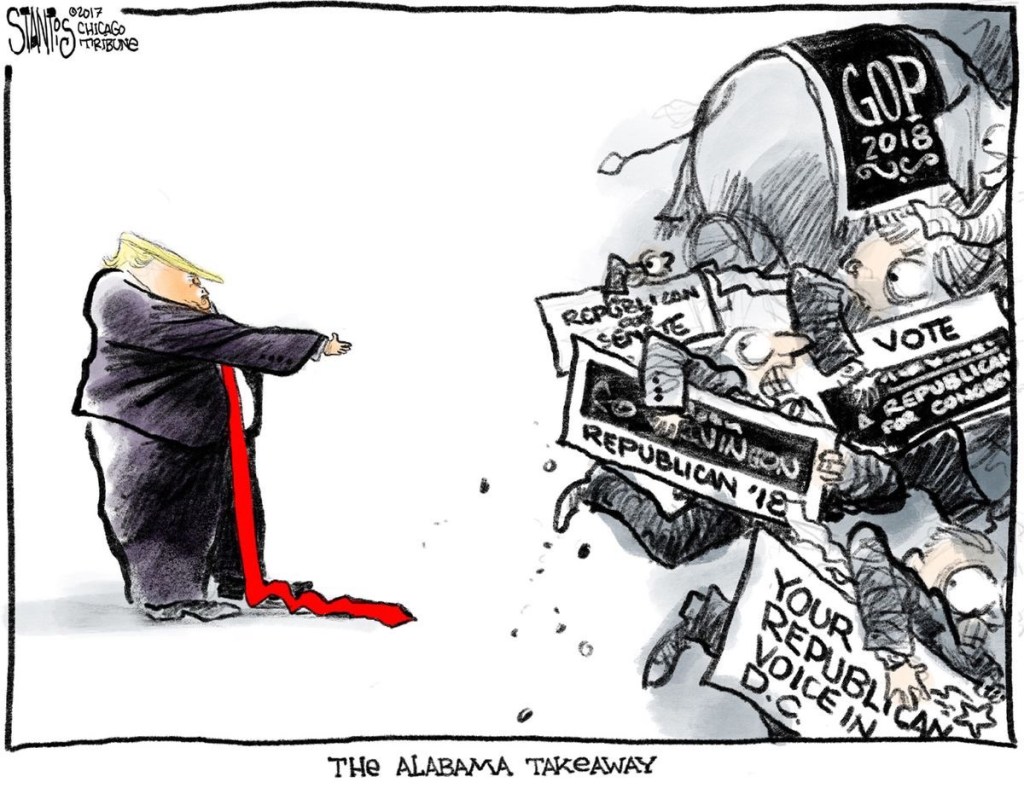
The GOP’s New Campaign Strategy: Please, Please Don’t Vote for Us
With the 2026 midterms now roughly six weeks away, I have a question that keeps rattling around in my increasingly cynical Gen X brain:
Are Republicans actually trying to win this election?
Because from where I’m sitting, it sometimes looks less like a political campaign and more like a group project where everyone on one side has decided the best way to guarantee failure is to keep doing exactly the things their opponents would have done if they were trying to sabotage them.
Maybe there’s a plan here.
Maybe the plan is so sophisticated that my primitive Gen X brain simply can’t comprehend it.
Or—and hear me out—the strategy is:
Lose now. Blame the Democrats later.
Because apparently we’re doing the latest installment of How to Make Americans Hate Something They Already Need.
Enter JD Vance and Mehmet Oz, who announced that the Trump administration plans to remove approximately 760,000 people from Affordable Care Act exchange coverage, claiming those enrollments are fraudulent, unauthorized, ineligible or otherwise “phantom.” Another roughly 419,000 enrollments are reportedly being subjected to additional verification. The administration says the cancellations will save about $2.2 billion.
And yes, there is legitimate evidence of fraud and unauthorized enrollment in the ACA marketplace.
That’s important.
Because I’m not arguing that nobody ever commits fraud. Of course they do. People commit fraud against Medicare, Medicaid, Social Security, insurance companies, banks, credit-card companies, grocery stores, and probably the self-checkout machine at Walmart.
But then we arrive at one of the arguments being used to identify suspicious ACA enrollments:
They haven’t filed any claims.
Excuse me?
Have we forgotten how insurance works?
Insurance is the thing you pay for hoping you don’t need it.
That’s kind of the entire point.
I have car insurance precisely because I hope I don’t get into a wreck.
I have homeowners insurance precisely because I hope my house doesn’t spontaneously decide to become a campfire.
And health insurance?
Well, I’d prefer not to need it because the alternative usually involves a doctor, a hospital, a diagnosis, a procedure, or a bill that makes you briefly consider becoming Amish.
Not filing a claim isn’t evidence that insurance isn’t working.
It’s evidence that you haven’t needed to use it.
And here’s the really important distinction: the administration isn’t simply saying, “You didn’t use your insurance, therefore you’re fraudulent.” Its HHS analysis says the unusually high concentration of zero-claim enrollment—particularly among people with $0 premiums—can be an indicator of people being enrolled without their knowledge or of other improper enrollment practices.
That’s a reasonable thing to investigate.
But investigating suspicious enrollment and treating lack of medical claims as inherently suspicious are two very different things.
Because imagine applying this logic to literally anything else.
“Sir, according to our records, you haven’t used your fire extinguisher.”
“Yes. Because my house isn’t on fire.”
“Sounds suspicious.”
Or:
“Your car insurance shows no collision claims.”
“Correct.”
“Fraud detected.”
Or my favorite:
“You’ve been paying for this gym membership for three years and we don’t have any evidence you’ve actually used the treadmill.”
Okay, you’ve got me there. That’s probably fraud.
But health insurance is fundamentally a risk pool. Millions of people pay premiums so that the relatively smaller number of people who actually need expensive medical care can afford it.
The healthiest possible insurance customer is, in fact, someone who pays their premiums and never needs the damn thing.
That’s not a bug.
That’s the business model.
And there’s another little detail here that seems to get lost in the political theater.
The ACA isn’t exclusively populated by some imaginary group of Democrats wandering around wearing Obama T-shirts and carrying copies of The Federalist Papers upside down.
Millions of Americans use it.
The administration’s own figures put current ACA exchange enrollment at roughly 19.2 million people.
Republicans use the term “Obamacare” as though it’s an ideological purity test.
But insurance cards don’t ask how you voted.
Your deductible doesn’t care whether you voted Republican.
Your cancer diagnosis doesn’t check your voter registration.
And your emergency-room bill certainly isn’t going to say:
“Oh, you’re a Republican? Never mind. Your coverage is free.”
Health insurance is one of those areas where ideology eventually runs headfirst into arithmetic.
People need it.
People use it.
People pay for it.
And when they don’t need it, they generally prefer to keep it anyway because they have this annoying habit of wanting to remain alive.
So here we are, six weeks before the midterms, watching the government announce that hundreds of thousands of people are losing ACA coverage while premiums have already risen sharply after enhanced subsidies expired. KFF Health News reported that average ACA premiums rose substantially in 2026 and that enrollment fell by nearly three million.
Again, the administration has a legitimate policy argument about fraud.
The question isn’t whether fraud should be investigated.
Of course it should.
The question is whether the cure for fraudulent enrollment should be designed so that legitimate people suddenly discover that the health insurance they thought they had is now sitting in the government’s recycling bin.
And then there’s the timing.
Six weeks before an election.
Which brings me back to my original question:
What exactly is the Republican strategy here?
Because if the strategy is to demonstrate that government can identify fraud and protect taxpayer dollars, okay.
That’s an argument.
If the strategy is to reduce federal spending on ACA subsidies, that’s an argument too.
But if you’re simultaneously making health insurance more expensive, removing hundreds of thousands of people from coverage, attacking the ACA as a program, and then heading into a midterm election where health care is one of the things voters are going to think about…
Well…
I’m starting to wonder whether “self-sacrifice” has officially become the GOP’s 2026 campaign mantra.
Maybe there’s a secret whiteboard somewhere in Washington.
At the top it says:
HOW DO WE WIN THE MIDTERMS?
And underneath:
- Make health insurance more expensive.
- Remove people from health insurance.
- Pick fights over things voters don’t care about.
- Keep doing things that generate negative headlines.
- Then blame Democrats for the consequences.
And someone in the back raises his hand.
“Should we maybe stop doing the things that are unpopular?”
Silence.
Someone slowly turns off the lights.
And the meeting adjourns.
Look, I’m a Gen Xer.
I’ve survived cassette tapes, rotary phones, leaded gasoline, Reagan-era nuclear anxiety, Windows 95, dial-up internet and the inexplicable cultural phenomenon of parachute pants.
I’ve learned one fundamental rule:
If something doesn’t make sense, there’s probably a reason.
Sometimes the reason is incompetence.
Sometimes it’s ideology.
Sometimes it’s money.
Sometimes it’s politics.
And sometimes it’s a strategy so convoluted that you have to wonder whether the people executing it have accidentally wandered into the wrong election.
But I suppose we’ll find out in November.
Until then, I’m going to sit here with my health insurance card, hoping desperately that I never have to use it.
Because apparently in 2026, being healthy enough not to file a claim may now require a congressional investigation.

