Dwain Northey (Gen X)
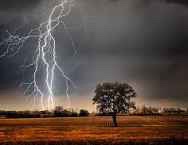
The Lightning You Can See but Not Hear
As children, we learn the equation pretty quickly: lightning equals thunder. One flashes; the other goes BOOM. But every once in a while, you’ll look up and see lightning dancing across the clouds—or even striking the ground—and hear absolutely nothing.
So where did the thunder go?
It didn’t disappear. Sound just has a much shorter range than light.
When lightning happens, the electrical discharge heats the surrounding air almost instantaneously to temperatures of roughly 30,000 kelvin. That sudden heating makes the air expand explosively, creating a pressure wave. We call that pressure wave thunder.
The important part is that the lightning and thunder travel very differently. Light reaches us essentially instantaneously, while sound moves through air at only about 1,125 feet per second. As a result, you can see a lightning flash from a storm that is much farther away than you can hear its thunder.
And sometimes the atmosphere helps hide the sound. Temperature layers, wind, terrain, buildings, and even the structure of the storm can bend or scatter sound waves. A distant lightning strike may produce thunder, but by the time those sound waves reach you, they’ve become too weak to hear.
There’s even a name for the phenomenon: heat lightning.
And here’s the slightly misleading part: heat lightning isn’t actually a special kind of lightning caused by heat. It’s ordinary lightning from a distant thunderstorm. The storm is simply far enough away that you can see the flashes while the thunder either hasn’t reached you or has become too faint to hear.
So the next time you see lightning without thunder, the storm isn’t being strangely quiet.
You’re just watching something happening much farther away than your ears can hear.
Turns out, even lightning has a social-distancing limit.
:::

