Dwain Northey (Gen X)
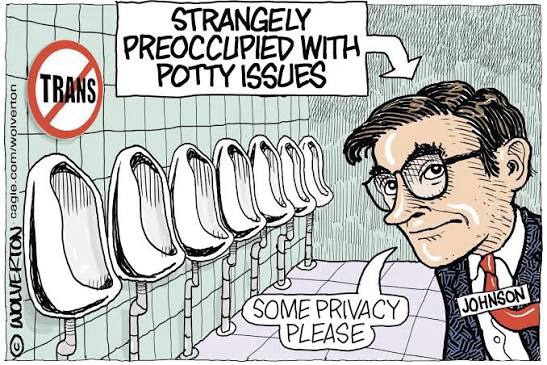
There is something almost uniquely American about being angry about a problem that doesn’t actually exist, voting to fix it, and then being disappointed when the problem remains exactly where it was.
I had one of those conversations today.
Someone told me they aren’t happy with Donald Trump. Fair enough. Apparently, however, they voted for him because they were fed up with DEI, transgender kids getting surgery at school, transgender athletes taking over school sports, and whatever other horrors had apparently been hiding behind the gymnasium doors waiting to destroy Western civilization.
And I had to ask the obvious question:
Which of those things actually happened to you?
Because this is where political reality gets really strange.
Let’s start with the surgical horror story.
No, children aren’t wandering into their elementary school nurse’s office at lunchtime and coming out with a new set of plumbing. That’s not how gender-affirming surgery works. A 2024 national study found that gender-affirming surgeries among minors were extremely rare. Among insured minors in 2019, the study found no such procedures among children 12 and under, and only 85 procedures among minors aged 13–17 in the dataset; most were chest-related procedures.
Another national study found that surgery among people ages 12–18 was uncommon compared with adults, and that genital procedures were particularly uncommon among adolescents.
So when somebody tells me they voted for Trump because they were tired of transgender children getting “surgery in schools,” I’m sorry, but that’s not a policy problem.
That’s a story.
And there’s an important distinction between saying that gender-affirming care exists and saying that the internet’s most outrageous version of it is happening everywhere.
Those aren’t the same thing.
There have been transgender adolescents who received gender-affirming medical care. There have also been some adolescents who received chest surgery. That’s documented.
But the idea that schools are performing gender-reassignment surgery on children is a completely different claim.
It would be like being furious that your local elementary school has a nuclear submarine parked behind the cafeteria because someone on television showed you a picture of one.
Then there’s transgender athletes.
Again, let’s separate the existence of an issue from the political megaphone surrounding it.
There are transgender students. There are transgender athletes. There are disputes over eligibility rules. Those are real.
But somehow a tiny number of people participating in school athletics became one of the defining political emergencies of our time.
Think about that for a minute.
We have somehow managed to take an extraordinarily small population of students and turn them into a national political obsession.
And here’s the part that really gets me:
If the thing you’re angry about was already incredibly rare before Trump, and remains incredibly rare afterward, what exactly did your vote accomplish?
This is where the political marketing genius comes in.
Take something most people will never personally encounter.
Give it a scary name.
Put it on television every night.
Have politicians repeat it until it becomes familiar.
Tell people their children are under attack.
Then offer yourself as the guy who will ride into Washington and stop it.
Congratulations.
You’ve just manufactured an emergency.
And I’m not saying people aren’t allowed to care about these issues. Of course they are. People can have legitimate disagreements about transgender participation in sports, medical treatment for adolescents, DEI programs, school policies, and the appropriate role of government.
Those are legitimate subjects for debate.
But debating an actual policy is different from voting based on an imaginary version of the policy.
That’s the part I wish we could talk about more.
Because the person I spoke with today isn’t stupid.
They weren’t trying to be malicious.
They were telling me what they had heard, what they believed, and why it mattered to them.
And that’s exactly why this bothers me.
Because somewhere along the way, political advertising stopped being about persuading people about what government should actually do and became increasingly effective at convincing people that government is doing things it isn’t doing.
The result is bizarre.
A person can be unhappy with the president they voted for while still believing the reasons they voted for him were valid.
But if the original premise was based on something that was exaggerated, distorted, or simply untrue, then maybe the uncomfortable question isn’t “Why hasn’t Trump fixed it?”
Maybe it’s:
“Who convinced me it was happening in the first place?”
That’s a much harder question.
Because once you discover that the monster under the bed isn’t actually there, you have to decide what to do with all the energy you spent being afraid of it.
And that’s the real problem with outrage politics.
It doesn’t require the problem to be solved.
It actually requires the problem to stay scary.
Because if tomorrow everybody suddenly agreed that transgender kids aren’t getting surgery in the school bathroom, that DEI isn’t secretly replacing every qualified white person with somebody’s diversity hire, and that the transgender student-athlete apocalypse hasn’t arrived, what happens to the outrage?
It disappears.
And apparently we can’t have that.
So we keep yelling.
We keep pointing.
We keep finding another terrifying thing hiding behind the next cultural corner.
And meanwhile, the boring stuff that actually affects people’s lives keeps sitting there waiting for somebody to pay attention.
Housing.
Health care.
Infrastructure.
Wages.
Education.
The deficit.
Climate.
The cost of groceries.
And about a thousand other things that don’t make quite as exciting a television segment as “THEY’RE COMING FOR YOUR CHILDREN.”
Maybe the most Gen X thing I can say is this:
Before you get pissed off about something, maybe check whether it actually exists.
Because we’ve spent an astonishing amount of political energy fighting imaginary fires while the real house is still standing there with the smoke alarm screaming.
And if somebody convinced you to vote for the firefighter because he promised to save you from a fire that wasn’t burning in the first place, you probably have every right to ask why you’re still smelling smoke.
But perhaps the first question should be:
Who lit the incense?

