Dwain Northey (Gen X)
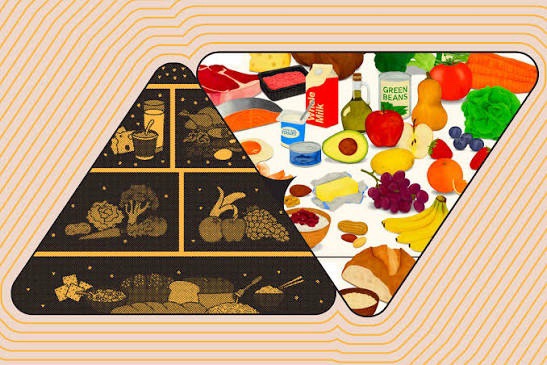
There is a certain American genius in the way we have managed to turn food into a competition.
Not good food. Not nutritious food. Not food that tastes like anything your grandmother would recognize.
No, we want the biggest chicken breast, the reddest tomato, the largest apple, the most perfectly symmetrical pepper, and a strawberry the size of a small child’s shoe.
Because apparently vegetables have a beauty pageant now.
Walk into an American supermarket and you can almost hear the produce whispering, “I was engineered for the Instagram aisle.”
Meanwhile, somewhere in Italy, somebody is looking at our tomatoes and wondering why they appear to have been manufactured by Mattel.
And here’s the strange part: we have some of the most abundant food in human history, yet we have managed to create a food system that contributes to some remarkably poor health outcomes.
Welcome to the American buffet
One of the things I find fascinating is hearing about people who immigrate to the United States from places like Italy, Israel, South Africa, Greece or any number of other countries.
They arrive with their familiar recipes and eating habits.
Olive oil.
Fresh vegetables.
Beans.
Fish.
Whole grains.
Meat in reasonable portions.
Food that actually resembles the animal or plant it came from.
Then they spend a year living the American lifestyle and suddenly their pants have apparently filed for divorce.
Five or ten kilograms later, they’re wondering what the hell happened.
And it isn’t necessarily because somebody suddenly forgot how calories work.
It’s because the American food environment is different.
Our food doesn’t just come in larger portions. It’s engineered to be convenient, cheap, shelf-stable, hyper-palatable and ridiculously easy to consume. A substantial body of research has found associations between greater consumption of ultra-processed foods and obesity, diabetes and cardiovascular outcomes. The 2025 Dietary Guidelines Advisory Committee likewise found that U.S. dietary patterns higher in ultra-processed foods are associated with greater adiposity and obesity risk, although it rated the evidence as limited.
We have taken the basic human requirement of “I need something to eat” and transformed it into a multibillion-dollar engineering project.
Congratulations, America. We industrialized lunch.
Bigger isn’t necessarily better
Our chickens are enormous.
Our tomatoes are enormous.
Our strawberries are enormous.
Our steaks are enormous.
Our soft drinks are enormous.
Our restaurant portions are enormous.
Apparently the national agricultural objective is:
If it isn’t big enough to require two hands, we’re doing something wrong.
But here’s where we need to separate legitimate concerns from some of the myths that have accumulated around modern agriculture.
People often say the chickens are pumped full of steroids.
They’re not.
The FDA says steroid hormone implants are approved for growth in cattle and sheep, but no steroid hormone implants are approved for growth purposes in poultry.
Likewise, genetically modified food isn’t synonymous with poisoned food. The scientific question is whether a particular product is safe, not whether the word “GMO” appears somewhere in its family tree.
And that’s important because if we’re going to criticize the food system—and there is plenty worth criticizing—we should criticize what the evidence actually supports.
We don’t need imaginary chicken steroids.
The real food system is already weird enough.
The chemical soup question
Where the conversation gets considerably more interesting is endocrine-disrupting chemicals.
There is legitimate scientific research examining whether certain pesticides and other environmental chemicals can interfere with hormonal systems. Reviews of the evidence have found associations between some pesticide exposures and altered timing of puberty, although the human evidence is complicated, varies by chemical and exposure, and isn’t strong enough to say that pesticides in food are the explanation for early puberty.
That’s an important distinction.
Because when a nine-year-old boy starts developing facial hair, it’s tempting to point at the nearest carton of milk and yell:
“AHA! THE CHICKENS HAVE DONE IT AGAIN!”
Science is rarely that cooperative.
Puberty is influenced by genetics, nutrition, body composition, environmental exposures and other factors. Researchers are still sorting out exactly how much individual chemicals contribute.
But that doesn’t mean we should shrug and say, “Well, nobody knows everything, so let’s spray away.”
It means we should demand better evidence, better regulation and better understanding of what we’re putting into the environment and onto the food we eat.
Maybe the tomato doesn’t need to be perfect
This is where I keep coming back to the supermarket.
Why does a tomato need to be the brightest red?
Why does every apple have to look like it was polished by a professional?
Why does a chicken breast need to be the size of a catcher’s mitt?
Why do strawberries need to look like they’re on steroids when they’re supposed to be fruit?
Maybe we got the objective wrong.
We optimized food for appearance, shipping, shelf life, yield and profit—and somewhere along the way forgot that food is supposed to be food.
And I’m not arguing that we should abandon modern agriculture and return to everybody standing in a field at sunrise singing folk songs while milking a cow.
I’m a Gen Xer.
I have absolutely no interest in milking anything before coffee.
But there has to be a middle ground between medieval subsistence farming and a handful of enormous corporations determining what millions of people eat.
More local agriculture.
More community-supported farms.
More farmers’ markets.
More regional food production.
More small and midsized farms that can actually sell food to the people living around them.
More incentives for farmers to grow food for communities rather than simply maximizing commodity production.
And fewer situations where the cheapest food available is the food most heavily engineered to make us eat more of it.
Because perhaps the solution isn’t to demonize every modern farming technology.
Perhaps the solution is to stop asking agriculture to produce the most food for the least money and start asking it to produce the healthiest food for the people who actually eat it.
We don’t need prettier food
Maybe we don’t need the reddest tomato.
Maybe we need the tomato that tastes like a tomato.
Maybe we don’t need a chicken breast the size of a football.
Maybe we need chickens raised in a system that doesn’t treat the animal like a biological manufacturing unit.
Maybe we don’t need twelve varieties of brightly colored snack food engineered to survive a nuclear winter.
Maybe we need actual food.
Because somewhere along the way, we confused abundance with health.
We filled the grocery stores until the aisles were overflowing, then congratulated ourselves for having solved hunger while simultaneously creating an environment where eating too much of the wrong things became almost unavoidable.
That’s the great American food paradox:
We have more food than almost anyone in human history—and somehow managed to make eating it complicated.
The answer isn’t necessarily to go backward.
It’s to stop pretending that bigger, cheaper, prettier and more processed automatically means better.
Because if the chicken needs a microscope to determine whether it ever actually met a chicken, the tomato tastes like wet cardboard, and the ingredient list on dinner is longer than the Magna Carta…
maybe we’ve wandered a little too far from the farm.

