Dwain Northey (Gen X)
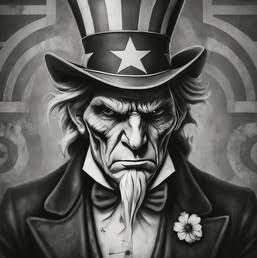
I never thought I would live long enough to hear this.
Not in a history book. Not in some dystopian political thriller. Not in an alternate universe where the Cold War ended differently.
I mean actually sitting here in my lifetime and hearing other countries at the United Nations talk about the United States in terms that sound suspiciously like something we used to reserve for the Soviet Union.
Western oppression. Economic coercion. Military intimidation. American hegemony.
Well, hell.
Somewhere along the way, America apparently wandered into the international neighborhood and discovered that we were the guy everyone was talking about when they thought we weren’t listening.
China has increasingly been willing to portray the United States as a power that uses its economic and military strength to pressure other nations. And while China has its own enormous record of coercive economic practices and human-rights controversies, that doesn’t automatically make the criticism of American policy meaningless.
That’s the uncomfortable part.
You can disagree with the messenger and still recognize that somebody is hearing the message.
And under Donald Trump’s second administration, the rest of the world has been given plenty of material to work with.
Tariffs. Sanctions. Threats of military force. Pressure on allies. An increasingly transactional approach to international relationships. The administration has openly embraced an “America First” foreign policy while simultaneously insisting that American strength is greater than ever. Trump’s September 2026 United Nations speech itself emphasized American sovereignty, confronting enemies and rejecting what he characterized as global control.
That’s certainly one way to project strength.
But here’s the thing about leadership:
Leadership isn’t the same thing as having the biggest stick.
For most of my lifetime, American influence wasn’t simply about aircraft carriers and the size of the economy. It was also about alliances, diplomacy, international institutions, economic partnerships, foreign aid, scientific cooperation and the idea that the United States was willing to build things that benefited more than just itself.
We didn’t always live up to that ideal. Obviously.
America has never been the spotless hero in the international story. We’ve invaded countries, supported questionable governments, interfered in other nations’ affairs and occasionally demonstrated that our definition of “democracy” became remarkably flexible whenever oil, communism, terrorism or geopolitical interests entered the room.
History isn’t a Disney movie.
But there was still an enormous difference between having power and being trusted with power.
And that distinction matters.
Other countries are not sitting around waiting for America to tell them what to do anymore. They’re building alternative relationships, alternative trade arrangements and alternative institutions. BRICS has expanded its membership and influence, while China has been aggressively cultivating relationships throughout the developing world.
That doesn’t mean BRICS has somehow become the humanitarian Avengers while America twirls its mustache in a dark room. International politics doesn’t work that neatly.
But it does mean other countries increasingly have options.
And options are what happens when the guy at the head of the table keeps reminding everyone that he can flip the table over.
A June 2026 Chatham House analysis described Trump’s economic policies as a major break from the postwar economic consensus and argued that other countries may increasingly need to build economic cooperation that doesn’t depend on either Washington or Beijing. A separate Congressional Research Service assessment notes that U.S. actions perceived as threatening the economic interests or sovereignty of countries in the Western Hemisphere have contributed to some governments seeking stronger relationships with other partners.
That’s the part that should make Americans uncomfortable.
Not because China is suddenly the good guy.
Not because Russia is the good guy.
Not because BRICS is the good guy.
But because America shouldn’t need to be the only good guy in the room to remain a leader.
We should want other countries to look at the United States and think:
“That’s the country we want to work with.”
Not:
“That’s the country we need to protect ourselves from.”
There is a profound difference.
For decades, America’s greatest advantage wasn’t simply that we could threaten someone economically or militarily. It was that we could convince other countries that cooperating with us was better than fighting us.
That’s soft power.
That’s diplomacy.
That’s leadership.
And once other countries begin constructing their own economic and political alternatives because they don’t trust the guy holding the largest stick, rebuilding that trust isn’t accomplished by buying an even larger stick.
You don’t restore leadership by demanding everyone acknowledge that you’re the leader.
You restore it by becoming the country people want to follow.
At 59 years old, I honestly never expected to see the United States described in international forums using language I grew up associating with the enemies of the United States.
That may be the strangest part of all.
The country that spent much of my lifetime warning the world about authoritarian power now finds itself increasingly having to explain how its own exercise of power is different.
Maybe that’s the real lesson here.
Being the most powerful country isn’t the same as being the most respected country.
And if we’re not careful, we may discover that the rest of the world doesn’t have to overthrow American leadership.
They can simply build a world that doesn’t require it.
And that, more than any aircraft carrier, tariff or presidential speech, might be the real measure of how much influence we’ve lost.

