Dwain Northey (Gen X)
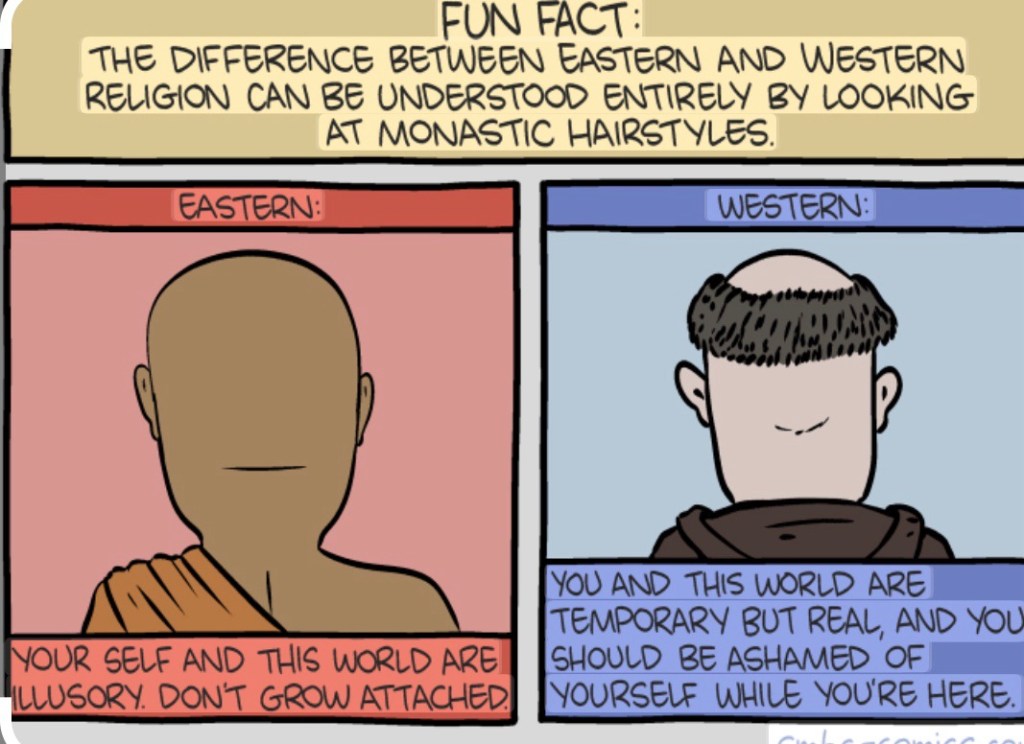
I have been thinking about religion, war, and one of the oldest human habits: finding a holy reason to do something that probably has a very ordinary reason underneath it.
When you look at the three major Abrahamic religions—Judaism, Christianity, and Islam—it is hard not to notice how often religion has become intertwined with warfare, conquest, persecution, and political power. The Crusades were fought under the Christian banner. Islamic empires expanded through military conquest while rulers invoked Islam to legitimize their authority. Jewish history contains its own periods of religiously framed warfare, particularly in the ancient conflicts described in the Hebrew Bible.
But before we congratulate ourselves on discovering that one half of humanity is uniquely violent, there is an important historical wrinkle: religions don’t usually invade countries. People do. Governments do. Kings do. Empires do.
Religion can provide the banner.
Sometimes it provides the motivation.
And sometimes it provides a remarkably convenient excuse.
That distinction matters.
Compare this with the major traditions that developed in South and East Asia. Hinduism and Buddhism certainly have histories involving warfare, political violence, and rulers who used religion to legitimize authority. Buddhism, despite its reputation for nonviolence, has not magically prevented Buddhist societies from fighting wars. Japan’s history alone should put that myth to bed.
But there is a noticeable difference in the way some of these traditions have historically interacted with political power.
A king who wants another kingdom’s land does not necessarily need to pretend that the neighboring king insulted his particular interpretation of the universe.
Sometimes the reason is simply:
“I want his land.”
And honestly, there is something almost refreshing about the brutal honesty of that.
Human beings have been fighting over land, resources, trade routes, political power, wealth, and strategic advantage since long before anyone invented the modern nation-state. Religion can become part of that equation, but it doesn’t have to be the fundamental cause.
The problem begins when we dress ordinary human ambition in sacred clothing.
“I want your territory” becomes “God has given us this territory.”
“I want your wealth” becomes “Your people are infidels.”
“I want political control” becomes “I am defending the faith.”
“I don’t like your religion” becomes “Your existence threatens our civilization.”
And suddenly a perfectly ordinary human desire has been upgraded into a divine mission.
That is where religion becomes particularly dangerous—not necessarily because religious people are more violent than everyone else, but because religion can transform a human objective into an absolute objective.
If I want your land because it has oil, we can negotiate.
If I want your land because it gives me access to a strategic port, we can negotiate.
If I want your land because my God personally promised it to me, apparently negotiation has become somewhat more complicated.
And that is one of the recurring problems throughout the history of the Abrahamic traditions.
The Crusades weren’t simply theological debates conducted with swords. They involved religion, certainly, but also territory, political power, wealth, prestige, dynastic ambitions, and competition among European rulers. Likewise, the expansion of Islamic empires cannot be reduced to religious fanaticism; political consolidation, taxation, trade, territory, and imperial ambition mattered enormously. And ancient Israelite warfare described in biblical texts existed within the broader world of ancient Near Eastern conquest and state formation.
Religion was frequently present.
But religion wasn’t necessarily the entire explanation.
The same caution applies to the East.
It would be historically dishonest to portray Hinduism or Buddhism as peaceful civilizations that somehow floated above human violence. Buddhist rulers fought wars. Hindu kingdoms fought wars. Buddhist nationalism has contributed to modern violence in places such as Sri Lanka and Myanmar. Religious identity can become political identity anywhere human beings live.
The difference, at least in my mind, is not that Eastern religions discovered peace while Western religions discovered war.
Humans everywhere discovered war.
The more interesting question is what happens when political ambition becomes inseparable from divine authority.
Because once a ruler convinces people that his political objective is God’s objective, opposing the ruler can suddenly become equivalent to opposing God.
And that’s a hell of a political weapon.
Maybe the lesson isn’t that one side of the planet is inherently more peaceful than the other. Maybe the lesson is that we should become suspicious whenever somebody tells us that their political objective is actually a sacred obligation.
Because history has given us plenty of examples.
The king wants land.
The emperor wants an empire.
The dictator wants power.
The politician wants votes.
The wealthy want resources.
The nation wants strategic advantage.
And then somebody walks into the room carrying a religious text and says:
“Don’t worry. God wants us to do this.”
That’s when I start checking the fine print.
Because if you want my land, just tell me you want my land.
If you want my oil, tell me you want my oil.
If you want political control, tell me you want political control.
If you don’t like my religion, at least have the courage to admit that you don’t like my religion.
But please stop telling me that you’re invading my country because my prophet offended you, my religion threatens you, or your God personally appointed you to take my stuff.
At least be honest.
Human beings have been extraordinarily creative at finding reasons to kill one another.
We don’t need to drag God into the argument every time.
Sometimes the most honest explanation is also the simplest:
“We wanted something you had.”
And perhaps that is the real lesson history keeps trying to teach us.
War is human.
Power is human.
Greed is human.
Territory is human.
Religion is human.
The dangerous part is when someone combines all five and then tells everyone else that the resulting bloodshed was God’s idea.

