Dwain Northey (Gen X)
We are just weeks away from the midterm elections, and for once, it feels like people are actually paying attention.
Historically, midterm elections have been treated like the political equivalent of the opening act nobody came to see. Turnout is lower. Attention is lower. People seem to forget that the House and Senate aren’t decorative branches of government that exist merely to provide cable news with talking heads. They are co-equal branches of the federal government, and they have enormous power to determine what this country can—and cannot—do.
But this year feels different.
Maybe it’s because of how badly this administration has performed. Maybe it’s the unnecessary wars, the chaos, the attacks on institutions, the constant assault on the idea that government should actually work for the people rather than serve the person sitting in the Oval Office. Maybe people have finally reached the point where they are tired of watching the country being driven into a ditch while being told we’re actually winning the Indy 500.
Whatever the reason, there is momentum.
And that’s good.
But momentum is a funny thing.
You can have it, and then you can lose it.
That is the part I think we need to remember.
Hopefully, in November, Democrats take back the House. Hopefully, we take back the Senate. Hopefully, voters look at the last couple of years and decide that enough is enough.
But if that happens, we cannot take a giant collective sigh of relief and go home.
We’ve done that before.
We elected Barack Obama and, for a moment, there was a sense that maybe we’d crossed some enormous historical finish line. America had elected a Black president. Surely that meant we had finally moved beyond racism.
Except we hadn’t.
Not even close.
Then came 2020. Donald Trump was defeated, Joe Biden was elected, and once again there was a collective exhale. We had survived the moment. Democracy had held. And Biden’s administration accomplished plenty.
But apparently, we didn’t keep our foot on the gas.
And here we are again.
That’s the lesson.
An election is not the movement. An election is part of the movement.
Taking back Congress in 2026 would be important. It would be necessary. It could put the brakes on some of the damage being done and begin restoring some balance to our government.
But 2028 is already standing in the doorway.
And after 2028 comes 2030.
Then 2032.
There is always another election. There is always another fight over what kind of country we want to be. There is always another generation of voters who needs to understand that democracy isn’t something you inherit like Grandma’s china and put in a cabinet until Thanksgiving.
It requires maintenance.
It requires participation.
It requires attention.
And, occasionally, it requires getting off the couch.
That’s where the old saying comes in:
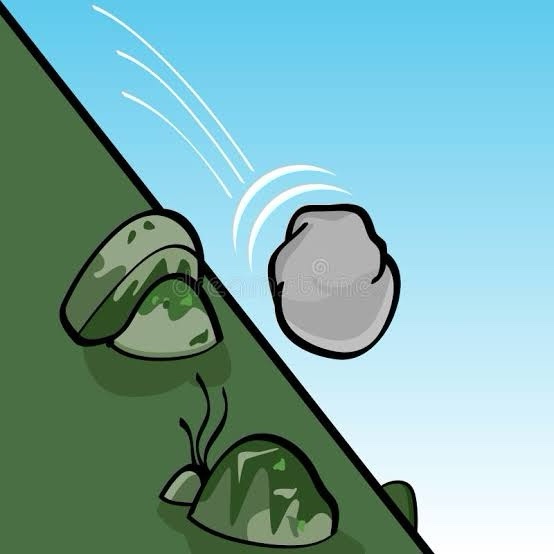
A rolling stone gathers no moss.
The entire point is movement.
A stone sitting in the same place long enough eventually becomes covered in moss. It becomes part of the landscape. Eventually, you stop noticing it.
I don’t want our political movement to become that stone.
I don’t want us to win an election and then spend two years congratulating ourselves for winning it.
I don’t want us to mistake stopping something bad for actually building something better.
And I definitely don’t want us to assume that because we won once, we’ve permanently solved anything.
Because history has a nasty habit of reminding us that nothing is permanent.
Progress isn’t a parking space.
You don’t pull into it, turn off the engine and announce, Well, we’ve made it.
Progress is movement.
Sometimes it’s fast.
Sometimes it’s painfully slow.
Sometimes you take two steps forward and one step backward.
But you keep moving.
If we don’t want to go backward, we have to keep going forward.
That means paying attention after the election. It means holding elected officials accountable after we’ve helped elect them. It means voting in midterms, presidential elections, primaries and local elections. It means knowing who represents us in Congress and the state legislature. It means paying attention to school boards, city councils, governors and judges.
It means understanding that democracy isn’t a spectator sport.
And it means resisting the temptation to believe that one election can fix everything.
Maybe 2026 gives us some momentum.
Good.
Use it.
Don’t squander it.
Turn 2026 into 2028.
Turn 2028 into 2030.
Turn 2030 into 2032.
Keep rolling.
Because the objective isn’t simply to defeat one politician or one administration. The objective is to build a political culture where democracy, equality, accountability, science, reason and basic human decency aren’t temporary projects that depend upon which party happens to control the White House.
That’s a much bigger job.
And it won’t be finished in November.
So vote.
Then keep voting.
Pay attention.
Then keep paying attention.
Push.
Then keep pushing.
Celebrate the victories, because God knows we need a few reasons to celebrate.
But don’t confuse a victory lap with the finish line.
There isn’t one.
The road keeps going.
And if we want to keep moving forward, we can’t afford to sit still long enough for moss to grow.
Keep rolling.

