Dwain Northey (Gen X)
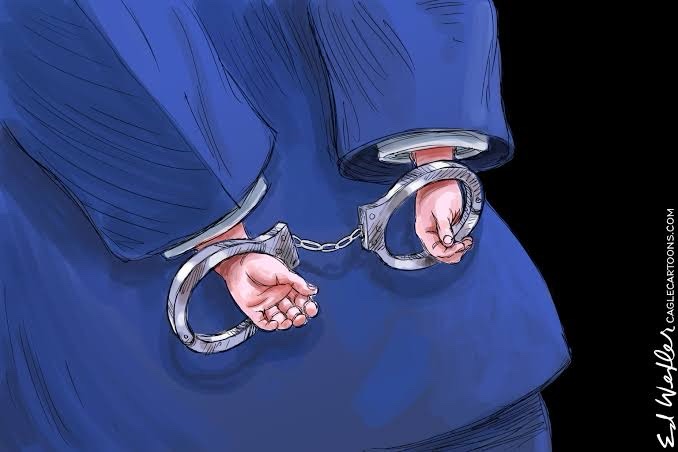
I sincerely hope the Democratic Party has finally learned something from the last 160 years of American politics: playing nice with people who have spent their time breaking the rules is not a governing philosophy. It’s an invitation to see how many more rules they can break before somebody finally does something about it.
We Americans have developed a peculiar tradition of treating political accountability like an optional accessory. We get outraged, investigate a little, argue about it for a while, and eventually decide that what the country really needs is to move forward. We convince ourselves that pursuing accountability would be divisive, that holding people responsible would reopen old wounds, and that the best thing for democracy is to let everyone get back to business as usual.
And then, a few years later, somebody comes along and does something even worse.
Apparently, our definition of moving forward is allowing the next guy to move the goalposts.
Let’s take a little trip through history.
After the Civil War, Confederate General Robert E. Lee surrendered at Appomattox. Grant allowed Confederate officers to return home under generous surrender terms, including keeping their horses and personal property. It was an attempt to end the bloodshed and begin reunification. Abraham Lincoln had favored a relatively lenient approach toward bringing the Southern states back into the Union, although he was assassinated before he could oversee Reconstruction.
There were legitimate reasons for reconciliation. A nation cannot remain permanently at war with itself. But reconciliation and accountability are not necessarily the same thing, and our history has never quite figured out how to balance them.
Lee himself was never prosecuted for treason, despite having commanded the military forces fighting against the United States. The broader question of how the country should have handled Confederate leaders remains part of our historical debate.
Then came Richard Nixon. Watergate exposed an administration willing to abuse presidential power, and Nixon resigned before he could be impeached and removed from office. Gerald Ford subsequently pardoned him, explaining that he wanted the country to move beyond the scandal.
And there it was again. The familiar American ritual: acknowledge the wrongdoing, express relief that the crisis is over, and hope the next president behaves himself.
Because nothing says deterrence quite like demonstrating that the consequences of abusing power might be a comfortable retirement and a place in the history books.
Then came Iran-Contra during Ronald Reagan’s administration, when senior officials became involved in secret arms sales to Iran and the diversion of proceeds to Nicaraguan Contra forces despite congressional restrictions. Investigations and prosecutions followed, and several officials were convicted, although some convictions were overturned and others received pardons. Reagan himself was never criminally charged.
Then came George W. Bush’s invasion of Iraq, justified publicly in large part by claims about Saddam Hussein’s weapons of mass destruction. Those stockpiles were not found. The intelligence failures, the administration’s presentation of the evidence, and the consequences of the war remain subjects of substantial historical and political debate. Yet the country never saw a criminal prosecution of Bush for the decision to invade.
Now, before somebody accuses me of wanting to turn every former president into a defendant, let me make something clear: not every bad decision is a crime, and political disagreement is not a substitute for evidence. Presidents have constitutional authority, and the legal standards for criminal liability are different from the standards for political criticism.
But when credible evidence suggests that someone has committed a crime, the appropriate response should be an impartial investigation and the application of the law. Not a group hug at the end of a constitutional crisis.
Because here’s the problem with our habit of moving on: every time we avoid confronting a serious abuse of power, we leave the next administration with another example of what might be possible.
One president crosses a line and gets away with it. The next president discovers that the line is negotiable. Another learns that congressional investigations can be delayed, public attention can be redirected, and the whole thing can eventually be buried under the next news cycle.
Eventually, the line isn’t merely crossed. Somebody starts asking why we bothered drawing it in the first place.
And now we have Donald Trump, whose conduct has generated years of investigations, criminal proceedings, impeachment battles, and arguments about the limits of presidential authority. The details of individual cases differ, and each allegation must be judged on its own evidence and legal merits. But the larger question facing the country is not going away: What happens when a president or former president is accused of abusing the very powers entrusted to him?
What happens when the response is to treat accountability as a political inconvenience rather than a constitutional obligation?
And what happens when the people around him discover that personal loyalty matters more than the oath they took to uphold the Constitution?
That last question may be the most important one of all.
Presidents don’t operate alone. They have cabinet secretaries, advisers, attorneys, agency heads, political operatives, and people throughout the government who make decisions, carry out orders, and sometimes choose to look the other way. Some may have acted lawfully. Others may have crossed legal or ethical boundaries. Those distinctions matter, and the evidence should determine the consequences.
But if people knowingly break the law to protect a president, they shouldn’t get a lifetime membership in the Accountability-Free Club simply because the administration eventually loses power.
Nor should the next president be allowed to wave a magic wand and make every investigation disappear because pursuing it might be politically uncomfortable.
Which brings me to the Democrats.
If Democrats regain control of Congress or the White House, I hope they remember that governing and accountability are not mutually exclusive. Yes, the economy matters. Healthcare matters. Housing costs matter. Infrastructure matters. Climate policy matters. People need to pay their bills and believe that their government can still accomplish something useful.
But protecting the constitutional system that makes all those policies possible matters, too.
A government that cannot hold powerful people accountable is eventually a government in which power becomes its own defense.
The answer is not to prosecute Republicans simply because they’re Republicans. It isn’t to create a partisan revenge machine, manufacture charges, or repeat the very abuses Democrats claim to oppose. That would only establish another dangerous precedent for the next administration to exploit.
The answer is to let independent investigators follow the evidence, let prosecutors apply the law, let defendants receive due process, and let courts decide cases without political interference.
If the evidence supports charges, bring them. If the evidence doesn’t, don’t. If someone is convicted, apply the appropriate sentence. And if someone is innocent, the process should establish that, too.
Equal justice means the powerful don’t get a different set of rules, not that the opposing party gets a different set of targets.
And for heaven’s sake, Democrats need to stop confusing restraint with surrender.
There is a difference between refusing to weaponize the justice system and refusing to use it at all. There is a difference between national reconciliation and national amnesia. There is a difference between moving forward and pretending nothing happened.
We can pursue an agenda for the future while still addressing the misconduct of the past. Those things are not contradictory. In fact, a credible commitment to accountability may be one of the things necessary to prevent future abuses.
Because here’s what worries me most: if the lesson future presidents learn from this era is that there are no meaningful consequences for abusing executive power, the next person who tries it might be more disciplined, more strategic, and better at keeping the evidence out of public view.
They might not make the same mistakes. They might not leave the same paper trail. They might understand exactly which institutions need to be weakened first and which people need to be placed in positions of unquestioning loyalty.
And by the time the country recognizes the danger, the mechanisms that are supposed to hold that president accountable might already have been dismantled.
Democracy doesn’t always disappear in one dramatic moment. Sometimes it erodes through a series of exceptions, excuses, and precedents that seemed tolerable at the time.
One norm becomes optional. One institution becomes politicized. One investigation gets buried. One official decides that loyalty to a person is more important than loyalty to the Constitution. And the next person goes a little further.
Eventually, we find ourselves wondering how we got here, as though history hasn’t been leaving us a trail of breadcrumbs for generations.
So, Democrats, if you get the reins of power back, by all means, govern. Fix what needs fixing. Help people. Make the country work better for the people who live here.
But don’t mistake the responsibility to govern for permission to forget.
Don’t let the desire to appear reasonable become an excuse for avoiding difficult decisions. Don’t let the fear of being called partisan prevent you from pursuing legitimate accountability. And don’t assume that the country will heal simply because everyone agrees to stop talking about the injury.
Reconciliation without accountability can become permission. Mercy without standards can become impunity. And moving forward without learning from the past is just walking in circles.
We have spent generations telling ourselves that the country is better served by letting powerful people move on. Perhaps sometimes it was. Perhaps some decisions helped prevent further conflict. History is complicated, and hindsight is a wonderful luxury for people who didn’t have to make the decisions.
But we should also recognize the cost of repeatedly choosing political convenience over the consistent application of the law.
If we want the next generation of leaders to respect democratic institutions, then those institutions must demonstrate that they are worth respecting. If we want presidents to understand that the Constitution limits their power, then those limits must mean something when they are tested.
And if we want to remain a democracy, we cannot make accountability dependent on who wins the next election.
The objective isn’t to get even. It’s to establish that nobody gets to stand above the law.
Because if every administration is allowed to push the boundaries a little further, every successor inherits a government with fewer boundaries left to push.
And eventually, we may discover that the next person didn’t just take advantage of our willingness to let bygones be bygones.
They took advantage of the fact that we had forgotten why those bygones mattered in the first place.
Forgiveness may be a virtue. Reconciliation may be necessary. But when it comes to the survival of democracy, accountability isn’t revenge. It’s maintenance. And we’ve ignored the warning lights long enough.

