Dwain Northey (Gen X)
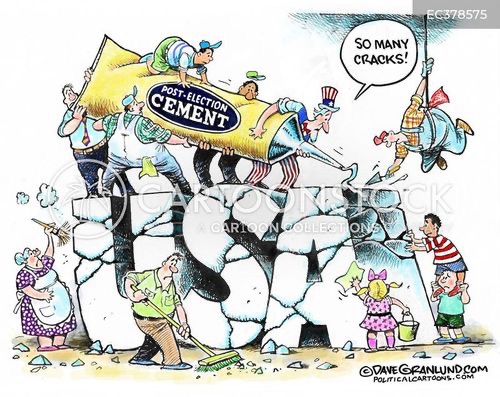
What the hell are we supposed to do?
I think I’ve figured out one of the biggest problems with the Democratic Party. We spend years fixing the mess Republicans leave behind, and just when things start getting better, Republicans come along, take credit for the improvements, get elected, and start breaking things again.
Rinse and repeat. Welcome to American politics, where destruction is instantaneous, reconstruction takes years, and the guy who set the house on fire gets to campaign on his ability to put out fires.
Maybe it’s time Democrats adopted a simple rallying cry:
YOU BROKE IT. WE’RE FIXING IT.
Put it on the signs. Put it in the commercials. Put it on the podium behind every Democratic candidate in the country. Hell, put it on a T-shirt and hand them out at rallies. Make it the message we repeat until even the people who aren’t paying attention start hearing it.
Because this is the fundamental problem with how we approach governing and communicating with voters: breaking things happens quickly. Fixing them takes time.
You can fracture a bone in an instant, but healing takes months. You can demolish a wall in an afternoon, but rebuilding it takes planning, materials, labor, and money. You can run up a massive debt, undermine public institutions, weaken regulations, and create economic instability a hell of a lot faster than you can reverse the damage.
Yet somehow, we keep judging the people doing the repairs by how quickly they finish, while barely holding accountable the people who caused the damage.
Republicans come into office promising to cut taxes, deregulate industries, shrink government, and unleash the magic of the free market. Eventually, the bills come due, the deficits grow, and ordinary Americans start feeling the consequences. Democrats get elected and begin trying to repair the damage.
Then comes the frustrating part.
The economy improves. Infrastructure gets repaired. Jobs are created. Programs begin working again. The country starts recovering. And instead of Democrats standing on the rooftops explaining what they’ve accomplished, we quietly move on to the next problem.
Meanwhile, Republicans point to whatever problems remain, declare the entire system broken, and promise they can do better.
Better than what? The mess they left behind?
Apparently, we forgot to mention that part.
And this is where our political strategy needs a serious adjustment. Democrats have traditionally approached governing as a job to be done, not a performance requiring applause. We believe that if we work hard, solve problems, and improve people’s lives, voters will eventually recognize the results.
That’s a nice sentiment. Unfortunately, it doesn’t work very well in a media environment where the loudest person in the room often gets credit for somebody else’s work.
Donald Trump could walk into a house somebody else built, flip on a light somebody else installed, and declare that electricity has never worked so beautifully in the history of the world. Then he’d slap his name on the front door and demand a trophy.
And the Democrats? We’d be in the basement replacing the wiring, repairing the foundation, and wondering why nobody noticed we were working.
Well, it’s time to come upstairs.
We don’t have to become Trump. We don’t need to invent accomplishments, exaggerate every minor success, or turn governing into a perpetual campaign rally. But we do need to stop acting as though telling people what we’ve accomplished is somehow beneath us.
It’s not bragging when it’s true. It’s accountability.
If Democrats inherit a financial mess and take steps to improve it, explain what the problem was, what was done, and what the results mean for ordinary Americans. If we repair infrastructure, tell people which roads and bridges were improved. If we expand access to health care, explain who benefits. If we create programs that help working families, make sure those families know who made them possible.
And when Republicans take credit for the results, correct the record.
You broke it. We’re fixing it. And here’s the proof.
That last part matters. We can’t just shout the slogan and expect it to do all the work. We need to show the receipts.
We also need to be honest about the time involved. Fixing years of accumulated damage isn’t always going to produce overnight results. Some policies take years to work. Some problems require long-term investment. Some repairs are expensive precisely because the damage was allowed to accumulate.
We should explain that. We should make the distinction between the immediate gratification of breaking something and the sustained effort required to rebuild it.
Because when someone breaks a window, you hear the crash immediately. When someone replaces the window, you hear the work truck, the tools, and maybe a little cursing. Nobody throws a parade because the window is finally installed correctly.
But that doesn’t mean the repair wasn’t necessary.
And it certainly doesn’t mean the person who broke the window deserves credit because the house eventually became livable again.
The other problem is that success changes the political conversation. When things are going badly, voters want someone to fix them. That’s understandable. But when things improve, the urgency fades, memories get shorter, and people begin wondering whether somebody else might do an even better job.
Republicans can always promise something better. They don’t have to explain how they plan to achieve it with any great detail. They just need to convince voters that the current situation isn’t good enough.
Democrats, meanwhile, risk losing the argument precisely because they’ve made progress. We can’t keep campaigning on fixing a problem that no longer exists in the same way. So we move on, often without explaining how we got there.
Then the Republicans return, take credit for the progress, dismantle what they can, and wait for the next election to blame Democrats for the consequences.
It’s an exhausting cycle, and it won’t change unless we change how we communicate.
So let’s make FIXING our rallying cry.
Not just fixing roads, budgets, health care, or public institutions. Fixing the damage caused by bad policies. Fixing the systems that stopped working for ordinary people. Fixing the mistakes that were ignored for years. And fixing the political narrative that allows the people responsible for the damage to present themselves as the solution.
We need to remind voters that repair takes time, patience, investment, and persistence. We need to remind them that progress isn’t always dramatic, that recovery isn’t instantaneous, and that the absence of a spectacular crisis doesn’t mean nothing has been accomplished.
Most importantly, we need to connect our accomplishments to the people who benefit from them.
The message should be simple enough to fit on a bumper sticker and strong enough to anchor an entire campaign:
YOU BROKE IT. WE’RE FIXING IT.
And when Republicans complain that the repairs aren’t finished yet, our answer should be just as simple:
Of course they’re not. You spent years breaking the damn thing. What did you expect, overnight delivery?
We should keep doing the work. We should keep solving problems. We should keep trying to leave the country in better condition than we found it.
But we need to stop confusing humility with silence.
Governing is the job. Explaining what we’ve accomplished is part of the job. And making sure voters understand the difference between the people who created a problem and the people working to solve it is essential to holding anyone accountable.
So, Democrats, keep your heads down long enough to get the work done. Then lift them up and tell people what you did.
Put it on the signs. Put it in the speeches. Put it in every campaign advertisement until the message becomes impossible to ignore.
You broke it. We’re fixing it.
And if you give us enough time, we’ll show you what it looks like when government actually works.
Just don’t hand the sledgehammer back to the people who broke it before we’re finished with the repairs.

