Dwain Northey (Gen X)
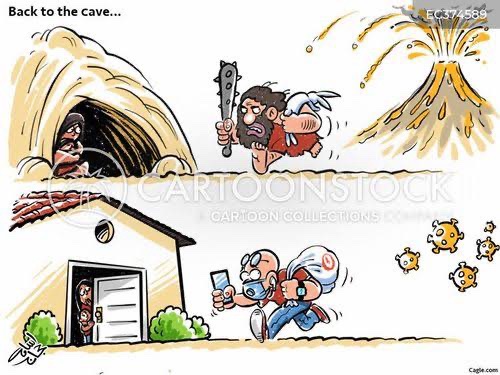
There is something interesting about the history of humanity that I don’t think we spend enough time contemplating. The more comfortable we make our lives, the more of us there seem to be. We have spent thousands of years figuring out how to escape the inconveniences of nature, and now we have reached a point where we can live in climate-controlled buildings, order food without leaving the couch, and complain when the internet takes three seconds longer than expected. Meanwhile, the human population has exploded to the point where we measure our communities in millions rather than thousands.
At some point, I have to wonder whether our success as a species is becoming a problem of its own.
For most of human history, survival was a full-time occupation. Finding food, locating clean water, avoiding predators, surviving disease, and staying warm during winter required considerable effort. Nature didn’t offer customer service, a return policy, or an indoor thermostat. You either adapted to your environment or became a cautionary tale for the next generation.
Early settlements were relatively small by modern standards. Even communities numbering a few thousand people could represent substantial population centers. Machu Picchu, for example, is estimated to have housed roughly a few thousand residents at its peak, although estimates vary. Ancient Egyptian cities and settlements also varied considerably in size, with some major urban centers reaching populations in the tens of thousands or more.
Today, we have metropolitan areas containing millions of people, with entire regions merging into continuous urban landscapes. We have gone from gathering around a fire to gathering in traffic, from hunting for dinner to arguing over which delivery app has the lowest service fee.
Progress, apparently, comes with a side of congestion.
But the real change isn’t simply that our communities have grown. It’s that we have steadily removed the environmental pressures that once limited our ability to grow.
Agriculture gave us dependable food supplies. Irrigation allowed civilizations to flourish in places that would otherwise have been difficult to inhabit. Sanitation and clean water reduced the spread of disease. Modern medicine allowed more children to survive and more adults to live longer. Industrialization increased food production, transportation connected distant markets, and refrigeration made it possible to preserve food rather than eat everything before it spoiled.
Then came air conditioning, central heating, supermarkets, antibiotics, and the modern infrastructure that allows millions of people to live together without spending every waking moment worrying about their next meal.
We have become extraordinarily good at making the world more accommodating to us.
And that is where the irony begins.
The human population grew from roughly one billion around 1800 to eight billion in 2022. That growth wasn’t simply the result of people becoming more comfortable or having more children. It was also the result of falling death rates, improved food production, better sanitation, and longer life expectancy. In many countries, birth rates have actually declined as education, urbanization, economic security, and access to contraception have increased.
So perhaps we aren’t exactly reproducing like bacteria in a warm petri dish. The metaphor still has a point, though: when the conditions for survival improve, populations can expand rapidly, particularly when those improvements arrive faster than the systems governing population growth can adjust.
We have essentially spent centuries building a better petri dish.
And now we’re surprised that it’s getting crowded.
The difference between humanity and bacteria, of course, is that we have the capacity to recognize the limits of our environment and change our behavior. Bacteria don’t convene international conferences about resource management. They don’t build desalination plants, develop renewable energy, or debate whether their consumption habits are sustainable. They simply respond to available conditions.
Human beings can do something different. We can anticipate consequences.
The question is whether we will.
Because our comfort has never been entirely free. Every new level of convenience requires resources, energy, infrastructure, and space. Our cities need water. Our farms need soil and irrigation. Our homes need electricity. Our transportation systems require enormous networks of roads, railways, and fuel or alternative energy. Even the digital world, which sometimes feels as though it exists somewhere in the clouds, depends on physical data centers, electrical grids, cooling systems, and materials extracted from the Earth.
We have become so accustomed to technology that we often mistake its invisibility for a lack of environmental cost.
Turn on a light, and the room illuminates. Turn up the air conditioning, and the temperature drops. Open the refrigerator, and food appears preserved. Tap a screen, and something arrives at the door.
We rarely think about the chain of resources, labor, energy, and infrastructure required to make those things happen.
Civilization has become a remarkably effective machine for separating us from the consequences of our own existence.
And yet, we continue to expand our expectations. We want bigger homes, faster transportation, more powerful computers, more entertainment, and greater convenience. We want to live longer, travel farther, and spend less time doing the unpleasant things that survival once demanded.
None of those desires is inherently wrong. I enjoy indoor plumbing as much as the next person. I’m not suggesting we abandon modern medicine and return to living in caves simply to give the planet a population break.
But perhaps we should recognize the distinction between improving the quality of life and endlessly increasing the quantity of consumption.
Those are not necessarily the same thing.
There is also a curious historical twist to this story. For much of human history, increasing the food supply and reducing mortality generally meant more people survived and populations grew. Today, many developed societies face the opposite concern: aging populations and declining birth rates. Greater security and prosperity often lead people to have fewer children, not more. Meanwhile, the world’s population growth rate has slowed, even as the total population continues to increase.
We may eventually discover that our species doesn’t need an external force to limit its expansion. Economics, education, urban living, changing cultural expectations, and personal choices are already reshaping family sizes around the world.
But population is only one part of the equation. Eight billion people living within sustainable limits would pose a different challenge from eight billion people consuming resources as though the planet were an inexhaustible warehouse.
The problem isn’t merely how many of us exist. It is how we live, what we consume, how we distribute resources, and whether our technology helps us live within ecological limits or simply allows us to postpone confronting them.
That brings us to the future.
We are approaching a point where technology may allow us to manufacture more of the conditions we need to survive. We can generate electricity from the sun and wind, extract fresh water from seawater, grow food in controlled environments, recycle materials, and develop systems that use fewer resources per person. Artificial intelligence may help optimize energy grids, improve agriculture, and manage complicated infrastructure.
We might even establish permanent settlements beyond Earth someday.
But I find the prospect of escaping our environmental limitations somewhat amusing. We struggle to manage the only planet we know can support us, yet we entertain visions of moving to Mars, building lunar outposts, and expanding into the solar system.
Apparently, the human response to a crowded house is to start shopping for another planet rather than reconsider how much junk we’ve accumulated in the first one.
And Mars, for all its science-fiction appeal, isn’t exactly an attractive alternative. It offers no breathable atmosphere, no convenient oceans of liquid water, and no comfortable outdoor environment. Establishing a self-sustaining civilization there would be an extraordinary technological achievement, but it would not be an inexpensive substitute for responsible stewardship of Earth.
Still, I don’t believe humanity’s future has to be a choice between technological progress and environmental collapse. We have the ability to use technology to improve lives without assuming that every improvement must be accompanied by endless expansion.
Perhaps the next great achievement of civilization won’t be learning how to support more people in increasingly artificial environments. Perhaps it will be learning how to make a good life possible without consuming more than the planet can reasonably provide.
That would require a change in how we measure success. We would need to value resilience over sheer size, sustainability over constant expansion, and quality of life over the endless accumulation of conveniences.
It might even require us to question the assumption that every problem can be solved by inventing something that allows us to continue doing exactly what caused the problem in the first place.
Humanity has traveled an extraordinary distance from its earliest settlements. We have transformed our environment, extended our lifespans, connected continents, and developed technologies our ancestors could barely have imagined. Our ability to cooperate, innovate, and adapt is remarkable.
But there is a difference between being capable of doing something and being wise enough to understand whether we should.
We have spent thousands of years learning how to make ourselves comfortable in the world. Perhaps the next stage of our evolution requires learning how to remain comfortable without overwhelming the systems that make our existence possible.
Because if we keep treating every new technological breakthrough as permission to expand indefinitely, we may eventually discover that we have built the most sophisticated civilization in history inside a very finite container.
And unlike a petri dish, Earth doesn’t come with a replacement waiting on the shelf.
We are intelligent enough to recognize the problem. We are technologically capable of addressing much of it. What remains uncertain is whether we are collectively wise enough to do so before necessity makes the decision for us.
For a species that prides itself on being the most intelligent life on the planet, that seems like a fairly reasonable test.
Let’s hope we pass it before we run out of room in the parking lot.

