Dwain Northey (Gen X)
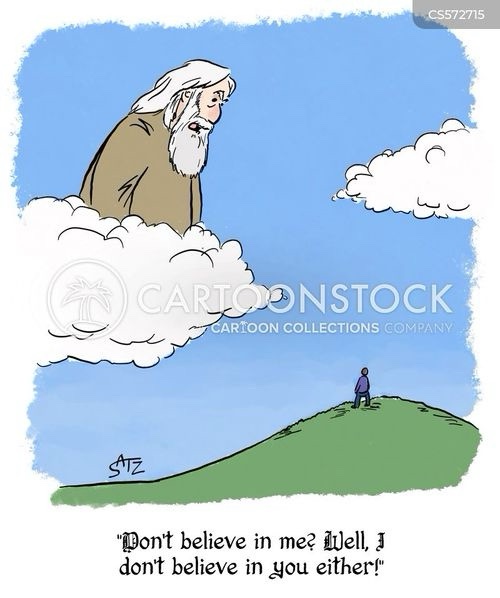
Because of some of my past posts, someone recently asked me a fairly straightforward question: Do I believe that Jesus was, or is, the Savior? Do I believe in the mythology surrounding his birth, his purpose, his death, and his resurrection? It was a reasonable question, and I gave what I believe was an honest answer. Not necessarily the answer they were hoping to hear, but an honest one nonetheless.
I believe Jesus was a prophet, much as Moses was considered a prophet, along with the many other prophets described throughout religious history. I believe he was a man whose teachings, influence, and legacy helped shape the world we live in today. But do I believe that an omnipresent, omnipotent being created everything, sent his only begotten son to Earth, and sacrificed him to atone for the sins of humanity? Honestly, I can’t say that I do.
And before anyone starts clutching their pearls, sharpening their theological knives, or preparing a sermon about my eternal destination, let me explain.
Human beings have always been storytellers. We have looked at the world around us and tried to explain things we didn’t understand. Lightning, eclipses, disease, the changing seasons, the movement of the stars, and the very existence of life itself have all inspired stories about gods, spirits, and supernatural forces. When we didn’t have an explanation, we often created one. Sometimes those explanations became traditions, those traditions became religions, and those religions became the unquestionable truths by which entire civilizations lived.
But here’s the thing about humanity: we learn.
Things once attributed to magic, witchcraft, curses, or the wrath of the gods have, in many cases, found explanations through science. Diseases that people once associated with demonic possession can now be understood through medicine. Natural phenomena once considered supernatural are now explained by physics, astronomy, and chemistry. We have gone from fearing the unknown to investigating it, testing it, and occasionally discovering that the universe is considerably more complicated than our ancestors imagined.
That doesn’t mean our ancestors were foolish. They were working with the knowledge available to them. They saw something extraordinary and tried to make sense of it. We do the same thing today, although we have better tools and considerably more information. The difference is that we now have methods for testing our explanations rather than simply accepting them because someone important declared them true.
And yet, when the conversation turns to religion, that willingness to question sometimes seems to disappear.
We can challenge scientific theories, revise historical accounts, and discard explanations that no longer hold up under scrutiny. But question a religious doctrine, and suddenly you’ve committed an offense against the Almighty Himself. Apparently, some subjects are open to investigation while others come with a spiritual equivalent of a Do Not Disturb sign.
Why?
I understand the appeal of faith. I understand wanting to believe that someone is watching over us, that suffering has a purpose, that death isn’t the end, and that somewhere beyond the confusion and cruelty of this world, there is a greater plan. Those are comforting ideas, especially when life gives us more questions than answers.
But the fact that an idea is comforting doesn’t automatically make it true. Nor does the fact that something is difficult to explain mean that a supernatural explanation must be correct.
There is a difference between acknowledging that we don’t know everything and deciding that what we don’t know must be evidence of God. Humanity has filled countless gaps in its understanding with supernatural explanations, only to discover later that some of those gaps could be filled by observation, experimentation, and reason.
Perhaps there are still things we cannot explain. I would argue there certainly are. But I am comfortable admitting that I don’t know everything. I don’t need to invent an answer simply because the absence of one makes me uncomfortable.
That brings me back to Jesus.
Do I believe he existed? I think there are reasonable historical grounds for believing that Jesus of Nazareth was a real person, although the details of his life are debated by historians. Do I believe he was a teacher whose message influenced millions of people? Absolutely. Do I believe that compassion, generosity, forgiveness, and caring for others are worthwhile principles? Without question.
But do I believe he was literally the only begotten son of an omnipotent God, sent to Earth as a divine sacrifice to redeem humanity from original sin? I cannot honestly say that I do.
The story itself raises questions for me. If God is omnipotent, why is a sacrifice necessary to forgive humanity? If God created humanity knowing exactly what we would become, why create a system in which our salvation depends on the suffering and death of his own son? And if forgiveness is a virtue we are expected to practice, why would an all-powerful, all-knowing being require such an elaborate arrangement to accomplish it?
I’m not suggesting that believers have never considered these questions. They have, and theology offers plenty of answers. I’m simply saying those answers haven’t persuaded me.
Perhaps that makes me a skeptic. Perhaps it makes me an agnostic. I’m comfortable with either description, although I don’t particularly feel the need to put a label on every question I haven’t resolved.
What I find more interesting is the distinction between believing in the teachings attributed to Jesus and believing every supernatural claim attached to his identity.
If someone tells me to feed the hungry, care for the sick, show compassion to the vulnerable, forgive others, and treat my neighbors as I would want to be treated, I don’t need a promise of eternal paradise to understand the value of those principles. Nor do I need the threat of eternal damnation to understand why cruelty, greed, and indifference are destructive.
Shouldn’t those things matter on their own merits?
If the only reason someone behaves compassionately is the promise of a heavenly reward, or the only reason they refrain from harming others is the fear of eternal punishment, I think that raises a question worth considering. Is that morality, or is it simply a transaction with the universe?
I would like to think that kindness matters because another human being matters. That helping someone in need is worthwhile because their suffering is real. That we should leave the world a little better than we found it because other people have to live here, too.
No supernatural instruction manual should be necessary for us to recognize that.
And perhaps that is where religion and I part company. I don’t necessarily reject the wisdom that can be found in religious teachings. I question the insistence that their value depends on accepting every supernatural claim surrounding them.
Humanity has evolved, physically and intellectually, over an extraordinary span of time. Our understanding of ourselves and the universe has changed repeatedly. Our ancestors told stories to explain the world, and some of those stories became the foundations of civilizations. They gave people community, identity, hope, and a way to confront the frightening realities of existence.
Those stories have mattered. They continue to matter to billions of people. But importance and literal truth are not necessarily the same thing.
So, do I believe?
I believe there is a great deal about existence that we still don’t understand. I believe human beings are capable of remarkable compassion and equally remarkable cruelty. I believe our choices matter, our actions have consequences, and the way we treat one another makes a tangible difference in the lives we share.
I believe we should remain curious, question what we are told, and be willing to reconsider our conclusions when new information comes along. I believe admitting that we don’t know something is not a weakness. Sometimes, it’s the most intellectually honest answer available.
And I believe people should be free to find meaning in faith without demanding that everyone else arrive at the same conclusions.
But do I believe there is one divine Savior who came to Earth to rescue humanity from the consequences of its own sins?
I can’t honestly say that I do.
Maybe I’m wrong. I’m willing to acknowledge that possibility. The trouble is, acknowledging that I might be wrong doesn’t require me to pretend I’m convinced.
Faith, by its nature, asks us to believe in things we cannot fully prove. Skepticism asks us to examine the reasons we believe them in the first place. I don’t think those two positions have to be enemies, although I suspect some people would prefer that they were.
I’m not trying to take anyone’s faith away from them. I’m simply explaining why I cannot claim a faith that I don’t possess.
And if there is a God who gave us the ability to reason, question, observe, and learn, I would hope that using those abilities honestly wouldn’t be considered an unforgivable offense.
After all, if the truth is truly the truth, shouldn’t it be able to withstand a few questions?
So, do you believe?
I suppose the more important question is whether you believe because you’ve examined what you were taught, or because you’ve been told that questioning it is dangerous.
Those are two very different things.

