Dwain Northey (Gen X)
Well, You Did It. We’re Gonna Do It.
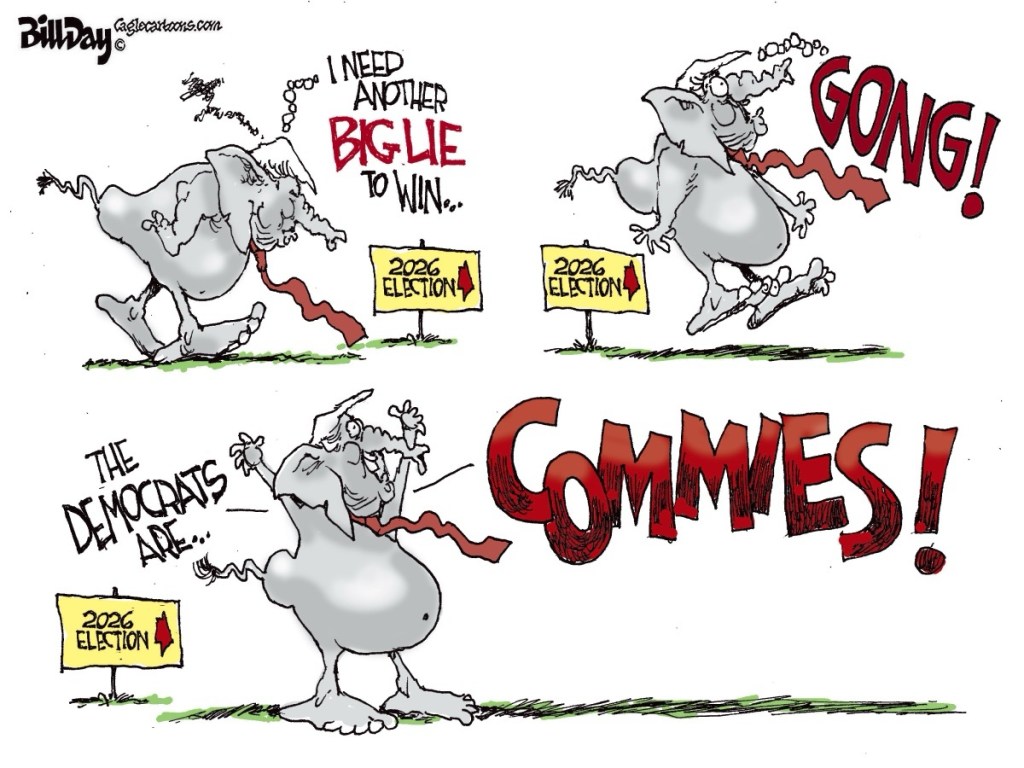
Well, well, well. If it isn’t the Republican Party discovering that the rules they’ve been playing by for years can apparently be used by somebody else. Stop the presses, clutch your pearls, alert the prayer chains, and somebody get Donald Trump a fainting couch. The Democrats might be using the same political tactics Republicans have been using for years!
The latest outrage involves Alaska Republican Dan Sullivan raising concerns about Democrats allegedly engaging in ballot stacking to undermine a preferred candidate. Now, I’m not going to pretend every accusation is automatically true, and there’s a difference between legal political maneuvering and actual election fraud. But the larger spectacle is familiar: Republicans suddenly discovering a moral objection to a tactic when they suspect the other side might benefit from it.
Apparently, the rules are perfectly acceptable right up until somebody else learns how to play the game.
Let’s talk about gerrymandering. Republicans have spent years drawing congressional districts to maximize their electoral advantages. They carve up communities, divide neighborhoods, and arrange district boundaries with the precision of a butcher portioning a side of beef. The objective is simple enough: create as many favorable districts as possible while minimizing the opposition’s ability to compete.
And when Democrats respond by pursuing their own redistricting strategies? Oh, the humanity!
Suddenly, we hear speeches about democracy, fairness, the sacred will of the voters, and the terrible danger of partisan manipulation. You would almost think Republicans had just discovered the Constitution under a pile of campaign mailers.
Where have these concerns been all this time?
Apparently, democracy is a sacred institution when your party controls the process and a constitutional emergency when it doesn’t.
The same pattern shows up everywhere in Republican politics. If Republicans use every available legal mechanism to gain an advantage, it’s strategy. If Democrats use a comparable mechanism, it’s corruption. If Republicans challenge election results, they’re defending democracy. If Democrats challenge election rules, they’re undermining democracy. If Republicans manipulate the boundaries of political competition, that’s just politics. If Democrats try to counterbalance those advantages, suddenly somebody needs to investigate, hold hearings, and call the founding fathers.
I’m beginning to suspect that the Republican definition of fairness is a little like their definition of patriotism: it applies most enthusiastically when it benefits them personally.
And let’s be clear about something. Legal does not necessarily mean fair, and hypocritical does not necessarily mean illegal. Those are separate questions, and they should be treated separately regardless of which party is involved.
If ballot stacking means illegally manipulating ballots, investigate it. If it means a legal electoral strategy involving candidate coordination, voter choices, or the way ballots are cast under the applicable election rules, then explain precisely what happened before declaring the republic has fallen. The details matter. Allegations are not proof, and political outrage is not evidence.
But if the complaint is simply that Democrats might be using a legal tactic to gain an advantage, then perhaps Republicans should take a moment to review their own playbook before pretending they have discovered a brand-new threat to democracy.
Because this is the part that makes the whole performance so absurd: political parties have always tried to gain advantages within the rules. They recruit candidates, coordinate endorsements, organize voters, draw districts where permitted, and exploit whatever opportunities the electoral system provides. That is not a revelation. It is politics.
The real question is whether the rules are reasonable, whether they protect voters’ rights, and whether we are willing to apply the same standards to both parties.
And that last part seems to be where the wheels come off.
For years, we’ve watched the political equivalent of a playground bully grabbing everyone else’s lunch money. The moment somebody finally takes his lunch money, he runs to the teacher screaming that somebody is being unfair.
Well, congratulations. You’ve successfully demonstrated that the game works both ways.
You drew the maps. You defended the tactics. You exploited the loopholes. You insisted that everything was perfectly legitimate because it was legal, or because your lawyers said it was legal, or because nobody had managed to stop you yet.
And now somebody else might be doing something you don’t like.
Well, you did it. We’re gonna do it.
That doesn’t automatically make the Democrats right in every individual case. It doesn’t excuse misconduct, and it doesn’t mean every Republican allegation should be dismissed out of hand. It means that political accountability cannot depend on which team is holding the ball.
If a practice is wrong, it should be wrong regardless of who benefits. If it is legal, then arguments about changing the law should be made honestly, not disguised as outrage over an opponent following the same rules. And if the system encourages both parties to engage in increasingly aggressive political maneuvering, perhaps the system itself deserves scrutiny.
But please, spare us the sudden innocence.
The Republican Party has spent years demonstrating that it understands political hardball. Watching it react with shock when Democrats attempt to play hardball, too, is like watching a casino owner complain that somebody at the blackjack table is counting cards.
You knew the game existed. You helped establish the rules. You profited from the arrangement.
Now the other side has picked up a few tricks, and suddenly the entire enterprise is morally unacceptable.
Welcome to politics, folks. The rules don’t magically change their meaning when your opponent uses them.
If Republicans want a fairer electoral system, let’s talk about fairer electoral systems. If Democrats are violating election law, show the evidence and enforce the law. But if this is simply another round of partisan outrage because the opposition might be gaining an advantage, then perhaps everyone could save themselves a little time.
Put the pearls down. Take a breath. And remember that the precedent you establish today might be the precedent you have to live with tomorrow.
Because when you spend years teaching everyone that winning matters more than consistency, you shouldn’t be surprised when your opponents learn the lesson.
And when they finally use your own playbook against you?
Well, you did it.
We’re gonna do it.
Now, isn’t that a bitch?

