Dwain Northey (Gen X)
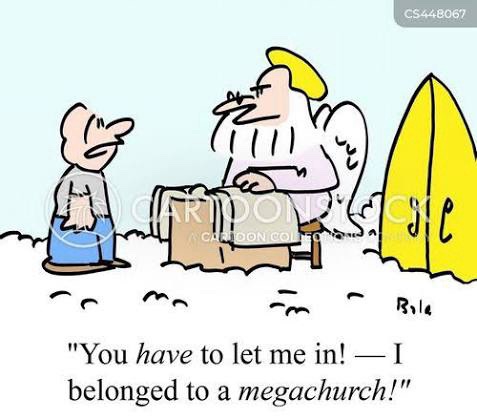
It’s Sunday morning, or at least it feels like it should be. For some reason, I find myself thinking about religion again. Perhaps it’s because I’ve been noticing more churches, more people wearing crosses around their necks, and more outward displays of Christianity. Maybe it happens all week long, but on Sundays, it seems more noticeable. Or perhaps I’m just paying closer attention.
Either way, it got me wondering about something that has bothered me for a while: What exactly are we witnessing when we see people flocking to churches to worship a man whose teachings they seem perfectly willing to ignore the other six days of the week?
Now, I’m not suggesting that everyone who attends church is a hypocrite. Far from it. There are genuinely good people who find comfort, community, and a sense of purpose in their faith. Some churches do extraordinary work feeding the hungry, sheltering the homeless, and helping people who have nowhere else to turn. Those efforts deserve recognition.
But there is a difference between believing in the teachings of Christianity and simply identifying as a Christian. One requires effort, compassion, and a willingness to examine your own behavior. The other requires little more than showing up, wearing the appropriate symbols, and occasionally reminding everyone else that you have God on your side.
And that is where my questions begin.
A Church on Every Corner
Something else I’ve noticed is the number of churches being built. I see new Christian churches appearing in communities, shopping centers, and neighborhoods. I don’t seem to notice the same growth in temples, synagogues, or mosques, although that is an observation from my own surroundings rather than a statistical accounting of religious construction.
Historically, particularly in the American frontier, the church was often among the first institutions established in a new settlement. You built homes, opened a general store, established a school when you could, and built a church. People needed something to hold onto when they were separated from familiar surroundings, established communities, and the institutions that gave their lives structure.
The church was more than a place of worship. It was a gathering place, a social network, a source of assistance, and a place where people could find some reassurance that their lives had meaning beyond the struggle to survive.
And I understand that. When the world is unpredictable, people naturally look for something stable. When life becomes frightening, faith can offer comfort. When people feel powerless, religion can give them the impression that someone, somewhere, is still in control.
So I wonder whether we are returning to that mentality.
Look around. We have political division, economic insecurity, housing costs that make homeownership feel like a fairy tale, and people working full-time jobs who still struggle to pay their bills. We have wars, environmental uncertainty, and a seemingly endless parade of people telling us that civilization is about to collapse unless we buy into their particular version of the truth.
Perhaps people are flocking to churches because they need reassurance that something in their lives remains dependable.
I can understand that impulse. What I question is whether the institution providing that reassurance is always worthy of the trust being placed in it.
The Price of Getting Into Heaven
Here is the part that really bothers me.
You have people who can barely afford groceries, who are struggling to pay rent, who are choosing between prescription medications and keeping the electricity turned on, and yet they feel obligated to give ten or fifteen percent of their income to their church.
Ten or fifteen percent.
Let that sink in for a moment.
If someone is struggling to make ends meet, that percentage can mean the difference between keeping a roof over their head and falling behind on their bills. Yet some congregations teach tithing as a religious obligation, sometimes attaching spiritual consequences to the decision not to give.
And what happens to that money?
Sometimes it goes toward feeding the hungry, helping struggling families, maintaining shelters, and supporting worthwhile community programs. Wonderful. That is exactly the sort of thing a religious organization ought to be doing.
But sometimes the people making the appeals for sacrifice are living considerably more comfortably than the people making those sacrifices.
You have parishioners counting pennies while their pastors drive luxury vehicles. Congregants worrying about their next mortgage payment while church leadership enjoys a lifestyle that seems strangely disconnected from the financial hardships of the flock.
It’s reminiscent of the old stereotype about someone receiving government assistance while driving a Cadillac. That stereotype was never a fair representation of people receiving welfare, but somehow, when the luxury vehicle belongs to a religious leader supported by donations from struggling believers, the questions become a little less fashionable.
Apparently, we are supposed to question the poor person’s possessions but not the prosperity of the person promising them spiritual salvation.
Funny how that works.
And before anyone starts shouting that pastors deserve to be paid, let me be clear: of course they do. Religious leaders have bills, families, and responsibilities like everyone else. There is nothing inherently wrong with earning a reasonable living while serving a congregation.
The problem is the disconnect between the message of humility and the reality of extravagant living. The problem is financial opacity, manipulation, and the suggestion that people who are already struggling must give more while leadership provides little accountability for how those contributions are spent.
In the United States, churches that qualify under the relevant tax rules generally receive significant tax advantages, including exemption from federal income tax on qualifying church income. That can allow religious institutions to direct more of their resources toward their missions. But it also raises a reasonable question: if an organization benefits from special tax treatment because of its religious and charitable purposes, shouldn’t we expect it to demonstrate that those purposes are being served?
I am not suggesting that every church is exploiting its congregation. I am suggesting that religious status should not make an organization immune from scrutiny.
If anything, a claim to moral authority should invite greater scrutiny, not less.
The Man They Say They Follow
And this brings me back to Jesus.
Whatever someone believes about his divinity, the virgin birth, the resurrection, or the other theological claims surrounding Christianity, the figure presented in the Gospels repeatedly emphasizes humility, mercy, generosity, and care for the poor.
In Matthew 25, the familiar passage about feeding the hungry, welcoming strangers, clothing the naked, and visiting the sick and imprisoned makes compassion toward vulnerable people a central measure of one’s relationship with God.
In Matthew 19, Jesus tells a wealthy man to sell his possessions, give to the poor, and follow him. In Matthew 6, he warns against practicing righteousness for public recognition. And in Matthew 21, he overturns the tables of the money changers in the temple.
Now, I realize that biblical passages can be interpreted in different ways, and Christians disagree about theology, salvation, and how these teachings should be applied. But the general themes are difficult to miss.
Where, exactly, did the message of humility and care for the poor become compatible with religious celebrity, political grandstanding, and personal enrichment at the expense of the faithful?
When did Christianity become, for some people, less about following the teachings attributed to Jesus and more about displaying the symbols associated with him?
A cross around your neck is not a substitute for compassion. A bumper sticker proclaiming your faith does not make you a better person. Attending church every Sunday does not automatically excuse the way you treat people on Monday.
And voting for someone because they claim to represent Christian values does not magically make their policies Christian, either.
If you profess to follow a teacher who tells you to love your neighbor, care for the stranger, and show mercy, then perhaps the more important question is not whether you attend church. It is whether the people around you experience those teachings through your actions.
Because if your religion makes you feel morally superior to others while giving you permission to disregard their suffering, something has gone terribly wrong.
Faith in a Time of Uncertainty
Perhaps the growth of churches really is a reflection of the times. Perhaps people are searching for community, certainty, and a sense of belonging in a world that increasingly seems to offer none of those things.
I don’t begrudge anyone that search. If faith helps someone get through a difficult day, gives them hope when they have none, or inspires them to be kinder to the people around them, I see no reason to object.
What I question is the business that can grow around that need.
There is a difference between offering people hope and selling them the promise of hope. There is a difference between encouraging generosity and convincing financially desperate people that their last few dollars are a test of their faith. And there is a difference between leading a congregation and building a personal empire on the backs of people who believe that giving more money will bring them closer to God.
If your congregation is struggling, perhaps the first question should be whether the church can do more to help its members rather than whether its members can do more to finance the church.
If your neighbors are hungry, perhaps the priority should be feeding them rather than building another elaborate sanctuary.
And if your pastor is preaching the virtues of humility from the driver’s seat of a luxury car, perhaps someone should ask whether the vehicle is serving the mission or whether the mission is serving the vehicle.
Just a thought.
The Wandering Preacher
The image that stays with me is that of Jesus as the wandering preacher, traveling from place to place, teaching, healing, and speaking to ordinary people. Whatever one’s religious beliefs, that image stands in stark contrast to the modern spectacle of expensive church buildings, carefully cultivated religious celebrities, and congregations asked to finance lifestyles they could never afford themselves.
Maybe that contrast is unfair in some cases. Buildings require maintenance, congregations need organization, and religious communities can do good work on a large scale. I understand all of that.
But the contrast is worth considering.
If the man at the center of Christianity could walk among the poor, the sick, the outcast, and the people society had dismissed, why do some of the institutions built in his name seem so preoccupied with their own wealth, influence, and political power?
Perhaps the problem isn’t faith itself. Perhaps it is what happens when human beings discover that faith can be turned into authority, authority into influence, and influence into money.
That is hardly a new story. Organized religion has produced extraordinary acts of kindness throughout history, but it has also been used to justify greed, exclusion, conquest, and the abuse of power. The existence of the good does not erase the bad, and the existence of the bad does not invalidate every sincere believer.
Which brings me back to Sunday morning.
I don’t know what is in the hearts of the people walking through those church doors. Some are there because they believe. Some are there because they are lonely. Some are frightened. Some are grateful. Some are searching for answers. And some may simply be following a routine passed down through generations.
I can respect that.
But I will continue to question the people who claim to speak for a humble, wandering teacher while accumulating wealth from people who can barely afford to live. I will question those who preach compassion but practice contempt, who preach generosity but demand it disproportionately from the poor, and who insist that the rest of us follow their moral example while refusing to examine their own.
Because if Christianity is supposed to be about following the teachings of Jesus, then perhaps we should spend less time counting the crosses around our necks and more time counting the people we have helped.
And perhaps the most important measure of faith isn’t how often we enter a church, how much money we put in the collection plate, or how loudly we proclaim our beliefs.
Perhaps it is whether we have made life a little less difficult for someone else.
After all, if the person you claim to follow spent his time among the poor, the hungry, and the forgotten, shouldn’t that be where you look for him?
Not in the size of the church.
Not in the price of the pastor’s car.
And certainly not in the balance of the collection plate.
Maybe the real question for Sunday morning isn’t Do you believe?
Maybe it’s this:
If you believe, does anyone else benefit from it?

