Dwain Northey (Gen X)
There is something fascinating about music. A song can remain unchanged for decades, yet somehow become an entirely different experience depending on who is singing it, how it is performed, and, perhaps most importantly, where we are in our own lives when we hear it. Sometimes a cover version doesn’t simply revisit an old song. It gives that song an entirely new identity. The words are the same, the melody may be recognizable, but the emotional message somehow reaches us in a completely different way.
A perfect example of this is The Sound of Silence.
When Simon & Garfunkel released their original version in the 1960s, it became one of the defining songs of its generation. It was a beautiful, haunting piece of music that captured something about the changing American landscape. The country was dealing with political division, social unrest, war, generational conflict, and a growing sense of disconnection. The song spoke to the loneliness of people surrounded by other people, the inability to communicate, and the uncomfortable reality that sometimes the loudest thing in a room is what nobody is saying.
There was a certain delicacy to the original. The acoustic guitar, the harmonies, and Paul Simon’s understated delivery created an almost intimate experience. It didn’t need to shout to make its point. It invited you to listen, to think, and perhaps to recognize a little of yourself in its words. It was a song that could make you uncomfortable without ever raising its voice.
And then, decades later, Disturbed came along.
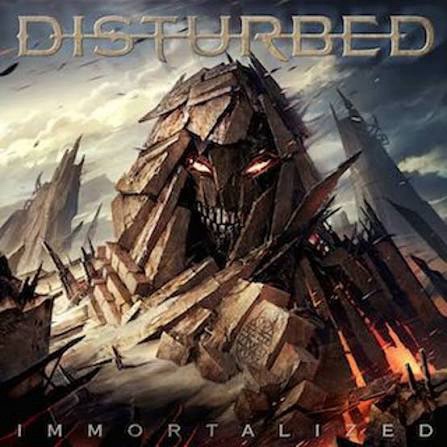
In 2015, Disturbed released its interpretation of The Sound of Silence, and something remarkable happened. They took a song that had already earned its place in musical history and managed to make it feel new again. But they didn’t simply make it louder or heavier. In fact, the most striking thing about their version is how restrained it is. David Draiman’s deep, powerful voice, the gradual orchestral build, and the emotional intensity of the performance transform the song into something almost cinematic.
The original Simon & Garfunkel version feels like someone quietly observing a world that has lost its ability to communicate. The Disturbed version feels like someone standing in the middle of that same world, looking around, and desperately trying to get somebody to listen.
That’s a significant difference.
One version makes you contemplate the silence. The other makes you feel the weight of it.
And perhaps that’s why the Disturbed interpretation resonates so deeply with people who might not have connected with the original in quite the same way. The song’s meaning hasn’t necessarily changed, but the emotional delivery has. There is a gravity to Draiman’s voice that gives the lyrics an almost personal quality. It sounds less like a social observation and more like a confession, a warning, or even a plea.
It is also interesting to consider how much the world has changed between those two recordings. The original emerged in an era when television, newspapers, and political institutions largely controlled the flow of information. The Disturbed version arrived in a world where we have more ways to communicate than at any other point in human history, yet seem increasingly incapable of having meaningful conversations.
We have smartphones, social media, instant messaging, and an endless supply of information. We can communicate with someone on the other side of the planet in seconds. Yet we routinely struggle to communicate with the person sitting across the dinner table. We talk over one another, shout past one another, and increasingly surround ourselves with people who already agree with everything we believe.
Perhaps the silence has never been about the absence of noise. Perhaps it has always been about the absence of listening.
And that brings me to something I find particularly interesting about music in general. We often attach memories, experiences, and emotions to particular songs. A song that meant one thing when we were teenagers can mean something entirely different when we’re approaching sixty. The lyrics haven’t changed, but we have. Our experiences have given those words a different context. We hear things now that we might not have understood when we first heard them.
Sometimes a cover version can accelerate that experience. It can take something familiar and present it in a way that forces us to reconsider what we thought we already understood.
I don’t necessarily believe Disturbed’s version is better than Simon & Garfunkel’s. That’s probably an unfair comparison anyway. They are two very different interpretations of the same remarkable piece of songwriting. The original captured the spirit of its time with a simplicity and beauty that helped make it timeless. The remake took that same foundation and gave it a different emotional dimension.
But I will say this: there is something about the Disturbed version that reaches a different part of me. It carries a weight that is difficult to explain. When Draiman sings those familiar words, it feels as though he isn’t simply performing a song. It feels as though he is experiencing it, and inviting the listener to experience it alongside him.
Maybe that’s the real magic of music. It doesn’t always matter who wrote the song, when it was written, or how many times we’ve heard it. Sometimes all it takes is a different voice, a different arrangement, or a different moment in our lives to make us hear something we somehow missed the first time.
Simon & Garfunkel gave us a song about the sound of silence.
Disturbed reminded us just how deafening that silence can become.
And perhaps the most unsettling part is that, more than half a century after the original was written, we still haven’t learned how to listen.

