Dwain Northey (Gen X)
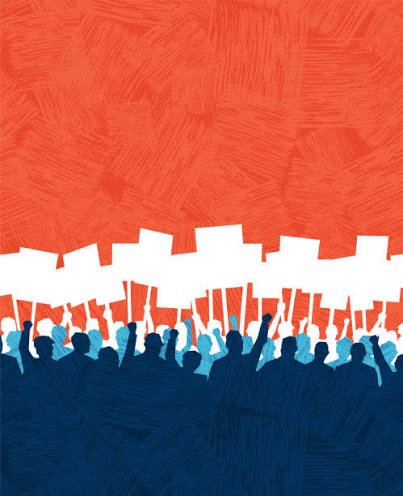
There are some songs that belong to a particular generation, and then there are songs that somehow manage to outlive the circumstances that created them. In 1971, the Canadian rock group Five Man Electrical Band released Signs, a song that would become one of those enduring anthems. On the surface, it was a catchy rock song about signs everywhere, but underneath that memorable melody was something considerably more meaningful: a protest against conformity, exclusion, institutional authority, and the absurdity of people using rules and symbols to tell everyone else how to live.
“Sign, sign, everywhere a sign.”
It is a simple opening, but it establishes the entire premise. Signs blocking up the scenery, changing minds, telling people what they can and cannot do. The song takes aim at a society increasingly covered in instructions, restrictions, and declarations of who belongs and who doesn’t. It questions the people who believe that putting up a sign somehow gives them the authority to dictate the behavior of everyone around them.
One of the most memorable parts of the song involves the distinction between the people who own the property and those who are simply trying to enjoy it. The message is unmistakable: rules are often written by people who already have the privilege of deciding who gets access and who doesn’t. The sign becomes more than a piece of wood or metal. It becomes a symbol of power.
And that is where this song becomes particularly interesting when we compare it with the protest music of today.
The 1960s and early 1970s were filled with music that challenged established authority. Vietnam, civil rights, racial inequality, generational conflict, and distrust of government provided plenty of material for musicians who wanted to say something beyond the usual love songs. Artists such as Bob Dylan, Joan Baez, Creedence Clearwater Revival, and Marvin Gaye used music to question the world around them. Songs weren’t simply entertainment. They were commentary, frustration, and sometimes a demand for change.
But here’s the interesting thing: the subjects have changed, the technology has changed, and the political vocabulary has changed. The underlying arguments haven’t necessarily changed all that much.
Today, the signs aren’t necessarily nailed to trees or posted outside private property. They’re digital, political, institutional, and sometimes quite literal. They’re the messages telling us what we’re allowed to discuss, which histories we’re supposed to remember, which opinions are acceptable, and which people deserve access to the same opportunities as everyone else.
Today’s protest music takes many forms. Bruce Springsteen’s The Ghost of Tom Joad continues to resonate with conversations about poverty and inequality. Childish Gambino’s This Is America examines race, violence, and the contradictions of American culture. Kendrick Lamar’s Alright became closely associated with demonstrations against racial injustice. Rage Against the Machine built an entire musical identity around challenging political and economic power.
Different generations, different sounds, different targets. But the impulse is familiar.
The protest song has always been about more than complaining. It is about questioning the assumptions that society has quietly accepted. It is about looking at something everyone else has walked past and asking why it has to be that way.
And perhaps that’s why Signs still feels relevant.
We live in an era where everybody seems to have a sign to hold up. Political signs, ideological signs, religious signs, cultural signs. Everyone has a declaration about what America should be, who belongs, who doesn’t, and what everyone else ought to believe. Social media has effectively turned the entire country into one enormous bulletin board, with everybody competing to make their message the biggest and loudest.
The irony is that we have more ways to communicate than any generation before us, yet we seem increasingly determined to stop listening to one another.
The original song was questioning the authority behind the signs. Today’s protest songs often question the authority behind the institutions, policies, and cultural expectations that shape our lives. They challenge inequality, discrimination, violence, political corruption, economic opportunity, and the concentration of power.
But there is another important connection between then and now: protest music doesn’t necessarily have to provide an answer. Sometimes its purpose is simply to make people uncomfortable enough to ask a question.
That’s what music has always done particularly well. It takes an idea that might otherwise be buried in a newspaper editorial or political speech and turns it into something people can sing together. A melody makes an argument memorable. A chorus makes frustration communal. And sometimes a three-minute song can communicate something that a three-hour political debate never manages to accomplish.
I suppose that’s why I find myself returning to songs like Signs. Not because I necessarily agree with every interpretation someone might attach to the lyrics, but because the underlying question remains worth asking: Who put that sign there, why is it there, and who benefits from everyone else following it?
Fifty-five years later, we’re still arguing about the signs. We’re still debating who gets to put them up, who gets to take them down, and who gets to decide what they mean.
Maybe that’s the real legacy of the protest song. It isn’t necessarily that it changes the world overnight. It’s that it reminds us not to accept the world simply because somebody put up a sign telling us that’s the way things are supposed to be.
And if there’s one thing worth carrying forward from the music of the 1960s into the arguments of today, it’s this:
Don’t just read the sign. Question the person who put it there.

