Dwain Northey (Gen X)
Two Things Every Gen Xer Remembers: The Breakfast Club and the Soundtrack of Our Youth
There are certain songs and movies that do more than entertain us. They become time machines. You can be going about your day, minding your own business, and suddenly a familiar song comes over the radio. Within the first few notes, you’re no longer sitting in traffic, paying bills, or worrying about whatever nonsense adulthood has decided to throw at you. You’re sixteen again. You’re back in high school, wondering where you fit in, who understands you, and whether any of this teenage bullshit is ever going to make sense.
For Generation X, I would argue there are two pieces of entertainment that accomplish this better than almost anything else: Simple Minds’ Don’t You (Forget About Me) and the movie The Breakfast Club.
And if you grew up in our generation, I’m willing to bet neither one needs much explanation.
Let’s start with the song.
Released in 1985, Don’t You (Forget About Me) became inseparable from The Breakfast Club. Those opening notes are practically a universal Gen X identification card. You hear them, and suddenly you’re transported back to a time when your biggest concerns might have been getting through algebra, figuring out who liked you, avoiding the wrong crowd in the hallway, or wondering what the hell you were going to do with your life.
There is something wonderfully melancholy about that song. It’s not simply a declaration that someone should remember you. There’s a little desperation in it, a little vulnerability, and a whole lot of youthful uncertainty. It’s the sound of someone hoping that the people who matter will remember them after the moment has passed.
And perhaps that’s why it has lasted.
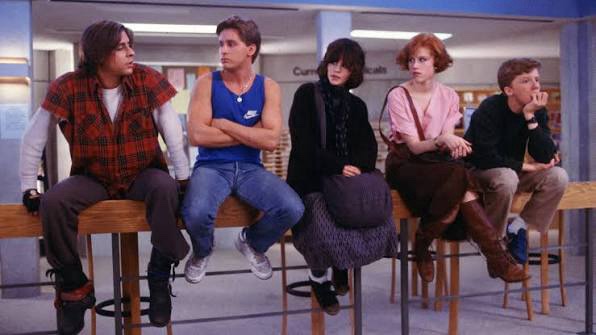
Then there’s The Breakfast Club, John Hughes’ 1985 masterpiece of teenage angst, identity, and the social classifications that seemed so important when we were growing up.
The brain. The athlete. The basket case. The princess. The criminal.
Five teenagers, five different social identities, thrown together in Saturday detention. On the surface, they couldn’t have been more different. They occupied different corners of the high school social universe, and under normal circumstances probably wouldn’t have voluntarily spent five minutes together.
But as the hours pass, the labels begin to fall away. We discover that the athlete has pressures of his own, the princess has problems at home, the brain is struggling with expectations, the criminal is dealing with a miserable family life, and the basket case isn’t nearly as strange as everyone assumes.
In other words, they’re teenagers. They’re trying to figure out who they are while everyone around them seems determined to tell them who they’re supposed to be.
And that, more than anything, was the experience of Generation X.
We grew up in an interesting period. We were the latchkey kids, the children who came home to empty houses, made our own snacks, watched television, and generally figured things out without an adult hovering over every decision. We had MTV, cassette tapes, drive-in memories, mall hangouts, and enough teenage independence to get ourselves into trouble without needing a smartphone to document the evidence.
We were also a generation that spent a fair amount of time feeling misunderstood. Our parents had their expectations, society had its expectations, and high school had its little kingdoms and social hierarchies. We were expected to fit into categories that rarely described the complicated people we actually were.
John Hughes understood that. He managed to put something on the screen that a lot of teenagers recognized, even if they didn’t necessarily have the vocabulary to explain it.
And Simple Minds provided the soundtrack.
What makes these two cultural landmarks particularly interesting is that they have outlived the circumstances that made them popular. The teenagers who watched The Breakfast Club in 1985 are now approaching sixty, or already there. The kids who listened to Simple Minds on their bedroom stereos have mortgages, careers, divorces, children, grandchildren, and a collection of responsibilities that would have seemed unimaginable back then.
Some of us have done pretty well. Some of us took a few detours. Some of us are still trying to figure out what we’re supposed to be when we grow up. And some of us occasionally wonder whether the adults we became had any idea what they were doing in the first place.
But play that song.
Just play those opening notes.
I suspect a lot of us will stop whatever we’re doing for a moment. We might even remember the people we sat with in the cafeteria, the friends we lost touch with, the first person who broke our hearts, or the version of ourselves who thought the entire world was waiting just beyond graduation.
And maybe we’ll remember that movie, too. Five teenagers sitting in a library, discovering that underneath all the labels, they weren’t nearly as different as they thought.
That’s the funny thing about nostalgia. We don’t necessarily want to go back. We remember the awkwardness, the insecurity, the heartbreak, and the occasional humiliation. High school wasn’t necessarily a wonderful experience for everyone. But we recognize the people we were, and sometimes we miss the simplicity of having our entire future still ahead of us.
So, if you’re Generation X, here’s a little test. Put on Don’t You (Forget About Me) and watch the closing scene of The Breakfast Club again.
If you don’t feel something, I’m going to have to question whether you actually attended high school in the 1980s.
Because those weren’t just a song and a movie. They were two pieces of our generational identity. One gave a voice to the feeling that we wanted to matter, and the other reminded us that behind all the labels we wore, we were just trying to figure ourselves out.
And forty years later, Simple Minds is still reminding us not to forget.
As if any of us ever could.

