Dwain Northey (Gen X)
The Last Gasp of the Good Old Boys
Well, apparently, democracy has become a rather inconvenient arrangement for some people on the right. Especially when the people voting decide that perhaps the people running the country ought to look a little more like the people actually living in it.
The aftermath of this past election has been something to behold. Instead of taking a moment to consider why voters have decided to change the direction of things, a certain segment of the political right has apparently decided that the sky is falling. The seats of power are changing hands, new faces are arriving, women are taking positions of authority, people of different ethnic backgrounds are winning elections, and individuals who don’t fit neatly into their preferred little Norman Rockwell portrait of America are finding themselves in positions of influence.
And, naturally, the screaming has begun.
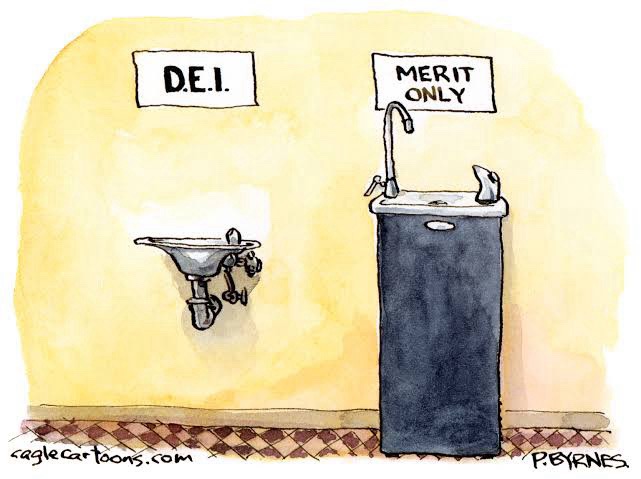
The latest boogeyman is DEI. Diversity, Equity, and Inclusion. Apparently, according to some of these folks, the moment a woman, a Black person, someone of Hispanic heritage, or a transgender individual gets elected or appointed to a position of responsibility, the entire institution must be suffering from some catastrophic decline in qualifications.
Never mind their education. Never mind their experience. Never mind their professional accomplishments, their military service, their public service, or the years they’ve spent working to get where they are. If they don’t fit the traditional picture of what these people believe a leader should look like, then obviously somebody must have lowered the standards.
Funny how that works.
What makes this particularly entertaining, in a rather depressing sort of way, is the breathtaking hypocrisy of the argument. These same people who scream bloody murder about DEI seem to have considerably less difficulty with a different kind of preferential treatment: legacy, family connections, political dynasties, inherited influence, and good old-fashioned nepotism.
Apparently, if your father was a senator, your grandfather was a governor, or your family name has been hanging around Washington since the Reagan administration, then you’re perfectly qualified to occupy a position of power. Nobody seems particularly interested in questioning whether you earned your place. Your bloodline apparently comes with its own résumé.
We are apparently supposed to return to the days of hereditary nobility, where your qualifications are established somewhere between your family tree and the country club membership application. Perhaps we should start requiring applicants for public office to submit a genealogy chart tracing their ancestry back to the appropriate collection of wealthy white men. Extra points if somebody in the family knew Ronald Reagan.
Because apparently, having the right ancestors is perfectly acceptable, but having the wrong skin color, gender, or background is somehow evidence of institutional collapse.
Let’s be honest about what is really bothering some of these people.
It isn’t necessarily that standards are falling. It’s that the monopoly on defining those standards is disappearing.
For generations, American political and economic power was disproportionately concentrated in the hands of white men. That doesn’t mean every white man was unqualified, just as it doesn’t mean every woman or minority candidate is automatically qualified. Competence has never been distributed according to skin color or chromosomes. But access to opportunity certainly hasn’t been distributed equally.
And now that the doors are opening a little wider, some people are acting as though somebody is stealing their birthright.
They’ve spent years telling everyone that America is a meritocracy, that anybody can succeed if they work hard enough, that personal responsibility matters, and that nobody should receive special treatment. Yet when the playing field starts becoming a little more representative of the population, suddenly meritocracy becomes a suspicious concept.
Apparently, merit is only merit when it produces the candidate they already wanted.
And there’s another rather amusing contradiction here. These are often the same people who wrap themselves in the American flag, talk endlessly about freedom, patriotism, and the greatness of this country, and then become absolutely terrified when America starts looking like the actual country they claim to love.
America isn’t a hereditary estate. It isn’t a private club. It isn’t a white Anglo-Saxon family business, and public office isn’t an inheritance that gets passed down to the next generation of people with the appropriate last name.
The Constitution doesn’t contain a requirement that elected officials be male, white, Christian, heterosexual, or descended from somebody who voted for Reagan. It doesn’t have a footnote explaining that women are welcome as long as they stay in the kitchen, minorities can participate as long as they don’t get too influential, and transgender Americans should probably just stay out of sight.
The qualifications for public office are supposed to be about the ability to serve the public. Not whether somebody makes the people already sitting in the room comfortable.
And let’s not confuse representation with a guarantee of competence. Every election produces winners who will disappoint us. Some will be excellent, some mediocre, and some will turn out to be walking examples of why background checks and job interviews are important. That’s politics. It has nothing to do with DEI. It has everything to do with the fact that human beings are imperfect, regardless of the demographic category into which they happen to fall.
But here’s the part I find most revealing.
When these people see a Black woman entering a position of authority, they don’t necessarily see a qualified individual who won an election. They see a threat to the established order. When they see a woman taking a seat previously occupied by a man, they don’t see another American exercising her constitutional rights. They see something being taken away from them. When they see someone transgender participating in public life, they somehow interpret that person’s existence as an attack on their own.
That’s not concern about qualifications. That’s resentment dressed up in a business suit and carrying a copy of the Constitution it apparently hasn’t bothered to read.
And perhaps that’s the real issue with this election. It represents another step away from the comfortable political arrangement some people desperately want to preserve. The old boys’ club is getting crowded with people who weren’t previously invited, and some of the original members aren’t handling the change particularly well.
Well, here’s a suggestion.
Get over it.
The country isn’t going backward simply because the people representing it no longer all look like the people who represented it fifty years ago. That’s not the destruction of America. That’s a reflection of America growing into the promises it has been making about itself for generations.
You don’t get to preach equality, opportunity, freedom, and individual achievement for two hundred and fifty years and then complain when people outside your preferred demographic actually start exercising those opportunities.
You don’t get to demand a meritocracy while defending political dynasties, inherited privilege, and family connections.
And you certainly don’t get to claim ownership of patriotism simply because your ancestors arrived earlier, your skin is lighter, or your preferred politicians wave a flag more enthusiastically.
Democracy isn’t supposed to preserve your position at the top of the ladder. It’s supposed to give everyone a fair opportunity to climb it.
The election has changed the occupants of some very important rooms. Some of those new occupants are women. Some are Black. Some come from immigrant families. Some have backgrounds and identities that make certain segments of the population profoundly uncomfortable.
Good.
Not because their identity automatically makes them better leaders, but because their identity shouldn’t automatically disqualify them either.
And if the sight of a qualified woman, a Black American, or a transgender person sitting in a position of authority is enough to convince you that America is falling apart, perhaps the problem isn’t the person sitting in that chair.
Perhaps it’s the person who believes the chair was supposed to belong to them in the first place.
The American experiment was never supposed to be about preserving the privileges of the people who got here first or inherited the most. It was supposed to be about creating something better than that.
Apparently, some people are still having trouble with that part of the assignment.

