Dwain Northey (Gen X)
There is something rather peculiar about the timing of Thanksgiving. Every year, on the fourth Thursday of November, Americans gather around a table, celebrate the harvest, give thanks for the year’s bounty, and generally consume enough food to make a competitive eater reconsider their career choices.
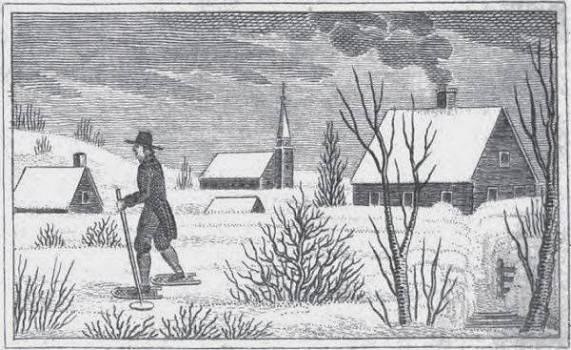
We call it a harvest festival. We decorate with pumpkins, autumn leaves, cornucopias, and images of New England covered in beautiful fall foliage. There’s just one little historical problem with that picture: By the fourth Thursday of November, much of seventeenth-century New England would have been well into winter, not enjoying some picturesque autumn afternoon.
Remember, we’re talking about Maine and the surrounding New England colonies, not Phoenix, Arizona, where November can still feel like somebody forgot to turn off the summer. In the 1600s and 1700s, November in coastal New England meant shortening days, freezing temperatures, increasingly difficult travel, and the very real possibility that winter had already established itself for the next several months.
The first European settlers weren’t exactly enjoying the luxury of modern heating, insulated windows, grocery stores, refrigerated trucks, or the ability to order a pizza when the weather turned unpleasant. Their relationship with winter was considerably more personal. Winter wasn’t a seasonal inconvenience. It was something you prepared for, endured, and hopefully survived.
So the idea that people in seventeenth-century Maine would be celebrating an autumn harvest festival on the fourth Thursday of November seems a little incongruent. By that point, the harvest would largely have been gathered, the gardens would be finished, and the business of preparing for winter would have taken priority. This wasn’t necessarily the time to celebrate the abundance of the growing season. It was the time to make sure you had enough food stored to see you through until spring.
And that’s an important distinction.
The original harvest celebrations associated with early colonial Thanksgiving weren’t necessarily tied to a fixed date on the calendar. They were tied to the agricultural cycle. When the crops came in, when the food was gathered, and when the community had reason to celebrate that it had survived another growing season, that was the appropriate time for a feast.
In fact, the famous 1621 Plymouth celebration took place sometime in the autumn, probably between late September and November, although historians cannot establish an exact date. It wasn’t an annual national holiday, and certainly nobody was checking a calendar to determine whether the fourth Thursday had arrived.
The modern Thanksgiving calendar came much later. Abraham Lincoln proclaimed a national Thanksgiving in 1863, during the Civil War, setting it on the last Thursday of November. Franklin Roosevelt eventually moved it earlier in 1939 to extend the Christmas shopping season, because apparently even national traditions aren’t immune to the influence of retail economics. After some confusion and political disagreement, Congress established the fourth Thursday of November in 1941.
So here we are.
A holiday rooted in the idea of celebrating the harvest, scheduled at a time when the people who originally lived in the region would have been preparing for the harshest part of the year.
It’s a little like scheduling a summer beach festival in February and then insisting everybody dress appropriately for the historical tradition.
Now, none of this means Thanksgiving shouldn’t be celebrated in November. There’s something meaningful about gathering together as the days grow shorter and the year winds down. But perhaps we ought to be a little more honest about what we’re celebrating and where some of these traditions actually came from.
The harvest was the reason for the feast. The fourth Thursday in November is largely the result of nineteenth- and twentieth-century politics, national tradition, and, eventually, the American retail calendar.
And that’s perfectly fine. Traditions evolve. We just shouldn’t confuse the date on the calendar with the agricultural reality of the people who first celebrated it.
Besides, if we’re going to keep romanticizing the historical New England Thanksgiving, perhaps we should stop imagining everybody sitting around a table surrounded by golden autumn leaves and recognize that some of those folks were probably already looking at a pretty miserable winter forecast.
So happy Thanksgiving. Enjoy the meal, appreciate the company, and be grateful that you aren’t trying to get through a Maine winter in 1621 with a wood-burning fireplace, a few barrels of provisions, and no indoor plumbing.
And if somebody insists that we’re celebrating an authentic traditional autumn harvest festival on the fourth Thursday of November, feel free to remind them that historically speaking, the autumn may already have packed up and gone home.

