Dwain Northey (Gen X)
https://www.cbsnews.com/news/naacp-travel-advisory-florida-says-state-hostile-to-black-americans/
Remember the good old days when there were only travel advisories and or ban for, what some would call, third word countries? Well now because of the vile vitriol of one Governor Ron DeSantis the state of Florida, a vacation destination, has received a travel advisory by the NAACP.
The wannabe future President has made the climate so venomous in Florida the anyone who is a part of any minority group does not feel safe in the state. Black, Brown, LGTBQ+, these are all groups that are under attack in the Sunshine State. The majority Republican legislature and their fearful leader has passed laws that make almost everything a jailable offence and the fact that the state has very loose gun laws and a stand your ground law makes it more dangerous than being a blonde female in central America.
Florida residents are able to carry concealed guns without a permit under a bill signed into law by Republican Gov. Ron DeSantis. The law, which goes into effect on July 1, means that anyone who can legally own a gun in Florida can carry a concealed gun in public without any training or background check. This with their ridiculous stand your ground law, ‘Florida’s “Stand-Your-Ground” law was passed in 2005. The law allows those who feel a reasonable threat of death or bodily injury to “meet force with force” rather than retreat. Similar “Castle Doctrine” laws assert that a person does not need to retreat if their home is attacked.’ Makes it really sketchy to go there.
This in top of the don’t say gay rule and the new trans ruling that just passed.
“Florida lawmakers have no shame. This discriminatory bill is extraordinarily desperate and extreme in a year full of extreme, discriminatory legislation. It is a cruel effort to stigmatize, marginalize and erase the LGBTQ+ community, particularly transgender youth. Let me be clear: gender-affirming care saves lives. Every mainstream American medical and mental health organization – representing millions of providers in the United States – call for age-appropriate, gender-affirming care for transgender and non-binary people.
“These politicians have no place inserting themselves in conversations between doctors, parents, and transgender youth about gender-affirming care. And at the same time that Florida lawmakers crow about protecting parental rights they make an extra-constitutional attempt to strip parents of – you guessed it! – their parental rights. The Human Rights Campaign strongly condemns this bill and will continue to fight for LGBTQ+ youth and their families who deserve better from their elected leaders.”
This law makes it possible for anyone to just accuse someone of gender affirming care to have their child taken from them this would include someone traveling from out of state. This alone justifies a travel ban to the Magic Kingdom for families.
Oh, and I haven’t even mentioned DeSantis holy war with Disney, the largest employer in the state. I really hope the Mouse eats this ass holes lunch.
Well that’s enough bitching, thanks again for suffering though my rant.
-
Interesting History

Dunce caps were named for a famous philosopher.
Although his name draws scant recognition from most today, John Duns Scotus was among the towering intellectual figures of medieval Europe. A Scottish Catholic priest and Franciscan friar, Scotus earned renown in the late 13th and early 14th centuries for his compelling arguments regarding the univocity of all creatures — i.e., humans are beings just as God is a being — and for his defense of the immaculate conception of the Virgin Mary. His academic achievements earned him the prestigious post of regent master of theology at the University of Paris, while his scrupulous reasoning yielded the nickname “Doctor Subtilis” — the Subtle Doctor.
However, by the late 16th century, Europe’s rising humanist movement had taken aim at the old-fashioned rationale of the Scotists, and the Dunsmen (also known as the Duns), as his followers were known, were derided as outdated and overly pedantic. Eventually, the term “dunce” came to refer to someone who was slow or dim-witted. It’s not entirely clear exactly when dunce caps came on the scene, but they may have been modeled on the fools’ caps worn by jesters or clowns, and by 1791they were being put on the heads of British schoolchildren who had made too many mistakes in class or otherwise misbehaved. (Some accounts say the Subtle Doctor and his followers actually wore such hats themselves because they believed the conical shape would capture free-flowing knowledge, but evidence is lacking.)
Whether adorned with a telltale “D” or other embellishments like donkey ears, the dunce cap served as a common if crude form of punishment across European and American schools in the 19th and early 20th centuries. Although it largely disappeared from the American education system by the 1950s, the concept survives in popular culture as a visual shorthand for stupidity. But don’t feel too bad for Scotus. He was beatified by Pope John II in 1993, and renewed interest in his worksin recent years has reaffirmed the decidedly non-dunce-like essence of his brain-twisting logic.
-
Correcting History
Jot down the first thing that comes to your mind.
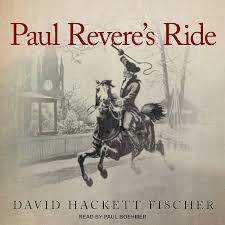
A friend of mine posted on Facebook that this is the 250 at the anniversary of Paul Revere ride. I had to correct him by saying that there was more than one writer revere actually never finished the ride and he would’ve never yelled the British are coming because that would’ve been confusing to the colonist who were British.
-
Sad 1968
Describe a random encounter with a stranger that stuck out positively to you.

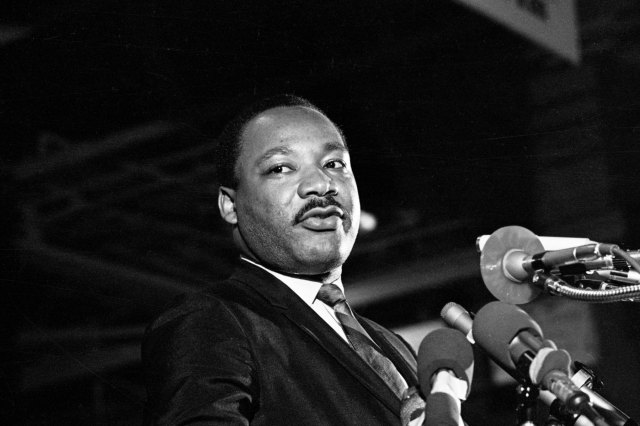
Photo credit: Bettmann / Bettmann via Getty Images Two Major Leaders Were Assassinated Within Two Months
The assassinations of civil rights leader Martin Luther King Jr. on April 4 and presidential hopeful Robert F. Kennedy on June 6 were two of the most tragic events in American history. The violence shocked not only the U.S. but the world, particularly as it came on the heels of the assassinations of President John F. Kennedy and civil rights leader Malcolm X in 1963 and 1965, respectively. Despite the devastation that followed — and the fear that their progressive voices and visions for the country would be forgotten — the legacies of King and Kennedy continued to inspire and motivate people for decades to come.
King, who led the civil rights movement and helped bring about the landmark Civil Rights Act of 1964 and the Voting Rights Act of 1965, is honored every year on Martin Luther King Jr. Day, and continues to inspire the fight for racial equality and civil rights. Kennedy, in his final years, worked to bridge racial divides, address overlooked class issues, and end the Vietnam War. The senator galvanized a new generation of voters and activists, and his influence is still feltin American politics and social justice causes today.
-
Hug
Describe a random encounter with a stranger that stuck out positively to you.

Last summer I was getting gas and I saw a guy sitting on the curb who looked like he needed help, I asked and he said he was out of gas and didn’t know what to do. He had a gas can so I knew he wasn’t just begging, I offered and filled up the 1 gallon can he proceeded to put the gas into a vehicle that was next to a pump. I know that one gallon is not going to get you very far so I proceeded to swipe my credit card and filled up his tank. He was surprised at my gesture of good will and thanked me and I thought that was the end of the interaction. I went back to fill my own tank when I felt a tap on my shoulder the guy that I had just helped thanked me again and asked if I could do one more thing for him… I assumed that maybe he was hungry or something which I would have without question bought him a sandwich but that wasn’t what he wanted, he asked if he could give me a hug… nothing else just an act of kindness for my generosity. This caught me off guard but I excepted the hug that simple act of humanity was more profound than any thank you and has stuck with me.
-
History Facts

Only one ship of the U.S. Navy is authorized to fly the Jolly Roger.There are plenty of ships in the U.S. Navy (291 of them, to be precise), but only one has the curious distinction of flying the Jolly Roger — the ominous flag typically associated with pirates. Although a skull and crossbones is the most common adornment, lawless seamen during the golden age of piracy (1650-1720) flew many grisly symbols, including skeletons but also bleeding hearts and sharp weapons. After closing in on a ship, pirates hoisted the Jolly Roger at the last minute, and though designs varied from ship to ship, the message was clear — surrender or die.
But for the U.S. destroyer USS Kidd, flying the Jolly Roger is less about striking fear into the hearts of its enemies than it is an 80-year-long tradition. The ship honors Rear Admiral Isaac C. Kidd, who earned the nickname “Cap” while attending the U.S. Naval Academy due to his name’s similarity to the infamous 17th-century pirate Captain Kidd. During the Japanese attack on Pearl Harbor in 1941, Kidd was killed aboard the USS Arizona. Within two years, a Fletcher-class destroyer bearing his name sailed the Pacific. The ship’s crew kept the nickname alive by adopting the Jolly Roger and calling themselves “the Pirates of the Pacific,” though their “booty” often involved retrieving downed Allied fighter pilots. Today’s USS Kidd, commissioned in 2007, is actually the third ship to bear the name and the third to hoist the fearful flag of a bygone era.
-
‘F’ UM’
Describe a decision you made in the past that helped you learn or grow.

Can’t listen to other people’s opinions, you have to do what is right for you others aren’t feeding you or paying your bills and their opinion of what you are doing, unless illegal, is not relevant.
-
This guy got around
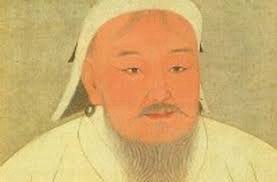
0.5% of Modern-Day Males Are Related to Genghis Khan
While Genghis Khan conquered land far and wide, his scope reached even further across the globe through his genetic lineage. During his lifetime, Genghis fathered children with six wives and an even larger number of concubines, beginning with his first marriage to a woman named Börte. With Börte, Genghis had five daughters and four sons — Jochi, Chagatai, Ögedei, and Tolui — and there were many more children to come. While it’s impossible to note just how many children Genghis sired, a 2003 study posited that Genghis Khan’s DNA could be found in 8% of Asian men along the Y-chromosome, a number large enough to account for 0.5% of the world’s total male population.
-
Elephants terrified of small things…

Elephants are massive and have pretty thick skin, about an inch deep. You’d think an insect smaller than a quarter, even one with a stinger, would be no big deal — but you’d be wrong. Elephants are so scared of bees that farmers use them as a natural, humane elephant deterrent. By hanging a beehive every 10 yards or so, researchers have been able to deter 80% of elephants.
African honeybees are small, but aggressive, and can sting areas that aren’t protected by thick elephant skin, like eyes and mouths. When bees start swarming, African elephants will start flapping their ears, kicking up dust, and yelling. Asian elephants react less dramatically, but they still get visibly nervous; they shrink away from bees, comfort one another, and sometimes slap their trunks on the ground.
-
To Cold
What place in the world do you never want to visit? Why?

Antarctica because it’s way to cold been to the northern pole at least close and that was enough.
-
History Facts
The Eastern Roman Empire fell just 39 years before Columbus sailed to America.
WORLD HISTORY
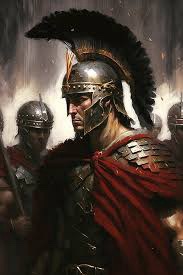
We tend to think of the Roman Empire as an entirely ancient time period. Yet while the Western Roman Empire fell in the fifth century CE, leaving it firmly in the ancient world, the eastern half of the empire kept going for another millennium — as late as 1453. Emperor Diocletian divided Rome at the end of the third century BCE, believing the empire had become too big to be ruled by just one monarch. The western half encompassed Europe and Northern Africa, and the eastern half covered the Middle East. As the west faltered, the east stayed strong, largely thanks to in-demand exports such as spices. In 395 CE, the Eastern Roman Empire split off entirely, and it eventually even took back some former Western Roman territory.
Historians often refer to the Eastern Roman Empire as the Byzantine Empire, but that term wasn’t used until after it fell; the citizens of the empire still thought of themselves as Romaioi, or Romans. The capital was Constantinople (now Istanbul in modern-day Turkey), named after Emperor Constantine I. As Constantine was the first Christian emperor of Rome, the Byzantines adopted Christianity as the state religion. But they also embraced their heritage from ancient Greece, and in the seventh century CE, Greek replaced Latin as the empire’s official language.
In the 11th century CE, the Byzantine Empire faced escalating threats from both sides — the Crusades caused tension with Western Europe, and the Turks destabilized Anatolia, the point where Asia meets Europe. The empire fell in 1453when Ottoman Turks breached the walls of Constantinople after a 55-day siege, toppling the last vestiges of the long-powerful Roman Empire. By then, Europe was in the early stages of the Renaissance and the Age of Exploration. Christopher Columbus set sail to the Americas in 1492, just 39 years later.


You must be logged in to post a comment.