Dwain Northey (Gen X)
https://www.cbsnews.com/news/naacp-travel-advisory-florida-says-state-hostile-to-black-americans/
Remember the good old days when there were only travel advisories and or ban for, what some would call, third word countries? Well now because of the vile vitriol of one Governor Ron DeSantis the state of Florida, a vacation destination, has received a travel advisory by the NAACP.
The wannabe future President has made the climate so venomous in Florida the anyone who is a part of any minority group does not feel safe in the state. Black, Brown, LGTBQ+, these are all groups that are under attack in the Sunshine State. The majority Republican legislature and their fearful leader has passed laws that make almost everything a jailable offence and the fact that the state has very loose gun laws and a stand your ground law makes it more dangerous than being a blonde female in central America.
Florida residents are able to carry concealed guns without a permit under a bill signed into law by Republican Gov. Ron DeSantis. The law, which goes into effect on July 1, means that anyone who can legally own a gun in Florida can carry a concealed gun in public without any training or background check. This with their ridiculous stand your ground law, ‘Florida’s “Stand-Your-Ground” law was passed in 2005. The law allows those who feel a reasonable threat of death or bodily injury to “meet force with force” rather than retreat. Similar “Castle Doctrine” laws assert that a person does not need to retreat if their home is attacked.’ Makes it really sketchy to go there.
This in top of the don’t say gay rule and the new trans ruling that just passed.
“Florida lawmakers have no shame. This discriminatory bill is extraordinarily desperate and extreme in a year full of extreme, discriminatory legislation. It is a cruel effort to stigmatize, marginalize and erase the LGBTQ+ community, particularly transgender youth. Let me be clear: gender-affirming care saves lives. Every mainstream American medical and mental health organization – representing millions of providers in the United States – call for age-appropriate, gender-affirming care for transgender and non-binary people.
“These politicians have no place inserting themselves in conversations between doctors, parents, and transgender youth about gender-affirming care. And at the same time that Florida lawmakers crow about protecting parental rights they make an extra-constitutional attempt to strip parents of – you guessed it! – their parental rights. The Human Rights Campaign strongly condemns this bill and will continue to fight for LGBTQ+ youth and their families who deserve better from their elected leaders.”
This law makes it possible for anyone to just accuse someone of gender affirming care to have their child taken from them this would include someone traveling from out of state. This alone justifies a travel ban to the Magic Kingdom for families.
Oh, and I haven’t even mentioned DeSantis holy war with Disney, the largest employer in the state. I really hope the Mouse eats this ass holes lunch.
Well that’s enough bitching, thanks again for suffering though my rant.
-
Solar Punk IV
Dwain Northey (Gen X)
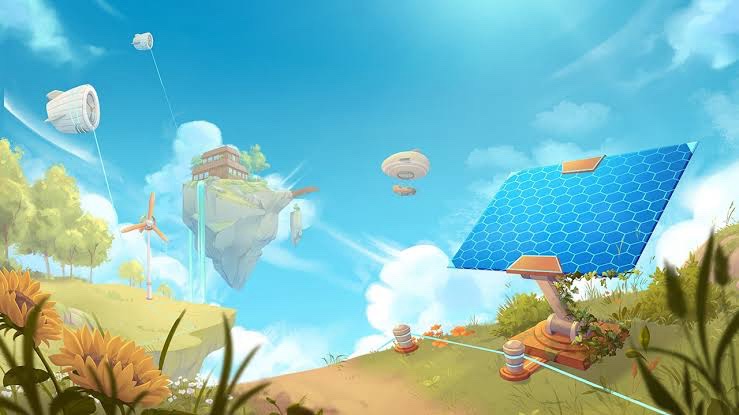
Beyond Solar: The Many Paths to a Solarpunk Energy Future
When people hear the term solarpunk, they often imagine cities covered in rooftop solar panels, gleaming glass towers draped in greenery, and communities powered entirely by sunlight. Solar energy is certainly an important part of that vision, but a truly sustainable future cannot depend on a single source of power. A resilient solarpunk society would embrace a diverse energy ecosystem that includes wind, geothermal, biofuels, and other renewable technologies working together to replace the carbon-based fuels that have dominated human civilization for the last two centuries.
The irony is that many of these energy sources are not futuristic inventions at all. They are ancient forces that humanity has known and utilized in various forms for thousands of years. Wind has propelled ships across oceans since antiquity. Geothermal heat has warmed homes and baths since the days of the Roman Empire. Plant-based fuels have powered engines since the earliest experiments with automobiles. In many ways, the solarpunk future is not about discovering new sources of energy but rediscovering and modernizing the gifts nature has always provided.
Wind power is perhaps the most obvious companion to solar energy. While solar panels generate electricity during sunny hours, wind turbines often produce energy at different times, including at night and during seasonal periods when sunlight is weaker. This natural partnership creates a more balanced electrical grid. Modern wind farms can generate enormous amounts of electricity without consuming fuel or producing greenhouse gases. In a solarpunk future, offshore wind farms, community-scale turbines, and innovative urban wind technologies could provide clean energy to millions while reducing dependence on coal, oil, and natural gas.
Geothermal energy may be even more exciting because it taps into a resource that never stops. Beneath our feet, the Earth contains tremendous amounts of heat generated by radioactive decay and residual energy from the planet’s formation billions of years ago. Unlike solar or wind, geothermal systems can provide steady, reliable power twenty-four hours a day regardless of weather conditions. In a solarpunk world, geothermal plants could serve as the dependable backbone of renewable energy infrastructure, supplying electricity and heating while producing virtually no carbon emissions.
Biofuels also have a role to play, though they must be developed thoughtfully. Soy-based ethanol and other plant-derived fuels offer a renewable alternative to petroleum. Plants absorb carbon dioxide as they grow, and when those plants are converted into fuel, much of that carbon simply returns to the atmosphere in a cycle rather than introducing carbon that has been locked underground for millions of years. While biofuels are not a perfect solution and must be balanced against food production and land use concerns, they can help decarbonize sectors that are difficult to electrify, such as aviation, shipping, heavy machinery, and certain industrial processes.
The solarpunk approach would likely expand beyond soy into a wide variety of sustainable biofuel sources. Agricultural waste, algae, hemp, forestry byproducts, and even municipal organic waste could be transformed into energy. Instead of viewing waste as garbage, future communities could see it as a resource waiting to be reclaimed. This circular approach aligns perfectly with the solarpunk philosophy of reducing waste and maximizing ecological efficiency.
Hydroelectric power, tidal energy, and wave energy would also contribute to a diversified renewable grid. Rivers, ocean currents, tides, and waves contain immense kinetic energy that can be captured with modern engineering. While each technology has limitations, together they create a portfolio of renewable resources that can support one another when conditions change.
Perhaps the greatest advantage of this diverse energy mix is resilience. A city powered entirely by one technology is vulnerable to interruptions. A city powered by solar, wind, geothermal, biofuels, energy storage systems, and smart-grid technology can adapt to changing conditions. When the sun sets, wind turbines may continue spinning. When the wind calms, geothermal systems continue operating. When demand spikes, stored energy and renewable fuels can fill the gap.
Critics often argue that renewable energy cannot meet modern civilization’s needs. Yet humanity has spent generations investing trillions of dollars into extracting, transporting, refining, and consuming fossil fuels. Imagine if those same resources had been invested in renewable technologies decades ago. The question is not whether renewable energy is capable of replacing fossil fuels. Increasingly, the question is why we waited so long to make the transition.
The solarpunk future is not merely about cleaner energy. It is about reimagining our relationship with the planet. Carbon-based fuels represent an economy built around extraction, consumption, and depletion. Renewable energy represents an economy built around stewardship, regeneration, and balance. Wind continues to blow. The Earth continues to radiate heat. Plants continue to grow. The tides continue to rise and fall. These processes have existed for eons before humanity arrived and will continue long after we are gone.
A mature solarpunk society recognizes that nature is not an obstacle to overcome but a partner to work alongside. By embracing solar, wind, geothermal, biofuels, and other renewable technologies, we can build communities that are cleaner, healthier, more resilient, and more harmonious with the natural systems that sustain life. The future may not be powered by a single miracle technology. Instead, it may be powered by the collective wisdom to use the energy sources that have surrounded us all along.
-
Purity
Dwain Northey (Gen X)

The modern Republican purity test is one of the strangest political phenomena I’ve ever witnessed. Not because it exists—every political party has standards, at least in theory—but because of who is administering the test.
Apparently Republicans have decided that the Democratic nominee trying to unseat Susan Collins in Maine is disqualified because he has a questionable tattoo and allegedly engaged in sexting that his wife was aware of. Notice the wording. Not unsolicited photos. Not criminal allegations. Not accusations of assault. Sexting. Between consenting adults. A personal matter inside a marriage.
This is supposed to be the scandal that shocks the conscience of the nation.
Meanwhile, the same people clutching their pearls over a tattoo have spent the better part of a decade defending behavior that would have ended political careers in any previous generation.
The current President of the United States was convicted on 34 felony counts and has been found liable for sexual abuse in civil court. Yet somehow I’m supposed to believe that a tattoo on a Senate candidate is where we’re drawing the line.
The same Republican Party that spent years telling us character doesn’t matter, personal conduct doesn’t matter, fidelity doesn’t matter, criminal convictions don’t matter, and allegations don’t matter has suddenly rediscovered Victorian morality because a Democrat has some ink they don’t like.
That’s not a standard. That’s a double standard.
Then there’s the Secretary of Defense, whose tattoos have generated controversy and speculation for years, along with past allegations of misconduct. Republicans either dismissed those concerns outright or accused critics of being hysterical. Apparently questionable symbolism is only a problem when it’s attached to a Democrat.
The deeper problem is that Democrats are constantly expected to meet standards that Republicans abandoned years ago. Democratic candidates are expected to have perfect personal lives, perfect social media histories, perfect language, perfect records, and perfect judgment stretching back to high school.
One bad tweet from 2009? Career-ending scandal.
One awkward tattoo? National emergency.
One consensual personal relationship? Endless cable news discussion.
Meanwhile, Republican politicians can survive affairs, indictments, convictions, extremist rhetoric, corruption allegations, ethics investigations, and conduct that would have been politically radioactive twenty years ago.
The message seems clear: Democrats must be flawless. Republicans merely need to be Republicans.
And that asymmetry drives me crazy.
Because if we’re going to have standards, let’s have standards. Apply them to everyone. If tattoos matter, they matter for everybody. If sexual misconduct allegations matter, they matter for everybody. If criminal convictions matter, they matter for everybody.
What we have instead is a political system where one side is expected to pass a white-glove inspection while the other side is judged on a curve so generous it might as well be a circle.
Republicans have spent years arguing that voters should overlook character flaws, personal scandals, and even criminal behavior in pursuit of larger political goals. Fine. That’s an argument, even if I disagree with it.
But if that’s your position, you don’t then get to transform into the morality police every time a Democrat has a tattoo, sends a text message, or has some personal issue that would barely register if there were an “R” after their name.
At some point the hypocrisy becomes so obvious that it’s impossible to take seriously.
The purity tests aren’t about morality.
They’re about politics.
And pretending otherwise insults everyone’s intelligence.
-
Solar punk III
Dwain Northey (Gen X)
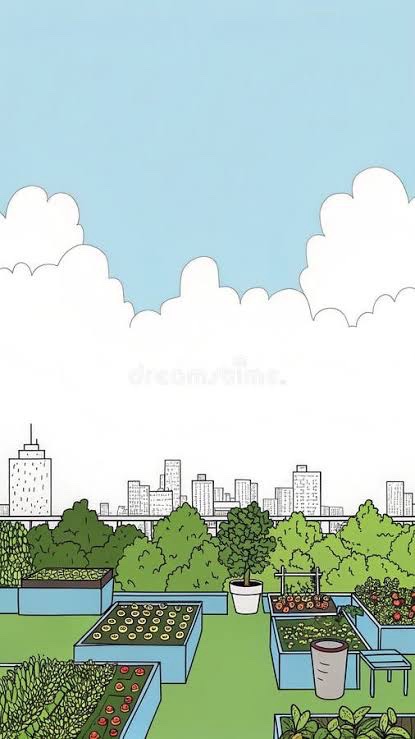
Growing the Future: How Community Gardens and Local Farming Can Transform a Solarpunk Society
When people imagine the future, they often picture towering skyscrapers, flying vehicles, and increasingly advanced technology. The solarpunk vision offers a different possibility. Rather than seeing humanity separated from nature by concrete, steel, and endless consumption, solarpunk imagines a future where technology and ecology work together. It is a future filled with renewable energy, green architecture, walkable communities, and an economy that values sustainability as much as growth. One of the most powerful and achievable steps toward that future may be something surprisingly simple: growing food close to where people live.
Community gardens, urban farms, rooftop agriculture, and neighborhood food forests have the potential to transform communities in ways that go far beyond providing fresh vegetables. They can reshape how people interact with one another, strengthen local economies, improve environmental health, and reconnect people to the natural systems that sustain life.
In many modern cities, food often travels hundreds or even thousands of miles before reaching a grocery store shelf. This transportation requires fuel, refrigeration, packaging, and extensive infrastructure, all of which contribute to pollution and waste. A solarpunk future seeks to shorten these supply chains. Local farming allows food to be grown near the people who consume it, reducing transportation emissions while increasing resilience against disruptions caused by climate change, economic instability, or global crises.
Community gardens represent perhaps the most accessible form of local agriculture. An empty lot that once collected trash can become a vibrant space filled with vegetables, fruit trees, pollinator plants, and people working together. These gardens transform neglected land into productive ecosystems. Bees, butterflies, and birds return. Soil health improves. Rainwater is absorbed rather than running off into storm drains. The garden becomes not only a source of food but also a source of ecological restoration.
The social benefits can be even more significant. Modern society often isolates people from their neighbors. Many individuals can live on the same street for years without ever learning each other’s names. Community gardens create opportunities for cooperation and shared purpose. People from different backgrounds work side by side planting, watering, harvesting, and learning from one another. The garden becomes a gathering place where knowledge is exchanged across generations. Elder gardeners share decades of experience while younger participants bring new ideas and energy.
A solarpunk future also embraces creativity in food production. Vertical gardens can transform the walls of apartment buildings into living ecosystems. Rooftops can host greenhouses powered by solar energy. Public parks can incorporate edible landscapes filled with fruit and nut trees instead of purely ornamental plants. Schools can maintain educational gardens where children learn biology, ecology, and nutrition through direct experience. Even small spaces such as balconies and patios can contribute to local food production through container gardening and hydroponic systems.
Food forests represent another exciting possibility. Unlike traditional agriculture, food forests mimic the structure of natural ecosystems. Layers of trees, shrubs, vines, herbs, and ground-cover plants work together to create self-sustaining environments that require less maintenance over time. A neighborhood food forest can provide fruit, nuts, berries, herbs, and habitat for wildlife while simultaneously cooling urban areas and capturing carbon from the atmosphere. Such spaces blur the line between park and farm, creating beautiful landscapes that nourish both people and ecosystems.
The economic impacts of localized agriculture are equally important. Money spent at local farms and community-supported agriculture programs tends to remain within the community rather than flowing to distant corporations. Small-scale agriculture can create local jobs while encouraging entrepreneurship. Neighborhood markets, cooperative food networks, and community kitchens can all emerge around local food production. This creates a more resilient economy that depends less on distant supply chains and more on local relationships.
Perhaps most importantly, community gardening and local farming help cultivate a different mindset. They remind people that food does not originate on grocery store shelves. They reconnect communities to the seasons, the weather, the soil, and the countless living systems that make human life possible. In a world increasingly dominated by screens and digital experiences, gardening offers something tangible and grounding. It teaches patience, stewardship, and an appreciation for long-term thinking.
The solarpunk future is not merely about replacing fossil fuels with solar panels. It is about reimagining humanity’s relationship with the natural world. Community gardens and local farming embody this philosophy perfectly. They combine practical sustainability with social connection, environmental restoration, and economic resilience. They transform vacant spaces into living landscapes and strangers into neighbors.
In the end, the path toward a greener future may not begin with some revolutionary technology. It may begin with a seed planted in a shared garden, cared for by a community that understands that the future grows best when people grow it together.
-
Am I a Cold Bastard?
Dwain Northey (Gen X)

I occasionally find myself wondering whether there is something wrong with me when it comes to grief.
Not because I don’t feel sadness when someone dies. Not because I don’t understand loss. But because when I witness overwhelming, hysterical grief, my reaction is often different from what seems to be expected.
The thought that creeps into my mind is one I suspect many people have had but few are willing to admit.
Who is this really for?
The person who died is gone. They are beyond my help, beyond anyone’s comfort, beyond tears and anguish and sleepless nights. Nothing I do now changes their circumstances. No amount of sobbing brings them back. No amount of suffering improves their situation.
Which means the grief belongs entirely to the living.
And that realization has always left me feeling conflicted.
When I watch someone consumed by grief, I can’t help but notice that the pain is usually centered on what they have lost. The conversations become about the empty space in their life. The memories they won’t make. The phone calls they won’t receive. The birthdays, holidays, and milestones that will now feel incomplete.
In that sense, grief feels selfish.
I don’t mean selfish in a cruel way. I don’t mean selfish as an insult. I mean selfish in the most literal sense possible. The grief is about my loss. Your loss. Our loss. It is about the wound left behind in the people who remain.
Sometimes I wonder if acknowledging that makes me coldhearted.
Society seems to expect grief to be dramatic. We are taught that the greater the display of suffering, the greater the love that existed. Yet I have never been entirely convinced that this is true.
I’ve seen people turn grief into a performance. I’ve seen people become so consumed by mourning that the life of the person who died almost becomes secondary to the emotions of those left behind.
That has never sat comfortably with me.
If someone I love dies, I want to remember them. I want to tell stories about them. I want to laugh at the ridiculous things they said and celebrate the moments that made them who they were. I want to acknowledge the sadness without making the sadness the entire story.
Because death is not a surprise ending. It is the ending waiting for all of us.
Knowing that doesn’t make loss hurt less, but it does make me question the purpose of endless despair. If I truly cared about someone, shouldn’t at least part of my focus be on the fact that they lived rather than the fact that I now have to live without them?
Maybe that sounds harsh.
Maybe it sounds detached.
Maybe some people would read this and conclude that I am, in fact, a cold bastard.
But I don’t think that’s quite right.
A cold person wouldn’t care about the loss at all. A cold person wouldn’t spend time thinking about what grief means or why people experience it the way they do. A cold person wouldn’t wrestle with these questions.
I think what bothers me is not grief itself. Grief is natural. It is inevitable. It is the price we pay for caring about other people.
What bothers me is the expectation that grief must consume us, that suffering itself is somehow a measure of love.
I don’t know if I believe that.
The older I get, the more I find myself believing that grief is fundamentally for the living. The dead no longer need anything from us. What remains is our pain, our memories, our regrets, and our love.
Maybe that is what grief has always been: love with nowhere left to go.
And if recognizing that makes me different from some people, then so be it.
I’m still trying to figure out whether it makes me coldhearted.
So far, I don’t think it does.
-
Solar punk II
Dwain Northey (Gen X)

Hempcrete and the Architecture of a Solarpunk Future
One of the most intriguing building materials emerging in discussions about a solarpunk future is hempcrete. While gleaming solar panels, vertical gardens, and renewable energy systems often dominate visions of sustainable cities, the materials used to construct those communities may be just as important. If humanity hopes to build a future that is both technologically advanced and environmentally responsible, then we must rethink not only how we power our buildings but also what those buildings are made from. Hempcrete offers a compelling glimpse into that possibility.
Hempcrete is a biocomposite material made from the woody inner core of the hemp plant, known as hemp hurd, mixed with a lime-based binder and water. The result is a lightweight material that can be formed into walls, insulation panels, or building blocks. Unlike traditional concrete, hempcrete is not typically used as a structural material. Instead, it is used alongside timber, steel, or other framing systems to create highly insulated, breathable walls.
What makes hempcrete particularly attractive in a solarpunk future is its relationship with the environment. Conventional construction materials often come with significant ecological costs. Cement production alone is responsible for a substantial portion of global carbon emissions, while steel manufacturing requires enormous amounts of energy. Modern construction frequently extracts resources from the earth, consumes vast amounts of fossil fuel energy, and leaves behind structures that are difficult to recycle.
Hempcrete represents a different philosophy. Hemp grows rapidly, often reaching maturity within a few months. During its growth cycle, the plant absorbs carbon dioxide from the atmosphere through photosynthesis. When the hemp is harvested and incorporated into building materials, much of that carbon remains locked within the walls of the structure. Combined with the carbon-absorbing properties of the lime binder, hempcrete buildings can potentially become carbon-negative, meaning they store more carbon than was emitted during their production.
This concept aligns perfectly with the core values of solarpunk. Rather than merely reducing environmental damage, solarpunk seeks systems that actively improve ecological health. The goal is not simply to be less destructive but to become regenerative. Hempcrete embodies that principle by transforming buildings from sources of carbon emissions into long-term carbon storage systems.
The advantages extend beyond carbon sequestration. Hempcrete provides excellent thermal insulation, helping buildings remain cooler in summer and warmer in winter. This reduces the need for energy-intensive heating and cooling systems. In a solarpunk city powered by renewable energy, every watt saved through efficient building design reduces strain on the electrical grid and makes communities more resilient.
Hempcrete is also naturally breathable. Traditional construction methods often create airtight structures that can trap moisture and encourage mold growth. Hempcrete walls allow moisture to move through the material without causing damage, helping regulate indoor humidity levels and creating healthier living environments. This characteristic reflects another recurring solarpunk theme: designing buildings that work with natural processes rather than constantly fighting against them.
Durability is another surprising benefit. While some people hear the word “hemp” and imagine something fragile or temporary, hempcrete structures can last for decades. The lime binder continues to cure over time, gradually strengthening the material. Hempcrete is also resistant to pests, fire, and rot, reducing maintenance requirements and extending the lifespan of buildings.
In a broader economic sense, hempcrete could help decentralize construction supply chains. Hemp can be cultivated in many different regions, allowing communities to produce a significant portion of their building materials locally. A solarpunk future often emphasizes local production, regional self-sufficiency, and resilient economies rather than dependence on distant industrial centers. Farmers could become suppliers not only of food but also of sustainable building materials, creating new economic opportunities while reducing transportation emissions.
Of course, hempcrete is not a miracle solution. It cannot replace every conventional building material, and scaling production would require investment, regulatory adaptation, and agricultural expansion. There are also challenges involving building codes, manufacturing infrastructure, and public familiarity with the material. Yet many transformative technologies begin with precisely these kinds of obstacles.
The significance of hempcrete lies not merely in its practical benefits but in what it symbolizes. For more than a century, industrial development has often treated nature as a resource to be extracted and consumed. Hempcrete suggests an alternative path—one in which buildings emerge from renewable biological systems, store atmospheric carbon, and integrate more harmoniously with the ecosystems around them.
In the solarpunk imagination, cities are not sterile landscapes of steel and concrete standing apart from nature. They are living environments where architecture, agriculture, technology, and ecology are woven together into a coherent whole. Hempcrete is a small but meaningful step toward that vision. It demonstrates that the materials of the future do not necessarily have to be more synthetic, more energy-intensive, or more disconnected from the natural world. Instead, they may come from fields of rapidly growing plants, transformed through thoughtful engineering into homes, schools, and communities that help heal the planet even as they shelter the people who inhabit them.
If solar panels provide the energy of a solarpunk future, hempcrete may help provide its walls. Together they represent a future in which human progress is measured not by how much nature we consume, but by how effectively we learn to build alongside it.
-
Let it Go
Dwain Northey (Gen X)

The Things We Carry That Were Never Ours to Carry
We live in a world that seems determined to keep us stressed twenty-four hours a day, seven days a week. The news never stops. Social media never stops. Political arguments never stop. Economic worries never stop. There is always another crisis, another outrage, another prediction of doom waiting for us the moment we pick up our phones.
The problem is that our minds and bodies were never designed to live under a constant state of alarm.
Stress is not just an emotional burden. It raises blood pressure. It disrupts sleep. It affects digestion. It contributes to anxiety, depression, headaches, and a long list of other health problems. Yet many of us spend enormous amounts of energy worrying about things that are completely beyond our ability to influence.
At some point, for the sake of our own health, we have to become selective about what deserves our emotional investment.
Over the years, I have developed two simple questions that help me determine whether something is worth carrying around in my head.
The first is: Is there any action I can take right now that will make this situation better or change the outcome?
If the answer is yes, then perhaps the stress is serving a purpose. Maybe there is a phone call to make, a problem to solve, a conversation to have, or a task to complete. Action can be productive.
But if the answer is no, then what exactly is the stress accomplishing?
If I cannot fix the problem, influence the outcome, or take meaningful action, then all I am doing is sacrificing my own peace of mind. I am paying an emotional price for something over which I have no control.
The second question is even simpler:
If this doesn’t turn out the way I hope, will my day be different tomorrow?
Sometimes the answer is yes. Some situations genuinely matter. They affect our families, our livelihoods, our health, or our futures.
But many things fail this test.
Take a child’s music recital.
Of course you want them to do well. Of course you want them to enjoy themselves and feel successful. But if they miss a note, forget a line, or have a rough performance, what happens tomorrow?
Nothing catastrophic.
They learn. They grow. They gain experience. They discover that mistakes are survivable.
In fact, those moments are often more valuable than flawless performances. The recital belongs to them, not to the parent sitting nervously in the audience treating every note like a life-or-death event.
The same principle applies to countless frustrations we encounter every day.
A stranger cuts you off in traffic.
Someone honks.
Someone flips you off.
Someone is rude.
So what?
Why should a ten-second interaction with a person you will likely never see again have the power to ruin an entire day?
That person is carrying their own baggage, their own frustrations, their own problems. Their behavior belongs to them. It doesn’t have to become yours.
Yet so often we allow these brief encounters to occupy hours of mental real estate. We replay them in our minds, relive them, and give them importance they never deserved.
Perhaps the greatest source of stress today comes from events happening far beyond our immediate lives.
Wars.
Political conflicts.
Economic uncertainty.
Global crises.
These are real issues, and it is natural to care about them. Being informed and engaged is part of being a responsible citizen.
If attending a protest helps you feel heard, go.
If writing letters to elected officials helps advance a cause you believe in, do it.
If volunteering, donating, or organizing creates positive change, participate.
But it is also important to recognize the limits of your individual control.
You can contribute your voice.
You can contribute your effort.
You can contribute your vote.
What you cannot do is personally carry the weight of the entire world on your shoulders.
Many people spend hours every day consuming bad news and absorbing anxiety from events they have no realistic ability to influence. They mistake worrying for action. They mistake emotional suffering for engagement.
But stress itself is not a contribution.
Stress is not a solution.
Stress is not a strategy.
Holding onto that anxiety day after day does not change the outcome of a war, an election, an economic trend, or an international dispute. It only changes what is happening inside your own body.
It raises your blood pressure.
It steals your sleep.
It drains your energy.
It shortens your patience with the people who actually matter in your life.
There is a difference between caring and carrying.
Caring means paying attention, staying informed, and acting where you can.
Carrying means hauling around emotional weight that was never yours to bear.
The older I get, the more I realize that peace of mind is not achieved by pretending problems don’t exist. It comes from honestly recognizing which problems belong to us and which do not.
Not every battle requires our participation.
Not every insult requires a response.
Not every setback requires panic.
Not every crisis requires us to sacrifice our own well-being.
Sometimes the healthiest thing we can say is, “I wish this were different, but I cannot fix it.”
And once we accept that truth, we can put down burdens that were never helping anyone in the first place.
In a world constantly demanding our attention, our outrage, and our anxiety, perhaps one of the most important forms of self-care is learning to reserve our stress for the things we can actually influence and the people we can actually help.
Everything else is just weight we were never meant to carry.
-
Solarpunk
Dwain Northey (Gen X)

Solarpunk: Imagining a Future Worth Building
For decades, much of our vision of the future has been dominated by dystopia. Popular culture has given us endless versions of cyberpunk cities: towering corporate skyscrapers, polluted skies, neon lights reflected in rain-soaked streets, and populations trapped beneath systems they can neither control nor escape. These stories are compelling because they take many of today’s problems—economic inequality, environmental destruction, and unchecked technology—and project them into a darker tomorrow.
Solarpunk asks a different question.
Instead of asking what happens if everything continues to get worse, solarpunk asks what happens if humanity actually learns from its mistakes.
At its core, solarpunk is a vision of a future where technological advancement and ecological stewardship are not enemies but partners. It imagines cities covered with gardens, buildings designed to generate their own energy, transportation systems that are efficient and clean, and economies that measure success not merely by profit but by sustainability and quality of life.
Unlike the grim aesthetics of cyberpunk, solarpunk is filled with sunlight, greenery, and community. Yet it is not naïve optimism. Solarpunk does not pretend that environmental challenges disappear through wishful thinking. Rather, it proposes that innovation can be directed toward solving problems instead of simply maximizing short-term gains.
One of the defining characteristics of solarpunk is its relationship with industry. Traditional industrialization often relied upon the assumption that nature existed primarily as a resource to be extracted. Forests became lumber, rivers became waste channels, and the atmosphere became a dumping ground for emissions. Solarpunk envisions industries that operate according to a different philosophy: that long-term prosperity depends upon maintaining the ecological systems that support human life.
In a solarpunk future, manufacturing would prioritize renewable materials, recyclable products, and production methods designed to minimize waste. Factories might run on solar, wind, geothermal, or other renewable energy sources. Supply chains would be structured around efficiency rather than excess, reducing unnecessary transportation and resource consumption.
Architecture would undergo a similar transformation. Instead of constructing buildings that merely occupy space, cities would be filled with structures that actively contribute to their environments. Rooftops would generate electricity. Walls could support vertical gardens. Water collection systems would reduce waste while helping communities adapt to changing climates. Urban spaces would blend natural and human-designed environments rather than forcing a rigid separation between them.
Agriculture, too, would reflect this philosophy. Rather than relying exclusively on industrial-scale farming practices that exhaust soil and consume enormous quantities of water, solarpunk envisions regenerative agriculture, urban gardens, and technologies that increase food production while reducing environmental impact. Communities would have stronger connections to the systems that produce their food, making economies more resilient and less dependent on fragile global supply chains.
Perhaps most importantly, solarpunk reimagines economics itself.
Modern economic systems often reward activities that create immediate profit even when they impose long-term costs on society. Pollution, habitat destruction, and resource depletion can generate financial gains in the short run while creating expenses that future generations must bear. Solarpunk proposes that truly successful economies would account for those costs and prioritize investments that create lasting value.
Under such a model, economic growth would not be measured solely by how much is produced or consumed. Success would also be measured by cleaner air, healthier ecosystems, improved public health, stronger communities, and greater resilience against environmental challenges. Innovation would remain important, but innovation would be evaluated by how effectively it improves both human well-being and environmental sustainability.
Critics sometimes dismiss visions like solarpunk as unrealistic. Yet many of the technologies that define the movement already exist. Solar panels continue to become more efficient. Battery storage improves each year. Green building techniques are increasingly common. Advances in recycling, water conservation, and sustainable agriculture are being implemented around the world. The challenge is not whether these technologies are possible; it is whether societies choose to prioritize them.
What makes solarpunk particularly compelling is that it offers something increasingly rare in discussions about the future: hope grounded in practicality. It does not require magical inventions or a complete rejection of modern technology. Instead, it asks humanity to direct its creativity toward building systems that work with nature rather than against it.
The future envisioned by solarpunk is not one without industry, technology, or economic development. It is a future where those forces are aligned with ecological health and human flourishing. It suggests that progress does not have to leave polluted rivers, poisoned air, and exhausted landscapes in its wake. Progress can be measured by how well civilization sustains itself and the world around it.
In that sense, solarpunk is more than an artistic aesthetic or literary genre. It is a philosophy that challenges us to imagine a future where advancement and sustainability are not competing goals but the same goal viewed from different angles. At a time when environmental concerns often inspire anxiety and pessimism, solarpunk offers a simple but powerful proposition: the future can be greener, cleaner, and more prosperous if we choose to build it that way.
-
Ego and the Need to Be Seen
Dwain Northey (Gen X)

There was a time when presidents understood that not every event was about them.
If your hometown team made it to the championship, you could certainly celebrate. You could congratulate them. You could invite them to the White House afterward. What you generally did not do was insert yourself directly into the middle of the event itself and become part of the story.
Yet here we are.
With New York’s basketball team reaching the Finals, Donald Trump suddenly wants to attend Game Three. Now, to be fair, he’s a New Yorker. Nobody is suggesting he isn’t allowed to enjoy sports or root for a hometown team. The issue isn’t whether he likes basketball. The issue is that the President of the United States cannot simply show up anywhere without fundamentally changing the environment around him.
A sitting president attending a championship game isn’t like an ordinary celebrity buying a ticket. It means road closures, security sweeps, restricted access, Secret Service checkpoints, altered schedules, and thousands of fans dealing with inconveniences they otherwise wouldn’t face. The event immediately becomes partially about the president rather than solely about the athletes and the fans who spent decades waiting for moments like this.
And that’s the difference.
Most presidents understood that there are occasions when the spotlight belongs somewhere else.
If the Chicago Bulls had somehow reached the NBA Finals during Barack Obama’s presidency, nobody seriously believes he would have decided that Game Seven was the perfect venue for a presidential appearance. He understood that the story was the team. The players. The fans. The city.
The same principle has applied throughout modern presidential history. Presidents have attended sporting events, certainly. But they generally recognized that championship moments belong to the athletes competing and the communities celebrating.
Donald Trump has always operated differently.
For him, every event appears to be evaluated through the same question: “How can I become part of the headline?”
A military parade becomes about him.
A disaster response becomes about him.
A diplomatic summit becomes about him.
A sporting event becomes about him.
The pattern is so familiar that it barely surprises anyone anymore.
The irony is that the fans don’t need him there. Knicks fans—or any team’s fans in this situation—have waited years, sometimes decades, for a chance to watch their team compete for a championship. They aren’t buying tickets because they’re hoping to catch a glimpse of the President. They’re there because they love basketball and because this may be a once-in-a-generation moment for their franchise.
Yet the presence of a president inevitably shifts media coverage, security planning, and public attention away from the court and toward the luxury suite.
The players become a secondary story.
The game becomes a secondary story.
The crowd becomes a secondary story.
The president becomes the story.
That may be unavoidable in some circumstances. The problem arises when the president seems to enjoy that outcome.
There is also an uncomfortable possibility that after all the attention, all the security arrangements, all the disruption, the actual game itself may not be particularly important to him. Trump has developed a reputation for treating sporting events less as competitions to be appreciated and more as stages upon which he can be seen.
One suspects that if you asked many lifelong fans to choose between having their team in the Finals and having the President attend the game, they would choose the Finals every single time without hesitation.
Because that’s what matters.
The players matter.
The coaches matter.
The fans matter.
The championship matters.
What should not matter is whether the most powerful person in the country can find yet another opportunity to place himself at the center of someone else’s moment.
Leadership often requires understanding when to speak and when to remain silent. It requires understanding when to lead and when to let others have their day. Perhaps most importantly, it requires understanding that not every spotlight belongs to you.
For many presidents, that lesson came naturally.
For Donald Trump, it seems to be the one lesson he never learned.
-
The Candidate Who Never
Dwain Northey (Gen X)
Imagine a fictional election cycle.
A candidate runs for office with campaign signs that are simple and direct. Some feature a bright red background with white lettering. Others use a white background with red lettering. Every sign carries the same message:
Military Veteran. Supports a Balanced Budget. Supports Law Enforcement.
That’s it.
No party label. No donkey. No elephant. No mention of Democrat or Republican. Just three statements describing the candidate and his positions.
Every statement is true.
The candidate served in the military. He genuinely supports balanced budgets. He supports police departments and public safety. There are no false claims, no misleading credentials, and no hidden meanings.
Election Day arrives, and he wins.
Then comes the surprise.
The candidate is a Democrat.
Almost immediately, some voters begin claiming they were deceived. They say the candidate was dishonest. They argue that he intentionally misled the public.
But what exactly was the lie?
The signs never claimed he was a Republican.
The signs never claimed he was a conservative.
The signs never mentioned a party affiliation at all.
What happened is not that voters were deceived. What happened is that voters made assumptions.
The red-and-white color scheme probably helped those assumptions along. For years, Americans have been conditioned to associate red with Republicans and blue with Democrats. Many voters would see red campaign signs talking about military service, balanced budgets, and support for law enforcement and automatically conclude they knew what party the candidate belonged to.
The candidate never said it.
The voters said it to themselves.
That distinction matters.
Over the last several decades, American politics has become increasingly tribal. Certain values and issues have been branded so successfully by one party that many people forget those positions are not exclusive to that party.
Military service is assumed to be Republican.
Support for law enforcement is assumed to be Republican.
Balanced budgets are assumed to be Republican.
Yet none of those positions belong exclusively to Republicans.
There are Democrats who have served in the military. There are Democrats who support police departments. There are Democrats who believe government should live within its means.
In fact, the balanced budget issue may be the most revealing assumption of all.
Republicans have spent decades marketing themselves as the party of fiscal responsibility. The phrase “balanced budget” has become part of the brand. But branding and reality are not always the same thing.
If voters looked only at campaign rhetoric, they might conclude Republicans are the only people concerned about deficits and government debt. If they looked at the historical record, they might discover a far more complicated story.
Recent history is filled with examples of Republican politicians campaigning on fiscal restraint while supporting tax cuts, spending increases, or both. At the same time, several Democratic administrations have presided over periods of deficit reduction and, in some cases, budget surpluses.
That does not mean every Democrat is fiscally responsible or every Republican is fiscally reckless. Reality is rarely that simple. But it does challenge the assumption that concern for balanced budgets belongs to only one political party.
The fictional candidate’s sign did not say, “I support a balanced budget because I’m a Republican.”
It simply said he supports a balanced budget.
The voters supplied the rest of the sentence.
What makes this thought experiment interesting is the reaction after the election. Rather than questioning their assumptions, many people would likely direct their anger at the candidate. They would claim the absence of a party label was deceptive.
But is a candidate responsible for assumptions voters make on their own?
If a restaurant advertises that it serves steak, customers cannot later complain that nobody informed them of the owner’s political affiliation. The information presented was accurate. The assumptions belonged to the customer.
The same principle applies here.
The candidate never lied.
He never hid his military service.
He never hid his support for law enforcement.
He never hid his support for balanced budgets.
The only thing he didn’t provide was a team jersey.
And perhaps that is why the hypothetical causes such discomfort.
Many Americans claim they vote based on policies, qualifications, and ideas. Yet this scenario suggests that a surprising number of voters may be relying on political branding instead. They see a color. They hear a familiar phrase. They recognize a stereotype. Then they assign a party affiliation before ever examining the candidate himself.
When the election is over and they discover the candidate is a Democrat, they feel betrayed—not because he lied, but because their assumptions turned out to be wrong.
The most revealing question isn’t whether the candidate was deceptive.
The most revealing question is why so many people automatically assumed that military service, support for public safety, and concern about balanced budgets could only belong to one political party.
The candidate never lied.
The assumptions did all the work.
And in today’s political climate, that may be the biggest truth of all.
-
The Easiest Way to Offend Donald Trump Is to Quote Donald Trump
Dwain Northey (Gen X)

One of the strangest features of Donald Trump’s political career is that he often becomes the most defensive when confronted with his own words. You can accuse him of almost anything and he’ll swat it away, but quote something he actually said six months ago and suddenly you’re watching an Olympic-level exercise in verbal gymnastics.
A recent interview provided a perfect example. The interviewer asked him about the fact that he campaigned on a promise of “no new wars,” yet America now finds itself involved in multiple military conflicts. Instead of addressing the substance of the question, Trump immediately shifted into lawyer mode.
“I never promised there would be no new wars.”
Technically, that’s a clever answer. It is also an answer to a question that wasn’t actually asked.
Of course no president can promise there will never be a new war. A president cannot guarantee that another nation won’t attack an ally, launch a missile, invade a neighbor, or create a crisis that demands a response. Nobody expects a president to predict every possible future event.
But that wasn’t the spirit of the campaign message.
When voters heard “no new wars,” they weren’t interpreting it as a magical guarantee that world history would stop happening. They understood it as a commitment that Trump himself would not be the one choosing to expand conflicts, initiate military adventures, or escalate situations that otherwise might have remained contained.
That’s the distinction that should have been pressed.
A better follow-up question might have been:
“Of course you can’t guarantee that some unforeseen event won’t create a military crisis. Nobody expects that. But when you campaigned on avoiding new wars, voters understood that to mean you wouldn’t be the one starting them. Today the United States is involved in more military conflicts than when you took office. Some of those were the direct result of decisions made by your administration. How do you reconcile those actions with the promise you made during the campaign?”
That’s the question that gets to the heart of the issue.
Because what Trump often does is argue against the literal wording of a criticism while ignoring the obvious meaning behind it. It’s a debating technique that works remarkably well in modern politics. If someone says, “You promised X,” he responds by finding a technicality that allows him to claim he never literally said X in precisely those words. His supporters hear a rebuttal. His critics hear an evasion. The actual substance disappears into the fog.
The pattern repeats itself constantly.
When challenged about spending, he talks about revenue.
When challenged about deficits, he talks about growth.
When challenged about statements he made on video, he argues about the interpretation rather than the statement itself.
The discussion shifts from what happened to whether the wording of the criticism was perfect.
It’s like arguing with someone who was caught speeding and responds by saying, “Well, technically the officer said I was driving fast, and speed is a relative term.”
Maybe. But everyone knows what the conversation is really about.
Another telltale sign of Trump’s approach to criticism is what happens when there is no room for interpretation at all.
Sometimes the challenge isn’t based on a newspaper article or an anonymous source. Sometimes the evidence is literally his own words.
An interviewer can say, “This is your tweet.”
Or, “This is your Truth Social post.”
Or, “This is video of you answering a question from the press corps.”
At that point there isn’t much room to argue that the media took him out of context. The source isn’t a hostile journalist. The source is Donald Trump himself.
Yet rather than addressing the substance of what he said, the conversation often takes a familiar turn.
The interviewer becomes the problem.
Suddenly the response isn’t, “Here’s why I changed my position.”
It isn’t, “The facts on the ground changed.”
It isn’t even, “I was wrong.”
Instead, it becomes, “You’re a nasty person.”
“You’re terrible at your job.”
“You don’t know what you’re doing.”
The criticism shifts from the statement to the person asking about the statement.
It’s a remarkable political magic trick. The evidence can be a direct quote, a social media post, or a video recording, but somehow the controversy becomes the character of the person holding up the mirror rather than the reflection staring back from it.
Imagine any other profession operating this way.
A CEO is shown a memo he wrote and responds by attacking the employee who brought it to the meeting.
A quarterback watches game film of a bad throw and responds by insulting the cameraman.
A contractor is shown the blueprint he signed and decides the architect is a terrible person for asking why the wall is crooked.
Most people would recognize that as avoiding accountability. In politics, however, it often becomes part of the show.
Trump’s political gift has always been his ability to recognize these escape hatches faster than his opponents. His weakness is that he often seems genuinely offended that anyone would hold him accountable for the expectations he created in the first place.
The easiest way to provoke Donald Trump isn’t to invent something about him. It’s to remind people of what he actually said.
And the moment you do, the conversation often stops being about the original promise and becomes a debate over definitions, wording, technicalities, semantics, or the motives of the person asking the question.
The evidence can be his tweet. His post. His speech. His interview. His video.
Yet somehow the real offense isn’t what he said.
The real offense is having the audacity to remember it.
The circle gets squared not by answering the question, but by changing what the question means. If that doesn’t work, then the focus shifts to attacking the person who dared ask it.
For supporters, that’s effective political combat.
For critics, it’s exhausting.
For everyone else, it’s another reminder that in modern politics, the hardest thing in the world is getting a straight answer to a simple question.


You must be logged in to post a comment.