Dwain Northey (Gen X)
https://www.cbsnews.com/news/naacp-travel-advisory-florida-says-state-hostile-to-black-americans/
Remember the good old days when there were only travel advisories and or ban for, what some would call, third word countries? Well now because of the vile vitriol of one Governor Ron DeSantis the state of Florida, a vacation destination, has received a travel advisory by the NAACP.
The wannabe future President has made the climate so venomous in Florida the anyone who is a part of any minority group does not feel safe in the state. Black, Brown, LGTBQ+, these are all groups that are under attack in the Sunshine State. The majority Republican legislature and their fearful leader has passed laws that make almost everything a jailable offence and the fact that the state has very loose gun laws and a stand your ground law makes it more dangerous than being a blonde female in central America.
Florida residents are able to carry concealed guns without a permit under a bill signed into law by Republican Gov. Ron DeSantis. The law, which goes into effect on July 1, means that anyone who can legally own a gun in Florida can carry a concealed gun in public without any training or background check. This with their ridiculous stand your ground law, ‘Florida’s “Stand-Your-Ground” law was passed in 2005. The law allows those who feel a reasonable threat of death or bodily injury to “meet force with force” rather than retreat. Similar “Castle Doctrine” laws assert that a person does not need to retreat if their home is attacked.’ Makes it really sketchy to go there.
This in top of the don’t say gay rule and the new trans ruling that just passed.
“Florida lawmakers have no shame. This discriminatory bill is extraordinarily desperate and extreme in a year full of extreme, discriminatory legislation. It is a cruel effort to stigmatize, marginalize and erase the LGBTQ+ community, particularly transgender youth. Let me be clear: gender-affirming care saves lives. Every mainstream American medical and mental health organization – representing millions of providers in the United States – call for age-appropriate, gender-affirming care for transgender and non-binary people.
“These politicians have no place inserting themselves in conversations between doctors, parents, and transgender youth about gender-affirming care. And at the same time that Florida lawmakers crow about protecting parental rights they make an extra-constitutional attempt to strip parents of – you guessed it! – their parental rights. The Human Rights Campaign strongly condemns this bill and will continue to fight for LGBTQ+ youth and their families who deserve better from their elected leaders.”
This law makes it possible for anyone to just accuse someone of gender affirming care to have their child taken from them this would include someone traveling from out of state. This alone justifies a travel ban to the Magic Kingdom for families.
Oh, and I haven’t even mentioned DeSantis holy war with Disney, the largest employer in the state. I really hope the Mouse eats this ass holes lunch.
Well that’s enough bitching, thanks again for suffering though my rant.
-
Diner Wisdom
Dwain Northey (Gen X)
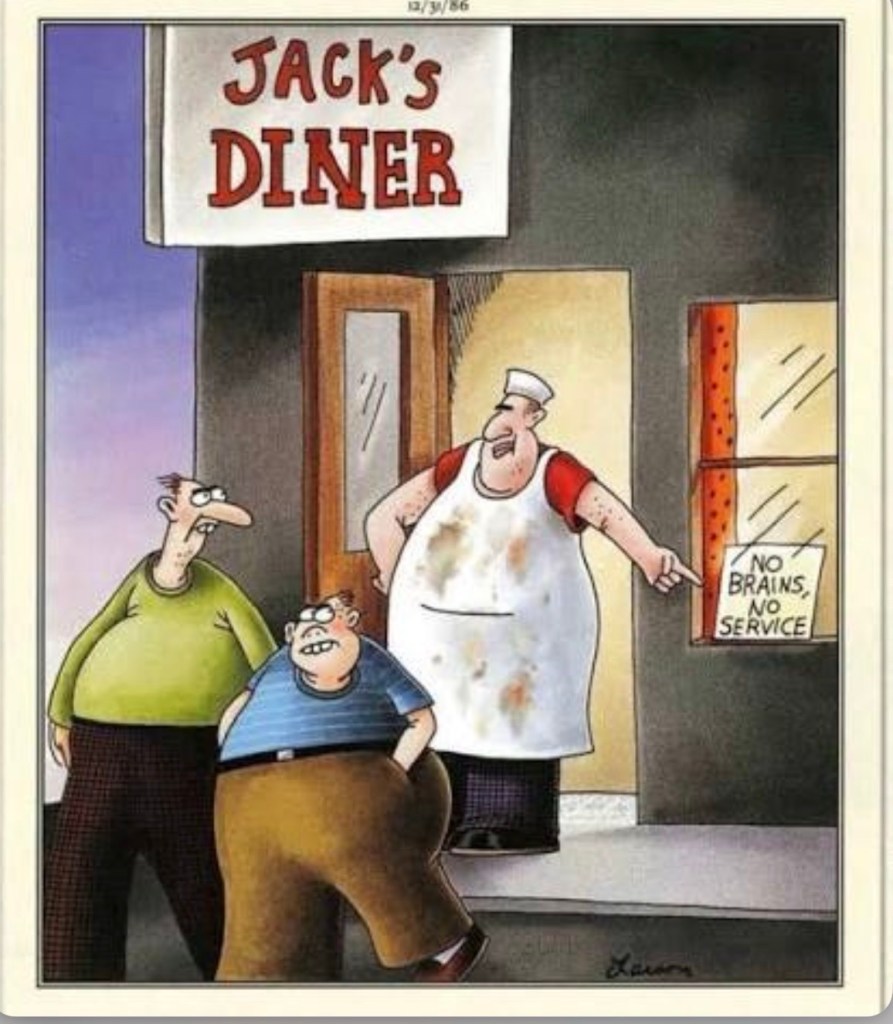
Every election cycle, without fail, the American media embarks on its sacred pilgrimage to the same mythical kingdom: a diner somewhere in Iowa, Indiana, or Ohio. You know the place. The coffee is burnt, the pie is suspiciously patriotic, and there’s always a guy named Randy sitting in a booth wearing a John Deere cap explaining geopolitics between bites of peach cobbler.
And apparently Randy is America now.
CNN treats this man like he’s the Oracle of Delphi. MSNBC nods solemnly while he explains why gas prices, immigrants, and “kids these days” are all somehow connected. Fox News practically bronzes him into a national monument. Every network sends reporters to stare deeply into the eyes of a guy whose international travel experience consists of getting lost once in Branson, Missouri.
Meanwhile, nobody seems remotely interested in what the actual majority of Americans living in cities think.
No one shoves a microphone in front of a bus driver in Chicago and asks, “Sir, what are your thoughts on NATO expansion?” Nobody interviews the woman running a deli in Queens about agricultural subsidies. Nobody in Seattle gets asked whether tariffs on Chinese goods are impacting democracy itself. The media never interrupts a guy grabbing tacos in East LA to ask how he feels about monetary policy and the future of Western civilization.
No. Apparently the soul of America lives exclusively in a laminated booth next to a jukebox off Interstate 70.
And the funniest part is the reverence. The media talks to these diner philosophers like they’re wise old monks living atop a mountain instead of people who still call every Asian country “the Orient.” Reporters lean in with furrowed brows while Earl explains that he’s voting against healthcare because freedom means choosing which untreated illness kills you.
Then comes the inevitable sentence:
“I just want somebody who understands people like me.”Buddy, the entire national media ecosystem has been treating you like the last surviving carrier of American DNA since 1984.
Meanwhile, urban voters — you know, the people who actually make up enormous chunks of the population and economy — are treated like background scenery. If New York sneezes, the global stock market catches pneumonia, but somehow a retired forklift operator in Dayton remains the official spokesman for “real America.”
It’s fascinating how “real America” always seems to involve places where the local Applebee’s counts as ethnic cuisine.
And let’s be honest: there’s also this weird implication that rural and exurban voters possess some magical moral clarity that city people lack. As though living near a cornfield automatically grants you superior insight into inflation, foreign policy, and constitutional law.
Because apparently if you live in Manhattan, Chicago, Miami, or Los Angeles, your opinions are invalidated by exposure to sushi and public transportation.
The media frames these diner interviews like anthropologists discovering an ancient tribe:
“Here we see the undecided Midwestern voter cautiously evaluating candidates while consuming a hot beef sandwich.”Meanwhile people in cities are just dismissed as predictable statistics instead of humans with thoughts, frustrations, and experiences of their own.
And what’s especially amazing is that these endlessly interviewed “forgotten Americans” are somehow the least forgotten people in modern politics. Presidents campaign for them. Pollsters obsess over them. Journalists write think pieces about them. Every economic policy gets filtered through whether Randy in Ohio “feels heard.”
Yet somehow Randy still believes he’s the ignored victim in all this while appearing on his fifth national news segment of the month.
Maybe the real issue isn’t that America ignores small-town voters. Maybe it’s that America has built an entire mythology around them while pretending everyone else is just standing off-camera holding the lighting equipment.
But don’t worry. In another four years, the media caravan will once again roll into some tiny diner at dawn to ask a man named Rick whether he believes Taiwan should exist.
And while maple syrup drips onto the Formica countertop, America will once again pretend this is the purest expression of democracy.
-
Lifetime appointment paradox
Dwain Northey (Gen X)
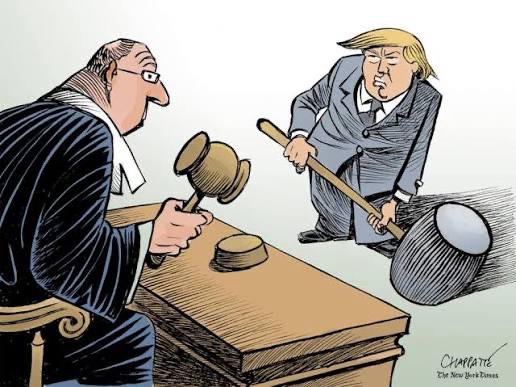
You’re Not Their Employee Anymore
One thing I have never quite understood about American politics is the expectation that judges should remain loyal to the president who appointed them. Once a federal judge is confirmed, whether it’s a district court judge in some federal courthouse or a justice sitting on the Supreme Court, they are not interns. They are not campaign staff. They are not contestants on a reality television show waiting for the boss to point a finger and declare, “You’re fired.”
They have lifetime appointments.
That’s not a bug in the system. That’s the feature.
The Founders, for all their faults and powdered-wig eccentricities, understood that judges needed to be insulated from political pressure. The whole point was to create a branch of government that could tell presidents, Congress, governors, and everyone else, “No, you can’t do that,” without worrying about whether their next performance review was coming up.
Yet every time a judge rules against the administration that appointed them, political commentators react as though they’ve witnessed an act of betrayal. “But he appointed you!” they cry.
Yes. And?
A federal judge’s job isn’t to protect the president’s feelings. It isn’t to rubber-stamp every policy proposal that comes down the pike. Their job is to interpret the law and the Constitution as they understand it. You may disagree with their interpretation, but they don’t owe the president a thank-you card every time a lawsuit appears in their courtroom.
Which brings us to Donald Trump.
One has to imagine that Trump’s understanding of federal judges occasionally collides with reality in a rather painful way. Throughout his business career and television career, if someone displeased him, he could usually remove them. Fire the executive. Replace the manager. Write a nasty social media post. Problem solved.
Federal judges don’t work that way.
If a Trump-appointed judge rules against him in a gerrymandering case, an election case, or an executive power dispute, there is no giant red button on the Resolute Desk labeled “Terminate Employee.” The judge doesn’t suddenly disappear in a puff of constitutional smoke.
They stay right where they are.
For life.
The Constitution essentially says, “Thank you for your concern, Mr. President, but this judge isn’t yours anymore.”
And that’s probably a healthy thing.
Imagine a judicial system where every judge had to constantly worry about pleasing the politician who appointed them. The courts would become little more than political customer service departments. Instead of asking, “What does the law say?” judges would be asking, “What would help my boss’s approval ratings this week?”
That would be disastrous.
Now, all of that said, I do think there’s a legitimate discussion to be had about the Supreme Court itself. We currently have thirteen federal judicial circuits and only nine Supreme Court justices. Contrary to popular belief, the Constitution never specified that there must be nine justices. Congress has changed the number several times throughout American history.
So the idea that nine is some sacred number handed down on stone tablets between the Ten Commandments and a recipe for manna is simply not true.
The Court had six justices at the beginning. At various points it had seven, nine, and even ten. Nine just happens to be the number we’ve settled on for the last century and a half.
Given the growth of the country, the population, and the federal court system, it’s not unreasonable for people to ask whether thirteen justices might better reflect thirteen circuits. Reasonable people can disagree about that, but at least it’s a discussion grounded in practical governance rather than mythology.
What strikes me as ironic is that many of the same people who insist judges should be independent suddenly become outraged when that independence actually shows up. We cheer judicial independence right up until a judge issues a ruling we don’t like. Then, somehow, independence becomes treason.
But that’s the whole point of lifetime appointments. The judge isn’t supposed to be loyal to the president. The judge is supposed to be loyal to the law as they understand it.
Whether they’re appointed by Trump, Obama, Bush, Clinton, Reagan, or whoever comes next, their constitutional duty remains the same.
And if that occasionally leaves a president staring at the television wondering why one of “his” judges just ruled against him, perhaps that’s evidence that the system is working exactly as intended.
-
God is “definitely“ Male
Dwain Northey (Gen X)

For centuries, people have insisted with absolute confidence that God is male. Not metaphorically male. Not “described in masculine language because ancient shepherds writing in patriarchal societies lacked nuanced theology.” No. Male male. Beard in the clouds male. Ultimate cosmic dad energy.
Which raises a rather obvious question nobody in Sunday school seemed eager to answer:
If God created Adam in His own image, and God is definitively male, exactly what was the long-term reproductive strategy here?
What was the original business model for humanity? Osmosis? Divine mitosis? Were Adam and his future descendants supposed to reproduce like amoebas? Maybe rub elbows aggressively until another fully grown adult wandered out of the shrubbery?
Because biologically speaking, if you start your species with one man and no women, you do not have a civilization. You have a very disappointing camping trip.
And apparently even God realized this almost immediately because the next chapter essentially becomes, “Well… this isn’t going anywhere.”
So then comes Eve. Not sculpted from clay like Adam, mind you, but allegedly manufactured from Adam’s rib. Which is fascinating because if the goal was simply companionship for loneliness, wouldn’t the obvious solution have been another man?
“Adam seems lonely.”
“Should we make him a buddy?”
“Absolutely. But first let’s invent an entirely new biological sex complete with mammary glands, reproductive systems, and the ability to create life inside their own body.”That feels like a pretty significant design pivot for what was supposedly just a roommate problem.
And this is where the whole “God is unquestionably male” argument begins wobbling like a folding chair at a barbecue.
Because every species on Earth has some version of complementary reproduction. Male and female. Pollinators and flowers. Eggs and sperm. Nature itself appears obsessed with balance, duality, and cooperative creation. The entire planet screams that existence is built on interdependence rather than one dominant half doing all the work.
Meanwhile, the one group claiming ultimate masculine supremacy is still relying on women to literally manufacture every human being who has ever existed.
Which brings us to the truly awkward theological speed bump:
Women create life.
Men participate enthusiastically for a few minutes and then pace around waiting rooms pretending they understand breathing exercises, but women are the ones growing organs from scratch while another skeleton forms inside them like some horrifyingly beautiful science-fiction miracle.
If you were assigning “closest thing to divine creation powers,” the scoreboard feels a little lopsided.
So perhaps an all-powerful creator wouldn’t be male at all. Or female. Or anything biologically recognizable. Maybe the very idea of assigning human gender to a cosmic entity says more about ancient societies than eternal truths.
Because an omnipotent being existing outside space and time probably is not worried about pronouns nearly as much as humans are.
And honestly, if an infinite intelligence created the universe, black holes, gravity, DNA, quasars, octopuses, and consciousness itself, it would probably find humanity’s obsession with celestial genitalia deeply embarrassing.
The irony, of course, is that many of the same people who insist God is male also insist that humans cannot question divine mysteries.
Yet the minute somebody asks, “So… how exactly was Adam supposed to populate Earth alone?” suddenly everyone develops the conversational reflexes of a politician avoiding tax questions.
Perhaps the simplest answer is the most uncomfortable one:
Ancient religious texts were written by men living in male-dominated cultures, and those men unsurprisingly imagined ultimate authority looking a lot like themselves.
History has a way of doing that.
Kings imagined heavenly kings.
Empires imagined heavenly empires.
Patriarchies imagined heavenly patriarchies.And somewhere along the line, people stopped recognizing metaphor and started treating poetry like architectural blueprints.
Still, credit where it’s due: creating Eve was at least an admission that masculinity alone was not sufficient to sustain creation.
Which may be the most unintentionally progressive plot twist in the entire Bible.
-
Old Advice (often ignored)
Dwain Northey (Gen X)

We all remember hearing it growing up. Your grandmother saying, “If you don’t have anything nice to say, don’t say anything at all.” Or if you were raised Gen X like me, you probably remember your dad delivering the far less delicate version: “Opinions are like assholes. Everybody’s got one.”
Simple advice. Crude maybe, but effective. It basically meant that just because you think something doesn’t automatically make it important, accurate, or necessary to unleash on the rest of humanity.
Somewhere along the line though, that advice apparently got thrown out with rotary phones, leaded gasoline, and basic social decorum.
Now everybody acts like their opinion is sacred scripture carved into stone tablets and delivered from a mountain. Doesn’t matter if it’s uninformed, objectively false, wildly exaggerated, or something they learned from a meme posted by a guy whose profile picture is an eagle wearing sunglasses. They believe it with the intensity of a medieval crusader.
And worse than having the opinion is the absolute refusal to even discuss it.
That’s the part that gets me.
We used to argue. Sometimes loudly. Sometimes sarcastically. Sometimes with a dramatic eye roll and a “Jesus Christ, are you serious?” But at least there was still an understanding that conversation existed. There was room for the possibility that maybe — just maybe — you didn’t know everything.
Today? People don’t discuss. They declare.
The second somebody questions them, they act like they’re under attack. Suddenly facts are “bias,” disagreement is “hate,” and every conversation becomes a hostage negotiation with someone emotionally married to their own nonsense.
I’ll openly admit I’m no saint here. I’m fluent in sarcasm. I have perfected the exhausted eye roll. I occasionally deploy a comeback sharp enough to qualify as a misdemeanor in several states. But even then, I know my opinion is still just that — an opinion. Not gospel. Not law. Not the final word handed down from the heavens.
It’s just my take.
And honestly, most opinions are pretty useless in the grand scheme of things. They’re like belly buttons. Everybody has one, and outside of very specific circumstances, nobody really needs to see yours.
That doesn’t mean people shouldn’t think critically or speak freely. Of course they should. But somewhere we confused having a voice with having authority. We started treating confidence like expertise. Loudness became intelligence. Stubbornness became strength.
And social media poured gasoline on the whole mess.
Now every half-formed thought gets broadcast instantly to hundreds or thousands of people like it’s breaking news. No reflection. No humility. No pause to consider whether maybe this thought could’ve just stayed inside your head where it belonged.
Not every opinion deserves a standing ovation. Some deserve scrutiny. Some deserve debate. And some honestly deserve the spiritual equivalent of your grandmother narrowing her eyes from across the kitchen table and saying, “Maybe keep that one to yourself.”
Because wisdom used to include knowing when to speak.
Now people think wisdom is never shutting the hell up.
-
Ego… look at me
Dwain Northey (Gen X)

There has got to be a part of Donald Trump that looked across the Atlantic after Queen Elizabeth II died and thought, “Well now wait a minute… why does Charles get all the fun?”
Because think about it. The moment King Charles III ascended to the throne, the machinery of monarchy kicked into gear. New postage stamps. New portraits. New official portraits hanging in government buildings. And perhaps most importantly to a man obsessed with branding, new currency. Charles’ face is now sliding onto pound notes and coins simply because he inherited a crown.
And somewhere in Mar-a-Lago, Donald probably saw that and thought, “See? THAT’S what respect looks like.”
The difference, of course, is that Charles actually is a king. Ceremonial, constitutional, fancy-hatted, ribbon-cutting king, yes, but still a king. England literally has a monarchy. They have spent centuries perfecting the art of putting one family’s face on money and pretending it’s perfectly normal. It’s baked into the system. Americans fought an entire revolution specifically to avoid that sort of thing.
Which makes Trump’s apparent fixation with slapping his image onto everything feel less patriotic and more like a man trying to cosplay monarchy in a country founded to reject it.
Now we’ve got talk about commemorative currency, including the idea of a $250 bill with Trump’s face on it tied to the 250th anniversary of the Declaration of Independence. Because apparently nothing says “celebrating freedom from kings” like printing a politician’s giant orange head onto a denomination that doesn’t even exist.
You almost have to admire the irony.
The Declaration of Independence was essentially America’s breakup text to a monarch. It was the colonies saying, “We’re done with inherited power, royal ego, and one guy thinking he’s the center of the universe.” Fast forward 250 years and somehow we’re discussing whether one American politician deserves the kind of symbolic treatment usually reserved for dead presidents and hereditary rulers.
And this obsession with image projection keeps growing. His face on trading cards. His face on merchandise. His name in gold letters large enough to be seen from low Earth orbit. Reports of his image being pushed into official government aesthetics. There is always this gravitational pull toward iconography, toward permanence, toward being visually unavoidable.
Because for Trump, visibility equals legitimacy.
That’s why Charles getting his face on actual currency probably stings in a way most people don’t even consider. Charles doesn’t have to demand reverence. The institution hands it to him automatically. The crown itself manufactures importance. Trump, meanwhile, has spent decades trying to manufacture the same aura through sheer repetition, branding, and spectacle.
And at the core of it is something deeper than vanity. Trump doesn’t merely seem to want admiration; he seems to want historical anointment. Not just remembered, but canonized. Not merely elected, but chosen. There’s always this undertone that he views himself as existing above ordinary political figures, as if criticism is not disagreement but heresy.
That’s why so much of his rhetoric drifts into messianic territory. He’s not just wronged politically; he’s persecuted. He’s not just popular; he’s destined. Supporters don’t merely vote for him; some speak about him in almost theological terms, as though he descended from a golden escalator carrying divine purpose and a Sharpie.
Meanwhile Charles, who waited seventy years to become king, probably would gladly trade some of that ceremonial burden for a quiet afternoon and fewer public appearances. But monarchy is inherited duty. Trump treats power like product placement.
And honestly, if you step back from all of it, the strangest part may be how much of modern politics has become about imagery rather than governance. We used to argue about tax policy, infrastructure, healthcare, foreign alliances. Now we spend entire news cycles discussing portraits, flags, branding, slogans, social media posts, and whether someone’s face belongs on money.
America doesn’t have a king. At least not officially. But we do seem dangerously fascinated with the aesthetics of kingship.
And Donald Trump, watching Charles calmly appear on pound notes by royal tradition, probably sees not a constitutional formality but a level of symbolic adoration he desperately wishes America would grant him.
Which is awkward considering the entire point of America was supposedly, “Yeah… we don’t do that here.”
-
Catch 22
Dwain Northey (Gen X)

It’s a strange kind of Catch-22 to realize that you probably weren’t going to go anyway, but it still hurts not to be asked. I tell myself that I like my solitude, that crowds drain me, that small talk feels like emotional wallpaper pasted over silence nobody wants to acknowledge. Most of the time that’s true. If I’m honest, there’s a good chance I would have found an excuse not to attend the barbecue, the birthday dinner, the family get-together, or whatever event filled everyone’s Instagram stories that weekend.
But knowing I would have declined doesn’t magically erase the sting of never being considered in the first place.
There’s something quietly painful about scrolling past smiling photos of cousins, siblings, aunts, uncles, everybody gathered together while realizing you had absolutely no idea it was even happening. Not because anyone actively dislikes you. That almost might hurt less. It’s more subtle than that. It’s the realization that after years of isolating yourself, people eventually stop reaching. Your absence becomes expected. Permanent. You unintentionally train the world to live around the empty space where you used to be.
And maybe that’s the hardest part — knowing there’s no villain in the story.
People stop inviting you because you stopped showing up. You stop showing up because somewhere along the way being around people became exhausting. Then one day you look around and discover the invitations dried up so completely that your name probably doesn’t even enter anyone’s mind anymore. Not out of cruelty. Just habit.
That’s the punch in the nose.
Not the event itself. Not even missing it. It’s the feeling of becoming invisible in slow motion.
What makes it worse is that humans are contradictory creatures. We want connection while avoiding vulnerability. We want to belong while keeping one foot permanently near the exit. We convince ourselves we prefer being left alone right up until the moment we actually are.
And then suddenly loneliness doesn’t feel dramatic or cinematic. It feels administrative. Quiet. Like being accidentally removed from a group chat nobody noticed you disappeared from months ago.
I think that’s why those pictures can hurt more than they probably should. They’re evidence that life keeps moving with or without your participation. Family traditions continue. Memories are made. Jokes are shared. And somewhere in the background is the uncomfortable realization that if you isolate yourself long enough, eventually people stop seeing your absence as temporary and start seeing it as simply who you are.
Still, if I’m being fair, there may actually be something worse than not being invited at all. Maybe it’s being invited, showing up, sitting through the event, smiling when expected, making conversation, and then later realizing you were never really included anyway. Because there’s a different kind of loneliness in physically being present while emotionally existing off to the side somewhere, like background scenery in someone else’s important moment.
At least when you aren’t invited, your absence is understood from the beginning.
But being there and still somehow erased feels almost surreal. Looking through photos afterward and realizing there isn’t a trace of you can make you question whether you occupied any meaningful space there at all. I think about my son’s wedding sometimes and realize I’m probably not in a single picture, which is sad considering I was there the entire time. I watched one of the biggest moments of his life unfold in front of me, yet if someone looked through the photographs years from now, they might never even know I attended.
And maybe that’s what all of this really circles back to — the fear that isolation eventually turns you into a ghost long before you’re actually gone. Not hated. Not rejected outright. Just quietly edited out over time until your absence no longer creates a space anyone notices needs filling.
-
Inequality built in
Dwain Northey (Gen X)
There’s this mythology in America that the middle class just somehow failed itself. That regular people stopped working hard enough, stopped grinding enough, stopped pulling themselves up by whatever patriotic footwear metaphor politicians are selling this week. And somehow, according to the people sitting in boardrooms making eight figures a year, the reason a family can’t afford groceries, rent, healthcare, and college simultaneously is because they bought Starbucks twice this month.
Sure. That must be it.
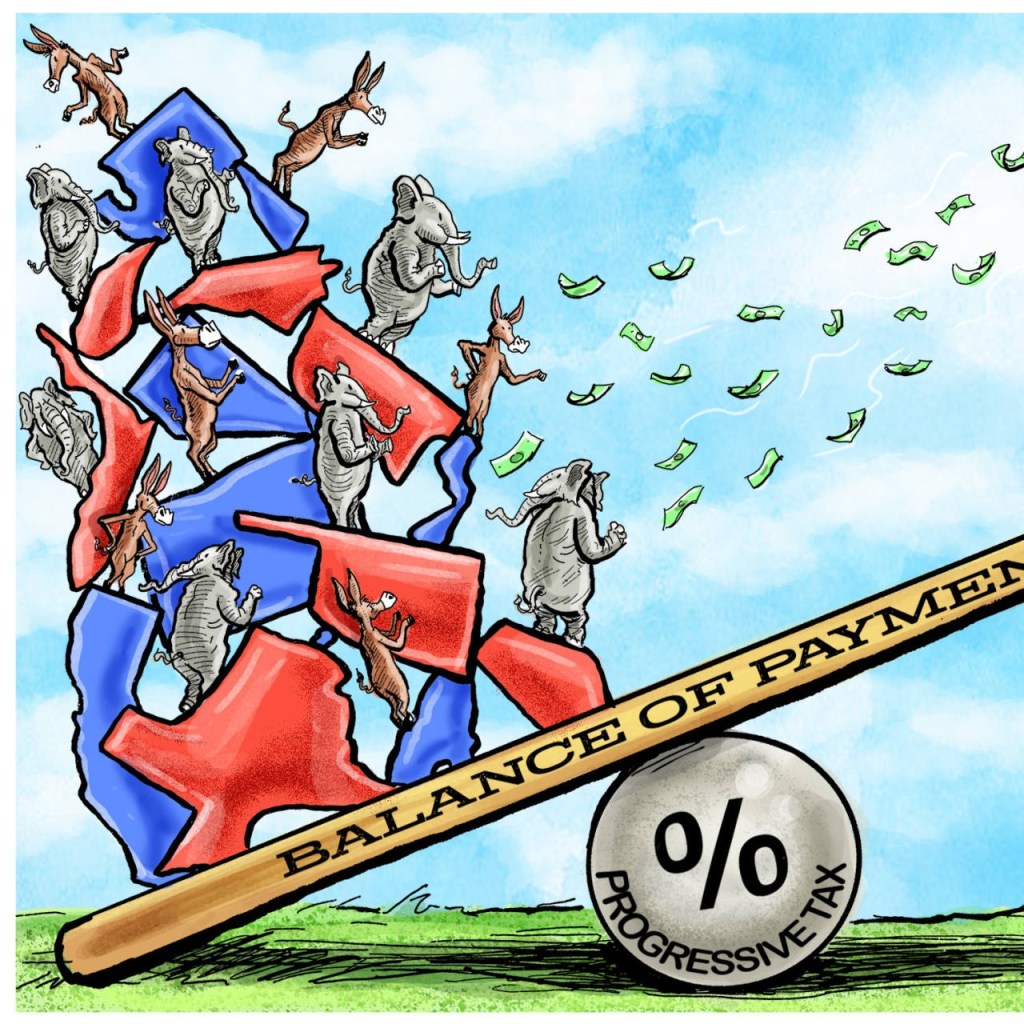
But if you actually look backward instead of just yelling “socialism” every time someone mentions fairness, there’s a pretty direct line between the destruction of the middle class and the dismantling of the progressive tax structure that built the middle class in the first place.
Back during the Eisenhower administration — yes, Republican Eisenhower, not Karl Marx hiding under the Resolute Desk — the top marginal tax rate on the ultra wealthy was over 90%. Corporations and the richest Americans actually paid substantial taxes. And somehow, strangely enough, civilization didn’t collapse. Rich people still existed. Businesses still operated. America somehow managed to survive despite millionaires not being allowed to hoard every nickel like anxious dragons sitting on a pile of gold bullion.
And what happened during that era?
The middle class exploded.
One income could buy a house. One income could raise children. One income could support a family, buy a car, take a vacation once in a while, and maybe even retire without having to choose between medication and electricity. Workers were paid enough to actually participate in the economy they were helping create.
Then Kennedy lowered the top rate to around 70%. Still high by today’s standards, but the middle class kept growing because the system still fundamentally understood something we seem to have forgotten: when wealth circulates, economies thrive. When workers have money, they spend it. When they spend it, businesses grow. When businesses grow, jobs grow. It’s almost like consumers matter more than stock buybacks.
Then came the Reagan era, where “trickle-down economics” was sold to America like some kind of financial gospel. Taxes on the wealthy were slashed dramatically under the promise that if rich people kept more money, prosperity would somehow rain down on everyone else like magical economic confetti.
And forty years later, we’re still standing outside waiting for the trickle.
What actually happened was predictable to literally anyone not being paid to go on television and pretend otherwise. Wealth consolidated upward. Corporations became obsessed with shareholder value over worker value. Wages stagnated while productivity soared. CEOs started making 300 times what their workers make while simultaneously explaining that nobody wants to work anymore.
No, people want to work. They just don’t want to work forty hours a week and still need three roommates and a GoFundMe for insulin.
The tax structure changed from “those who benefit the most from society should contribute the most back into society” into “how do we create as many loopholes as possible for billionaires while auditing waitresses over undeclared tip money?”
And now everybody’s fighting over scraps.
The working class blames the poor. The poor blame immigrants. The middle class blames itself. Meanwhile the ultra wealthy sit comfortably above the chaos explaining that universal healthcare is somehow too expensive while they launch themselves into space for fun.
That’s the part that feels insane.
We’ve normalized levels of wealth inequality that would’ve horrified previous generations. A handful of people possess more wealth than entire populations, and we’re somehow told the real problem is a single mother using food assistance or a teacher asking for classroom supplies.
The middle class didn’t collapse because ordinary Americans became lazy. It collapsed because policy changed. Deliberately. Systematically. Over decades.
When tax rates on the ultra wealthy were high, corporations reinvested profits into workers, pensions, infrastructure, and growth because hoarding money wasn’t as advantageous. Once those guardrails disappeared, the incentive became extraction. Squeeze labor. Cut benefits. Automate everything possible. Consolidate wealth upward endlessly.
And now here we are.
Two-income households struggling harder than one-income households did fifty years ago. People working multiple jobs and still drowning. Entire generations unable to buy homes while hedge funds purchase neighborhoods like Monopoly pieces.
But every election cycle we’re still told the billionaire class desperately needs another tax break or civilization itself may crumble.
At some point you have to stop calling that economics and start calling it what it really is: organized upward wealth transfer disguised as patriotism.
And maybe the cruelest irony of all is that the same people suffering most from these policies are often convinced to defend them. Because if there’s one thing America perfected, it’s convincing struggling people that someday they too might be billionaires — and therefore should protect billionaire interests now just in case.
Meanwhile, the potholes get bigger, healthcare gets more expensive, schools get worse, retirement disappears, and everybody wonders why life feels harder despite supposedly living in the richest country on Earth.
Turns out when the people at the top stop paying their share, everybody underneath feels the holes.
-
Choices
Dwain Northey (Gen X)
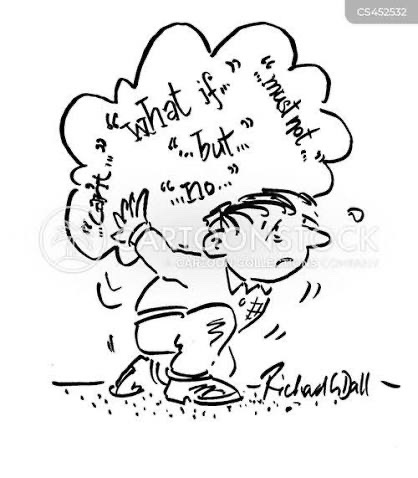
I think most of us spend way too much time haunting the graveyard of our own decisions. Standing there staring at all the little headstones marked “what if.” What if I took that job? What if I stayed? What if I left sooner? What if I said yes? What if I said no? What if I made one different turn twenty years ago and suddenly I’m living in some beachfront house with lower blood pressure and better knees?
But that’s not life. That’s fan fiction.
I know I’m guilty of it too. I replay conversations like there’s some director’s cut version of my life hidden somewhere in the archives. Maybe if I had chosen differently, I’d be happier. Maybe I’d be richer. Maybe I’d still have certain people in my life. Maybe I’d have avoided certain scars. Human beings love to imagine that somewhere out there is an alternate timeline where every choice magically worked out perfectly.
We’ve been obsessed with the multiverse long before Marvel turned it into a two-hour CGI migraine. The idea isn’t new. Hell, It’s a Wonderful Life was basically a “what if” story decades ago. What if George Bailey had never been born? What if one missing piece changes everything? It’s the same concept dressed up in black-and-white sentimentality instead of superheroes punching holes through dimensions.
And honestly, I get the appeal.
Because reality is heavy. Choices are permanent. Once the toothpaste is out of the tube, you don’t get to politely ask life to put it back in. So our brains create these little escape hatches. Parallel universes where we were smarter, braver, luckier, thinner, less stubborn, more patient, or just happened to be standing in the right place at the right time.
But eventually I had to realize something uncomfortable.
“What if” doesn’t count.
It just doesn’t.
If “ifs and buts were candy and nuts, we’d all have a Merry Christmas.” My grandparents used to say that, and I hated it when I was younger because it sounded dismissive. But now I understand it. You cannot build a life on hypothetical bricks. You can visit the land of what-if once in a while, but you can’t move there permanently. Too many people do. They unpack their bags and start decorating imaginary lives they never actually lived.
Meanwhile, real life keeps happening without them.
I think sometimes we romanticize alternate outcomes because we only imagine the good parts. We picture the road not taken like it comes with perfect lighting and a movie soundtrack. We never imagine that maybe taking that other job would’ve made us miserable. Maybe marrying that person would’ve ended in disaster. Maybe moving across the country would’ve left us lonely and isolated. Maybe the thing we regret avoiding was actually the thing that saved us.
We don’t know.
That’s the whole point.
Every choice closes certain doors and opens others. That’s being alive. Nobody gets every version of life. We only get one. One messy, confusing, occasionally beautiful timeline where we do the best we can with incomplete information and exhausted brains and emotions we barely understand half the time.
And honestly? Sometimes surviving your choices is more important than perfectly optimizing them.
I’ve started realizing that maturity is understanding there’s no cosmic scoreboard comparing your life against all the alternate versions that never happened. There’s just this one. This imperfect, weird, complicated existence where we stumble forward making decisions we hope make sense at the time.
Some choices will absolutely haunt me forever. I’m human. I know that. There are conversations I wish I’d handled differently. Opportunities I should’ve taken. People I should’ve appreciated more while they were still here. I don’t think anyone reaches adulthood without carrying at least a few ghosts around.
But I also know this: constantly staring backward keeps you from seeing what’s still in front of you.
At some point, you stop asking, “What if?” and start saying, “Well… this is where I ended up. Now what?”
And honestly, that question matters a hell of a lot more.
-
Check Engine
Dwain Northey (Gen X)

There are very few things in life that can ruin your entire day faster than a check engine light. You can wake up in a decent mood, grab your coffee, maybe even convince yourself that life is manageable for five consecutive minutes, and then suddenly there it is. That little glowing orange demon on the dashboard. Instantly your stomach drops. Your brain goes from zero to catastrophe in under three seconds.
Because nobody ever sees a check engine light and thinks, “Oh good, this is probably inexpensive.”
No. The human brain immediately goes to worst-case scenario. Transmission. Engine failure. Financial collapse. Walking to work. Selling organs on the black market to afford repairs. The light itself doesn’t even tell you what’s wrong, which somehow makes it worse. It just glows there ominously like your car knows something terrible and refuses to elaborate.
And I’m sure I’m not the only one who feels like living in America right now feels exactly like driving around with a permanent national check engine light.
Every single day there’s another noise coming from under the hood of this country, another vibration you swear wasn’t there yesterday, another flashing warning signal telling us something is deeply, fundamentally wrong. And sitting in the driver’s seat of all of it is Donald Trump, somehow managing to make the entire planet feel like a 1998 Ford Taurus one missed oil change away from exploding on the interstate.
Maybe I pay too much attention to the news. Maybe doomscrolling has permanently rewired my nervous system. But I swear the collective anxiety level of this country feels like millions of people hearing an unfamiliar clunk in their engine at the exact same time.
Because with Trump, everything feels unstable all the time. Every speech feels like smoke coming out from under the hood. Every social media post feels like another warning light turning on. Every international conflict feels like the mechanic calling to say, “Well… I’ve got bad news.”
We’ve got escalating tensions with Iran. Constant political chaos. International allies looking at us the way passengers look at a pilot who just said, “Huh, that’s weird,” over the intercom. And through all of it, we’re supposed to continue pretending this is normal.
It’s exhausting.
I honestly think a huge percentage of Americans are walking around with low-grade political PTSD at this point. Not just from one event, but from the nonstop chaos fatigue of never knowing what fresh insanity is waiting when we wake up. It’s the emotional equivalent of hearing a strange rattling noise in your car for years while somebody keeps insisting the vehicle is running “better than ever.”
No, it isn’t.
The engine is screaming.
And maybe that’s the part that wears me down the most. The people acting like the blinking red warning light is somehow patriotic. Like acknowledging the obvious danger is the real problem instead of the danger itself. Meanwhile the rest of us are white-knuckling it through traffic wondering whether democracy is about to overheat on the side of the road.
The stress becomes constant background noise. You wake up already bracing yourself for headlines you haven’t even read yet. Your nervous system never fully powers down because the national dashboard is permanently lit up like a Christmas tree.
Oil pressure low.
System malfunction.
Engine overheating.
Democracy traction control disabled.And the worst part is knowing that unlike a car, you can’t just pull over somewhere safe and turn the whole thing off for a while. You still have to go to work. Pay bills. Buy groceries. Pretend everything is fine while the metaphorical engine coughs smoke into the atmosphere.
I’m sure I’m not the only one who feels this way, because you can almost see it in people now. That exhausted look. That constant tension. That feeling that everyone is just waiting for the next terrible thing to happen because lately there’s always a next terrible thing.
At this point, America doesn’t feel like a superpower.
It feels like a car making a noise your mechanic described as “concerning,” but you can’t afford to fix it, so everybody just keeps driving and praying the wheels don’t come off on the freeway.
-
100 years
Dwain Northey (Gen X)

There are moments when I sit down and do the math on my family history and my brain just kind of short-circuits for a minute. This year would have been my grandmother’s 100th birthday. One hundred years. A whole century. She was born in 1926, which sounds less like a birth year and more like the answer to a trivia question about silent movies and bread lines.
And I know I can’t be the only person who has looked backward at the chronology of their grandparents’ lives through the lens of modern social norms and thought, “Wait… hold on… that math feels illegal now.”
My grandfather was born in 1913. My grandmother in 1926. Their first child, my uncle, was born in 1943. My father came along in 1945. Then my aunt in 1956. If you line all those dates up against today’s standards, people start reaching for calculators, therapy, and maybe a mandatory reporting hotline.
By modern standards, only one of those births would have even remotely passed without somebody side-eyeing the situation. Today we hear phrases like “age gap discourse,” “power imbalance,” and “call the police.” Back then, people were just out there surviving the Great Depression, fighting world wars, and apparently getting married at ages that would make current social media implode in real time.
It’s wild how much social norms can change in a hundred years.
And the thing is, I’m not even saying that change is bad. A lot of it is probably good. Society evolved. We learned things. We became more protective of young people. We started questioning dynamics that previous generations accepted without blinking an eye. That’s progress.
But it’s still difficult to reconcile emotionally because these aren’t abstract historical figures in a textbook. These are my grandparents. These are people I knew. People who loved me. People who existed in a completely different social framework than the one we live in now.
When I think about my grandmother turning 100 this year, I don’t first think about controversy or morality or sociology. I think about the smell of old perfume and coffee. I think about those impossibly tough old women who survived everything. Wars. Rationing. Economic collapse. Raising kids without modern medicine, modern conveniences, or Google telling them whether a fever meant “drink water” or “prepare your will.”
That generation operated under an entirely different understanding of adulthood and responsibility. By the time many of them were teenagers, they were already working jobs, running households, or helping raise siblings. Childhood itself looked different. Life expectancy looked different. Expectations looked different.
And honestly, trying to overlay 2026 morality onto 1926 realities is like trying to install modern airbags into a horse-drawn carriage. Technically, you can discuss it, but the entire framework underneath it was built for a completely different world.
That’s the strange thing about family history. The farther back you look, the more you realize human beings didn’t suddenly become complicated. We just changed the rules around them. Every generation thinks their norms are permanent right up until the next generation comes along and decides half of it was insane.
Which makes me wonder what people 100 years from now will look back on us for.
Because if history teaches anything, it’s that someday our great-grandkids are probably going to stare at our timelines, our relationships, our politics, our beauty standards, our technology addictions, and say, “Wait… you people thought THAT was normal?”
And honestly, they probably won’t be wrong.


You must be logged in to post a comment.