Dwain Northey (Gen X)
https://www.cbsnews.com/news/naacp-travel-advisory-florida-says-state-hostile-to-black-americans/
Remember the good old days when there were only travel advisories and or ban for, what some would call, third word countries? Well now because of the vile vitriol of one Governor Ron DeSantis the state of Florida, a vacation destination, has received a travel advisory by the NAACP.
The wannabe future President has made the climate so venomous in Florida the anyone who is a part of any minority group does not feel safe in the state. Black, Brown, LGTBQ+, these are all groups that are under attack in the Sunshine State. The majority Republican legislature and their fearful leader has passed laws that make almost everything a jailable offence and the fact that the state has very loose gun laws and a stand your ground law makes it more dangerous than being a blonde female in central America.
Florida residents are able to carry concealed guns without a permit under a bill signed into law by Republican Gov. Ron DeSantis. The law, which goes into effect on July 1, means that anyone who can legally own a gun in Florida can carry a concealed gun in public without any training or background check. This with their ridiculous stand your ground law, ‘Florida’s “Stand-Your-Ground” law was passed in 2005. The law allows those who feel a reasonable threat of death or bodily injury to “meet force with force” rather than retreat. Similar “Castle Doctrine” laws assert that a person does not need to retreat if their home is attacked.’ Makes it really sketchy to go there.
This in top of the don’t say gay rule and the new trans ruling that just passed.
“Florida lawmakers have no shame. This discriminatory bill is extraordinarily desperate and extreme in a year full of extreme, discriminatory legislation. It is a cruel effort to stigmatize, marginalize and erase the LGBTQ+ community, particularly transgender youth. Let me be clear: gender-affirming care saves lives. Every mainstream American medical and mental health organization – representing millions of providers in the United States – call for age-appropriate, gender-affirming care for transgender and non-binary people.
“These politicians have no place inserting themselves in conversations between doctors, parents, and transgender youth about gender-affirming care. And at the same time that Florida lawmakers crow about protecting parental rights they make an extra-constitutional attempt to strip parents of – you guessed it! – their parental rights. The Human Rights Campaign strongly condemns this bill and will continue to fight for LGBTQ+ youth and their families who deserve better from their elected leaders.”
This law makes it possible for anyone to just accuse someone of gender affirming care to have their child taken from them this would include someone traveling from out of state. This alone justifies a travel ban to the Magic Kingdom for families.
Oh, and I haven’t even mentioned DeSantis holy war with Disney, the largest employer in the state. I really hope the Mouse eats this ass holes lunch.
Well that’s enough bitching, thanks again for suffering though my rant.
-
State of the Union 26’
Dwain Northey (Gen X)

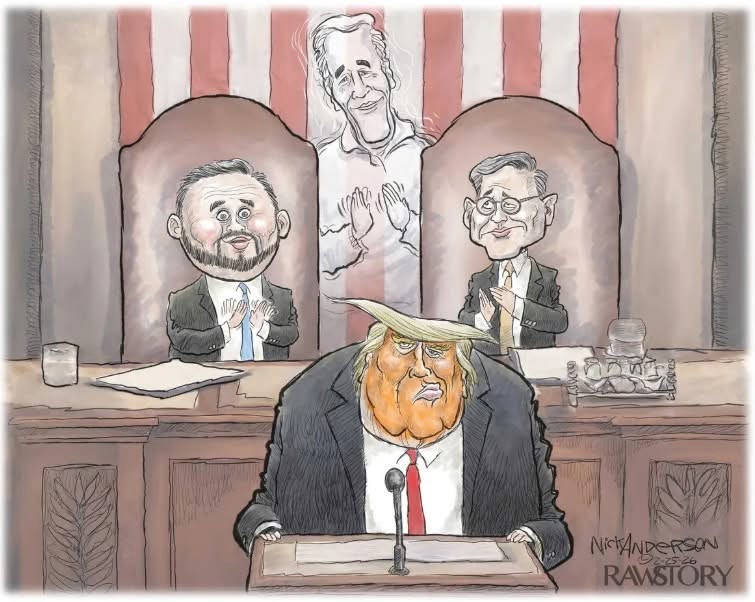
Last night felt less like a serious address and more like open-mic night at the Ministry of Make-Believe. The union bravado, the pure Patterson-style rhetoric—grand, indignant, overflowing with confidence—might have sounded impressive if you didn’t actually, you know, live here.
At the center of it all was Donald Trump, once again spinning tales that exist primarily in the cinematic universe of his own imagination. According to the script, everything is booming, everyone is thrilled, and any evidence to the contrary is just fake, unfair, or insufficiently loyal. It’s a remarkable trick: declare victory loudly enough and hope reality gets embarrassed and leaves the room.
And apparently, brevity is for the weak. What we witnessed was a record-length marathon of self-congratulation—a filibuster of fantasy dressed up as governance. If ratings were measured in sheer endurance of nonsense, this would have broken every Nielsen record on the books. The American public, should they have tuned in, were subjected not to information, not to policy, but to an extended director’s cut of alternate reality.
The problem is that the American public doesn’t feel the standing ovations he seems to hear in his head. Groceries still cost what they cost. Rent still arrives on time. Paychecks still stretch like cheap elastic. You can’t union-buster your way out of lived experience, and you can’t Patterson-plot twist your way past math.
The hypocrisy is the real headliner. Rail against elites while gold-plating your own narrative. Preach truth while peddling stories that wobble under the slightest fact-check. Wrap it all in patriotic bunting and call it destiny.
In the end, it wasn’t just long. It was impressively, almost athletically long—an Olympic event in rhetorical excess. And somewhere between hour one and “are we still doing this?” the applause faded, the talking points blurred, and the country was left wondering whether leadership is supposed to inspire confidence… or simply test bladder control.
-
Tariff Tantrum
Dwain Northey (Gen X)

There is something almost poetic about watching a man who branded himself as the ultimate dealmaker discover that even the highest court in the land is not, in fact, one of his subsidiaries.
Imagine the scene: after years of boasting about having appointed “his” justices, after celebrating a Court reshaped in his image, after implying that loyalty flows upward like tribute to a monarch, the ruling comes down. The supposedly handpicked bench informs him—politely, in legal prose—that blanket tariffs imposed by executive whim do not magically become constitutional just because he really, really wants them to be.
And thus, the tantrum.
For someone who once treated tariffs as a kind of economic fairy dust—sprinkle them on imports and watch factories bloom, prices fall, and patriotic eagles circle overhead—it must sting to be told that Article I of the Constitution actually exists. That Congress, not a single aggrieved executive, holds the power of the purse. That even a president who sees himself as a walking brand extension does not get to rewrite separation of powers between rounds of cable news interviews.
Of course, in true fashion, the response is not reflection but defiance. He’ll “figure out a way.” Because when confronted with constitutional limits, the solution is obviously to find a side door, a loophole, a “very legal and very cool” workaround. Why accept that tariffs—taxes on imports, paid largely by American businesses and consumers—have been quietly padding grocery bills and hardware receipts? Why admit that the promise to lower prices has collided head-on with the reality of trade economics?
Tariffs are marketed as punishment for foreign nations. In practice, they are a surcharge on Americans with the audacity to buy things. The cost doesn’t vanish in a puff of nationalist rhetoric; it shows up in the price of appliances, cars, construction materials. It is the most indirect way imaginable to “lower costs”—by first raising them and then insisting that patriotism makes the difference disappear.
But the deeper comedy lies in the shock. The disbelief. The outrage that the Supreme Court—an institution he praised when it delivered wins—would dare to apply the same constitutional constraints when the outcome is inconvenient. It’s as though the concept of judicial independence was charming in theory and intolerable in practice.
And so we are treated to the spectacle of a former president railing against judges he once celebrated, vowing to outmaneuver a system designed precisely to prevent unilateral economic decrees. All while ordinary Americans, who were promised relief at the checkout counter, continue to finance this grand experiment in executive improvisation.
If irony were an import, perhaps it, too, would face a tariff. Though in this case, Americans are already paying the price.
-
Profit First
Dwain Northey (Gen X)
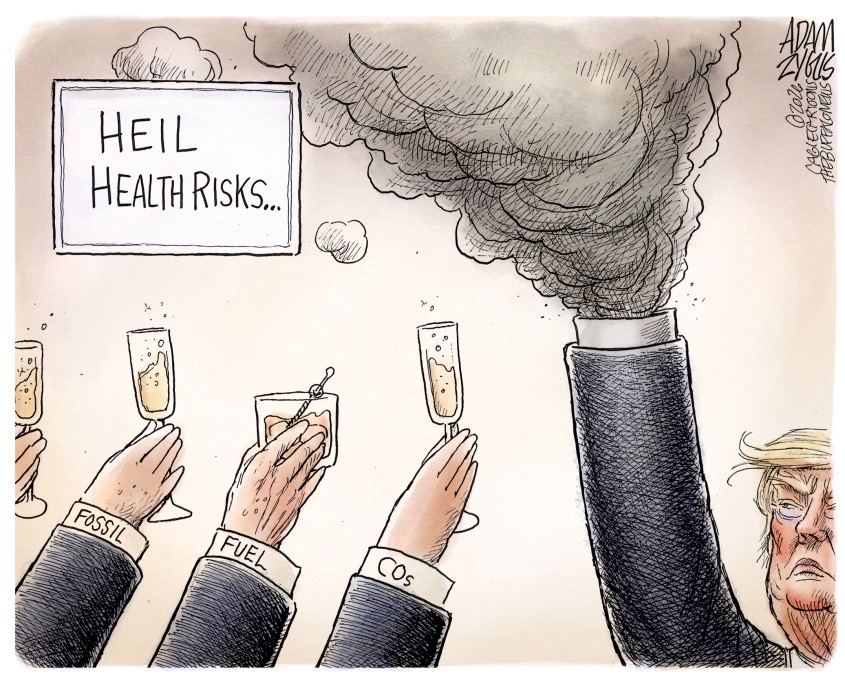
There is something almost theological about the way we worship money in this country. Not respect it. Not use it. Worship it. We bow to quarterly earnings like medieval peasants bowed to relics. We defend billionaires with the zeal once reserved for saints. And when forced to choose between sustaining life and sustaining luxury, we somehow keep choosing the marble countertops.
Look at what’s happening with the dismantling of environmental protections. Agencies like the Environmental Protection Agency were created for a simple reason: rivers catching fire was bad for business—specifically, the business of breathing. The point wasn’t ideological. It was survival. Clean air. Clean water. Basic planetary maintenance.
Yet here we are again, watching regulations get stripped away because certain industries find them inconvenient. Polluting is cheaper. Waste disposal cuts into margins. Safeguards slow growth. And growth, we are told, is sacred. Growth must continue. Growth is the altar.
The irony, of course, is breathtaking. The same executives who fight climate rules live in coastal mansions, invest in water futures, and build bunkers in places like New Zealand. They seem to believe that money is an atmospheric filter. That cash can substitute for oxygen. That a portfolio can stabilize a collapsing ecosystem.
Spoiler: it can’t.
We’ve seen this movie before. The cigarette industry didn’t just suspect that smoking was harmful; it knew. Internal memos revealed that companies like Philip Morris understood the link between smoking and cancer decades before the public did. And yet they funded doubt. They hired scientists to blur conclusions. They sold addiction with a smile and a slogan. Because the revenue was enormous. Because shareholders needed reassurance. Because profit margins apparently mattered more than lungs.
How many funerals did that buy?
This is the recurring pattern: when evidence threatens wealth, wealth fights back. When science suggests limits, money demands exceptions. The fossil fuel industry has mirrored the tobacco playbook almost line for line—delay, deny, distort, deflect. Meanwhile, storms intensify, droughts expand, wildfires turn entire regions into tinderboxes. But the quarterly reports still look good, so the machine hums along.
The moral equation has somehow flipped. Protecting life is framed as “anti-business.” Regulating toxins is called “job-killing.” Preserving ecosystems is portrayed as extremist. And asking corporations not to poison shared resources is considered radical.
At what point do we ask the obvious question: what exactly is the economy for?
An economy is not a deity. It is not a living being that must be fed sacrifices of asthma rates and cancer clusters. It is a tool. A human invention meant to support human life. If the tool begins undermining the life it was designed to serve, then the tool—not the life—needs to change.
But we’ve blurred the hierarchy. Wealth has become the objective instead of the instrument. Luxury has become more sacred than longevity. We treat environmental collapse like an accounting inconvenience instead of an existential threat.
There’s also a brutal inequality in the gamble. The wealthy can insulate themselves longer. Air purifiers. Private healthcare. Relocation options. Investment hedges. The poorest communities live closest to refineries, highways, toxic runoff. They don’t have escape hatches. They absorb the externalities.
And still we’re told deregulation is “freedom.”
Freedom for whom?
The deeper issue isn’t left versus right. It’s whether we believe human life—collectively, globally, long-term—has intrinsic value beyond its economic output. If the answer is yes, then clean air and stable climates are non-negotiable foundations. If the answer is no, then we are simply investors riding the market until the planet liquidates.
History is littered with civilizations that extracted their environments beyond repair. None of them were saved by having the highest GDP of their era.
So the real question isn’t whether wealth is bad. Wealth can fund research, innovation, medicine, education. It can build resilient infrastructure. It can accelerate clean energy. But only if it is subordinated to life rather than elevated above it.
At what point do we realize that sustaining life is more important than sustaining wealth?
Probably the moment sustaining life becomes impossible.
The tragedy is that by then, the money won’t matter.
-
Aliens
Dwain Northey (Gen X)

There are moments in American political life when satire simply throws up its hands and says, “You know what? I can’t compete with this.”
Recently, on a podcast appearance, Barack Obama was asked the kind of question that has launched a thousand dorm-room debates: Do aliens exist? Obama responded with what can only be described as cosmological common sense. In a universe as vast as ours, he said, it’s reasonable to assume there’s probably life somewhere. But no, he added, he has never seen any evidence of little green bureaucrats filing intergalactic paperwork at the Pentagon.
This is not exactly the Roswell press conference people have been waiting for.
And yet, somehow, this was reframed as the former president “divulging classified information.” Cue dramatic music. Cue cable news graphics with glowing UFOs hovering over the Capitol dome. Because apparently acknowledging the statistical probability of extraterrestrial life in a universe with hundreds of billions of galaxies is now tantamount to leaking Area 51’s employee handbook.
Enter Donald Trump, our current maestro of the Oval Office megaphone, who suggested that Obama had let something slip. Something classified. Something secret. Perhaps the minutes from the last summit with the Andromedan trade delegation?
Here’s the circle we’re asked to square: On one side, a former president making a philosophical observation shared by astrophysicists, science teachers, and anyone who’s glanced at a Hubble photo. On the other, the suggestion that this observation constitutes the exposure of top-secret material. It’s like accusing someone of leaking nuclear launch codes because they said the sun exists.
The math is simple. Probability is not proof. Wonder is not intelligence briefings. Saying “the universe is big; life elsewhere seems plausible” is not the same as saying “we have three aliens in cold storage and they prefer oat milk.”
If anything, the episode reveals something less about extraterrestrials and more about our terrestrial politics. We’ve reached a place where basic scientific literacy can be spun as scandal, and speculation about cosmic life becomes fodder for partisan theatrics.
How do we square that circle? Perhaps by remembering that curiosity about the universe is not classified. It’s human. And unless NASA has been quietly hiding E.T. in a filing cabinet labeled “Miscellaneous,” acknowledging the vastness of space is not a state secret—it’s Astronomy 101.
If aliens are out there, one hopes they’re advanced enough to understand irony. Because from orbit, this must look absolutely fascinating.
-
Lent
Dwain Northey (Gen X)

Every year, sometime after we’ve finally forgiven ourselves for whatever happened between Christmas cookies and New Year’s champagne, someone quietly announces, “It’s Lent.” And suddenly people are giving up chocolate, swearing off social media, or announcing—like spiritual CrossFit champions—that they’re doing “no sugar, no alcohol, no joy” for 40 days.
So what is Lent, really? And why are we still doing this?
At its core, Lent is a 40-day season of reflection, repentance, and preparation leading up to Easter. It begins on Ash Wednesday and mirrors the 40 days Jesus spent fasting in the wilderness. Traditionally observed in the Catholic Church and many other Christian denominations, Lent is meant to be a time of spiritual recalibration. Less indulgence, more introspection. Fewer distractions, more discipline. In theory.
In practice, it often becomes the world’s earliest New Year’s resolution reboot. “I gave up desserts for Lent” is essentially a theologically upgraded version of “I’m cutting carbs.” The difference is that Lent isn’t supposed to be about beach season—it’s about spiritual depth, humility, and confronting the less flattering parts of yourself.
The number 40 is symbolic. In biblical tradition, 40 represents testing and transformation—40 days of rain in the flood story, 40 years in the wilderness, 40 days of fasting. It’s long enough to feel uncomfortable but short enough to survive without dramatic medical supervision. Lent institutionalizes the idea that growth requires restraint. Radical concept, really.
But here’s the thing: Lent is not uniquely Catholic, nor even uniquely Christian in spirit.
Plenty of other traditions have their own versions of sacred restraint. In Islam, Ramadan involves a month of fasting from dawn to sunset—arguably a far more intense spiritual discipline than skipping lattes. In Judaism, Yom Kippur includes fasting and deep repentance. In Hindu and Buddhist traditions, various fasting practices and periods of renunciation are built into the rhythm of spiritual life. Even outside formal religion, many cultures embrace cycles of abstinence and renewal—seasonal cleanses, vision quests, silent retreats.
In other words, Lent mirrors a nearly universal human instinct: periodically step back from comfort to remember what actually matters.
What makes Lent distinct is its blend of three classic practices: prayer, fasting, and almsgiving. It’s not just “give something up.” It’s also “add something meaningful” and “give something away.” Ideally, it’s less about self-improvement and more about self-emptying—loosening the grip of ego, habit, and consumption.
Of course, modern life has a talent for turning solemn traditions into social media announcements. There’s always someone posting, “Day 12 without caffeine. Please respect my sacrifice.” But even in its slightly commercialized, occasionally performative form, Lent survives because the underlying idea still resonates: we need structured pauses.
We live in a culture of constant consumption—food, media, outrage, noise. Lent whispers (or sometimes coughs dramatically), “Maybe try less.” Less scrolling. Less reacting. Less numbing. Whether one approaches it religiously or philosophically, that rhythm of voluntary restraint is almost revolutionary.
So why do we follow Lent?
For believers, it’s about preparing the heart for Easter. For others, it’s a built-in accountability season. And for the skeptically amused observer, it’s a yearly reminder that human beings have always known something essential: discipline clarifies desire.
Strip away the theology, and Lent asks a timeless question: What controls you?
Chocolate? Ego? Speed? Anger? Algorithms?
Forty days is long enough to find out.
And maybe that’s why the tradition endures—not because everyone perfectly understands it, but because deep down, across religions and cultures, we recognize the power of stepping back from indulgence long enough to see ourselves clearly.
Even if we complain about it the entire time.
-
Male vs Female Rule
Dwain Northey (Gen X)
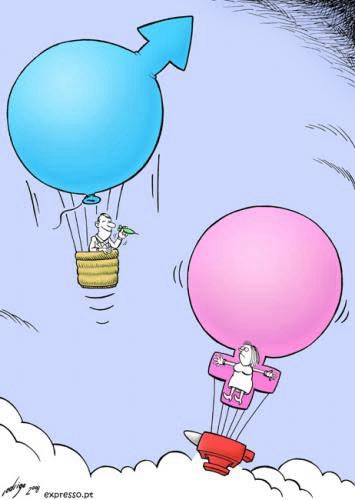
Throughout most of recorded history, human societies have leaned toward patriarchy—but that word is often used loosely. Before asking whether a matriarchy would be “better,” it helps to define what we actually mean.
What Is Patriarchy?
Patriarchy is a social system in which men, especially older men, hold primary power in political leadership, moral authority, property control, and family structure. In a patriarchal system:
Leadership roles are predominantly male. Inheritance and lineage often pass through the male line. Cultural norms tend to prioritize masculine authority. Women’s legal, economic, and political power is restricted or secondary.
Examples of strongly patriarchal societies can be seen in ancient civilizations such as Ancient Rome, where women could not vote or hold office, and in classical Ancient Greece, where citizenship and political power were reserved for men. Even in modern democracies, many institutions developed within deeply patriarchal traditions.
Patriarchy does not mean all men have power or that all women are powerless. It refers to systemic patterns of authority and social organization.
What Is Matriarchy?
Matriarchy, in its strictest definition, would be the mirror image: a system in which women hold primary power in leadership, inheritance, and authority. However, fully developed, large-scale matriarchal states have been rare in recorded history.
There are, however, matrilineal or matrifocal societies—where lineage or property passes through women, or where women play central social roles. For example:
The Mosuo in southwestern China follow matrilineal traditions. The Minangkabau in Indonesia are often described as the world’s largest matrilineal society. The Haudenosaunee in North America historically granted women significant influence in governance decisions, including the selection of male chiefs.
Importantly, these societies are not typically “female domination” systems. They tend to emphasize shared power structures rather than a simple reversal of male dominance.
Would a Matriarchy Be Better?
That question assumes that the core issue is which sex rules, rather than how power is structured.
Historically, patriarchal systems have coincided with:
High levels of warfare. Concentrated political hierarchies. Legal inequality between genders. Economic systems favoring property consolidation.
But those outcomes are shaped by many variables: technology, geography, resource scarcity, religion, and political ideology—not just gender leadership.
Some anthropological research suggests that societies with stronger female influence often display:
Greater emphasis on social welfare. More consensus-based decision-making. Lower tolerance for internal violence. Broader community networks.
However, replacing patriarchy with matriarchy does not automatically eliminate hierarchy, corruption, or conflict. Power dynamics are human dynamics. A system dominated by any single group—male or female—risks marginalizing others.
The Deeper Question: Dominance vs. Balance
The more productive question may not be whether matriarchy would be better than patriarchy, but whether systems that balance power across genders tend to perform better than those that concentrate it.
Modern research in political science and economics consistently shows that societies with higher gender equality:
Have stronger economic growth. Experience lower corruption levels. Achieve better health and education outcomes. Are less likely to experience internal conflict.
That suggests the optimal model is neither patriarchy nor matriarchy, but something closer to egalitarianism—shared governance, distributed authority, and structural fairness.
Final Thought
Over millennia, patriarchy shaped much of global civilization—for better and for worse. It built empires, legal systems, and institutions. It also entrenched inequality and limited human potential.
A matriarchy might change tone, priorities, and methods—but simply flipping the hierarchy does not guarantee justice or harmony.
The real evolutionary leap for humanity may not be trading one dominant structure for another, but designing systems where leadership is based on wisdom, empathy, competence, and accountability—regardless of gender.
In other words, the question may not be “Would women rule better?” but “Can we finally outgrow rule by dominance at all?”
-
The United States Halo has slipped
Dwain Northey (Gen X)
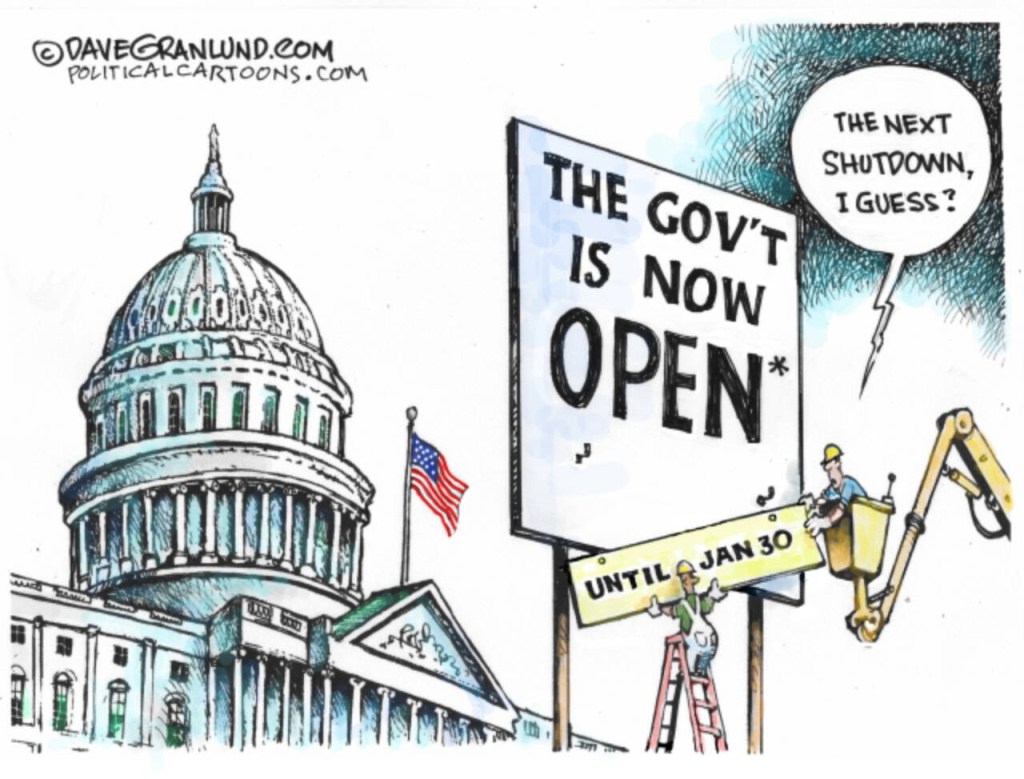
There was a time when we liked to imagine ourselves as the global hall monitor—the nation that lectured everyone else about democracy, rule of law, and consequences. We wrapped ourselves in civics textbooks and told the world how it ought to behave. And yet here we are, watching other countries quietly do the very things we claim to stand for while we twist ourselves into rhetorical pretzels trying to avoid holding our own powerful accountable.
Take Park Geun-hye in South Korea. When her corruption scandal and abuse of power came to light, the country didn’t shrug and say, “Well, politics is messy.” Millions protested. Courts acted. She was impeached, tried, and sentenced. Agree or disagree with every detail, but the through-line was clear: power does not equal immunity. The system bent toward accountability.
Meanwhile, in the United Kingdom, even the gilded insulation of monarchy didn’t prove impenetrable. Prince Andrew was publicly stripped of royal duties and affiliations after his associations with Jeffrey Epstein became impossible to ignore. The House of Windsor closed ranks not to protect him, but to distance the institution from scandal. Titles faded. Doors closed. Consequences arrived—however imperfectly.
And here? We debate whether consequences are “political.” We treat accountability like it’s a partisan attack instead of a civic obligation. We split hairs. We invent alternate realities. We call prosecutions “witch hunts” and investigations “weaponization.” We elevate people under clouds of serious allegations and then act shocked—shocked!—when the rest of the world questions our moral authority.
How did we fall so far, so fast?
It wasn’t overnight. It was a slow corrosion. A tolerance for “our side” getting away with what we’d condemn in anyone else. A normalization of behavior that would have once ended careers in a week. A transformation of patriotism from love of country into loyalty to personalities. We began treating the rule of law as optional, depending on polling numbers.
The irony is painful. We still give speeches about freedom and democracy while other nations—flawed, imperfect, complicated nations—demonstrate that no one is too powerful to answer for misconduct. We insist we are the beacon. But a beacon has to shine consistently, not flicker depending on who’s standing in the dock.
Accountability isn’t vengeance. It isn’t partisan. It’s the quiet, steady insistence that the rules apply to everyone. When other countries enforce that principle and we hesitate, deflect, or protect, it doesn’t just damage our politics. It damages our credibility.
Maybe the real question isn’t how we fell so far so fast. Maybe it’s when we decided that protecting power was more important than protecting principle. Because the rest of the world is watching—and, increasingly, leading by example.
-
This is not honoring our veterans
Dwain Northey (Gen X)

It takes a special kind of cruelty to wrap yourself in the language of patriotism while quietly sharpening the knife behind your back. This administration speaks endlessly about honoring veterans, praising sacrifice, invoking courage, and draping itself in the flag whenever convenient. Yet beneath the speeches and staged salutes comes a policy logic so cold it almost defies belief: if a disabled veteran’s medication is working—if their pain is managed, if their trauma is stabilized, if their life is finally livable—then maybe their benefits should be reduced or taken away.
Think about what that really means. It means punishment for healing. It means telling the very people who carried the physical and psychological cost of war that improvement is not a victory, but a liability. It means forcing veterans into an impossible choice: stay sick enough to qualify for support, or risk losing the very resources that keep them alive. That is not fiscal responsibility. That is moral abandonment disguised as budgeting.
The predictable result is not savings. It is suffering. When stability is threatened, treatment is interrupted. When treatment is interrupted, crises follow—hospitalizations, homelessness, suicide. We already know the fragile line many disabled veterans walk each day. Policies that pull that line out from under them do not trim waste; they cost lives. Quietly. Slowly. Avoidably.
A nation reveals its character in how it treats those who served it when the cameras are gone. Real support is not a slogan, and gratitude is not conditional. If we truly believe veterans deserve care, then their survival cannot depend on staying broken.
-
Permanent Structures for Temporary Detention (?)
Dwain Northey (Gen X)

There is something profoundly comforting about the phrase “temporary facility.” It has the soft, disposable sound of a paper cup—use it briefly, throw it away, move on with your conscience mostly intact. Temporary means necessity. Temporary means emergency. Temporary means nobody has to ask long, slow questions about permanence, profit, or history.
Which is why it is so reassuring to learn that we are building permanent places for all this temporary activity.
After all, nothing says “short-term administrative process” quite like pouring concrete that will outlive several generations of elected officials. Nothing whispers “just until the paperwork clears” like zoning approvals, multi-year construction contracts, and infrastructure designed to stand proudly through earthquakes, recessions, and whatever new slogan replaces the worst of the worst in the next campaign cycle.
One begins to suspect that the word temporary is doing the kind of heavy lifting normally reserved for mythological creatures or unpaid interns.
We are told, of course, that these facilities exist only to house people briefly before deportation. A logistical waypoint. A bureaucratic bus stop. Just a pause in motion. And yet, curiously, history teaches that when governments invest in cages that do not rust, the cages tend to find reasons to remain occupied. Empty permanence is politically inefficient. Concrete, like nature, abhors a vacuum.
This is not cynicism; it is simply the résumé of the past.
America, after all, has always possessed a remarkable talent for declaring something finished while quietly preserving the mechanism that made it possible. Slavery ended—except for the small textual footnote allowing forced labor for the incarcerated. Segregation ended—except for the neighborhoods, schools, and systems that somehow remembered the old map perfectly. Wars end. Emergencies end. Powers granted during crises, however, develop a touching reluctance to retire.
And now we discover that deportation, too, may require architecture sturdy enough to survive the very future in which it is supposedly unnecessary.
Perhaps this is merely prudent planning. Perhaps officials simply fear a catastrophic shortage of people to detain and want to ensure adequate storage capacity for decades to come. One would hate to run out of room for temporary humanity. The headlines would be dreadful: Nation Forced to Confront Policy Without Adequate Warehousing.
Better to prepare.
Still, there is an awkward historical echo in the idea of building durable institutions around the controlled labor and confinement of a legally diminished class of people. Not the same, of course—history never repeats, we are told, it only rhymes. And America has always preferred its rhymes faint enough to ignore.
Yet the constitutional clause remains, quietly grammatical, patiently available: freedom guaranteed—unless incarcerated. A loophole with excellent real estate. A sentence fragment that has done more work than many full amendments.
So when permanent detention spaces rise in the name of temporary necessity, some observers experience a mild historical déjà vu. Not outrage, exactly—outrage requires surprise. More a slow recognition, like hearing an old melody played on newer instruments.
But surely we are different now. We have better signage. Cleaner fonts. Committees. Oversight hearings scheduled firmly in the future. And above all, we have language—carefully polished language that transforms endurance into urgency and infrastructure into compassion.
Nothing humane has ever been built so solidly.
In the end, perhaps the question is not why permanent facilities are being constructed for temporary purposes. Perhaps the real question is why we continue to believe that permanence ever arrives wearing its true name. History prefers euphemism. Concrete prefers silence. And both, once set, are famously difficult to remove.
Still, we can rest easy knowing that everything is under control, strictly provisional, and absolutely not the sort of thing future generations will study with puzzled expressions and long, uncomfortable pauses.
Just a temporary measure.
Built to last forever.
-
Fat Tuesday
Dwain Northey (Gen X)

Fat Tuesday—known around the world as Mardi Gras—is a celebration that blends faith, history, and joyful excess into a single vibrant day. Rooted in Christian tradition, it marks the final moment of feasting before the reflective season of Lent begins on Ash Wednesday. For centuries, communities have used this day to enjoy rich foods, music, dancing, and togetherness, savoring life’s pleasures before turning toward a period of simplicity and spiritual renewal.
The origins of the celebration stretch back to medieval Europe, where families would use up butter, sugar, and eggs before the Lenten fast. Over time, these practical customs blossomed into colorful festivals filled with masks, parades, and laughter. When the tradition traveled to North America, it found a particularly joyful home in New Orleans, where jazz rhythms, elaborate floats, and strings of purple, green, and gold beads transformed the day into one of the world’s most famous cultural celebrations.
Yet beyond the spectacle, Fat Tuesday carries a deeper meaning. It reminds us to celebrate community, abundance, and shared humanity. The laughter in the streets, the music echoing through neighborhoods, and the simple act of gathering with others all speak to a universal desire for joy before reflection. In this way, Fat Tuesday is more than a party—it is a moment to embrace life fully, honor tradition, and step forward together into the quieter season that follows.


You must be logged in to post a comment.