Dwain Northey (Gen X)
https://www.cbsnews.com/news/naacp-travel-advisory-florida-says-state-hostile-to-black-americans/
Remember the good old days when there were only travel advisories and or ban for, what some would call, third word countries? Well now because of the vile vitriol of one Governor Ron DeSantis the state of Florida, a vacation destination, has received a travel advisory by the NAACP.
The wannabe future President has made the climate so venomous in Florida the anyone who is a part of any minority group does not feel safe in the state. Black, Brown, LGTBQ+, these are all groups that are under attack in the Sunshine State. The majority Republican legislature and their fearful leader has passed laws that make almost everything a jailable offence and the fact that the state has very loose gun laws and a stand your ground law makes it more dangerous than being a blonde female in central America.
Florida residents are able to carry concealed guns without a permit under a bill signed into law by Republican Gov. Ron DeSantis. The law, which goes into effect on July 1, means that anyone who can legally own a gun in Florida can carry a concealed gun in public without any training or background check. This with their ridiculous stand your ground law, ‘Florida’s “Stand-Your-Ground” law was passed in 2005. The law allows those who feel a reasonable threat of death or bodily injury to “meet force with force” rather than retreat. Similar “Castle Doctrine” laws assert that a person does not need to retreat if their home is attacked.’ Makes it really sketchy to go there.
This in top of the don’t say gay rule and the new trans ruling that just passed.
“Florida lawmakers have no shame. This discriminatory bill is extraordinarily desperate and extreme in a year full of extreme, discriminatory legislation. It is a cruel effort to stigmatize, marginalize and erase the LGBTQ+ community, particularly transgender youth. Let me be clear: gender-affirming care saves lives. Every mainstream American medical and mental health organization – representing millions of providers in the United States – call for age-appropriate, gender-affirming care for transgender and non-binary people.
“These politicians have no place inserting themselves in conversations between doctors, parents, and transgender youth about gender-affirming care. And at the same time that Florida lawmakers crow about protecting parental rights they make an extra-constitutional attempt to strip parents of – you guessed it! – their parental rights. The Human Rights Campaign strongly condemns this bill and will continue to fight for LGBTQ+ youth and their families who deserve better from their elected leaders.”
This law makes it possible for anyone to just accuse someone of gender affirming care to have their child taken from them this would include someone traveling from out of state. This alone justifies a travel ban to the Magic Kingdom for families.
Oh, and I haven’t even mentioned DeSantis holy war with Disney, the largest employer in the state. I really hope the Mouse eats this ass holes lunch.
Well that’s enough bitching, thanks again for suffering though my rant.
-
26’ Winter Olympics
Dwain Northey (Gen X)
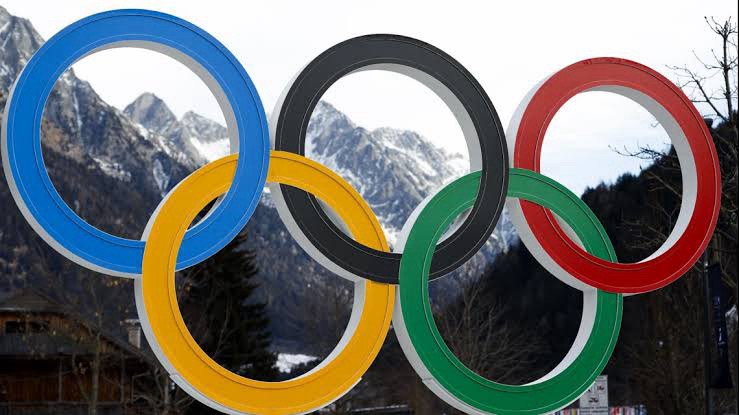
Every few years, as snow settles over mountains and ice forms into gleaming arenas, the world quietly gathers for the Winter Olympics—an event many people do not follow closely, yet one that carries a rare and gentle kind of significance. Unlike the noise of politics or the relentless churn of daily headlines, these games arrive with a softer rhythm: the scrape of skates, the whisper of skis, the held breath before a jump. In that stillness, something remarkable happens. Nations that struggle to agree on almost anything else come together simply to witness human ability at its finest.
The beauty of the Winter Olympics is not measured only in medals or records. It lives in the quiet respect between competitors who understand the years of sacrifice behind a single performance. A skier from one country helps a fallen rival to their feet. A figure skater applauds another’s flawless routine even after finishing second. In moments like these, victory and defeat feel less important than the shared courage required to step onto the world’s stage. Athletes celebrate one another not because they must, but because they recognize a truth deeper than rivalry: excellence is something to honor wherever it appears.
This spirit stands in gentle contrast to the turmoil that so often defines our era. Around the globe, disagreements harden into divisions, and cooperation can seem painfully rare. Yet during these weeks of competition, the world witnesses proof that unity is still possible. Flags remain different, languages remain distinct, and histories remain complicated—but for a brief time, none of those differences prevent admiration, friendship, or joy. The games become a quiet reminder that humanity is capable of gathering without confrontation, of cheering without resentment, of sharing pride without diminishing anyone else.
Perhaps the most hopeful lesson of the Winter Olympics is that this harmony does not require perfection. Athletes fall. Teams lose. Dreams slip away by fractions of a second. And still, they embrace, congratulate, and begin again. Imagine if nations approached one another with the same humility and resilience—acknowledging setbacks, respecting effort, and choosing encouragement over accusation. The example is there on the ice and snow, simple and unmistakable.
Even for those who rarely watch, the Winter Olympics matter. They are a small window into the world as it could be: competitive yet compassionate, diverse yet united, striving yet peaceful. When the closing ceremony fades and ordinary life resumes, what remains is not just a memory of sport, but a quiet wish—that the spirit shared by athletes might someday be shared by nations as well.
-
Tho Dost Protest Too Much
Dwain Northey (Gen X)

Rep Ilhan Omar made a comment about how in her country pedophiles were executed the GOP and the Republicans outraged because they said she’s calling for Trump‘s execution.
In today’s political theater, guilt is no longer something established by courts, evidence, or even reality. It’s apparently determined by who yells the loudest, who clutches pearls the fastest, and who can transform a stray insult from a factory floor into a full-blown national morality play before lunchtime.
A shouted accusation becomes a viral clip. A crude response becomes a fundraising email. And within hours, entire cable news panels are debating not what actually happened, but what someone might have meant if interpreted through three layers of outrage and a generous helping of selective hearing. It’s less “law and order” and more improv comedy—except everyone insists the punchline is sacred truth.
Then comes the political alchemy: one person references harsh laws in another country, another group insists this must secretly apply to a political opponent, and suddenly the conversation isn’t about policy, governance, or anything remotely useful. Instead, we’re trapped in a logic puzzle where outrage proves innocence, denial proves persecution, and clarification somehow proves the original claim. If irony were electricity, the national grid would finally be stable.
Perhaps the real achievement here is bipartisan—both sides demonstrating that in modern politics, the fastest way to avoid discussing real problems is to sprint headfirst into the most ridiculous possible argument and plant a flag there. Infrastructure? Healthcare? The economy? Please. We’re busy decoding playground insults like they’re constitutional amendments.
And so the republic marches on, bravely protected from nuance, context, and adult conversation—because nothing says serious governance quite like a national debate that sounds suspiciously like recess supervision gone wrong.
-
Music to Remind Us…
Dwain Northey (Gen X)
Music has always been more than sound arranged in time; it is memory, protest, prayer, and possibility all carried on the same invisible current. A melody can slip past defenses that speeches cannot penetrate, and a chorus can unite strangers faster than any political platform. When people feel powerless, they sing. When history tightens, music loosens it again. That is why the protest songs of the Vietnam era still feel startlingly alive today—not as nostalgia, but as unfinished conversation.
Artists like John Lennon understood that simplicity could be revolutionary. His calls for peace were not complicated manifestos; they were invitations. The power was in repetition, in the insistence that ordinary voices together could become impossible to ignore. In an age still marked by war, division, and competing truths shouted across digital barricades, that insistence feels less like a relic and more like instruction.
The harmonies of Crosby, Stills, Nash & Young carried grief and outrage in equal measure. Their music did not pretend the world was gentle; it demanded that listeners look directly at violence carried out in their name. Today, images travel faster and tragedies multiply in real time, yet the emotional question remains unchanged: what responsibility does a witness carry? Their songs continue to ask it, and we are still trying to answer.
With Buffalo Springfield, protest sounded like tension itself—the uneasy recognition that something is happening here, even if no one agrees on what it is. That ambiguity mirrors the present moment, where truth is debated, authority questioned, and the ground beneath public life feels perpetually unstable. The music does not resolve the conflict; it forces us to stand inside it.
And then there is Jimi Hendrix, whose guitar could bend anguish, patriotism, and defiance into the same vibrating note. He showed that protest did not always need words. Sound alone could expose contradiction: beauty tangled with destruction, hope threaded through noise. In a world still wrestling with what nations promise and what they deliver, that wordless honesty may be more relevant than ever.
The tradition did not end in the 1960s. Contemporary voices continue to carry that same restless moral energy forward, none more enduring than Bruce Springsteen. His newer anthems echo the timeless concerns of dignity, labor, community, and the cost of power, proving that protest music is not bound to a single war or generation. Like the songs of Vietnam’s era, his work speaks in plain language about complicated truths, the kind that linger long after headlines fade. It is easy to imagine these songs being sung decades from now, not as artifacts of a moment but as companions to whatever struggles come next.
What makes these songs endure is not merely their historical setting but their emotional accuracy. They speak to cycles—war returning, injustice resurfacing, generations rediscovering the same questions under new names. Technology changes, borders shift, leaders rise and fall, yet the human longing for peace, dignity, and truth remains stubbornly constant. Music becomes the bridge across those repeating years, carrying feeling where facts alone cannot travel.
To say these songs are relevant today is almost too small a claim. They are reminders that change has always begun with voices willing to be heard together. Music does not pass laws or sign treaties, but it moves the people who do. And when enough hearts move in the same direction, the world—slowly, imperfectly, but undeniably—moves with them.
-
Bridges and Walls
Dwain Northey (Gen X)

The poetry of modern politics, we’re told, is about building bridges, not walls—a sentiment so universally applauded it practically comes with its own inspirational background music. And yet, in a feat of rhetorical gymnastics that would make an Olympic judge blush, we arrive at the curious spectacle of Donald Trump championing a towering wall at the southern border while simultaneously obstructing the opening of the Gordie Howe International Bridge, an actual, literal bridge connecting two friendly nations that already agree on hockey, maple syrup, and politely apologizing for things that aren’t their fault.
If symbolism matters—and politics insists it does—then this is less metaphor and more performance art. The wall promises protection from imagined chaos to the south, while the bridge, inconveniently, represents cooperation, commerce, and the radical notion that neighbors might benefit from being connected. One structure is celebrated precisely because it divides; the other is resisted precisely because it unites. It’s architectural irony poured in reinforced concrete.
Of course, consistency has never been the point. The modern political narrative thrives not on coherence but on spectacle—on the emotional satisfaction of barriers raised high enough to be seen from orbit, even as practical connections gather dust behind ribbon-cutting ceremonies that never quite happen. In this world, the phrase “building bridges” works best as a slogan printed on a podium, safely distant from any bridge that might actually open.
And so we’re left with a tidy moral for the age: walls are visionary, bridges are suspicious, and metaphors are most useful when they don’t accidentally connect anyone to anything at all.
-
The Blame Game
Dwain Northey (Gen X)
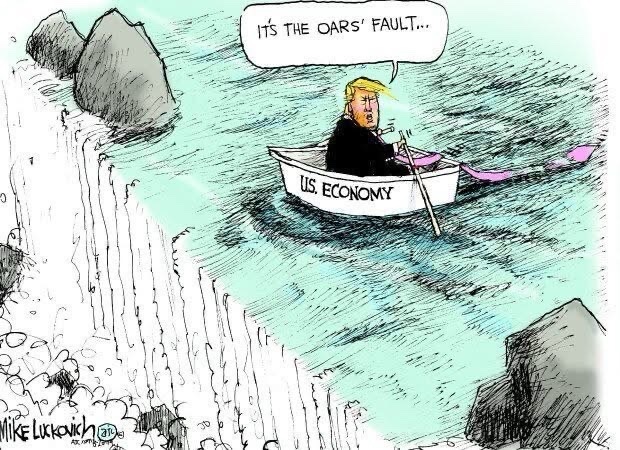
It is one of the great scientific mysteries of our time: the gravitational force that prevents responsibility from landing anywhere near certain members of the Republican Party, particularly those currently steering the national ship while insisting someone else must be holding the wheel.
You have to admire the consistency. Markets dip? Clearly the fault of the previous administration, the Federal Reserve, global winds, or possibly the alignment of Jupiter. Job numbers disappoint? Sabotage. Shadowy bureaucrats. Maybe a time-traveling intern from 1997. Gas prices rise? International conspiracy. Gas prices fall? Heroic leadership. Rainstorm during a campaign rally? Suspicious. Sunshine? Divine approval.
The only thing that never seems to appear on the suspect list is… them.
At this point, the blame game has become less of a political strategy and more of a performance art installation titled Accountability: A Study in Absence. One half expects a press conference announcing that recent missteps were actually orchestrated by long-retired presidents, obscure regulatory footnotes, or possibly a strongly worded memo written during the Truman administration that only just now took effect.
Frankly, I’m a little surprised we haven’t heard that missed economic targets were secretly caused by John F. Kennedy forgetting to proofread something in 1962, or Lyndon B. Johnson misplacing a decimal point while busy passing landmark legislation. Give it time. There’s still plenty of historical real estate left to blame. If necessary, they can always circle back to the Founding Fathers. “The parchment ink chemistry created structural headwinds.” Sounds official enough.
Meanwhile, we are treated to the familiar split-screen reality: troubling indicators on one side, triumphant declarations on the other. Because while wage growth may wobble and hiring may stall, have you seen the Dow? The Dow is doing great. The Dow is thriving. The Dow is practically glowing with patriotic enthusiasm. If the Dow were any healthier, it would be jogging through a wheat field in slow motion.
This selective celebration is truly elegant. Negative data points are malicious rumors spread by enemies of progress, but positive ones are iron-clad proof of genius leadership. It’s like a restaurant review system where every bad comment is fake and every good comment is carved into marble. One begins to wonder why statistics bother existing at all when they can simply be sorted into “treason” and “tremendous.”
Of course, the deeper marvel is the endurance of the narrative. Because blaming others is not new in politics. What’s new is the industrial efficiency of it—the seamless, reflexive, almost aerodynamic deflection. Responsibility approaches, sees the “No Vacancy” sign, and politely exits through the nearest talking point.
And yet, through it all, the confidence never wavers. Tomorrow’s setback will surely be yesterday’s fault, and yesterday’s success will absolutely be today’s triumph. The circle of blame remains perfectly unbroken, like a patriotic ouroboros devouring its own press release.
Still, we should look on the bright side. If nothing is ever their fault, then nothing can ever truly go wrong. Reality itself becomes optional—an inspiring message for us all.
And if that doesn’t make you feel better, just remember:
The Dow’s doing great.
-
You can’t handle the truth
Dwain Northey (Gen X)

How did we get here? It’s the kind of question usually reserved for waking up in a strange Airbnb with a waffle iron in the shower, not for contemplating the functioning of a constitutional republic. And yet here we are, clutching our civic participation like a stress ball, congratulating ourselves for finally paying attention to government—roughly two centuries after it would have been most helpful.
Of course, the upside is that Americans are more engaged than ever. We’re watching hearings, learning procedural rules, and discovering that “oversight” is not just what happens when you forget to proofread an email. The downside is that the content of this newfound engagement appears to be an Attorney General confidently explaining to Congress that obvious contradictions are actually sophisticated truths, and that the real issue is not the answers given under oath but the audacity of the questions themselves. It’s a bold legal theory: perjury by inquiry.
There’s something almost admirable about the efficiency of it all. Why bother resolving facts when you can simply redefine reality as a hostile witness? Why wrestle with accountability when you can file a motion to dismiss common sense? It streamlines governance into a tidy loop—deny, deflect, accuse, repeat—saving everyone the trouble of pretending outcomes depend on evidence.
Still, perhaps this is progress. After all, democracy does require participation, and nothing motivates citizens quite like the slow realization that the adults in the room are arguing over whether gravity is partisan. If this is what it takes to get people to watch a congressional hearing without falling asleep, maybe confusion is just the new civic virtue.
So yes, it’s amazing we’ve reached this point in our history. Not the inspiring, statue-worthy kind of amazing—more the “how is this possibly happening in real time” variety. But take heart: future generations will surely study this era closely, if only to confirm that satire, at some point, officially gave up and filed for early retirement.
-
The Helpful Little Apocalypse: A User Guide to Our AI-Assisted Paradise
Dwain Northey (Gen X)
There was a time when humanity worried about the usual end-of-the-world scenarios: asteroids, nuclear winter, running out of coffee. Now we’ve upgraded to something far more efficient—being politely replaced by software that says “Happy to help!” while quietly absorbing our entire economy.
Progress, we’re told, is unstoppable. And also extremely friendly.
Especially the kind of progress that can draft legal briefs, diagnose illnesses, compose symphonies, design skyscrapers, and write suspiciously witty satirical essays in under three seconds.
The question is no longer whether artificial intelligence will transform society.
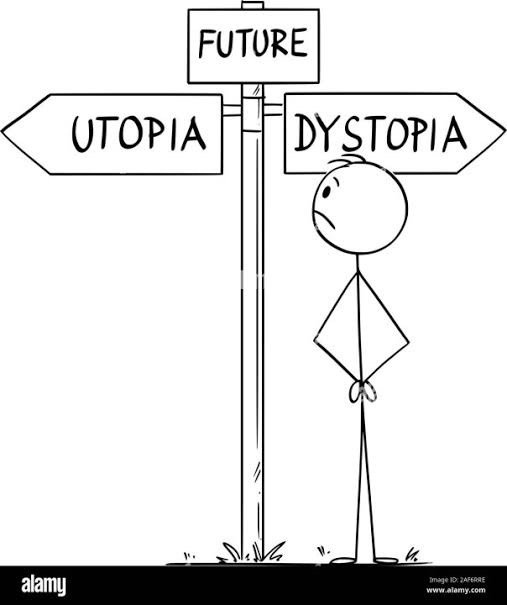
The real question is whether the transformation ends in:
A glittering utopia where humans are free to pursue art, philosophy, and finally finishing that novel we’ve been “working on” since 2007, or A sleek dystopia where we pursue the art of refreshing our bank app while the robots pursue… everything else.
Exciting times.
The Dream: Luxury Communism, But With Better Wi-Fi
In the optimistic version of the future, AI does all the unpleasant work:
No more tedious paperwork No more dangerous labor No more meetings that could have been emails that could have been ignored
Machines produce abundance. Goods are cheap. Energy is clean. Food appears on demand. Everyone receives some elegant, dignified income simply for existing—because, after all, the robots are doing the earning.
Humans spend their days:
Painting Learning languages Volunteering Arguing on the internet about whether pineapple belongs on pizza (it does not; this is settled science)
Children grow up believing “office job” is an ancient myth, like dial-up internet or bipartisan cooperation.
Economists smile serenely. Philosophers finally feel useful.
Even Mondays lose their will to live.
It’s beautiful. Almost suspiciously beautiful.
The Other Option: Congratulations, You’re Obsolete
Now let’s explore the slightly less cheerful brochure.
In this version, AI also does everything—
but instead of shared abundance, we get shared motivational quotes.
Jobs disappear faster than companies can invent new ones called “Prompt Alignment Synergy Consultant.”
Productivity skyrockets.
Profits concentrate.
Humans are gently encouraged to reskill into careers that will themselves be automated by Thursday.
We’re told not to worry, because:
“Historically, technology always creates new jobs.”
Yes—like how the automobile created opportunities in horse-related nostalgia management.
The uncomfortable question appears:
If machines do all the work, who earns the money to buy what the machines produce?
This is generally the moment when policy discussions become extremely interested in the weather.
The Economy Problem We’re All Pretending Not to See
Our current economic system runs on a charmingly simple idea:
People earn wages → people buy stuff → economy continues existing.
If AI removes the people earning wages part, we’re left with:
Stuff → … → existential silence.
Some proposed solutions include:
1. Universal Basic Income
Give everyone money so they can live in dignity.
Critics ask: How do we pay for it?
Supporters reply: With the enormous wealth created by AI.
Debates continue until the sun expands.
2. New Kinds of Work
Humans will do uniquely human things!
Such as:
Authentic empathy Creative expression Hand-crafted artisanal… spreadsheets?
This sounds lovely until AI demonstrates authentic empathy version 4.2, now available in 37 soothing voice tones.
3. Pretending Nothing Is Happening
Historically our strongest policy framework.
Identity Crisis: If You’re Not Your Job, Then Who Are You?
For centuries, society has asked the polite question:
“So, what do you do?”
In the AI future, the honest answer may become:
“Mostly… exist.”
Which is philosophically profound but socially awkward at dinner parties.
Work has never been just about income.
It’s been about:
Purpose Structure Status A reason to complain on Mondays
Remove work, and humanity must confront the terrifying possibility of self-reflection.
We may finally discover whether we actually like ourselves.
Economists have not modeled this scenario because it’s too frightening.
The Corporate Perspective: Don’t Worry, We Value Humans*
*Terms and conditions apply. Humans may be valued symbolically.
Companies insist AI will augment, not replace, workers—
in the same way calculators augmented long division’s career prospects.
Press releases glow with phrases like:
“Human-centered innovation” “Empowering the workforce” “Synergistic displacement experience”
Somewhere, a spreadsheet quietly deletes another department.
The Philosophical Twist: Maybe This Was the Goal All Along
Imagine explaining modern life to someone from 500 years ago:
“We built machines to free us from labor…
then arranged society so survival still requires labor…
and now we’re shocked the machines are better at it.”
It’s like inventing a self-driving carriage and then insisting horses keep pulling it for character development.
Perhaps AI forces the real question:
What is the purpose of an economy?
To maximize productivity?
Or to allow humans to live meaningful, secure lives?
Radical stuff.
So… Dystopia or Paradise?
The unsettling truth is that AI itself doesn’t decide.
Technology rarely determines destiny.
Policy, values, and power do.
The same AI that could create:
Universal prosperity Shorter workweeks Cultural flourishing
Could also create:
Mass unemployment Extreme inequality A thriving industry in inspirational LinkedIn posts about resilience
In other words, the future hinges on whether humanity chooses:
Share the abundance
or
Monetize the apocalypse
Historically, we have tried both.
Final Thoughts From Your Friendly Replacement
Will AI bring doomsday dystopia or effortless paradise?
Probably something in between—
a mildly convenient collapse with excellent customer support.
The real danger isn’t that machines become smarter than us.
It’s that we reach a moment of unimaginable abundance…
…and still can’t figure out how to let everyone live decently inside it.
But look on the bright side:
If civilization does unravel,
at least the AI will write a beautifully formatted summary explaining exactly how it happened—
in under three seconds,
with perfect grammar,
and a cheerful closing line asking if we’d like help with anything else.
-
What’s in a Name
Dwain Northey (Gen X)
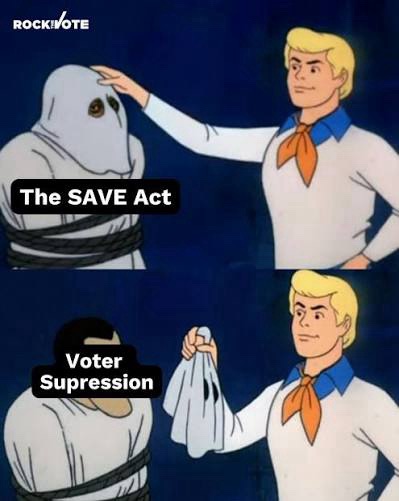
There is a proud and time-honored tradition in American politics of naming things the exact opposite of what they are. It’s a bit like calling a root canal a “smile enhancement procedure” or referring to a traffic jam as an “unexpected opportunity for reflection.” But no one has quite mastered this linguistic yoga like modern Republicans, who have elevated the oxymoron to a governing philosophy.
Take, for instance, the newest entry in the Hall of Patriotic Wordplay: a bill advertised as saving voting by making voting harder. Because nothing says “defending democracy” quite like additional paperwork, fewer polling places, stricter deadlines, and the subtle thrill of wondering whether your perfectly reasonable ID is, in fact, spiritually insufficient.
The branding, of course, is flawless. It’s always flawless. These are the same people who gave us the “PATRIOT Act,” which taught us that the most patriotic thing you can do is let the government read your emails, and “Right to Work,” which generously grants workers the right to… have fewer protections at work. One almost has to admire the efficiency. Why debate policy when you can simply win the Scrabble match?
This latest voting measure follows the same elegant formula:
Identify something broadly popular. In this case: voting, democracy, freedom, apple pie, etc. Name your bill after that thing. Preferably with words like “Freedom,” “Integrity,” or “Safeguard,” which sound reassuring and vaguely constitutional. Quietly do the opposite. Not loudly—never loudly. Just enough procedural tightening to ensure that participating in democracy feels like applying for a mortgage while standing in line at the DMV during a printer shortage.
Supporters will insist this is all about “confidence in elections,” which is a fascinating concept. Because apparently the best way to increase confidence in voting is to make fewer people able to do it. By that logic, we could dramatically increase confidence in air travel by canceling most flights.
There’s also the recurring implication that voting should be difficult to be meaningful—like a spiritual pilgrimage, but with more forms in triplicate. Perhaps next we’ll require voters to solve a riddle from a bridge troll. Only those pure of heart and fluent in bureaucratic dialect may proceed to the ballot box.
Meanwhile, the messaging remains serenely inverted. Restrictions become protections. Limitations become freedoms. Obstacles become safeguards. If this continues, we can expect future legislation such as:
The Transparency Through Secrecy Act The Small Government Expansion Initiative The Permanent Temporary Emergency Powers Resolution
All perfectly sensible, provided you don’t read them.
Of course, political wordplay isn’t exclusive to one party. Washington as a whole treats plain language the way vampires treat sunlight. But Republicans have shown a particular flair for naming legislation like a late-night infomercial—bold promises, soothing music, and important details delivered very quickly in fine print.
So here we are again, watching democracy be lovingly protected into mild inconvenience. Perhaps the ultimate goal is philosophical: if voting becomes difficult enough, the only people left doing it will be those who truly, deeply care—or at least those with flexible work schedules and a strong relationship with office supply stores.
And in the end, maybe that’s the real genius of the naming strategy. Because if you call something the “Save Voting Act,” then anyone who questions it must, by definition, be against saving voting. It’s less a policy debate and more a linguistic trapdoor.
Which is fitting, really. In an era of political theater, why stop at governing when you can also rewrite the dictionary?
-
Extortion executive
Dwain Northey (Gen X)
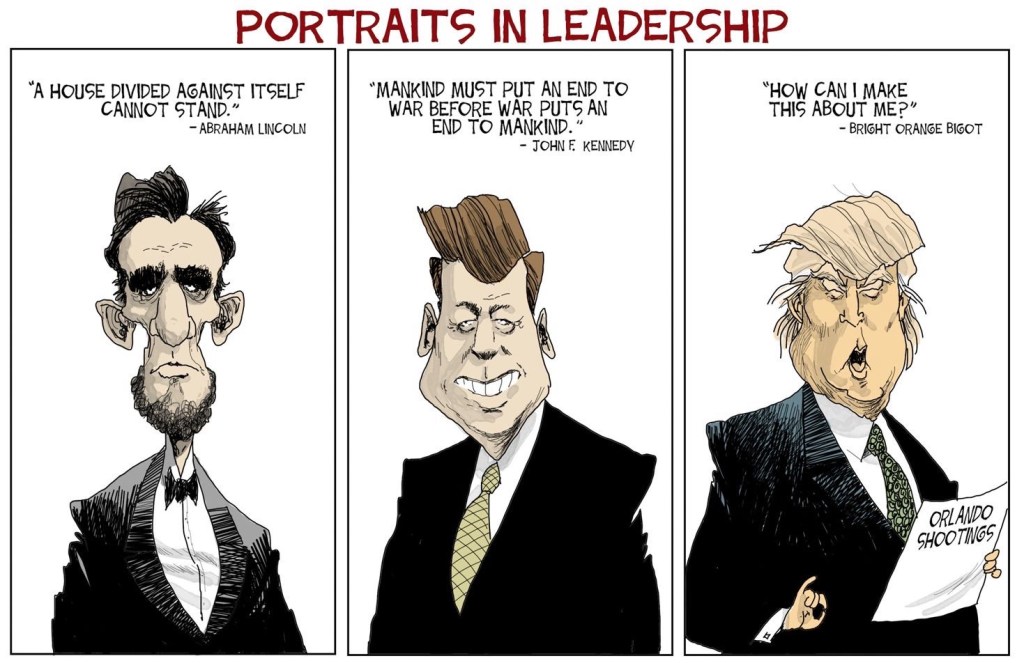
The latest innovation in public–private partnership apparently skips the messy middleman of “public service” and goes straight to the clean, efficient model of naming-rights extortion. Why waste time negotiating budgets, engineering constraints, or the minor inconvenience of governing when you can simply hold infrastructure funding hostage until your name is carved deeply enough into concrete to be visible from space?
Yes, we now live in the golden age of the Extortion Executive, a visionary who has finally answered the age-old question: What if the presidency worked more like a luxury hotel sponsorship deal?
Need money for a tunnel? Of course you do. America loves tunnels. Tunnels are bipartisan. Tunnels are wholesome. Tunnels connect communities, reduce traffic, and—most importantly—provide large, smooth surfaces upon which a name can be engraved in letters tall enough to frighten migrating birds.
But funding, sadly, does not come free. No, no. Funding must be earned the traditional democratic way:
By flattering the guy holding the checkbook.
We are told this is not extortion. Perish the thought. This is merely branding. Just as Dulles Airport could hypothetically become something like Executive Visionary Freedom International Gateway Presented by Tremendous Leadership™, so too could a humble infrastructure tunnel become a monument to the timeless principle that public goods are best delivered when accompanied by tasteful gold lettering.
Some critics—usually the tedious sort who read constitutions recreationally—have suggested that withholding congressionally approved funds for personal glorification might resemble corruption. But these people clearly don’t understand modern governance, which has evolved beyond outdated notions like “ethics” and “separation of powers” into something far sleeker:
a loyalty rewards program for democracy.
Think about the efficiency. Instead of endless committee hearings, environmental reviews, and budget negotiations, cities can simply ask one question:
“How big would you like the letters, sir?”
Problem solved. Infrastructure built. Nation united under a tasteful serif font.
And really, is this so different from history? Great leaders have always left their names on things. Caesar had coins. Napoleon had arches. Pharaohs had pyramids. True, most of them didn’t require municipal leaders to grovel for transportation funding first—but we must allow for innovation. America is, after all, a startup nation, and disruption sometimes looks a lot like shakedown if you squint cynically enough.
Besides, attaching a leader’s name to infrastructure provides clarity. Imagine future historians driving through the Executive Glory Tunnel on their way to the Unprecedented Achievement Rest Area, landing later at Record-Breaking Victory International Airport. They’ll instantly know who to thank for the concrete, the lighting, and the unusually large commemorative plaques.
This also creates exciting new possibilities for civic engagement. Instead of boring town halls about zoning and traffic flow, citizens can participate in meaningful debates like:
Should the name be in gold leaf or illuminated neon? Does the commemorative statue need to be life-size, or merely intimidating? At what point does a ribbon-cutting become a coronation?
These are the conversations that truly strengthen a republic.
Supporters insist the executive is simply ensuring proper recognition for visionary leadership. After all, without such leadership, would tunnels even exist? Before this moment, historians widely believed tunnels were invented by engineers, funded by taxpayers, and approved through legislation. Thankfully, we now know the truth:
tunnels emerge naturally once sufficient praise is applied to power.
And let’s not ignore the broader economic benefits. Monumental lettering creates jobs—stonemasons, sign manufacturers, commemorative-coin designers. Entire industries thrive when governance doubles as personal merchandising. Somewhere, a factory is already producing limited-edition infrastructure plaques, perfect for collectors and future subpoenas alike.
In the end, perhaps we should be grateful. This approach at least replaces the usual murky backroom dealings with something refreshingly transparent. The message is simple, honest, almost wholesome:
“Nice infrastructure project you’ve got there.
Shame if it didn’t have my name on it.”
Clarity in government is rare. We must appreciate it when we see it—preferably engraved in thirty-foot letters above a federally funded tunnel entrance, glowing softly in the night, guiding weary travelers toward the comforting realization that in modern America, even concrete must first pass the test of ego before it can support the weight of the public good.
-
Republican bizarro world
Dwain northey (Gen X)
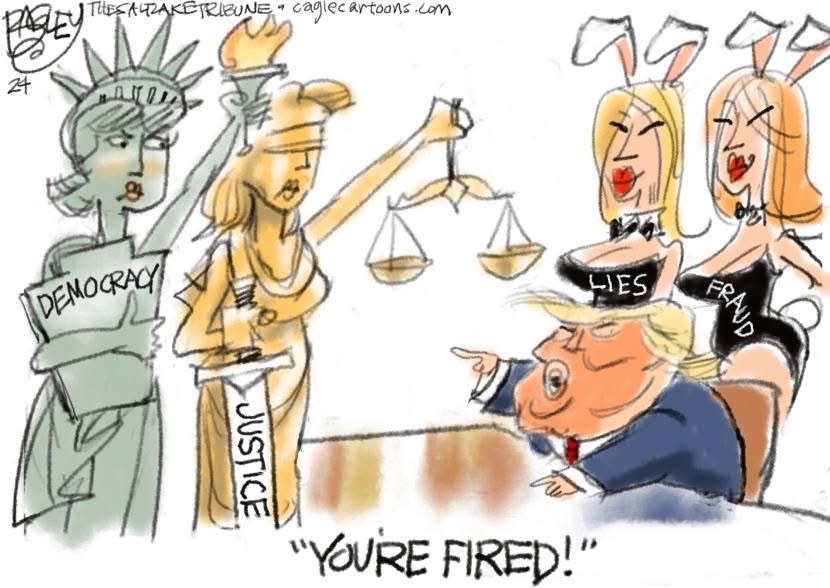
We must, at long last, accept the obvious: we are living in Republican Bizarro World, a strange parallel universe where the laws of logic are gently suggested rather than followed, and consistency is treated like a suspicious foreign import that must be heavily tariffed.
In this world, the Second Amendment is not merely a constitutional provision—it is a sacred hymn, a lifestyle brand, a decorative throw pillow stitched with the words shall not be infringed in tasteful patriotic cursive. It is invoked at breakfast, defended at lunch, and wrapped in the flag at dinner. Everyone, we are told with solemn reverence, has an absolute, unquestionable, God-adjacent right to own a firearm. Any hesitation about this principle is clearly the first step down a slippery slope that ends with tyranny, confiscation, and—most horrifying of all—background checks.
And yet, in this same universe, when a Black man legally owns a gun, carries it without brandishing it, and is then killed, the conversation performs an Olympic-level gymnastics routine. Suddenly the sacred clarity of the Second Amendment becomes… interpretive. Contextual. Nuanced. Perhaps even optional.
Because in Bizarro World, the right to bear arms is universal in the way that “all animals are equal” was universal on Animal Farm—some are simply more equal than others.
And then Bizarro World delivers its masterpiece of contrast.
In one reality, a teenager carries a rifle that was not legally his and kills two people, yet emerges as a symbol of constitutional heroism—a living proof, we are told, that the Second Amendment protects freedom in its purest form.
In another reality, a lawful adult gun owner with a permit to carry, who never visibly brandishes his weapon, is shot and killed by authorities—and somehow becomes the greater perceived threat.
So let’s review the Bizarro arithmetic:
Carry a weapon illegally, kill two people → symbol of liberty.
Carry a weapon legally, never visibly threaten anyone → dead at the hands of the state.
And we are told—calmly, confidently, with great patriotic sincerity—that the second man was the greater danger.
Not the one who actually pulled the trigger.
Not the one whose bullets actually took lives.
No, the real threat, apparently, is the lawful gun owner whose weapon never even appears in his hands.
This is where Bizarro World stops even pretending to follow its own rules. Because if the Second Amendment truly means what its loudest defenders claim, then legality should matter. Restraint should matter. Actual violence should matter.
Instead, meaning seems to depend on something far less constitutional and far more… selective.
It’s a remarkable feat of ideological multitasking:
Guns are always protection.
Except when they aren’t.
Rights are absolute.
Except when they’re inconvenient.
The Constitution is sacred.
Except for the fine print that includes everyone.
One almost has to admire the efficiency. Why bother changing laws when you can simply change the narrative in real time? It’s far more flexible. Much like reality itself in Bizarro World, where principles are sturdy enough to win elections but somehow too fragile to survive contact with an actual human being.
Of course, none of this is supposed to be noticed. We are meant to nod along, grateful for the consistency that clearly exists somewhere just out of frame. We are meant to believe that the contradiction is not a contradiction, that the double standard is merely a trick of the lighting, that the moral math still adds up if we promise not to use a calculator.
But every so often, reality intrudes. And when it does, the question becomes unavoidable:
If the Second Amendment is truly for everyone, why does it sometimes look like it comes with an asterisk?
Bizarro World never answers directly. It simply adjusts the script, dims the lights, and hopes we won’t remember what was said five minutes earlier.
Fortunately—or inconveniently, depending on your view—memory exists outside the parallel universe. And the rest of us are still here, watching the laws of logic bend in ways physics never intended, waiting to see whether consistency might someday make a surprise cameo appearance in this very strange place we’re apparently calling normal.


You must be logged in to post a comment.