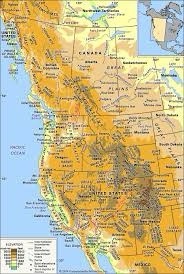
The Rocky Mountains have had many names since humans first came into contact with them, some more fanciful than others. Their current moniker comes from the Plains Cree term ᐊᓯᓃᐘᒋᐩ, usually transcribed as asinîwaciy and literally meaning “rocky mountain” or “alp.” The first European to describe the pride of Colorado was explorer Jacques Legardeur de Saint-Pierre, who gave them their current name when he called the mountains “montagnes de Roche” in a 1752 journal entry. Four decades later, the John Reid Company published a map in which they were called the Stony Mountains.
Another journal, this one belonging to fur trader Gabriel Franchere and written between 1811 and 1814, claimed “the first travellers called them the ‘Glittering Mountains,’ on account of the infinite number of immense rock crystals, which, they say, cover their surface, and … reflect to an immense distance the rays of sun.” The Rockies have also been called the Mountains of Bright Stones and the Shining Mountains, each name a testament to how striking they are.
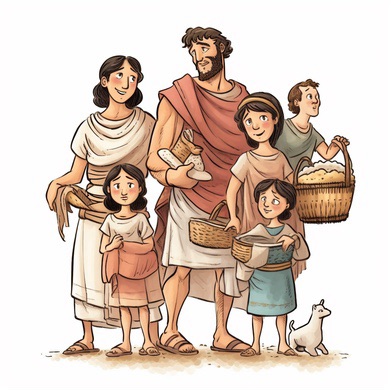
The Roman Empire is responsible for countless innovations that are still used on a daily basis, but it would be putting it lightly to say that medical science has advanced quite a bit since Rome fell. Given that — as well as all the gladiators, wars, and assassinated emperors — it shouldn’t come as too much of a surprise to learn that life expectancy in ancient Rome was just 35 years. Yet the real culprit behind that figure is actually the infant mortality rate at the time, as some 25% of babies born in the first century CE didn’t make it past 1 year old, and only half survived past the age of 10.
Life expectancy is an average, and one that has tended to increase over time, but lifespan hasn’t actually changed much in human history. Indeed, it was not uncommon for ancient Romans to live to a ripe old age. Gordian I was 81 when he became emperor of Rome, and Roman statesman Cicero’s wife Terentia lived to be 103, for instance. Pliny the Elder (who, despite his moniker, lived to be just 55 before dying in the eruption of Mount Vesuvius) was particularly impressed by one centenarian he studied. He wrote, “The solitary instance of Xenophilus, the musician, who lived one hundred and five years without any infirmity of body, must be regarded then as a kind of miracle.”
The Grand Canyon attracts millions of visitors to northern Arizona each year, all hoping to snap an amazing photo of the canyon’s vast landscape. The mile-deep gorge is the centerpiece of such an expansive view that it can’t all be seen at once; at 277 miles long and up to 18 miles wide, the Grand Canyon is so large, it creates its own weather. In fact, getting a view from its two most popular rims (aka tops) requires nearly five hours of travel time.
The Grand Canyon is under the care of the National Park Service, yet the park boundaries don’t contain it entirely; the portion protected by Grand Canyon National Park totals 1,904 square miles, a span larger than the smallest U.S. state. In comparison, the tiny East Coast state of Rhode Island contains just 1,214 square miles.
Today, the Grand Canyon is the second-most-visited national park (bested only by the Great Smoky Mountains in 2022). Until the mid-1800s, however, little was known about the area, thanks to its remoteness. Spanish conquistadors who explored the region in 1540 had little to note of its magnificence, and an 1857 report from an American expedition through the canyon described the 6 million-year-old area as “altogether valueless,” with “nothing to do but leave.” Such declarations impeded progress in turning the natural wonder into a national park when President Benjamin Harrison first moved to protect the area in 1893 as a forest reserve; President Theodore Roosevelt designated it a national monument in 1908. It would take a third president — Woodrow Wilson — and 11 more years for the Grand Canyon to become the awe-inspiring national park it is today.
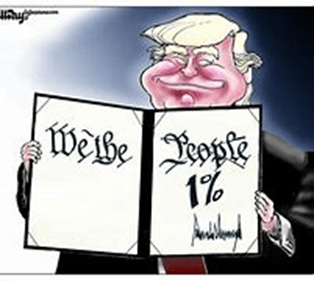
Executive Orders have been used by every President in our nation’s history, but no one has attempted to circumvent the rule of law and our Constitution until now. Donny’s Executive Orders are petty and vindictive and from what I have seen do nothing that will move the country and the government forward. He wants to defy the Constitution and ban Birth Right Citizenship, repeal lower prescription drug prices, pull funding from the Biden Era infrastructure plan designed to fix roads and bridges, basically reverse any legislation passed in the past 4 years. He is actively trying to implement schedule F and purge government employees that are not loyal to him, (those that won’t pledge that the 2020 election wasn’t rigged against him).
You know all the things he promised he was going to fix.
Now that we are squarely in the FAFO portion of the retribution tour I can only hope that there are some members of the GOP that still have spines, but hope is like pissing in the wind with this group of jellyfish.
The Great and Powerful (ODD) has even attacked clergy because they, actually, spoke the truth that Christ commanded asking for mercy for those he has personally attacked. The sign of true power is to look down on and subjugate others while holding yourself in the highest regard… I forget what Bible text that is from (DIckarotimy 1:1) maybe someone fact check me.
Now he is going to North Carolina and California because… well just because he must continue the big lie. He is confident that the Hurricane that hit the Carolinas wasn’t addressed by FEMA and he knows how to manage fires and magically move water, ‘like no one has ever seen…’ I am sure that he can inform firefighters how to stop fires in the middle of a draught and high winds… I mean really, he has won his own golf clubs’ tournament more than once he obviously knows and thing or two about a thing or two.
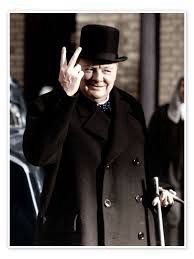
Winston Churchill’s remarkable life was filled with genuine “OMG” moments, from withstanding the disastrous Gallipoli campaign during the First World War to leading Britain through World War II as prime minister. Churchill held a front-row seat to many history-defining moments, even including the little-known origin of the term “OMG” itself.
The expression “OMG,” an acronym for “oh my god,” became popular as early internet lingo during the 1990s. But the first known use of the acronym actually dates back to a letter written to Churchill in 1917, while he was serving as first lord of the admiralty in the British navy. The letter was written by John Arbuthnot Fisher, who, as first sea lord (the navy’s highest ranking officer), often quarreled with Churchill. In the 1917 missive, Fisher wrote, “I hear that a new order of Knighthood is on the tapis [table] — O.M.G. (Oh! My God!) — Shower it on the Admiralty!!” Sadly for the linguistically hip Fisher, neither Churchill, the navy, nor the British people adopted his clever quip. It wasn’t until the arrival of the internet age some 70 years later that the “OMG” acronym exploded in popularity.
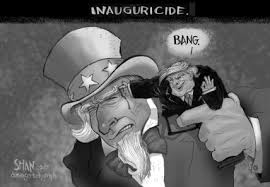
Is this what we get to look forward to for the next few years… a 78years old toddler that has a poopy diaper and no concept that the world exists outside the confines of his hair spray. Donald has delusions of grandeur, and his personality disorder and advanced age are on full display. These are the actions of a tyrant that in no way will tolerate anything contrary being said about him or to him. His inaugural ‘TED Talk’ was full of lies about the failing economy and how he has been mistreated and how everything (he thinks) is bad will be rectified by his hand.
The thin-skinned Narcissist can’t even take the pleas of a female bishop for compassion for LGBTQ, immigrants and anyone else in distress without attacking them as a nasty person.
We must stand up and push back, if we don’t, we only have to look back through the 20th century to see what the cost could be.
Like any good tyrant he is talking about expelling those he feels are undesirable, expanding our borders through military action, punishing any, and all that speak out against him. President Biden foresaw they actions of the Toddler King and pre-emptively pardoned his entire family and all those that were on the J6 committee but based on the actions of the past 48hours I don’t know that if Donny gets the league of misfits in the Justice Department, he wants that they will honor any actions taken by President Biden. Wouldn’t be surprised if during the State of the Union he didn’t call for public executions of any person on the J6 committee, the Biden family, Kamala Harris and her Husband and because the Supreme Court said that nothing is illegal if its Presidential act he would walk away once again.
Currently we have a constitution and laws and those are being severely challenged, our system allowed a convicted felon into the White House… I guy that if he weren’t DJT with these charges could even buy a gun but now he has an army and the nuclear codes. Too many believed the constant barrage of crap that White Washed the last time he was in the Oval and now we are all going to pay the price.
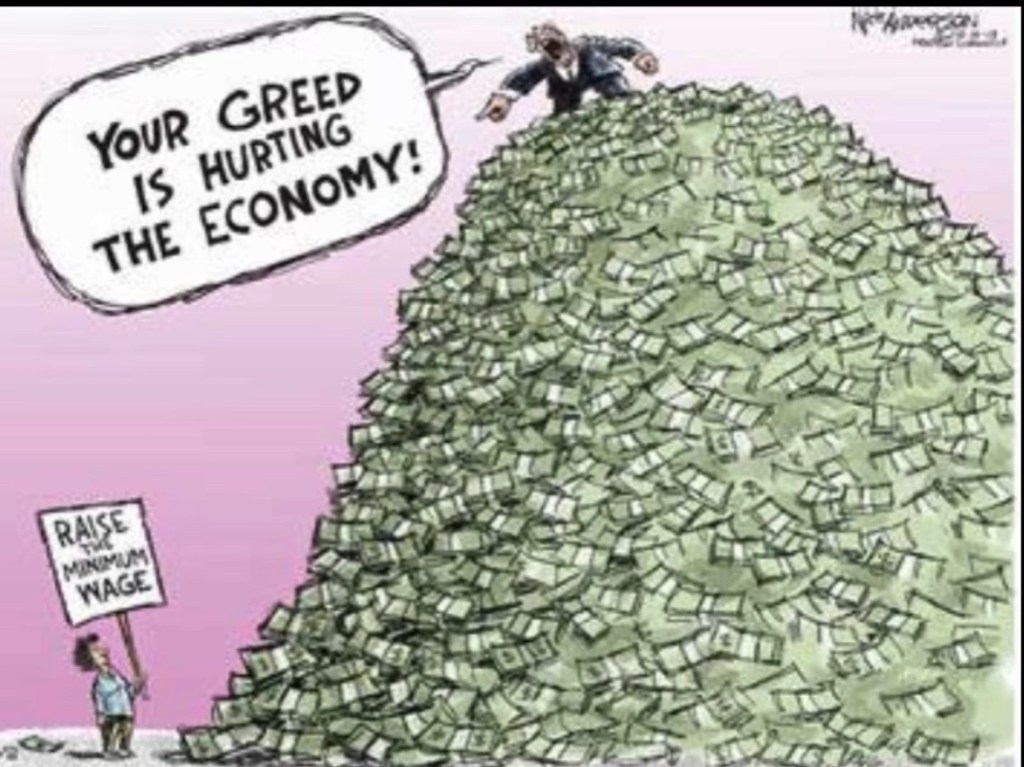
This may not make a great deal of difference in the actions of the ultra rich, but it should be something for them to think about. Most if not all of them got wealthy because they have or had something that other people bought. So now you are sitting on these mountains of money and looking at the class of people that are your customers and saying lets take away the programs that help them have the money to spend on our products. If you sell cars and you take away jobs by allowing tariffs to be put in place that end up closing your factories, who is going to buy your cars? If you sell news papers and people only have enough in their pockets to either buy the paper or something to eat, which do you suppose will come first? Most of the newspapers around the country have been bought out or crushed because the big boys did not like the message that was being sent by the local press. Has it really improved your circulation that much? Take the controls off of medicine and the ones that benefit for now are the drug companies, and when no one can afford the medicine and start dying off then will the drug companies do better? The only things that improve with loss are disease and stupidity. Keep on believing that putting debt back on students, or families trying to same a sick family member and all other facets of life will begin to suffer. When buying medicine causes someone to not pay the rent, if you are a land lord you end up with emptry apts. If you are a rancher and sell beef and people can only buy hamburger your cattle are not that valuable or become a liability. If no one can buy anything more than basics in groceries the novelty foods are left to be thrown out. The wealth of a nation depends on the how well all of the inhabitats are doing not just the ones at the top. The Robber Baron era finally proved that to at least a couple of those that made fortunes off the sweat of others. One started building libraries as a for instance. What are you going to build? If social security gets cut or eliminated that truly means that millions of people will be out on the street. The benefit was earned and should be repaid. The fund would be self generating if it were allowed to take care of only what it was designed to do versus all the crap that it has funded over the years. Other social assistance programs are necessary because of many factors, not the least of which is the reluctance of the wealthy to share some of that by way of paying living wages. Many of the wealthy today high someone to do all the grunt work to keep things going and they usually offer a golden parachute if that person fails to do a really good job. You have boards of directors that do nothing to improve or produce the product you are selling but they get paid lots for hot air. Hopefully that is not what is being offered to the less than competent people that are being approved by the fearful congress to hold such important cabinet positions. Big business has for years put limitations on people for being inventive. If you come up with something that makes this better the company owns it and you can not profit by the invention. Really causes everyone to be creative or inventive doesn't it? The bottom line is that the arrogance of wealth is leading to ecconomic ruin and it will not just be the people at the bottom that have nothing, no one will. Look at history and what the more corrupt nations of today look like an you have the view of what your programs and hubberus will cause.
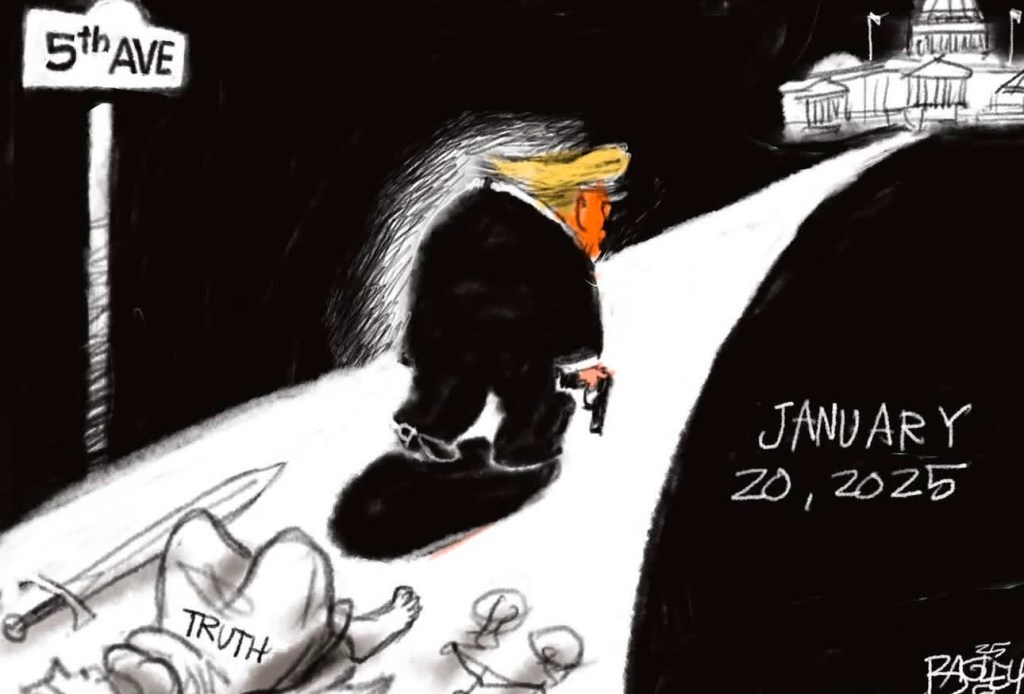
Yesterday the 34 count Felon and Adjudicated Sexual Offender was reinstalled as the head of our government much to the shaggin and disappointment of many. In his address he stated that we are starting the Golden Era, “Unlike anything ever seen…” After that he signed executive orders receding the cap of pharmaceutical drugs for seniors and Medicare’s ability to negotiate drug prices and the $35.00 insulin cap, put in process to once again pull the United States out of the Paris Climate agreement and pardoned all the J6 individuals who assaulted police offices while trying to overturn an election. The law-and-order party just released criminals, some of whom confessed, that injured policed officers.
But let’s talk about the golden era that he wants to usher in with a little view of history…
The Gilded Age that started in the 1870s, was a period of economic growth as the United States jumped to the lead in industrialization ahead of Britain. The nation was rapidly expanding its economy into new areas, especially heavy industry like factories, railroads, and coal mining. Three societal problems facing America during the Gilded Age were political corruption, racial tensions, and economic inequality. Political corruption: The Gilded Age was marked by widespread political corruption, with politicians catering to business interests and participating in graft and bribery.
Well at least it starting out like last time… what could go wrong?
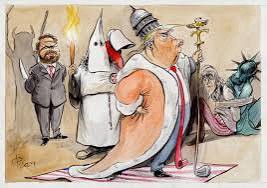
While there were some positives… Significant economic growth, technological advancements, and the rise of new industries. Those positives made men like Andrew Carnage, J.P. Morgan, John Rockefeller wealthy beyond belief but there was a cost. Those costs included exploitation of workers, dangerous working conditions, low wages, widespread poverty, political corruption, and the growing gap between the rich and poor. The ‘Gilded Age’ is also known as the age of the robber barons and that is the era Donald wants to bring back. A time when the rich get filthy rich and everyone else suffers… we already have Billionaires, which is obscene, but they want to be Trillionaires. This current round of aristocrats I don’t foresee making a sudden move to philanthropy like Rockefeller and Carnage did in the early 20th century. To date there isn’t a Hospital, Library, Museum, or any public project named after, Musk, Zuckerburg, Bezos, or Trump. Which hard to believe as much as Trump likes to put his name on things, I am sure there will be plenty of monuments to dear leader but they will have zero benefit other than ego aggrandizement.
We have jumped the track and are on our way to OZ. Trump is not in office yet, please let something stop that, and he has made a big deal out of taking back the Panama Canal, annexing Green Land, by force if necessary, making Canada the 51st state, and renaming the Gulf of Mexico. Nothing like pissing off allies and causing caous which is what he is good at. The fires in California are the govenors fault, something about water, but since it is a state that did not vote for him it will not get federal help if he can help it. More blatant stupidity for the sake of a bruised ego. All these distractions but nothing about how to make good on all the promises about lowering prices in the grocery store or the drug store, just bull shit to distract from serious matters. Again, all of those that voted for him, did you not see this coming? He only keeps promises to wealthy donors and he isn't real good at that. His biggest efforts are directed at how much he can steal from the nation before he is again out of office. Oh, amd keep in mind, he will not be prosecuted for crimes because of the Supreme Courts complicit stupidity. We are definitely in for one of the most corrupt none functional administrations that has ever been put into place anywhere in the free world. The latest and greatest is the fact that the republicans in the House of Representative have put together a bill to allow Trump to buy back the Panama Canal. We are being told that we need to cut back on Social Security, Medicare, sell the Post Office turn schools back to the states, close libraries, but we can cut takes on the rich and now buy the canal. Are we out of money or are we being witness to another round of ass kissing for the sake of pleasing Trump. Again, the question is to the American public, what were you thinking in Novenmber? Moving ahead to the future, hoping we actually have one, the goal will be to return a sense of normalcy to the nation, the economy and to common sense. Caous is the currency of the Trump periods. He likes to keep things stirred up so that he is not being closely watched while he depletes the national treasury. He made a forturne from charging for hotel space for secret service while he played golf to putting his hand out to every second rate charleton you can imagine. Sell some secrets, give up the names of undercover agents and let them be found and killed, doesn't matter he made money off those deaths and that is the only point we need to know. The entire reason for his push to get back in the Presidency has nothing to do with the betterment of America, it is all about the enrichment of Trump. He claims to be our favorite President. He is the most despised of our Presidents. We have had some good and some bad and a few that were unfortunate enough to die in office. There were a couple that got killed in office and the reason for that is because they were doing far to good a job of running the country and it pissed someone off. Trump will not be one of those types, he may die in office but it will most likely be from chocking to death on his ego. The comment has been made that the conformation hearings are rather childish. The truth is that we have been subjected to the preschool antics of the people that are supposed to be running the country ever since Trump entered the field of politics. He does not know the english language well enough to articulate a full sentence that does not sound like it came from a first grade primer book. He spends most of his time whining about how badly his treated and how he intends to punish everyone that doesn't show the necessary deference to him. His life has been a on going shit show and it will continue into death. With any amount of luck when he dies they will put him in a pile of dung. The lack of any productive agenda by the incoming administration proves that they are not working to make things better for the majority of us but rather for the minority, particularly the wealthy minority of us. They wish to cut taxes on the rich and impose more taxes on the middle and lower class. They don't see the need to raise minimum wages but they do see a need to impose excessive tariffs on all imports, which makes everything more costly and lowers the value of what income everyone has. That is the justification for cutting taxes on the rich, but not on anyone else. Many of these people are from the far right politically which means, if you listen to their bull shit, they are religious and are very pious. Truth be told they must be using the Trump bible for their worship as I would guess that dear Don has taken the place of Jesus.
Trump wants to end birth rite citzenship, which is in the 14th Amendment. If we are unwilling to violate that clause why are we violating the mandate in section 3? One item saves people that are born here of foreign born parents, the other item will save the nation from rule by an idiot. Someone needs to push back on the insurection clause and end this foolishness before it gets going.



 Esoteric Meandering Shouting Into the Void
You must be logged in to post a comment.