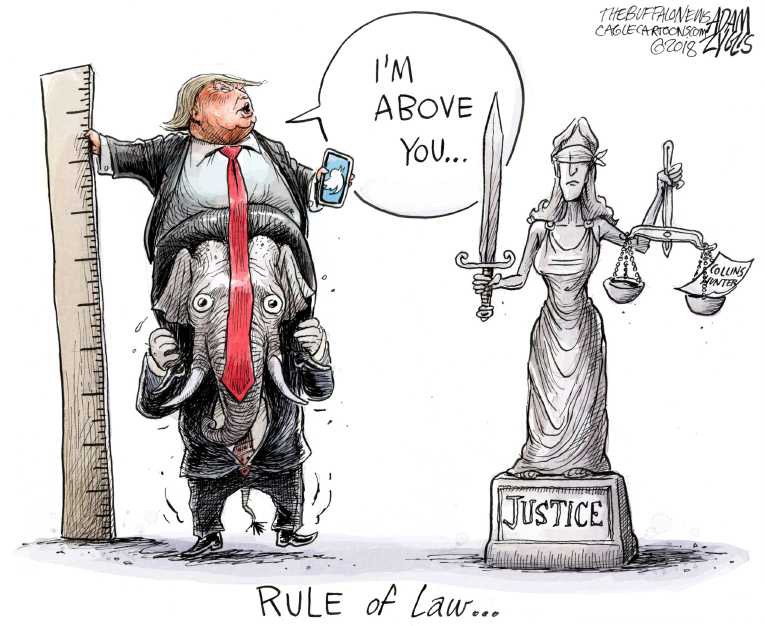
The nation is again being held hostage as the republican party under Trumps (he is at present a private citizen with only personal interest) orders to sink the entire country or give him what he wants. This is absolute lunacy and anyone with a brain knows it. The law they are making a fuss over already exists, they just want a way to stop people from voting so they are twisting another requirement into the language of the order. Everyone of the people that are putting us at risk should not be reelected and should have all of their benefits stripped as they leave. They should also be banned on pain of imprisonment from becoming beltway bandits, or lobbyists. It seems that we have this out and out conflict between parties and we the people are powerless to do anything about it. The project 2025 has a listing of all the requirements they think are necessary to become a civil servant. A code of ethics is no doubt included in the description, none of the points of the description or points of ethics are met by Trump. We need a set of standards to put people in office. They need to have a list of parameters they must follow and violations should be punishable by determination of employment. Government is a business and it needs to run like one. To enlist in the military and have the opportunity to select a career choice you must meet certain requirements. Your intelligence is tested to see if you are capable of the job, your background is investigated to make sure you are trustworthy, and of course, you have to be physically fit. To be employed in the highest ranks of our government all you have to be is capable of getting enough money together to campaign. No one checks the rest of the stuff and as a result we have idiots and less than honest people in the House, the Senate and the Supreme Court, and another is trying to get into the Presidency. We seem to have the system built backwards, a soldier that carries a rifle into battle has to have a better character rating than your representative in Congress. No wonder people don’t trust the government. It is a case of when you have the money to get elected then you run for office. Then when something major happens in your region back home, you have the money to take a vacation in Mexico till the power is back home and the mess is cleaned up. Perish the thought that you should be there helping get things done. It is time to start the process of putting people in office that wish to represent the people. They need to be intelligent and willing to compromise for the greater good, not just stubborn and obnoxious to get their way. Governance has a limit as to how far into the lives of the people legislating can go, and that limit is set by where helping and uplifting end and interfering begin. The laws we have established are all telling us what not to do, like the 10 Commandments tell us what not to do, proving they were written by man on God. A deity that is powerful enough to do all that is attributed to him would be giving guidance to encourage joy and unity, such as Love Thy Neighbor, not negatives all the time. Positive approach methods do not teach hate or evil or divisiveness so why are we listening to all that from someone that thinks of himself as a God?
Credit: Bequest of Grace M. Pugh, 1985/ The Metropolitan Museum of Art
History’s Real Peg-Legged Pirates
While peg legs weren’t nearly as ubiquitous as popular culture suggests, they weren’t entirely fictional either. We do know of a couple of documented cases involving high-profile pirates with prosthetic limbs.
The most famous is arguably François Le Clerc, a 16th-century French privateer. When not being paid by various European rulers to act on their behalf, Le Clerc sailed independently as the leader of a pirate fleet. He was one of the first notable pirates of the Caribbean and was known for his peg leg. His nicknames included “Jambe de Bois” and “Pata de Palo” (in French and Spanish, respectively), both of which translate as “wooden leg” or “peg leg.”
Another example is Cornelis Jol (1597-1641), a Dutch corsair, admiral, and privateer — in other words, pirate-adjacent — who was nicknamed “Houtebeen” (Dutch for “peg leg”) due to his wooden leg. It’s worth noting, however, that both Le Clerc and Jol were sailing the high seas before the golden age of piracy, which is the era typically associated with peg legs, parrots, and eye patches.
We have 44 days till the election and the mudslinging and name calling just gets more intense. One candidate is the focus of racial slurs, gender bashing, and anything else negative that her male opponent can think to call her. She is calling him on his record of failures, promises not kept, and basic inability to do much of anything but tell lies. When this campaign is over and a winner is named it is a sure thing that when he loses he will be calling it cheating and stealing the election again. As we move closer and closer to the day of decision he is losing more and more of his base. Even the most ardent of his followers have to be getting tired of his constant whining about being a victim. According to the news mainstream republicans are looking to sever ties with him. So we can only hope that he will be through screwing up our political landscape with his shit. The time has come for him to retire to the back of the theater and use your imagination. His departure from the scene and ultimately from our midst will be mourned by very few and celebrated by many. Regardless of the position held in society the loss of our democracy is a loss that will be devastating. The wealthy that have funded Trump may think that they would be better off but that is not really likely. At present if they believe they are being treated unreasonability they have recourse, if we lose our democracy that will change. They will be doing as they are told and that will be it. As for the rest of us, life will get a lot more difficult. The ones that feel their allegiance to Trump is somehow going to improve their lot will discover that his concern for them is as fleeting as his ability to remember where he is. If he spent 2 hours in a closed studio for a debate and then comments about audience response, is he really aware of anything? His comments about not having to worry about future elections means we will have no voice. When you live in a society run by a dictator, that is the last right he is willing to give you, a voice. His is a fairytale world where he gets to do as he pleases and there are no consequences ever.
In California, You Can’t Eat Frog That Was in a Jumping Contest
California has somewhat complicated laws surrounding jumping contests involving frogs. In the Golden State, it’s legal to challenge frogs to compete against one another in a jumping contest, but if you try to eat one of them, you could be in hot water. According to the state’s Fish & Game Code, “if such a frog dies or is killed, it must be destroyed as soon as possible, and may not be eaten or otherwise used for any purpose.” As well, the red-legged frog — the species that starred in Mark Twain’s 1865 California-based short story, “The Celebrated Jumping Frog of Calaveras County” — is barred from competing, due to its status as an endangered species. The popular choice for the real-life Calaveras County Jumping Frog Jubilee is the non-native eastern bullfrog, and it’s illegal to return them to the water after the contest, because they’re a big part of the reason that their red-legged cousins got so endangered in the first place.
There has been so much written and said about immigration and how the people coming here are criminals and rapists and anything but acceptable. This applies to all immigrants, or does it? Well if you look at who has come here seeking a better life and couple that with who among them has been a positive influence to our society, you will see that most have been positive versus the negative preached by the right. One person came here and has built a fortune for himself, continues to be highlighted in the news and seems to feel quite empowered to help destroy our democracy. His country of origin is South Africa and since he is fortunate enough to be very wealthy, feels his voice should be heard even if all he does is tell or repeat lies. On one side of this issue there is the fact that he came here and has contributed to the nation by innovation and the growing of wealth for himself and for others. The other side is the question of why did he come here to do these things? Perhaps he could not do them where he is from, or he would not have gained as much wealth from his projects there. It is possible that nowhere else could he have hoped to do as well as he has done here, so why when the country that has provided such opportunity now his target to destroy the very thing he came here to find, freedom, opportunity and all that it offers? How do we test for intentions when someone wants to immigrate? They have to be vetted which means background checked. After that is done we say yes or no as to the person’s entry. The same process is used to fill top level jobs in government and industry and yet we promote some people into positions that they should not have. As an example , the last 3 Justices that were put on the Supreme Court. When people seek to become members of Congress they go through a process to validate their acceptance by the party they want to represent. At present within both houses of congress we have to wonder who took the day off and put the kindergarten students in charge to make the selections. What we really have to observe from some of the more recent elected members is that “You can’t fix stupid” but apparently you can vote them into office. The reasons for the lack of qualified, honest and intelligent people not running for Congress may include expense, right at the top of the list, and a history of service, and local support. Having identified those issues we would presume that a history of service would be valuable for letting everyone know where you are coming from. Now if you look at who has been elected to be President then you have to believe nothing matters but money. Is apathy one of the reasons for the lack of qualified candidates? Another reason is that for many they are already putting in excessive amounts of time just to make ends meet. Support both on the home front and in the public sector may not be easily obtained. At any rate we need to encourage younger, inquisitive, intelligent, progressive thinking people to become part of the steering group to help our nation grow and prosper. Our history has several people that came here, made a fortune and then made contributions to society that no one ever thought they would do. Carnegie made his fortune in steel and then built libraries. These are the kind immigrants we need, not the ones that make a fortune and then team up with the forces that wish to destroy our democracy.
Do you believe that highly intelligent people are socially stunted? If so, you certainly wouldn’t be alone in assuming this stereotype. Many people believe that those who are smart or who are highly intelligent tend to be lost at sea where it comes to social skills, believing they lack interpersonal sense and sensitivity. This belief has persisted for centuries, and I have even personally encountered the odd uninformed organizational psychologist – someone specializing in human thought, feeling, and behaviour as applied to the workplace – who still believes that smarts and social skills are at odds with one another. In fact, it’s the ubiquitousness of this stereotype and its intransigent nature that’s motivated me to write on this subject. Thankfully, you don’t have to take my word alone on this matter. Recent research has indicated that this belief is more likely a myth than an informative and explanatory stereotype. In this article, I want to give you all a little taste of the most compelling research dispelling this myth while letting you in on precisely why holding onto this debunked stereotype could be quite costly in the end.
Intelligence and Interpersonal Sensitivity
A meta-analysis conducted by Nora A. Murphy and Judith A. Hall investigated the association between general intelligence and interpersonal sensitivity. Interpersonal sensitivity refers to the ability to accurately decode social cues, such as facial expressions and tone of voice, and understand their intended meaning. It’s a landmark feature of emotional intelligence and can be incredibly helpful in helping you to understand and communicate with others. Nora and Judith’s review involved 38 independent samples with nearly 3,000 total participants. The study found a small-to-medium effect for intelligence measures to be positively correlated with decoding accuracy (r = .19, p < .001). In other words, smarter people tended to be better at accurately interpreting and responding to the social and emotional cues of others.
It is important to note that significant moderators were found to include the type of decoding judgment (emotion vs. intended meaning judgments), decoding channel (audio-only vs. audio-plus-video channel), and target gender (both male-and-female targets vs. female-only targets having their emotions evaluated). This means that the association between general intelligence and interpersonal sensitivity can vary depending on the specific context of the social interaction. Nevertheless, the study’s findings suggest that cognitive abilities comprising general intelligence are part of the social skillset required for decoding emotions accurately.
All of this is important in a business context in the sense that you want to be putting highly skilled people into roles that they’re likely to thrive within. If you hold the stereotyped belief that smart people are likely to be socially stunted, you’re likely to be passing over highly qualified candidates for roles they’re actually well suited to perform within. Ultimately this sort of thinking can result in losses grounded in bias and unfounded assumptive stereotypes. Although this is far from the only instance where bias and stereotypes can harm businesses and the individuals within them, it’s certainly something we can actively avoid through awareness and a dedicated effort to combat faulty cognitive shortcuts of thinking.
Take-aways for you and your practice
These research findings have practical implications for leaders, managers, and individuals looking to improve their interpersonal skills. Leaders and managers can take advantage of these research findings by creating an environment that encourages and rewards intelligence of all sorts and that recognizes and accepts people for their unique contributions. They can try to combat their own biases and ensure that they’re using objective indicators of fit to judge people a prospective candidate for available positions within their organization. They can also ensure that their followers have the necessary time, energy, and other resources to develop their social and cognitive abilities as it’s likely to help them to perform better within their role. General intelligence is found to increase with additional years of academic training and validated emotional intelligence training programs can be a great tool to develop social skills.
Organizations can take advantage of these research findings by ensuring that people are being evaluated and placed into roles that they’re likely to excel within. One way to avoid the impact of such biases as these is to simply measure people’s abilities and skills to ensure you actually have a good idea how they’d perform rather than by relying on presumptive assumptions. There are many reliable and valid emotional intelligence assessments that are able to provide you with evidence as to the knowledge, skills, and abilities one has relevant to social settings. Even if someone doesn’t happen to score highly in emotional intelligence, it doesn’t have to be a prohibiting factor so long as it doesn’t prevent them from performing effectively and so long as they aren’t willing to try to develop it. Organizations can invest in emotional intelligence training to fill these gaps.
Non-managing members of organizations can also benefit from these research findings by challenging their own biases. They may also reflect and recognize how their own intelligence (general and social) impacts their work and how they perform in their role. The bridge between people with differences of all sorts is often through effective communication. People who speak differently from one another often have to work more deliberately and a bit harder to work more effectively with one another. When they don’t work so hard or deliberately to promote such communication, misunderstandings and assumptions are often made and it may work to perpetuate stereotypes like these. Even if we have to meet people where they are in terms of social and general intelligence, everyone can still strive to be better at their deliberate communication and active listening to accommodate for the natural differences we encounter in our work communities.
The idea that smart people are socially stupid is a myth that’s not entirely supported by the available evidence. In fact, there’s good evidence to suggest that the cognitive abilities comprising general intelligence are related to interpersonal sensitivity, which is the ability to accurately interpret and respond to the social and emotional cues of others – a landmark feature of emotional intelligence. By using objective data, working to overcome biases, communicating better, and recognizing the importance of different forms of intelligence organizations and the people that comprise them stand a much better chance of success.
Today, we associate tug-of-war with cookouts and schoolyard games, but for a brief period in the early 20th century, world-class competitors participated in tug-of-war matches on one of the most prestigious stages in athletics: the Olympic Games. Tug-of-war was an event at five Summer Games: in 1900, 1904, 1908, 1912, and 1920. The rules of Olympic tug-of-war were essentially a slightly more regulated version of the game commonly played today. Two teams of eight competitors (or five or six competitors in the 1900 and 1904 Games) grabbed hold of either side of a rope, and two lines were drawn in the middle of the field, 6 feet away from each team. The two sides then battled to pull the opposing team 6 feet over the line closest to their side — or to make the other team fall over. If this wasn’t accomplished within a five-minute time limit, the team that had pulled their opponent the greatest distance was declared the winner.
However, there were some unusual rules in Olympic tug-of-war that led to a few odd results. For instance, a country could enter multiple teams into the same competition, which resulted in the United States winning the gold, silver, and bronze medals in tug-of-war at the 1904 Olympics. A similar result occurred after a controversy in the 1908 Games: When the United States complained that the competitors from Great Britain had an unfair advantage from the heavy, spiked police boots they were wearing, the U.S. withdrew from the competition in protest, and all three medals went to Great Britain. After the 1920 Games, the International Olympic Committee removed around 30 sports from the Olympics, including tug-of-war, amid concerns that the event was getting too large.
Over the course of six seasons and 166 episodes, The Flintstones carved out a formidable TV legacy. The show was the premiere 30-minute animated sitcom, as well as the first cartoon ever nominated for Outstanding Comedy Series at the Primetime Emmys — an honor The Simpsons has never even achieved.
Despite its laugh track, The Flintstones embarked on nuanced storylines in its middle seasons about routes to parenthood. After Fred and Wilma became U.S. television’s first animated couple to sleep in the same bed, nine episodes were devoted to Wilma’s pregnancy with their daughter, Pebbles. During the following season, with Barney and Betty, the series acknowledged the plight of infertility, a rarely addressed topic on screen or in society at the time. The Rubbles eventually adopted a son, Bamm-Bamm. The Flintstones proved that there was a grown-up audience for animation, emboldening future TV creators to tackle mature themes such as parental abandonment (The Simpsons), politics (South Park), mortality (Archer), and mental illness (Bojack Horseman) — to great critical acclaim.
Additionally, The Flintstones was an early satirist of TV tropes and celebrity culture that helped establish the practice of famous guest stars doing cameos as themselves. Ann-Margret, Ed Sullivan, Tony Curtis, Rock Hudson, and Cary Grant were among the prominent personalities that entered Bedrock. The show also gave rise to numerous TV spin-offs, two live-action films, and millions of brontosaurus cranes worth of merchandise sales, ranging from Fruity Pebbles cereal to Flintstones Vitamins. After a robust second life in syndication, The Flintstones recently found a new home on HBO Max.
You must be logged in to post a comment.