Do you play in your daily life? What says “playtime” to you?

I feel like I don’t have any playtime in my life at all. It’s all work sleep work sleep work sleep that’s about it.
Do you play in your daily life? What says “playtime” to you?
I feel like I don’t have any playtime in my life at all. It’s all work sleep work sleep work sleep that’s about it.
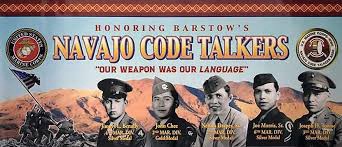
Diné bizaad is an Indigenous language primarily used by the Navajo, or Diné, people of the American Southwest. Not only is the language complex, but it’s traditionally passed down orally. During World War II, the United States military used this to its advantage by recruiting Navajo people fluent in both English and Diné bizaad, dubbed “code talkers,” to transmit secret messages among Allied forces.
The U.S. military wasn’t the first to use the tactic — members of Cherokee, Lakota, and other nations used their native tongues to evade German detection in World War I. The Marines, however, established the first formal training program for code talkers, and 29 Navajo completed the training in 1942. Recruits developed and memorized a two-part secret code inside a guarded room. The first part used 26 Diné bizaad words to stand in for letters of the English alphabet. The next part was more complex, and required making up hundreds of terms for English words that didn’t have a direct translation — for example, “iron fish” for “submarine,” and “humming bird” for “fighter plane.”
Even after recruiting more trainees into the program, the Marines struggled to find enough soldiers fluent in both languages to scale the program. But where code talkers were deployed, they passed along information with incredible security and accuracy. The Navajo Marines provided a valuable and often dangerous service to the U.S. military and its allies, but ironically, many had attended government or church-run boarding schools where they were punished for speaking languages other than English. After the war, the code talkers and their service went completely unacknowledged for decades. Their mission stayed classified until 1968, in case the military wanted to use the code again. In 2001, the original 29 code talkers were finally awarded the Congressional Gold Medal, and the rest were awarded the Congressional Silver Medal.
How have your political views changed over time?

I have always been a democrat because my personal values align more closely with the Democratic Party. Over the past few decades I have become more and more informed and have also been more involved on a local level.
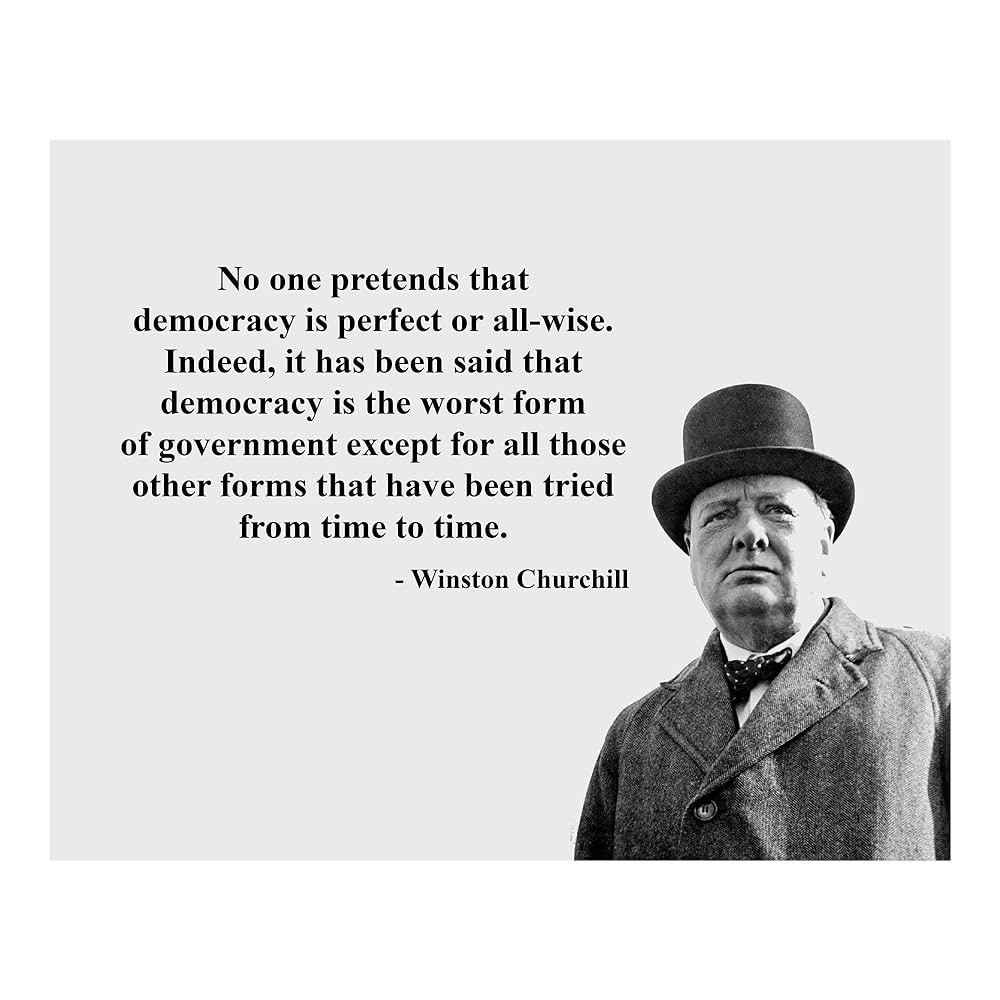
This is my favorite quote about our current system of government.

John Hanson
When we think of the President of the United States, many people do not realize that we are actually referring to presidents elected under the U.S. Constitution. Everybody knows that the first president in that sense was George Washington. But in fact the Articles of Confederation, the predecessor to the Constitution, also called for a president- albeit one with greatly diminished powers. Eight men were appointed to serve one year terms as president under the Articles of Confederation. In November 1781, John Hanson became the first President of the United States in Congress Assembled, under the Articles of Confederation.
Many people have argued that John Hanson, and not George Washington, was the first President of the United States, but this is not quite true. Under the Articles of Confederation, the United States had no executive branch. The President of Congress was a ceremonial position within the Confederation Congress. Although the office required Hanson to deal with correspondence and sign official documents, it wasn’t the sort of work that any President of the United States under the Constitution would have done.
Hanson didn’t really enjoy his job either, and found the work tedious and wished to resign. Unfortunately, the Articles of Confederation hadn’t accounted for how succession worked and his departure would have left Congress without a President. So, because he loved his country, and out of a sense of duty, he remained in office.

Statue of John Hanson in the United States Capitol Building
While there, he served from November 5, 1781 until November 3, 1782, he was able to remove all foreign troops from American lands, as well as their flags. He also introduced the Treasury Department, the first Secretary of War, and the first Foreign Affairs Department. He led the flight to guarantee the statehood of the Western Territories beyond the Appalachian Mountains that had been controlled by some of the original thirteen colonies.
What’s probably most interesting is that Hanson is also responsible for establishing Thanksgiving Day as the fourth Thursday in November.
It was no easy task to be the first person in this position as President of Congress. So it’s incredible that Hanson was able to accomplish as much as he did. Plus, instead of the four year term that current Presidents serve, Presidents under the Articles of Confederation served only one year. So, accomplishing anything during this short time was a great feat.
Hanson played an important role in the development of United States Constitutional History, one often not stated, but true nonetheless. Often, Hanson is regarded as the “forgotten first President.” In Seymour Weyss Smith‘s biography of him, John Hanson, Our First President, he says that the American Revolution had two primary leaders: George Washington in the military sphere, and John Hanson in politics. Although one position was ceremonial, and the other was more official, there are statues of both men in the United States Capitol in Washington D.C.
Hanson died on November 15, 1783 at the age of 62.
“Thus was ended the career of one of America’s greatest statesmen. While hitherto practically unknown to our people, and this is true as to nearly all the generations that have lived since his day, his great handiwork, the nation which he helped to establish, remains as a fitting tribute to his memory. It is doubtful if there has ever lived on this side of the Atlantic, a nobler character or shrewder statesman. One would search in vain to find a more powerful personage, or a more aggressive leader, in the annals of American history. and it is extremely doubtful if there has ever lived in an age since the advent of civilization, a man with a keener grasp of, or a deeper insight into, such democratic ideals as are essential to the promotion of personal liberty and the extension of human happiness. … He was firm in his opinion that the people of America were capable of ruling themselves without the aid of a king.”
-JACOB A. NELSON, “JOHN HANSON AND THE INSEPARABLE UNION,” PUBLISHED

Original photo by New Africa/ Shutterstock
In America, the act of tipping — chipping in a little extra on top of a bill in recognition of service workers — is both customary and controversial. How much is polite to tip, and how did tipping even come to be in the first place? Is it just an American thing? These eight facts about tipping help answer some questions about when to tip, how tipping evolved, and where you might not want to tip at all.
1of 8

There’s a persistent rumor that the word “tip,” when used to refer to a gratuity, is an acronym for “To Insure Promptness,” “To Insure Performance,” or “To Insure Prompt Service.” This is false. Around the 1700s, “tip” was underworld jargon among petty criminals as a verb meaning “give” or “share.” It’s been in the mainstream, both as a verb and a noun, since the 18th century.
Make Every Day More Interesting
Receive Facts Directly In Your Inbox. Daily.
By subscribing you are agreeing to our Privacy Policy and Terms of Use.
2of 8

The federal minimum wage for most people in the United States is $7.25 per hour as of 2023, but for tipped workers it’s just $2.13. Those tipped workers need to get paid the equivalent of $7.25 an hour once tips are tallied, and their employer needs to make up the difference, but for staff at some restaurants, a tip isn’t always a bonus — up to a certain point, it’s just supplementing staff wages. (Many states and cities have higher minimum wages.)
3of 8

As it exists now, tipping is a very American phenomenon, but it was customary in Europe for hundreds of years before wealthy Americans imported it back home. It dates back to the feudal system in the Middle Ages, when servants would perform duties for their wealthy masters and receive a paltry sum in exchange. Eventually, this evolved into gratuities for service industry workers from their customers. Wealthy Americans who traveled to Europe in the 19th century brought back the practice, just as a wave of poor European immigrants, used to working under the European tip system, were arriving. The idea got major pushback at the time as “un-American,” but tipping picked up after the Civil War because …
4of 8

When recently freed former enslaved folks entered the U.S. workforce after the Civil War, many had few employment prospects — so restaurants would “hire” them, but force them to rely on tips for payment instead of a reliable wage. Six states then abolished tipping in an attempt to force employers to pay their employees, but those bans were eventually overturned. When the Fair Labor Standards Act established the minimum wage in 1938, tipping was codified as a way to earn those wages.
5of 8

In America, tipping is customary to not only say thank you for good service but also to help service workers make ends meet — even in states without tipped wages — so not tipping or undertipping is considered an insult in many industries. Yet at most businesses in Japan, tipping is embarrassing at best and insulting at worst. Many restaurants do implement service charges though, so you should still prepare yourself for something on top of face value when the bill comes.
6of 8

When you’re staying at a hotel — at least, an American hotel — it’s customary to tip the housekeeping staff. Don’t worry, the etiquette isn’t to leave 20% of your hotel stay. Experts recommend a minimum of anywhere from $1 to $5 per day, and to leave a bigger tip if you’ve been messy, you made special requests, or if there’s a pandemic on.
7of 8

According to a poll by Bankrate, slightly less than two-thirds of all Americans always tip at sit-down restaurants. Furthermore, 42% say they always tip 20% or more. This doesn’t include takeout or coffee shops — Americans are much less likely to tip consistently there, at only 13% and 22%, respectively.
8of 8

Americans are far less likely to tip when they get takeout vs. when they sit down to eat because they’re not getting table service, but restaurant staff still work to prepare your food and package it up. You may not be expected to tip as much, but a little something is still warranted — after all, the kitchen staff perform essentially the same job whether you sit down or take it to go.
History Facts

A dding to the rich legacy of Easter Island, archaeologists have uncovered full bodiesunderneath each structure. (But breathe easy: The bodies, like the heads, are made out of stone.) Known as moai, the figures were built by the Indigenous Rapa Nui people between 1100 and 1600 CE, but as time took its toll, the statues’ lower halves became increasingly hidden by sediment and rock.
Located in the southeastern Pacific Ocean, Easter Island is one of the most isolated places in the world, and managed to escape colonization until the first European explorer arrived in 1722. The island itself was formed by three extinct volcanoes, which explains why the moai are carved from volcanic stone. The statues were built to temporarily contain the spirits of Rapa Nui chiefs, who were believed to become divine after death. The structures also sit on stone platforms called ahu, and some moai are adorned with circular red stones (pukao) that sit on their heads and represent topknots of hair. Excavationists have also found cremated and buried human remains at some ahu, suggesting they were a place of Rapa Nui death rituals.
The moai bodies were initially discovered by archaeologists in 1914, and in 2010, the Easter Island Statue Project began excavating two of the bodies. Since Easter Island is a UNESCO World Heritage Site, the moai are protected from humans, though the monoliths still battle erosion, rising sea levels, and the effects of forest fires.
You get to build your perfect space for reading and writing. What’s it like?

The perfect space is one you create in your mind, if the story is engaging you can lose yourself in the pages, I have to be in my own head to successfully write the exterior environment doesn’t matter.
Lyle Northey (Silent/Boomer)
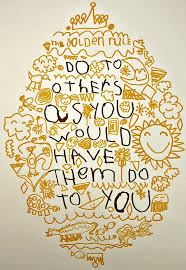
Received a Christmas card, Hallmark card, that has one of the best messages I have ever read on it. The message is “Everytime a hand reaches out to help that is Christmas,
Every Time a person chooses peace, that is Christmas, Every Time we forget our differences and remember the love that connects us, that is Christmas”.
This should not be the message that applies only at Christmas, it is a message that we all need to remember all the time. It and the standby “Do unto others” message should be how we are conducting business. Unfortunately we have all the other baggage to drag along, our fear and distrust, greed and self importance that makes being thoughtful and caring almost impossible for many.
The idea that we are capable of living together and supporting one another seems too good to be true. It works in other countries, why not here? There is the battle to stay well, paying for high priced medical insurance that is picky about what they will or won’t cover. The effort to get an education beyond high school and the debt that is incurred with that. Homelessness and unemployment, drug usage and gun violence. We in the US have all of these and other problems to deal with on a daily basis and the bottom line reason for so much of it is the greed of a few that want to keep the money flowing into their accounts even if it bankrupts everyone else.
Other countries have education opportunities to the age of 26 at no cost. They have health care that does not cost them everything they make. They have very little in the way of homelessness and unemployment. Drug problems are dealt with as an illness more often than as a crime and gun violence is minimal as gun laws are in place that make sense.
What will we become if a Dictator is put in place? Will he deal with our problems in a just and humane way? Drug dealers and users in one country are open game to execution with complete approval of the government. Will the gun laws change to keep us safe or will everyone have a gun so we can shoot however offends us?
We will not have to worry about voting, probably will not have to concern ourselves with vacation or upkeep on national parks. We will most likely have no ability to honor anyone but the master and to keep the money rolling into his coffers. Will he have one of his sons groomed to become his replacement, as they do in North Korea? Have the people that have said they think it is a good idea even thought about the consequences of having a dictator? This move will not be a trip through the tunnel of love that is for certain.
What is your all time favorite automobile?

Mini Cooper Mark1
Not a big engine muscle car but the Mini Mark1 hold a special place in my heart. Would love to acquire one and convert it to full electric just as a run about grocery getter.
Dwain Northey (Gen X)
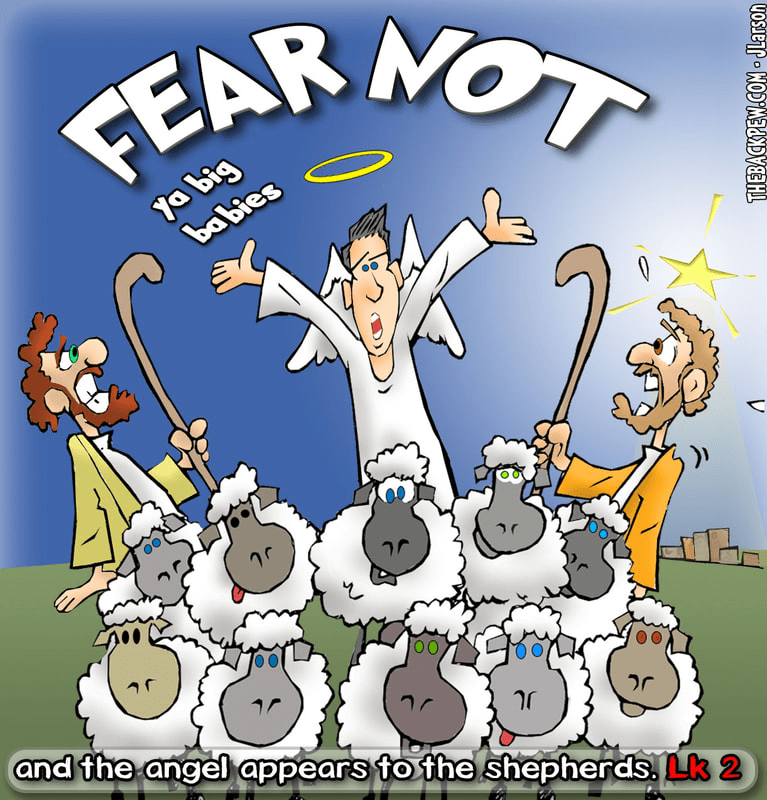
The term derives from Middle English Cristenmasse, meaning ‘Christian mass’. Christmas is celebrated to remember the birth of Jesus Christ, who Christians believe is the Son of God. The name ‘Christmas’ comes from the Mass of Christ (or Jesus). A Mass service (which is sometimes called Communion or Eucharist) is where Christians remember that Jesus died for us and then came back to life.
The Catholic Church puts great reverence on Christmas even though the events surrounding Jesus’ birth are taken from two Gospels: Matthew and Luke. Each book was written during different times and in different locations. This event isn’t mentioned any other time in the gospels.
The common Christian traditional dating of the birthdate of Jesus was 25 December, a date first asserted officially by Pope Julius I in 350 AD, although this claim is dubious or otherwise unfounded. Because Dec. 25 was the date in the imperial Roman calendar on which the solstice occurred, some Christians living in Rome asserted that Jesus must have been born on the shortest day of the year, as a sign of his great humility. Other dubious assertions of Dec. 25 came from Hyppolitus (170-235 CE), a prominent theologian of the Catholic Church in Rome, mentioned the date of Jesus birth in his 204 CE work, “Commentary on Daniel”. He stated Jesus was born “in Bethlehem, eight days before the calendar of January [December 25], the 4th day of the week [Wednesday]”.
Almost certainly the December 25th date was derived from existing pagan celebrations. The winter solstice (shortest day) had always been celebrated by primitive peoples as the beginning of hope for the arrival of spring. This continued into classical times. The Romans celebrated the festival of Saturnalia between 17th and 25th December. Many Christian celebrations not so coincidentally coincide with previous pagan festivals.
The Roman calendar is supposed to represent year one as the start one the year of Christs birth although date of birth of Jesus is not stated in the gospels or in any historical sources, but most biblical scholars generally accept a date of birth between 6 BC and 4 BC, the year in which King Herod died. The change from BC to AD, AD meaning Anno Domini is Latin for “The Year of the Lord”. If anyone tells you it means “After Death”, THEY ARE WRONG!! Hey, if B.C. means ‘Before Christ’, and A.D. meant ‘After Death’, it would mean after Christ’s death, RIGHT? Tradition has it that Christ lived for 33 years. True believers would say that Christ never died, he was Crucified and rose from the tomb 3 days later.
As for the December 25th date many biblical scholars more appropriately place the birth in the spring more than likely around the month of April not in the winter. My guess is that when Pope Julius I deemed the day to be in December that it was a political move as to not correlate the birth, crucifixion and subsequent resurrection all into the same month of the year. Again, this is just my assumption.
I could go on about how the holiday has been bacterized and commercialized for corporate profit but I will save that rant for next Christmas.
 Esoteric Meandering Shouting Into the Void
You must be logged in to post a comment.