I live in Arizona so we don’t play the clock touching game we just have to adjust our viewing or listening times for programs that are broadcast from anywhere else… it just annoying to continue a practice that seems to be irrelevant today.
The impact of shifting more sunlight later into the evening on public health and safety has been the subjects of debate in recent years in light of efforts in Congress to make daylight saving permanent, but why do we have spring our clocks forward in the first place?
The United States followed the lead of several European countries at war that adopted daylight saving time during the summer months. Newspapers at the time reported that European countries had seen considerable savings in coal consumption.
The new law, signed by President Woodrow Wilson on March 19, 1918, also established a standard time and gave the federal government the authority to establish five different time zones across the county.
The federal government would re-institute twice more daylight saving time on an emergency basis to conserve energy:
Year-round daylight saving time was implemented during World War II
Daylight saving time was extended from 1973 to 1975 during the oil embargo crisis.
When did daylight saving time start?
The federal law that dictates daylight saving time as we know it today is the Uniform Time Act of 1966, which implemented a uniform time and date all states forwarded their clocks to observe daylight saving time. States were again given the option to not observe daylight saving time and remain on standard time. Two states: most of Arizona and Hawaii stay on standard time year round.
Originally, daylight saving time began on the last Sunday of April and ended on the last Sunday of October, according to the Congressional Research Service.
In 2005, Congress amended the Uniform Time Act to expand daylight saving time to the period in effect today: Starting on the second Sunday of March and ending on the first Sunday of November, according to the Congressional Research Service. This move was again for energy saving purposes.
The national archives is the holder of all Presidential communications whether it be letters, text messages, or any other form of data between the President and any person or state or organization. It is not personal and it cannot be retained by the outgoing President no matter who that may be.
In one former President we have had more problems of claims of it is mine and I can do as I please and this is the petulant little boy named Trump. The victim or all time everybody is picking on me and yet his big mouth is what is causing him and us all the problems. He needs to grow up and his enablers all need to go home and get back to being citizens of the United States of America not puppets in the Donald J Trump Punch and Judy Show.
We are proud to have been involved in an insurrection, say one man, and now we are going to run for public office. That should not be condoned and the plug should be pulled on this effort before it gets off the ground. The stated fact that our politicians need to get back to doing the business of the nation is quite true. How supporting the nation and supporting Trump have anything to do with one another is beyond me.
The continued support of Conservative values is also very much a thing that has become almost as repugnant as Trump. You all claim to be so goody goody and yet you are the ones cutting programs that help people in need, allowing children to go hungry, creating laws that violate women’s rights in favor of a fetus. By the way, geniuses, women can vote, at present, a fetus can not.
We have these mass shootings sponsored by the NRA and the GOP and all that is offered at the end of the day is prayers and thoughts. None of those thoughts have anything to do with changing a law that actually uses common sense about weapons. How would that be possible that would violate the 2nd amendment and no amount of death and destruction should alter that.
Believe in the bible, thou shall not kill, unless you have an assault weapon and for some reason a case of the ass or a case of stupid at the same time, and then it is okay to go to a theater, a birthday party, a club, gay preferably, or a church and start shooting. Those people should have been somewhere else.
The other people that should be somewhere else will be the law-abiding citizens of this nation when Trump is not elected again and his troop of idiot followers decides to start a war. It is a sad statement that people are so convinced that he is the answer to our collective problems that they would be willing to pick up arms against their neighbors for him. When it happens it will be a test of the current administration to see if they bring in the big forces and fight the situation . If the war only renders one casualty let it be the leader of the pack.
The Patriots of this Nation are not losers. They have gone to far away shores and not come home and now occupy graves in foreign lands. Some lost their lives quickly in a sudden burst of gunfire or an explosion of a bomb, others lost their lives after months in prison camps living on next to nothing and perhaps suffering from wounds that did not heal. None were losers, all were members of the military this nation had sent to help liberate someone else’s home and to keep the war off of our doorstep. Many came home very different than when they left physically and mentally and some never returned to quite the same ever again.
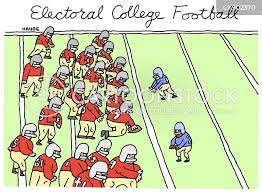
Those Patriots should never have been shamed by a draft dodger, a sewer rat that brags about not catching any sexually transmitted diseases and that was his contribution to the VietNam War. That person may have been elected to the highest office in the land but it did not happen on the popular vote it happened because of a system that needs to be ended so that the voice of the people can be heard not just the wishes of the wealthiest people in the nation.
I don’t rely on one site for anything, with access to all the information that the World Wide Web provides it is insane to pigeon hole yourself to one source .
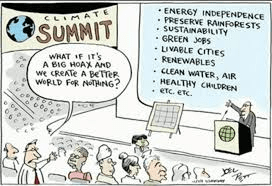
We are in an energy transition point and a lot of naysayers are not only on the fence about EVs and alternative energy sources they seem to be actively throwing rocks trying to discredit this move away from burning fossil fuels. I liken these cynics to the saddle makers of the late 19th century that would never forgo their horses for the new-fangled horseless carriage. But the times are changing, and technology is advancing and as a ‘thinking’ species we are, well at least some of us are, realizing that burning carbon is irreconcilably altering the climate of the planet that we live on. Most of us are aware that we have no other place to go and unlike Elon Musk we do not have the resources to launch ourselves into space to try and find an alternate planet to live on.
EV’s are getting a bad name mostly because the technology is new. The main complaint I hear for the detractors is that charging the batteries requires the burning fossil fuel to create the energy and when the batteries are spent that the batteries themselves are not recyclable and more toxic to the environment that just burning gas. Again, I come to the point of reminding people that this technology is relatively new, think of how far the cell phone has come from the first clunky phones of the 90’s. leaps and bounds of the past 30+ years.
Let’s get back to the EV and battery issue that is the stumbling block for many detractors of EV’s. There is an emerging battery technology that is going to change everything we think about batteries and when it is perfected it is going to cost a lot of energy companies their monopolies in the market. Here is the solution by encapsulating radioactive material inside diamonds, we turn a long-term problem of nuclear waste into a nuclear-powered battery and a long-term supply of clean energy.” The team have demonstrated a prototype ‘diamond battery’ using Nickel-63 as the radiation source.
I am sure many of you just had a WFT moment. It is called a Radioactive Diamond Battery. Again, I can hear the “What Radioactive that can’t be safe.” Research has determined that the radiation level of diamond batteries will be lower and safer than the radiation level produced by the human body. Serving as a small nuclear generator, the power source for these batteries consists of high-level radioisotopes coated with multiple synthetic diamonds for safety. The next question is how do recharge this battery? The good news is you don’t by using nuclear waste as their main power source and diamonds as their heat conducting element, the nuclear Diamond battery can supposedly last up to 28,000 years, an unfathomably long time.
How would this affect EV’s? Well, I am glad you asked, according to NDB, the nano-diamond battery is self-renewing and advantageous for the environment. It could be used to power drones, electric cars, smartphones, and many other gadgets. In these batteries, the energy source is stored beneath a polycrystalline diamond covering. Now the question is, what about diamonds? We have lab grown diamonds; we don’t have to extract them for the earth. Most industrial applications of synthetic diamond have long been associated with their hardness; this property makes diamond the ideal material for machine tools and cutting tools. These same synthetic diamond are ideal for NDB (Nuclear Diamond Battery)s.
The disadvantage of these types of batteries is since radioisotope decay is sustained by the material itself, there is no need for refueling or recharging. The disadvantage of using these batteries is that their power density is lower than chemical batteries, and these have low conversion efficiencies.
For all the science nerds that want to know how much power the batteries produce; It produced a power output of about 1 μW at for power density of 10 μW/cm3. At those values, its energy density would be approximately 3.3 Wh/g over its 100-year half-life, about 10 times that of conventional electrochemical batteries. I know for most non chemists that doesn’t mean anything let’s just leave it to say that this new battery technology sustains itself and will outlive the application that it will power.
Now that I have rambled on about science and advancements that most of us are or were unaware of, does anyone feel better about our energy future? I DO!
Is there an age or year of your life you would re-live?
Re-live as it was with no changes or re-live and re-direct your future . That is unique question because the reality of re-living an age or a year would invariably change the future altering your present.
I would go back and re-direct my life from 17 to 24 years of age but the problem with fixing mistakes of the past would cause me to lose the one thing that is most important to me which is my son. He didn’t come along till I was 38 and changing my time line would inevitably change that chapter of my present.
Would be interesting to go back as an observer, not changing anything just to see how those past mistakes molded the person I am now .
This is a word that I feel is overused and usually out of context. The literal meaning of Draconian is excessively harsh and severe, today the meaning has expanded to rigorous; unusually severe or cruel. It is a hard word, with hard connotations and as I said used often today and out of context.
I hear high school kids saying that their parents have draconian rules but when I ask what the rule is and consequences for breaking that rule are the adolescent does not articulate anything that could be construed as excessively severe.
Example: Rule- a curfew of 9pm during the week and 11pm on weekends.
Consequences for breaking rule- no going out or car for the next week.
Oh, my gawd that is the harshest punishment ever… at least to the teen. This is in no way DRACONIAN.
Now if the punishment for breaking curfew was No car, no going out, and 50 lashes with a cat of nine tails, that could be considered draconian.
I suppose I am a word snob, all I ask is if your going to try and sound smart don’t your big words out of context.
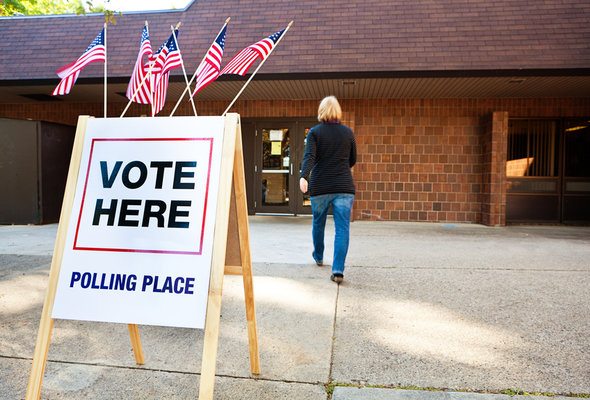
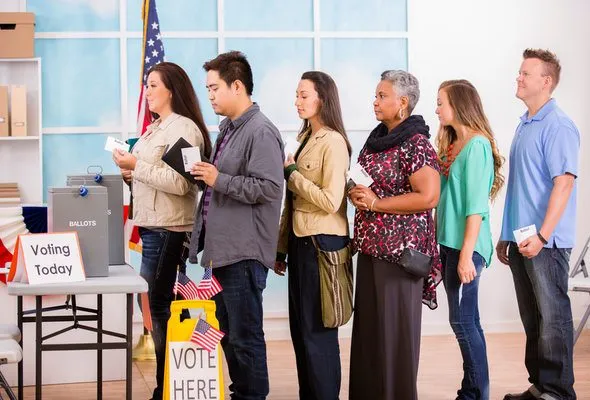
When you go to the polls to vote for a president every four years, you’re participating in an indirect vote. Why is it indirect? Well, because of the electoral college. Some say the electoral college is key to maintaining what’s good about U.S. politics, while others want to abolish the institution in favor of a more direct system. Let’s take a look at the pros and cons of the electoral college in the context of modern American politics.
Advantages of the Electoral College
The electoral college has a number of pros and cons, depending on where you fall on the political spectrum. While it prevents an easy-to-understand election that would draw from a popular vote, it was originally enacted to give every state its fair say in who gets elected to the highest office in the country. Here are the most relevant benefits:
1. It Keeps Smaller States Relevant in National Politics
Imagine a U.S. presidential election with no electoral college. If only the popular vote mattered, candidates might concentrate their energies on densely populated metro areas like New York, Los Angeles and Chicago. Depending on your perspective, that might sound like a change for the worse. It would mean candidates would have little reason to consider, say, the state of farming in Iowa or the opiate crisis in New Hampshire.
One reason that some analysts support the electoral college is that it encourages candidates to pay attention to small states and not just get out the vote in big, populous states and cities. The electoral college gives small states more weight in the political process than their population would otherwise confer.
2. It Provides a Clean, Widely Accepted Ending to the Election (Most of the Time)
The electoral college, proponents say, makes U.S. presidential elections less contentious by providing a clear ending. There’s no need for a national recount when you have an electoral college.
If one state has voting issues, you can just do a recount in that state rather than creating national upheaval. And to win, a candidate must garner the support of voters in a variety of regions. That means whoever wins the presidency must build a truly national coalition. This, in turn, helps promote national cohesion and the peaceful transfer of power between presidents and helps keep the nation’s political system stable.
3. It Makes it Easier for Candidates to Campaign
If you’re a Democrat running for president, you don’t have to spend too much time or money wooing voters in left-leaning California. The same goes for Republican candidates and right-leaning Texas.
The fact that certain states and their electoral votes are safely in the column of one party or the other makes it easier and cheaper for candidates to campaign successfully. They can focus their energies on the battleground states. Some argue that getting rid of the electoral college could make American presidential elections even more expensive than they already are, exacerbating what some see as America’s campaign finance problem.
Disadvantages of the Electoral College
In politics, there are very few things that make everyone happy. The electoral college is no different as there are a few cons that need to be considered. Here are the most important cons to the electoral college.
1. It Can Make People Feel Like Their Votes Don’t Matter
In the electoral college, it’s true that not every vote matters. A Democrat in California who gets stuck in traffic and doesn’t make it to the polls probably shouldn’t beat themselves up. The same can’t be said for a voter in Florida, Ohio or another swing state.
U.S. voter participation rates are already quite low. Some argue that eliminating the electoral college would be an easy way to raise them and boost Americans’ engagement in the political process.
2. It Gives Too Much Power to Swing States
If you follow U.S. federal elections and you don’t live in a swing state, you might find yourself grumbling that some voters get all the attention. If you don’t live in a swing state like Pennsylvania, Florida, Ohio, Michigan, Wisconsin and more, you probably won’t see as many ads, have as many canvassers come to your door or get polled as frequently. The electoral college means that swing states – which aren’t necessarily the most representative of the country as a whole – get most of the attention.
And even within swing states, certain counties are more competitive than others. That means voters in those counties are courted particularly hard. If that offends your sense of fairness and you think that candidates should fight for the votes of all Americans, you may oppose the electoral college. In fact, this result has ended up creating the same thing that the electoral college is supposed to prevent, which is candidates focusing on a few specific areas.
3. It Can Clash With the Popular Vote
Remember the 2000 election when Al Gore won the popular vote, but lost the electoral college, and therefore the presidency? That was enough to turn some Americans off from the electoral college forever.
If the U.S. eliminates the electoral college, that scenario would never happen again. The potential for the electoral college to conflict with the result of the popular vote is one of the most commonly cited arguments against the electoral college.
4. There Remains the Possibility of “Rogue Electors”
Many states have no law requiring electors to vote the way their state has voted. Electors in these states are “unbound.” Therefore, the electoral college is based on a set of traditions that electors vote the way their state votes.
However, there’s always the possibility of “rogue” or “faithless” electors who could give a vote to a candidate who didn’t win the elector’s state. This also worries critics of the electoral college.
Pro or Con: It Keeps the Two-Party System Strong
This one is either a pro or a con, depending on your point of view. The electoral college helps keep the two-party system strong. It makes it very hard for a third party to break through at the national level and increases the risk that a third party could spoil a candidate’s chance of winning, which in turn discourages people from voting for third-party candidates.
Some analysts credit the two-party system with keeping American politics stable and driving candidates to the political center, while others would like to see a multi-party system takes hold in the U.S. So, depending on where you stand with regard to the two-party system, you’ll probably have corresponding feelings about the electoral college.
The Bottom Line
Will the U.S. decide to eliminate the electoral college? It’s hard to say. There’s a movement to encourage states to split their electors in proportion to the percentage of the state vote that each candidate gets. While that wouldn’t eliminate the electoral college, it would change the winner-take-all nature of our system and the way candidates think about state campaigns. Time will tell whether that reform – and others – come to pass.
I wish I could experience the sense of wonder and joy that lives in a child’s heart but as an adult the ugliness of the world has forever tainted that experience.😢








 Esoteric Meandering Shouting Into the Void
You must be logged in to post a comment.