Category: Uncategorized
-

One of my favorites -
What does your ideal home look like?

My ideal home would blend seamlessly into it environment and be self sustaining and carbon neutral or negative.
-
Dwain Northey (Gen X)

While you are enjoying your day off and ushering out summer vacation and welcoming fall many Americans have no idea what this day means, it just a paid day off (well deserved).
So, he is a little history lesson about the day we all celebrate… and on this day thank a Union Member for all they do and what Unions have done for this Nation.
Labor Day became a national holiday in 1894 when President Grover Cleveland signed a law passed by Congress designating the first Monday in September a holiday for workers.
What Unions Have Done For You
- The Weekend. In 1870, the average workweek for most Americans was 61 hours — almost double what most Americans work now. …
- End of Child Labor. …
- 40 hour work week. …
- 8 hour work day.
- Unemployment Benefits.
- Workers Compensation Laws.
- Employer-Based Health Coverage.
- Family and Medical Leave Act.
10 Facts About the History of Labor Day and the Labor Movement
- 1. The first Labor Day “parade” was actually a strike.
- On Sept. 5, 1882, tens of thousands of union laborers marched from New York City Hall to Union Square to protest deplorable working conditions amid the Industrial Revolution: Workers, including children as young as five years old, labored in unsafe factories, farms, mills and mines for 12 hours or more per day, seven days a week, often without breaks, fresh air or even clean water. Many workers risked their jobs and livelihoods in order to march.
- 2. The war on police brutality was directly tied to the Labor movement.
- In early May 1886, a labor protest rally in Chicago turned into what’s now known as the Haymarket Riot. Police fired into a crowd, killing at least two but possibly six protesters (reports at the time varied) and injured several others in a peaceful rally demanding an eight-hour workday and safe conditions.
- The following evening, at the end of a rally peacefully protesting police brutality, a still-unidentified individual threw a bomb, killing seven cops and at least four protesters. More protests followed, some condemning the slayings and others slamming police brutality. Gunfire between police and protesters broke out, wounding 60 cops and even more civilians. The outrage and unrest led to the convictions of eight alleged anarchists, with four being hanged. Three surviving defendants were later pardoned.
- 3. New York City recognized Labor Day in 1882.
- It would be several more years before it became a federal holiday.
- 4. A deadly railroad strike led to the federal recognition of Labor Day.
- The Pullman Palace Car Company cut wages following an economic depression in the early 1890s, leading many railroad workers to join the American Railway Union, led by Eugene V. Debs. The union supported the workers with a strike against Pullman train cars. After the striking workers were punished, the entire ARU went on strike, and within days, 125,000 railroad workers quit their jobs.
- Then-President Grover Cleveland sent in troops and U.S. Marshals, claiming that the railroad strike interfered with mail delivery. As a result, 13 workers were killed and nearly 60 were injured. The incident was known as the Pullman Strike. Cleveland began to show support for the Labor Movement afterward and made Labor Day a federal holiday in 1894—but his motives have been said to likely be political gain more than genuine sympathy for workers.
- 5. Railroad workers didn’t get a standard eight-hour workday until 1916.
- It wasn’t until another massive railroad workers’ strike that the standard eight-hour workday became law. In 1916, 400,000 rail workers in four different unions threatened to strike unless the rule was implemented. President Woodrow Wilson signed the Adamson Act, making an eight-hour workday the legal standard, out of fear of the repercussions of a railroad strike.
- 6. Other workers had to wait much longer for government regulation of work hours.
- The Fair Labor Standards Act (FLSA) was enacted in 1938 to expand the standardized eight-hour workday to industries beyond railroads. It also established minimum wage, overtime pay and child labor laws.
- 7. Labor Day weekend technically has two holidays.
- Labor Day always falls on the first Monday of September, but in 1909, it was declared that the Sunday preceding Labor Day would be “Labor Sunday,” dedicated to educational and spiritual messages and goals of the Labor Movement.
- 8. Labor Day and May Day are similar, but not the same.
- The concept of Labor Day is essentially the same as that of May Day, now known as International Workers’ Day, celebrated worldwide (though not widely recognized in the United States) on May 1 every year.
- 9. Canada had the idea first.
- From January through June 1872, Canada marked the Nine Hour Movement for laborers in an effort to shorten working days.
- 10. No one is quite sure who invented Labor Day.
- Peter J. McGuire, who served as general secretary of the Brotherhood of Carpenters and Joiners and was a co-founder of the American Federation of Labor, is largely credited with conceiving Labor Day to recognize people “who from rude nature have delved and carved all the grandeur we behold.” However, Matthew Maguire, a machinist and secretary of Local 344 of the International Association of Machinists in Paterson, N.J., is also believed to have had a hand in founding Labor Day, proposing the holiday when he served as secretary of New York’s Central Labor Union in 1882.
HAPPY LABOR DAY
-
What brings a tear of joy to your eye?
Not sure about the joy part but I can guarantee a tear by pulling a nose hair.😳🤣
-
Dwain Northey (Gen X)
Has anyone else heard about this? This a real plan set forth by the Heritage Foundation, it appears that they are tired of the dog whistle and coming right out and saying the quiet parts out loud.
‘Project 2025’: plans to dismantle US climate policy for next Republican president. An alliance of rightwing groups has crafted an extensive presidential proposal to bolster the planet-heating oil and gas industry and hamstring the energy transition, it has emerged. Undoing climate action is only part of the plan, they also have ambitions to change the structure of the U.S. government. The plan that has been stated by GOP candidates and was almost implemented by (45) is to gut the government of 10 of thousands federal employees and including FBI and other law enforcement that aren’t loyal to the President. These long-time employees that keep the wheels of government rolling no matter who sits in the Executive Branch are considered by the GOP to be the dreaded DEEP STATE.
This radical reconstruction of power has been seen in the past and has led to world wars. Many experts agree that this push for unitary power, otherwise known as fascism, is a mass political movement that emphasizes extreme nationalism, militarism, and the supremacy of both the nation and the single, powerful leader over the individual citizen.
Those that are pushing this type of governmental charge are using the cry of Socialism to advance their movement. Fascism is a dictatorial form of political ideology. Socialism, on the other hand, is an ideology where individuals of a society own the means of production. A fascist ruler wields supreme power and authority over a country. In contrast, rulers of socialist nations distribute power and authority among the states. Those that don’t know the difference have always been afraid of any message that contains an (ISM), socialism, communism, pick an ISM and you can terrify at least half the population.
This country is a Democratic Republic, it is democratic because the people govern themselves, and it is a republic because the government’s power is derived from its people. This means that our government – federal, state, and local – is elected by the citizens. That means that we have the power, the power to elect people that represent our ideas, we also have the power to remove those that don’t live up to the promise they made to achieve the office. The Heritage Foundation’s plan wants that power of the people to be a thing of the past. The unitary executive theory has been pushed for years and if the current crop of Trumpublicans get their way it will be a reality not a theory. Every part of government would answer directly to the Executive Branch i.e. the President. Does that sound familiar, Putin, Kim Jung Un, Duterte, Xi Jinping. These are all authoritarians that Trump admires and wants to emulate, hell if he could achieve this in the U.S. he would have these despots looking up to him. Knowing the narcissistic person the Donald is this would be a wet dream for him.
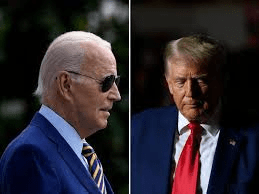
It seems that every election since 2016 we have been telling people that this is the most important election but sadly it is true once again. Yes, Biden is older, but he has accomplished more than any President in the past 80 years and like he has said on a number of occasions, ‘don’t compare me to the Al’ Mighty compare me to the Alternative.’
If you haven’t heard about the 2025 Project please take some time to do your own research.
Again thanks for reading… VOTE, VOTE, VOTE.
-
Why do you blog?
Honestly I have always had the screaming voices in my head and blogging is a way to share them. Also really wanted to find out if I was alone in my thoughts or if others spent their days shouting into the Void.


You must be logged in to post a comment.