The story of the first Thanksgiving is often told like a warm, soft-focus commercial: noble Pilgrims, helpful Wampanoag, long tables groaning under the weight of roasted fowl and whatever passed for carbs in 1621. It’s a cozy scene—so cozy, in fact, that it politely ignores one inconvenient detail: it makes absolutely no sense.
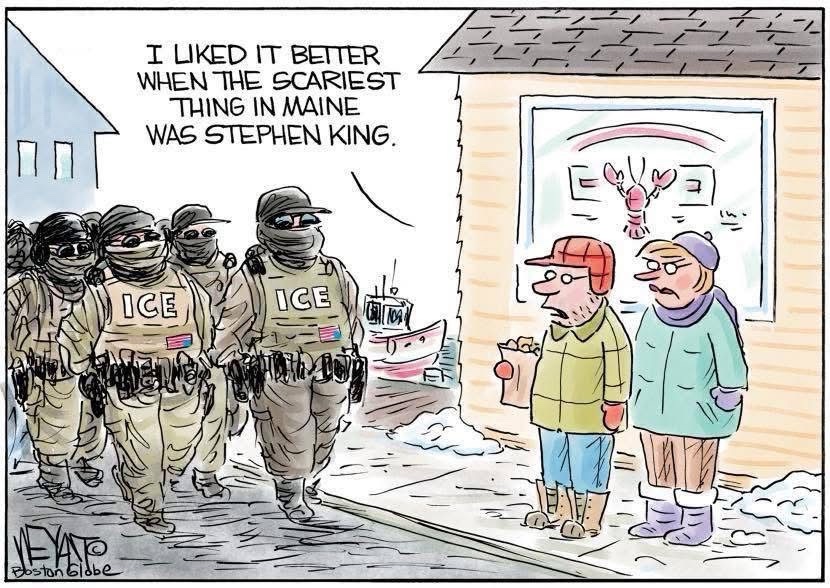
Let’s be honest. If you’ve spent months clawing survival out of the unforgiving New England dirt, buried half your companions, and are staring down another winter that promises the charm of Maine but with none of the L.L. Bean catalogs, the last thing you should do is throw a multiday blowout feast. But that’s exactly what happened. They gathered up the harvest—a modest one, mind you—and instead of rationing it with the disciplined paranoia that cold climates demand, they decided, “You know what? Let’s invite guests. Lots of them. And let’s eat like we’re not about to freeze solid by January.”
Brilliant.
It’s almost touching in its optimism. Or delusion. Or maybe it’s the first example of Americans committing to a tradition simply because it looked good in the moment, practicality be damned. After all, winter starvation was practically a seasonal hobby in those parts. Nothing says “we’re totally going to survive this” like blowing through your hard-won food right as the days get shorter and your vegetables begin contemplating their own mortality.
And yet, maybe that’s the real heart of the story. Not peace, not unity, not even the shared meal—just the audacity of human beings choosing celebration over common sense. A moment of joy in a landscape that promised anything but. A collective, historic shrug of “Eh, we’ll figure it out.”
So perhaps the first Thanksgiving wasn’t a brilliant plan. It wasn’t strategic. It certainly wasn’t logical. But it was defiantly, irrationally human. And given what the next few centuries had in store, a little reckless optimism might have been the wisest thing they did after all.
At long last, the political universe has blessed us with a moment so poetic, so karmically delicious, it should be served warm with ice cream: the MAGA House of Cards—previously held together exclusively by rage tweets, performance patriotism, and whatever glue Marjorie Taylor Greene snorts before committee meetings—is finally starting to wobble.
And the wobble isn’t subtle. No, this is the majestic sway of a drunken flamingo trying to perch on a greased bowling ball.
The first glorious sign? Marjorie Taylor Greene, the self-appointed pitbull of the movement, the woman who has turned performative fury into a full-body sport, has announced she’s taking her ball and going home. Home! That magical place she apparently finds less dysfunctional than her own caucus, which is saying something, because this is a woman who once chased teenagers through the halls of Congress but now finds her colleagues “too much.”
When MTG—the face of MAGA feral energy—decides the chaos is too chaotic for her? Oh honey, that’s not a red flag. That’s karma kicking the front door off its hinges and yelling, “I brought snacks, let’s watch this!”
And the joy from defenders of democracy? Palpable. Electric. Like opening the front door on Christmas morning and finding out Santa left you a box set titled The Slow-Motion Collapse of Authoritarian Cosplay.
But wait—there’s more! Rumors abound that several other GOP members are quietly inching toward the exits, clutching their own metaphorical playground balls like they’re the last remnants of dignity they still possess. They’re apparently ready to bow out before the entire MAGA Jenga tower inevitably collapses into a pile of splinters, slogans, and unpaid legal bills.
Which, by the way, brings us to Mike Johnson—Speaker of the House, part-time sermon reader, full-time human stress ball. Johnson may soon discover that you can’t run a majority when your majority decides it would rather be literally anywhere else. Imagine having to surrender the gavel before the 2026 election cycle because your own teammates can’t stand the smell of the dumpster fire they helped ignite. If democracy could laugh, it would be cackling loud enough to trigger seismographs.
Watching all this unfold is like watching the world’s tackiest fireworks display malfunction mid-show: sparks flying in the wrong direction, people diving for cover, the air filled with the unmistakable scent of “This was always going to end badly.”
But for those who’ve spent years defending democratic norms, institutions, and the radical notion that the truth matters?
This isn’t just schadenfreude.
This is victory.
This is relief.
This is karma finally taking her stilettos off, cracking her knuckles, and saying, “My turn.”
The MAGA House of Cards is collapsing. Not quietly, not with dignity, but with a glorious, melodramatic thrashing worthy of an overfunded reality show.
And honestly?
Couldn’t have happened to a more deserving stack of bullshit.
The holiday season arrives every year wrapped in its familiar colors—warm lights strung across rooftops, storefronts playing the same five songs, families crowding airports with suitcases full of sweaters and anticipation. It’s the time of year we’re told is meant for family, for friends, for community. We’re encouraged to gather, to celebrate, to embrace the people who make us feel at home. But beneath the glow and glitter, there’s another truth that sits quietly in the corner: for many people, this season doesn’t feel joyous at all. In fact, it can feel lonelier than any other time of year.
There’s a particular kind of silence that settles in when everyone else seems to have somewhere to be. Not the peaceful silence of a winter morning, but the hollow kind—the one that echoes a little when you open the door to an empty apartment. Some people receive invitations to gatherings and parties but turn them down, not because they dislike the hosts or the festivities, but because of that strange, heavy feeling of being alone in a crowded room. Of standing among laughter and inside jokes and thinking, I don’t belong here. Of watching people connect and wondering why their own hands feel too full of invisible weight to reach back.
That feeling is real. It’s valid. And it’s far more common than most people realize. The holiday season has a way of magnifying contrasts: joy and sadness, togetherness and isolation, gratitude and grief. If you’re already carrying loneliness, this time of year can press on it like a bruise.
But maybe the most important thing to remember is this: the story we tell about the holidays—that they are supposed to look a certain way, filled with certain people, punctuated with certain moments—is just that: a story. For many, the holidays are messy, complicated, bittersweet. Some are healing from loss. Some are estranged from family. Some are rebuilding their lives from scratch. And some simply feel out of rhythm with the world around them.
There’s no shame in that. There’s no failure in it. And there’s certainly no rule that says you have to pretend your heart is lighter than it is.
If you know someone who drifts to the edges this time of year—someone who slips quietly out of invitations or keeps conversations short—reach out, gently. Not with pity, but with presence. Sometimes a simple “thinking of you” means more than any wrapped gift. Sometimes inclusion isn’t about the party at all, but about the reminder that someone notices whether you’re there.
And if you are the person sitting with that loneliness, stepping back from celebrations because the noise feels too sharp or the cheer feels too distant, know this: you’re not invisible. Your experience matters just as much as the brightest holiday tableau. There’s no wrong way to move through this season. You can decline invitations, create your own rituals, find comfort in quieter moments, or simply take it day by day. There is room in the holiday landscape for your feelings, even the heavy ones.
The season may be marketed as a nonstop parade of joy, but real human lives are deeper and more varied than that. The truth is, the holidays aren’t universally magical—they never have been. But they can still hold space for all of us: the joyful, the grieving, the connected, and the quietly lonely.
And maybe that’s the real meaning of the season—not perfection, not endless cheer, but compassion. A reminder to be a little softer with each other, and with ourselves.
Are you effing kidding me? Of all the chaos that could possibly come out of Washington on a Tuesday morning, now we’re waking up to the administration deciding—on behalf of the entire country—that nursing, architecture, teaching, and even physical therapy don’t count as professional degrees anymore. Yes, you read that right. According to the latest panel of geniuses (and by geniuses, I mean the same people who think “critical thinking” is a communist plot), we’re supposed to pretend that these fields—fields that require years of advanced education and licensing—are somehow not “professional” enough for federal student loan programs.
Apparently “professional” now means something between “I saw it on YouTube” and “my cousin Earl told me it’s real.”
Let’s break this down. Nursing. You know, the people who literally keep hospitals from collapsing into Lord of the Flies with stethoscopes? Not professional. Architecture—the folks who design every building these bureaucratic masterminds hold press conferences in? Not professional. Teachers, the people shaping the next generation so they hopefully grow up smarter than this current batch of policymakers—also not professional. And physical therapists—who have to earn a doctorate (yes, doctor, as in “graduate-level professional degree,” as in “the thing we used to define professions by”)—somehow have been demoted to what? Hobbyists?
The message is loud, clear, and monumentally stupid:
If it helps society function, we don’t think it’s a profession.
And the result? Making it more difficult—logistically and financially—to get federal student loans for these degrees. Because why support the people who spend their lives healing, teaching, building, rehabilitating, caring, or otherwise preventing civilization from collapsing? No, no, let’s instead create barriers for them while shoveling money toward whatever the administration does consider professional. (Spoiler: if someone can lobby with a check, it’s probably “professional.”)
It’s like this administration gathered a group of knuckle-draggers around a whiteboard and said:
“Alright boys, how do we make sure we discourage exactly the fields that keep the country running?”
And someone in the back grunted, “What if we make student loans harder for nurses and teachers? That’ll show ’em.”
And everyone applauded.
Like seals.
But dumber.
This entire move reeks of a government that couldn’t pass a 100-level community college course on “What Is A Profession?” if you gave them the answer key, a tutor, and an emotional support animal.
Because here’s the truth they don’t seem to grasp: professionalism isn’t determined by political convenience. It’s determined by rigor, responsibility, licensure, accreditation, and the kind of education that takes actual work—not inherited wealth or a cousin in the committee chair’s office.
And the people they’re targeting? They’re the backbone of every functioning society. Nurses. Teachers. Architects. Doctoral-level therapists who make it possible for people to walk again. If these aren’t professionals, then neither is anyone in the room creating these policies.
In fact, if this administration truly believes those careers “aren’t professional,” then by all means:
The next time a policymaker breaks a hip, don’t call a physical therapist.
The next time their kid needs an education, don’t send them to a teacher.
The next time their blood pressure hits 200/120, don’t page a nurse.
And the next time they want to hold a rally in a structurally sound building, well—good luck with that.
But of course, they won’t. Because even when they attack these professions, they still rely on them.
In the end, this isn’t just bureaucratic stupidity—it’s a declaration of what this administration values. And clearly, it’s not intelligence, not education, and definitely not the people who make the country livable.
In the ever-expanding universe of Donnie’s bruised ego, where every slight is a cosmic injustice and every disagreement is a coup attempt, we have reached the next predictable—but still astonishing—stage of escalation. It turns out that nothing stings quite like former military leaders reminding current military members of a basic civic truth: you don’t follow unlawful orders.
You would think that this foundational principle—one of the bedrocks of military ethics, one of the great lessons learned from Nuremberg onward—would be universally embraced. But in Donnie-land, where loyalty is measured by obedience and obedience is measured by how quickly you leap to repeat his grievances, even the suggestion that soldiers have agency is treated as outright mutiny.
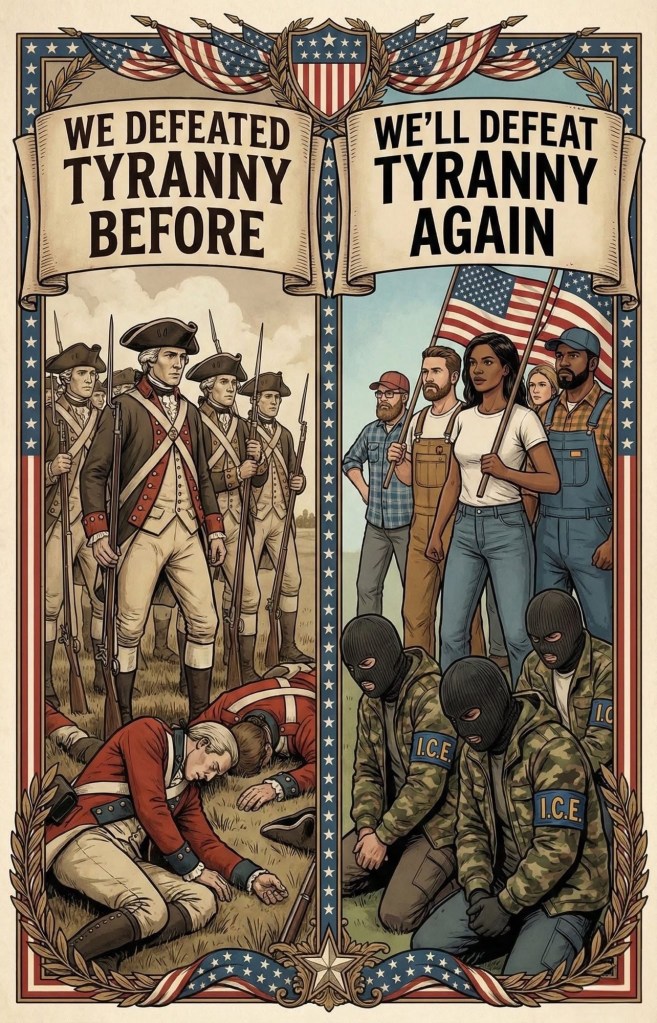
Enter Dear Leader and his loyal emotional support pundit, Pete Hegseth, who has become something like a hype-man for authoritarian cosplay. Together, they’ve managed to whip up enough righteous indignation to pressure the Pentagon into investigating none other than Senator Mark Kelly—astronaut, Navy captain, actual American hero—for… treason.
Yes. Treason.
For participating in a campaign reminding military personnel that they must not follow illegal orders.
Not lawful orders. Not standard orders.
Illegal ones.
Apparently nuance is the new sedition.
This would be hilarious if it weren’t so bleak. But in the contemporary strongman starter pack, the formula is always the same:
Portray lawful dissent as rebellion. Portray accountability as betrayal. And when all else fails, label your critics “traitors” and hint loudly that the penalty should be severe—preferably medieval.
And so here we are, watching an actual astronaut—one of those rare humans who have seen the Earth from above and returned with their sanity—being metaphorically strapped to the launchpad of Donnie’s insecurities because he dared to affirm constitutional norms. The Pentagon, apparently weary of trying to referee political tantrums, is now expected to hunt for evidence that Senator Kelly’s participation in a public-service announcement constitutes some elaborate, deep-state “defrocking” conspiracy.
The punishment being floated by the outrage machine?
Not a reprimand.
Not a censure.
No, no—nothing so mild.
They’re murmuring about treason, a word that Donnie tosses around the way other people say “whatever.” And because treason carries the possibility of execution, the whole spectacle takes on the aroma of someone flipping through the dictator starter manual and skipping ahead to the advanced chapters.
The whole situation manages, in one neat package, to capture the distilled essence of authoritarianism: the insistence that loyalty to the leader supersedes loyalty to the law. The idea that any challenge—no matter how grounded in constitutional obligation—is inherently disobedient. And the belief that the only good military is one that salutes the person in power, not the principles of the nation.
It’s almost poetic, in a tragicomic way. Donnie, the self-styled champion of the troops, now furious with the military for doing exactly what a healthy democracy requires of them. Pete, banging the drum like a medieval herald of punitive patriotism. And Senator Kelly, drifting serenely above them like he’s still in orbit, probably wondering how a man trained to dock with the International Space Station is now being accused of high treason for promoting basic military ethics.
If it weren’t so dangerous, it would be slapstick: a leader so consumed by his own fragility that even the concept of lawful vs. unlawful orders becomes an existential threat. A pundit-class so desperate to appease him that they’re willing to turn constitutional norms into capital crimes. A movement that shouts “freedom!” while demanding unquestioning obedience.
But here’s the quiet truth beneath the noise:
When powerful people become angry at the idea that soldiers shouldn’t follow illegal orders… it says everything about the kind of orders they imagine giving.
And that’s why voices like Senator Kelly’s matter—voices that remind the country that the oath is to the Constitution, not to Dear Leader’s feelings. In an era where insecurity masquerades as strength and retaliation is mistaken for patriotism, insisting on the rule of law has become an act of courage.
Which, ironically, makes Kelly even more of a hero—perhaps the very thing that annoys Donnie the most.
If you want, I can write an even sharper version, a more absurdist satire, or a more solemn constitutional analysis.
Let’s clear something up with the cold, dry clarity of a government spreadsheet: America does not have an “illegal immigrant” problem. No, no — what we actually have is a thriving, full-bodied, artisanal, farm-to-table illegal employer problem. The workers are just here picking lettuce, hanging drywall, washing dishes, and keeping half the country’s economy from collapsing into dust. The real spectacle is the parade of business owners who suddenly develop Olympic-level amnesia the moment anyone asks, “So uh… who hired these people?”
Picture this: A federal agent shows up at a worksite, and instead of frog-marching the workers into a van, they simply hand them back their shovels and say, “Carry on, José, you’re doing fine.” Then they turn to the foreman and ask, with the politeness of a dentist’s receptionist, “Hi! Could you point me toward your HR department? We just need to speak with everyone who signed off on this operation, falsified a few documents, shaved a few corners, and magically forgot the meaning of the word ‘eligibility.’”
Suddenly the entire management team dissolves like a sugar cube in hot water. They start mumbling about subcontractors, third-party vendors, temp agencies, and ghosts. Yes, ghosts! Because apparently, no one at these companies has ever hired anyone. People just mysteriously show up, work 60 hours a week, get paid under the table, and somehow the crops still get harvested and the luxury homes still get built. A miracle!
See, if we want to stop undocumented labor, we don’t need border walls, drones, or politicians yelling into microphones about “invasions.” We need a sturdy pair of handcuffs and a map to the nearest C-suite.
Just imagine the efficiency:
Walk into a meat-packing plant, reassure the workers they’re not the problem, then go upstairs and start rounding up executives like Pokémon. “You falsified I-9s? That’s a $50,000 fine. You pretended you didn’t notice your entire workforce magically shared the same address? Deportation hearing is down the hall. And you — yes, you with the country club membership — your lawyer can Skype in.”
Because let’s be real: undocumented workers are not sneaking into America to commit tax fraud, crash the housing market, or eliminate HR best practices. They’re coming for work — work Americans magically stop wanting the minute the job involves sweat, dirt, or lifting anything heavier than a grande latte. Meanwhile, the employers hiring them? They’re the ones gaming the system like it’s a carnival booth.
So maybe it’s time we stopped treating workers like the criminal masterminds and instead went straight for the actual masterminds — the folks who built a business model on “Don’t ask, don’t tell, but definitely do exploit.”
Until then, save the outrage. We don’t have an undocumented immigrant crisis.
We have an undocumented employer crisis — and they’re hiding in air-conditioned offices, not in the fields.
Welcome to Farmageddon—brought to you by the very folks who proudly voted (twice!) for a 34-count convicted felon, an adjudicated sexual offender, and the world’s first reality-show CEO whose greatest business success was convincing half the country that bankruptcy is just “strategic financial repositioning.”
These small family farmers—salt of the earth, God-fearing, tractor-loving patriots—were assured by Dear Leader Donald John “Trust Me, I Know Business” Trump that they were his top priority. He promised to make them “great again,” presumably in between court appearances, depositions, and threatening judges on the internet.
And what did they get for their loyalty?
Tariffs so economically catastrophic they made crops unexportable, equipment unaffordable, and solvency optional. Instead of winning trade wars “so fast your head will spin,” Trump managed to spin them right off their land and straight into the waiting jaws of mega-corporate agribusiness—the very beasts he swore he’d protect them from.
Because nothing says America First like forcing small farms—some in the same families for a century—to sell out to AgriCorpUltraMegaGlobal™, a corporation so large it needs its own ZIP code and congressional representative. But hey, at least they can take comfort knowing the man they voted for—again—would totally fix this if he weren’t busy explaining to probation officers why he can’t stop posting threats on social media.
And yes, these are the same people who believed the guy whose business record includes:
Casinos that lost money (an achievement once thought impossible) A university deemed a fraud Steaks sold next to frozen waffles And an airline that somehow crashed financially without ever hitting the ground
But they swore he understood them. He was their champion. Their billionaire savior who speaks fluent resentment and performs patriotism the way some people perform karaoke: loudly, badly, and with unwavering confidence.
Now, as they watch their farms swallowed by corporations while Trump reminds them that he alone can fix it, the irony is almost poetic—if poetic irony were written in bankruptcy filings, foreclosure notices, and bulk soybeans no one will buy.
Farmageddon wasn’t an accident. It was the inevitable sequel to electing a man whose business strategy has always been:
Break it Blame someone else Sell hats
But fear not. Trump still promises he’ll make them great again.
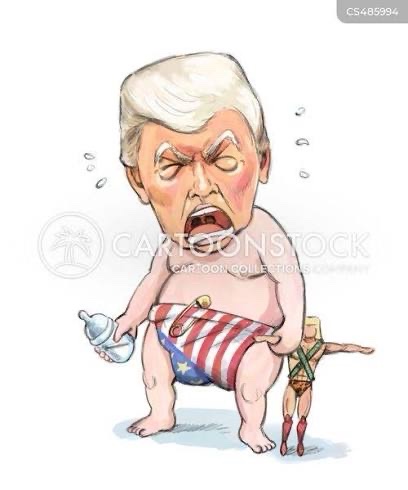
In the grand tradition of temperamental monarchs, Wannabe King Donald John Trump once again relocated the United States—not geographically, but diplomatically—to the kids’ table. You know, the one with plastic cups, chicken nuggets, and everyone arguing about whose turn it is with the iPad. This time, it was because His Majesty threw a fit about some invented “white genocide” crisis in South Africa, a conspiracy so flimsy it couldn’t even support its own paranoia.
While the world’s actual leaders were gathering at the G20—grown-ups discussing grown-up things like global economies and climate disasters—Trump opted out, citing concerns that were about as substantive as a Trump University diploma. In doing so, he proudly declared that America, under his divine rule, would no longer sit with the adults. No sir. America would be right where he feels most comfortable: sulking at the kitty table, away from the responsibilities, the expectations, and—most importantly—people who might actually expect him to read a briefing longer than a tweet.
But here’s the most astonishing part: the other countries at the G20 were… relieved. Practically jubilant. It was as if the entire global community collectively exhaled and said, “Thank God he’s not coming.” The mood was identical to a family Thanksgiving where everyone discovers that their racist uncle—who usually arrives drunk, loud, and ready to explain why the pilgrims invented Wi-Fi—decided to stay home this year. Plates clink, glasses raise, and the holiday meal suddenly tastes just a little better when no one is yelling about replacement theory over the mashed potatoes.
Without Trump stomping around, insisting that everyone admire his imaginary trade deals and his totally real phone calls with leaders who politely pretend not to know him, the G20 reportedly ran smoother than it had in years. Leaders discussed policy instead of fending off monologues about crowd sizes. They negotiated agreements instead of deciphering half-coherent rants about windmills causing cancer. They solved problems without having to hide the crayons.
And meanwhile, Trump was somewhere else—likely tweeting in ALL CAPS—congratulating himself for “STANDING UP TO THE GLOBALISTS,” which in his mind means “not being invited to any group project where facts matter.”
In the end, the only person who thought America belonged at the adult table was Trump himself. Everyone else was perfectly content with the U.S. sitting this one out, coloring quietly, and not knocking over the gravy boat in a fit of royal indignation.
Because here’s the truth: when the king acts like a toddler, the nation ends up eating lunch with the toddlers. And the adults? They just enjoy the peace and quiet while it lasts.
Ah, Thanksgiving week—that magical time of year when America pauses to reflect on gratitude, family, and, of course, the rich tradition of people whose great-great-grandparents stumbled off a boat with zero paperwork now demanding to see everyone else’s papers.
It’s truly inspiring to watch modern-day deportation crusaders, chests puffed out like overcooked turkeys, proclaim that this land must be protected from “outsiders.” Outsiders—like their own ancestors, who arrived clutching nothing but a dream, a prayer, and an absolutely stunning lack of documentation. The irony is so thick you could baste a bird with it.
Let’s be honest: most of today’s immigration hardliners come from a lineage that didn’t just show up without papers—they showed up without invitations, without language skills, without respect for local customs, and in many cases, without the slightest intention of coexisting peacefully. And how did the natives respond? With a grace that, in hindsight, seems almost tragically generous. They welcomed them. Fed them. Helped them survive winters. Shared land, resources, crops, knowledge.
And how did that go?
Well… let’s just say the Yelp review would read: “Zero stars. Visitors overstayed their welcome by about 400 years.”
Fast forward to today, and their descendants—the ones who benefited from every open door their ancestors barged through—are now proudly insisting that the gate must be slammed shut. Permanently. Bolted. Welded. Preferably electrified.
It’s almost impressive, really. It takes a special kind of historical blindfold to look at the land your ancestors took without consent, built upon with the help of people they either displaced or enslaved, and declare, “Actually, we were the good immigrants. The last good ones, in fact.”
This Thanksgiving, while turkeys roast and families gather, perhaps the loudest voices demanding deportations might pause—just for a moment—to reflect on the cosmic audacity of their argument. Because if America had enforced their preferred immigration policies back when their own ancestors arrived, the family tree would look a whole lot shorter.
And maybe, just maybe, they’d realize that the people they’re trying to expel look a whole lot like the people who once welcomed their people in. And we all know how that turned out for the folks already living here.
But hey—Happy Thanksgiving! A perfect time to remember that the first people to demand strict immigration control arrived uninvited, made themselves at home, and immediately started rewriting the rules.
On this day in 1963, the modern American conspiracy industry was born in a flash of gunfire on Dealey Plaza in Dallas, Texas. The assassination of President John F. Kennedy didn’t just end a presidency—it ignited a national habit of suspicion that has never entirely gone dormant. With the official story offering one neat villain in Lee Harvey Oswald and the grainy chaos of the Zapruder film offering a thousand loose threads, Americans quickly discovered how irresistible it was to fill the gaps with theories, counter-theories, and bar-stool ballistics.
In a country that had just entered the television age, the tragedy unfolded not just as a national trauma but as a puzzle that every citizen felt entitled to solve. Was it the Soviets? The CIA? The Mafia? A second gunman on the grassy knoll? The more authorities insisted on a single explanation, the more people found meaning in the shadows, convinced that the truth was hiding just out of reach. In a way, Dealey Plaza became the birthplace of the “official narrative versus the real story” dynamic that still shapes political discourse today.
The lingering sense that something wasn’t right—that something was withheld, manipulated, or covered up—became a cornerstone of American civic psychology. From Watergate to 9/11, from moon-landing skeptics to election deniers, the Kennedy assassination laid the template: a tragic event, a skeptical public, and the enduring belief that somewhere behind the curtain lurks a secret too explosive to tell.
Sixty-plus years later, the white pergola and the painted X on Elm Street remain quiet, but the echo of that day persists. The shots fired in Dallas didn’t just claim a president—they shattered America’s faith in simple explanations, ensuring that the age of conspiracy would last far longer than any Camelot.
You must be logged in to post a comment.