Week 3 of our collective constitutional crisis. I am still not sure that the Mango Menace is in charge or has he abdicated power to the South African welfare, tech-bro oligarch. The non governmental department of government efficiency DOGE has been allowed unfettered access to nearly everything and who knows what information they are stealing. Musk and his merry band of misterients have accessed everything for our financial institutions to the nuclear codes and non of them were elected or took an oath to protect our country.
I know I didn’t vote for this and I am pretty sure that a lot of those who did vote for the Mango Malignant Narcissist did not what to turn the nation over to a gang of Tech-Bro children.
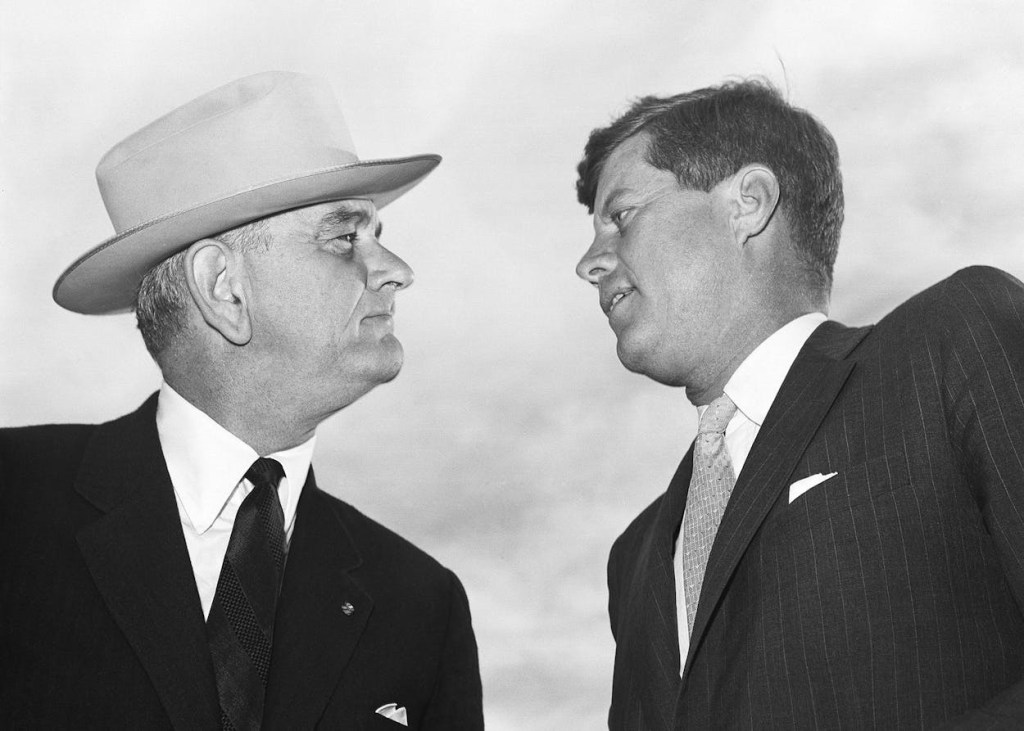
Lyndon B. Johnson led the nation in an untraditional manner at times, going so far as to conduct meetings with his advisers while seated on the toilet. The 36th U.S. president was known for a method of persuasion called the “Johnson treatment,” in which he won political victories either through flattery or bullying. One of LBJ’s most common tactics was inviting people into the bathroom and continuing the conversation, often leaving the door wide open and creating an awkward environment.
While some advisers would turn away in order to give the president privacy, Johnson would invite them to come closer so he could hear them better. One such instance saw national security adviser McGeorge Bundy nearly stumble and fall onto LBJ’s lap while he was seated on the toilet. Johnson treated other private facilities as meeting rooms as well — he was known to have aides stand just outside the shower, and he kept the conversation going while drying himself off afterward. Johnson even had telephones installed throughout various White House bathrooms, to ensure he’d never miss an important call. The president’s eccentricities weren’t limited to just the toilet, either. LBJ once completely stripped down while conducting an interview with reporters aboard Air Force One, continuing the conversation as normal. He also began many mornings by inviting aides into the White House bedroom to discuss official business while he was still in bed with his wife, Lady Bird Johnson.
The Nobel Peace Prize is among the most prestigious honors in the world, but not everyone considered for the prize has wanted it. Buckingham Palace was approached on more than one occasion about nominating Queen Elizabeth II for the prize — including as recently as 2018 — but the idea was always politely rebuffed. Though the queen never provided an on-the-record explanation as to why, a line from a speech she gave on her 21st birthday has been pointed to as a possible motivation: “I declare before you all that my whole life, whether it be long or short, shall be devoted to your service.” In other words, she didn’t think it necessary to receive an award for fulfilling her stated duty.
Queen Elizabeth wasn’t the only person to turn down a Nobel Peace Prize nomination. Vietnamese politician Lê Đức Thọ did so in 1973 because it was to be a joint honor shared with U.S. Secretary of State Henry Kissinger. Thọ and Kissinger had negotiated a ceasefire during the Vietnam War, and Thọ believed the U.S. had violated the term’s agreements. The decision to award Kissinger was so controversial that two members of the Norwegian Nobel Committee resigned in protest, while The New York Timesreferred to the award as the “Nobel War Prize.”
The ketchup we slather onto hot dogs, burgers, and fries today once had a different purpose: Doctors believed it was best consumed as a health tonic. Ketchup has come a long way from its roots in China as far back as the third century BCE, when cooks fermented seafood to create a salty, amber-colored sauce that resembles modern fish sauce (an anchovy-based condiment that adds umami flavor to many Asian dishes). By around the 16th century, British sailors had taken word of ketchup back to their home country, and British cooks tried to replicate it with their own versions made from walnuts and mushrooms. It’s not clear exactly when tomatoes came on the scene, though the first known tomato ketchup recipe appeared around 1812, published by Philadelphia horticulturist James Mease.
It wasn’t until the 1830s that some doctors began rebranding tomatoes as a 19th-century superfood. One physician, Dr. John Cook Bennett, especially promoted tomatoes as cures for indigestion and other stomach ailments, encouraging a craze for the fruit that eventually saw the introduction of ketchup pills and extracts. (One memorable jingle went, “tomato pills will cure all your ills.”) The fad lasted through around the 1850s, but soon enough home cooks focused on creating their own ketchups instead of taking the vitamin equivalents. The sauce then became an easily obtainable American dinner table staple in large part thanks to the H. J. Heinz Company, which released its first tomato ketchup in 1876.
Although people have sought to effect change through economic and social pressure since at least the 1700s, the concept became more widely known in the latter years of the following century, earning its moniker by way of one of the individuals targeted.
From 1879 to 1882, Ireland’s first Land War pitted rural tenants, reeling from years of economic downturn, against the rental policies of wealthy and often-absentee English landlords. Caught in the crossfire was former English army officer “Captain” Charles Boycott, whose position as a land agent for one such landlord in County Mayo came with the responsibility of evicting delinquent tenants. Organized locals made life miserable for Boycott by behaving coldly toward him in public, refusing to provide him with goods and services, and harassing his employees into quitting, a process dubbed “boycotting” by parish priest John O’Malley.
After Boycott’s complaints about the situation were published in London’s The Times in October 1880, around 50 volunteers from Ireland’s northern border journeyed to County Mayo to help the short-staffed officer harvest his farm crops. However, these charitable souls required the protection of a Royal Irish Constabulary regiment, whose members proceeded to trample the grounds and poach the livestock during their two-week stay at Boycott’s property. Although the volunteer mission was successful (albeit at an estimated cost of £10,000 to harvest £350 worth of crops), Boycott’s abandonment of his farm in late November marked a victory for the tenants and the effective method of persuasion that rapidly earned recognition under its new name.
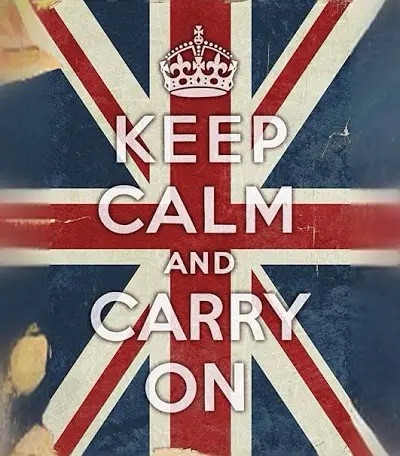
“Keep Calm and Carry On” posters and their variantshave become ubiquitous over the last two decades, a symbol of the United Kingdom’s stoic resilience during World War II. But while more than 2 million posters were printed by the Ministry of Information in the leadup to World War II, they were never officially released during the actual conflict. Two other slogan posters were designed in the same style, neither of which has achieved the same prominence despite being seen by far more people during the war. They were: “Your Courage, Your Cheerfulness, Your Resolution — Will Bring Us Victory” and “Freedom Is in Peril; Defend It with All Your Might.”
The “Keep Calm and Carry On” posters were meant to be held in reserve until the situation grew especially dire and the public needed a morale boost, but officialsfound the other designs effective enough on their own. It wasn’t until the owner of a bookstore in Alnwick, Northumberland, found a batch of “Keep Calm” posters in a box of secondhand books he’d won that the posters achieved their current fame. The bookseller framed one in his shop, and it drew so much attention from the public that he began selling copies.
When Homo sapiens began walking the Earth some 400,000 years ago, a day was basically 24 hours long — but that hasn’t always been the case. Scientists from Kyoto University estimate that when the moon first formed a few billion years ago, it spun around the Earth at a much closer distance than it does today, which affected the Earth’s own rotation. By their calculations, when life first appeared 3.6 billion years ago, an Earth day (one full rotation of the planet) was only 12 hours long. As the moon slowly distanced itself from Earth, the days grew longer, lasting 18 hours around the emergence of photosynthesis and 23 hours when multicellular life first took form. Research in 2021 discovered that the Earth is now spinning ever-so-slightly faster than it was 50 years ago, a major headache for physicists, astronomers, and computer programmers everywhere.
The Mango Menace stepped back into the Oval Office 15 days ago and all the worst things are already happening. He fired the head of the FAA and put a hiring freeze on hiring, which included air traffic controllers, and we had the first airline tragedy in 20 years… but it isn’t his fault, it’s DEI policies, former transportation secretary Pete, and President Biden’s fault.
Now threatening a trade war by trying to impose 25% tariffs on our closest trade partners. He has fired 1/3+ of the agents in the FBI… pretty much any agent that was tasked with the Jan 6 investigation. Sent out letters to nearly all federal employees offering them an opportunity to resign before he attempts to fire them. Wants to annex Canada and Greenland and militarily seize the Panama Canal.
If that weren’t enough his South African tech bro billionaire that was not elected and is not in an actual government agency, locked treasury employees out of their systems and downloaded all of our data, social security numbers, any payments we may have received from the government, all our banking information if you get direct deposits for income tax payments or refunds…. WTF ARE WE GOING TO SURVIVE AS A NATION ?





 Esoteric Meandering Shouting Into the Void
You must be logged in to post a comment.