Category: Uncategorized
-

It’s often speculated that Valentine’s Day has its roots in the ancient Roman festival of Lupercalia, and it’s not hard to see why. Lupercalia was observed on February 15, and involved fertility rituals — albeit along with animal sacrifice and ritual whipping. Yet the link between this pagan festival and the Christian feast day that morphed into our modern ode to love and romance is murky, and indeed may be little more than coincidence.At its peak, Lupercalia — which dates back to at least the sixth century BCE, predating Christianity by centuries — was a really wild time. A group of nude Roman priests kicked off the events in Lupercal Cave at the bottom of Palatine Hill with the sacrifice of a dog and at least one goat. They painted themselves in the blood and wiped it off their skin with milk-soaked wool, then cut strips of goat hide and whipped women on the hands with them to promote fertility.
As time went on, Lupercalia mellowed out, and the nudity dramatically subsided. Yet it was still too much for Pope Gelasius I, who forbade participation in the festival at the end of the fifth century CE. One common theory is that he supplanted the pagan festival with St. Valentine’s Day, also known as the Feast of St. Valentine, though recent historians have shed doubt on that claim. For one thing, St. Valentine, a third-century Christian martyr, had no connection to love or romance. In fact, the holiday didn’t get its modern association until Geoffrey Chaucer wrote a poem linking St. Valentine’s Day and mating season in the 14th century, some 900 years after the holiday was established.
-
Dwain Northey (Gen X)

We collectively have an issue… we have 2 political parties and for the last 60 years one parties primary mission has been to dismantle the government. The truth is breaking things is easy and can be done quickly and repairing the damage takes time.
This sad truth evades many people because the party that is , historically, trying to fix the problem is demonized because they aren’t fixing it fast enough so the muddled masses put the breakers back in power.
The previous administration was and did fix a lot of the problems that were caused by their predecessors but the result were not felt fast enough by the public. Due to that the destroyers are back in the drivers seat and they are on a rapid fire mission to take everything apart. Here is the problem… the public will feel the pain and soon and they, we, will vote the fixer party back into power but the masses will expect that repair to happen as fast as the destruction and when it doesn’t the cycle will start again.
I guess it’s Ground Hog Day forever.
-
Dwain Northey (Gen X)

So our a lustrous leader is making us the butt of the world, his renaming the Gulf of Mexico to the Gulf of America, wanting to take the Panama Cannel, saying he is going to take the Gaza Strip… oh and there is the entire Greenland deal, the best part is Greenland is hitting back.
First, President Donald Trump floated the idea of buying Greenland. Now, Denmark is flipping the script with its own offer for one of America’s richest and most populous states.
A satirical petition making the rounds in Denmark suggests that if the United States is in the business of acquiring its Greenland territory, maybe Denmark should get in on the action. The plan? Snag California, throw in some hygge and call it New Denmark.
“Have you ever looked at a map and thought, ‘You know what Denmark needs? More sunshine, palm trees, and roller skates,’” the petition reads. “Well, we have a once-in-a-lifetime opportunity to make that dream a reality.”
The proposal, which has reportedly gathered nearly 200,000 signatures, makes a strong pitch: Denmark could brighten its gray skies for 300 days of California sunshine, secure Silicon Valley for better or worse and ensure an endless supply of avocados — since California grows about 90% of the nation’s stash. Meanwhile, Disneyland would be rebranded as Hans Christian Andersenland, dressing Mickey Mouse in a Viking helmet. Though the petition doesn’t say if Sacramento would remain the state capitol, Solvang may be a better bet.
The “Tremendous Plan,” as organizers call it, comes with a hefty price tag of around $1 trillion, which they estimate could be covered if every Danish citizen chips in around 200,000 kroner (roughly $28,000). Negotiators would include Denmark’s finest dealmakers — executives from Lego, the cast of “Borgen” and perhaps a few Viking reenactors for good measure.
For those willing to invest in the cause, organizers have thrown in a few incentives: a personalized thank-you from the Danish royal family, a virtual tour of Danishwood studios, a lifetime supply of California-grown avocados (shipping not included) or, for the deep-pocketed donor, a private stretch of Malibu beach.
Of course, this isn’t the first time Denmark and Trump have butted heads over imaginary real estate deals. In 2019, Danish Prime Minister Mette Frederiksen called Trump’s idea of purchasing Greenland “absurd,” prompting Trump to cancel his planned visit to Copenhagen. Greenland’s leader, Múte Egede, quickly reinforced that the territory was not for sale.
Since returning to office, Trump and his allies have revived the idea, even claiming — without evidence — that most Greenlanders want to become U.S. citizens. Recent polls from Denmark and Greenland suggest otherwise.
The petition also plays into the long-standing friction between California and Trump. The state has overwhelmingly rejected him in three straight elections, while Gov. Gavin Newsom has spent much of his tenure positioning California as a direct counterweight to Trump’s policies. Trump, for his part, has dubbed California a “failed” state, has clashed with its leaders on everything from environmental regulations to immigration and, most recently, has targeted its high-speed rail project.
Selling off California would be a risky deal for the U.S. The state is the world’s fifth-largest economy and a critical hub for agriculture, energy, tech, transportation, and entertainment. It is also one of the few states that pay more in federal taxes than they receive. If California were to hypothetically rebrand as New Denmark, the economic fallout would be massive.
Good for you Denmark calling out the stupidity…
-

John Adams and Thomas Jefferson Died on the Exact Same Day
It’s unlikely enough that two of America’s Founding Fathers would die on the very same day, but this story gets even stranger. First, these two political rivals died within hours of each other. Even weirder? The date of their passing was July 4, 1826 — 50 years to the day after the Declaration of Independence was adopted. John Adams and Thomas Jefferson weren’t the same age when they died, though — Adams was 90 and Jefferson was 83. There are multiple theories on why this happened, and sheer coincidence is certainly one. To add another eerie layer, founding father James Monroe also died on the Fourth of July, five years later.
-
Dwain Northey (Gen X)

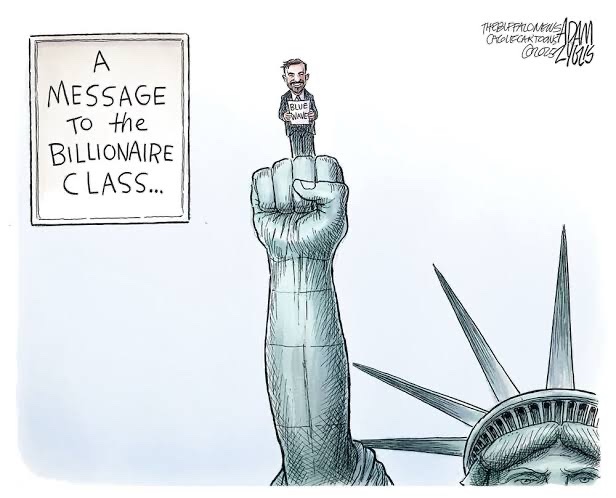
Week 3 of our collective constitutional crisis. I am still not sure that the Mango Menace is in charge or has he abdicated power to the South African welfare, tech-bro oligarch. The non governmental department of government efficiency DOGE has been allowed unfettered access to nearly everything and who knows what information they are stealing. Musk and his merry band of misterients have accessed everything for our financial institutions to the nuclear codes and non of them were elected or took an oath to protect our country.
I know I didn’t vote for this and I am pretty sure that a lot of those who did vote for the Mango Malignant Narcissist did not what to turn the nation over to a gang of Tech-Bro children.
-

Lyndon B. Johnson led the nation in an untraditional manner at times, going so far as to conduct meetings with his advisers while seated on the toilet. The 36th U.S. president was known for a method of persuasion called the “Johnson treatment,” in which he won political victories either through flattery or bullying. One of LBJ’s most common tactics was inviting people into the bathroom and continuing the conversation, often leaving the door wide open and creating an awkward environment.
While some advisers would turn away in order to give the president privacy, Johnson would invite them to come closer so he could hear them better. One such instance saw national security adviser McGeorge Bundy nearly stumble and fall onto LBJ’s lap while he was seated on the toilet. Johnson treated other private facilities as meeting rooms as well — he was known to have aides stand just outside the shower, and he kept the conversation going while drying himself off afterward. Johnson even had telephones installed throughout various White House bathrooms, to ensure he’d never miss an important call. The president’s eccentricities weren’t limited to just the toilet, either. LBJ once completely stripped down while conducting an interview with reporters aboard Air Force One, continuing the conversation as normal. He also began many mornings by inviting aides into the White House bedroom to discuss official business while he was still in bed with his wife, Lady Bird Johnson.
-

The Nobel Peace Prize is among the most prestigious honors in the world, but not everyone considered for the prize has wanted it. Buckingham Palace was approached on more than one occasion about nominating Queen Elizabeth II for the prize — including as recently as 2018 — but the idea was always politely rebuffed. Though the queen never provided an on-the-record explanation as to why, a line from a speech she gave on her 21st birthday has been pointed to as a possible motivation: “I declare before you all that my whole life, whether it be long or short, shall be devoted to your service.” In other words, she didn’t think it necessary to receive an award for fulfilling her stated duty.
Queen Elizabeth wasn’t the only person to turn down a Nobel Peace Prize nomination. Vietnamese politician Lê Đức Thọ did so in 1973 because it was to be a joint honor shared with U.S. Secretary of State Henry Kissinger. Thọ and Kissinger had negotiated a ceasefire during the Vietnam War, and Thọ believed the U.S. had violated the term’s agreements. The decision to award Kissinger was so controversial that two members of the Norwegian Nobel Committee resigned in protest, while The New York Timesreferred to the award as the “Nobel War Prize.”
-

The ketchup we slather onto hot dogs, burgers, and fries today once had a different purpose: Doctors believed it was best consumed as a health tonic. Ketchup has come a long way from its roots in China as far back as the third century BCE, when cooks fermented seafood to create a salty, amber-colored sauce that resembles modern fish sauce (an anchovy-based condiment that adds umami flavor to many Asian dishes). By around the 16th century, British sailors had taken word of ketchup back to their home country, and British cooks tried to replicate it with their own versions made from walnuts and mushrooms. It’s not clear exactly when tomatoes came on the scene, though the first known tomato ketchup recipe appeared around 1812, published by Philadelphia horticulturist James Mease.
It wasn’t until the 1830s that some doctors began rebranding tomatoes as a 19th-century superfood. One physician, Dr. John Cook Bennett, especially promoted tomatoes as cures for indigestion and other stomach ailments, encouraging a craze for the fruit that eventually saw the introduction of ketchup pills and extracts. (One memorable jingle went, “tomato pills will cure all your ills.”) The fad lasted through around the 1850s, but soon enough home cooks focused on creating their own ketchups instead of taking the vitamin equivalents. The sauce then became an easily obtainable American dinner table staple in large part thanks to the H. J. Heinz Company, which released its first tomato ketchup in 1876.

You must be logged in to post a comment.