
Category: Uncategorized
-

There are currently around 8 billion people living on Earth — more than quadruple the global population in 1920. But before the planet hit its first billion people at the beginning of the 19th century, population growth tended to be slower. At the beginning of the Common Era (CE) — the year 1 — Earth was home to as few as 170 million people, according to a widely cited 1978 source, Atlas of World Population History by Colin McEvedy and Richard Jones. That’s about the population of Bangladesh today. Of course, estimating a worldwide head count from 2,000 years ago isn’t an exact science; researchers suggest it could be as high as 400 million, and the United Nations typically puts the estimate at 300 million.
Around 1 CE, the world was at the tail endof a population growth cycle that started around 5000 BCE, when only about 5 million human beings roamed the Earth. Population growth then accelerated with the expansion of agriculture. According to McEvedy and Jones, the rate of growth peaked around 1000 BCE with the beginning of the Iron Age. The world population doubled between 1000 and 500 BCE, and nearly doubled between 500 BCE and 1 CE. Growth then slowed to a rate of 12% between 1 CE and 500 CE.
Population growth continued to be slow during the Middle Ages. The bubonic plague killed around 25 million people in Europe alone, and Mongol invasions in China killed around 35 million people and wiped out agricultural infrastructure. Growth rates picked back up around 1700, and continued to increase until the 1960s. While it may seem like the population is expanding at a breakneck speed, annual growth rates have actually been on the decline since then. The United Nations expects the population to stabilize around 10.4 billion and even start declining again around 2086.
-
The first New Year’s resolutions may date back 4,000 years.

Perhaps because of the universally uplifting feeling of starting anew, you can find similarities between the lively New Year’s celebrations found in many countries today and those of the oldest recorded civilizations. The ancient Egyptians, for example, shared huge meals and partook in music and dancing to commemorate the pending flooding of the Nile with the festival of Wepet Renpet, meaning “opening of the year.” And the Babylonians of Mesopotamia enjoyed their own extended gala some 4,000 years ago with rituals that may have included a prototype of our modern-day New Year’s resolutions.
Held in March to mark the start of the planting season, the 12-day Babylonian festival of Akitu —which began on the first new moon of spring — was a time to honor the supreme god Marduk, his son Nabu, and the other deities who watched over the people. For the king, this included a humbling ceremony in which he was stripped of his regalia, struck across the face, and dragged by the ears by the high priest to atone for any sins committed. It’s believed the rest of the common folk, spared of such physical punishment, instead engaged in prayer, promising that they would repay their debts and otherwise conduct themselves in sterling fashion to please the gods.
While the Babylonians may have been the first to introduce these promises to a celebration marking the start of the year, the Romans were the first to deliver theirs in January. For that we can thank the wide-reaching Roman calendar, which moved the first month of the year from March to January. Named for the two-faced god Janus, who both looked back at the past and faced the unknown future, the first month became a time for officials to pledge their vows of loyalty to Rome — a custom that continues in the less urgent but no less earnest tradition of the countless people who pledge to get off the couch and hit the gym in the new year.
-
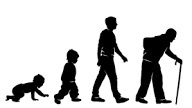
Your body ages more rapidly in your mid-40s and early 60s.
The concept of time has been described as many things: an arrow, a river, a march, anything that moves inextricably forward at a constant, unalterable rate. However, aging doesn’t flow at such a uniform speed. Instead, humans age in fits and starts. A 2024 Stanford University study shows that our bodies age faster around our mid-40s and early 60s than during other stages of life.
The study analyzed data from 108 people who donated blood and other biological samples over several years. By tracking 135,000 different molecules, creating 250 billion data points, scientists discovered that roughly 81% of the studied molecules showed age-related fluctuations, and those moments of rapid aging tended to coalesce around the ages of 44 and the early 60s. According to the scientists, the most surprising data point was rapid aging in the mid-40s. At first, they theorized that menopause or perimenopause could be playing a role in these changes, but they found the molecular changes impacted men just as much as women.
The affected molecules also differed between those two aging periods. Both age groups reported changes in molecules related to cardiovascular disease, caffeine metabolism, and skin and muscle growth, but the mid-40s cohort also recorded increased alterations in alcohol metabolism, while people in their early 60s underwent changes to immune regulation and kidney function. Of course, a lifetime of healthy eating, exercise, and plentiful sleep can curtail some of the effects of these periods of aging, so it may be worth paying extra close attention to your health when those milestones arrive.
-
Dwain Northey (Gen X)

It’s time again to turn the calendar, it’s hard for me to project a ‘happy’ year coming. All I can do is reflect ln the past year and hold my head up and hope that things don’t get worse. 2024 was a disappointment in so many ways , I lost a cousin that was way to young to leave this mortal coil… I hope his young son has only fond memories of his father.
As a country we has put our future back in the hands of a man that did his best to dismantle our democracy from 2016-2020 and I hope was can survive as a nation until we can change the direction of entitlement and hate that we are currently experiencing.
My goal for myself is to improve me, touch the lives directly around me, maybe, just maybe enough of us can do that and that will in itself effect the change we all need.
-
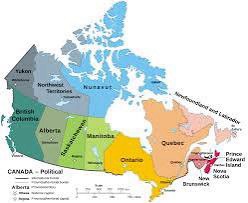
Here are 16 interesting facts about Canada:
- Canada is the second-largest country in the world by land area.
- Canada has the longest coastline in the world, with over 243,000 kilometers of shoreline.
- Canada has more lakes than any other country, with over 2 million lakes covering about 8% of its land area.
- The country’s name comes from the St. Lawrence Iroquoian word “kanata,” meaning “village” or “settlement.”
- Canada is home to the world’s oldest known rock, the Acasta Gneiss, which is approximately 4.01 billion years old.
- The country has six time zones: Pacific, Mountain, Central, Eastern, Atlantic, and Newfoundland and Labrador.
- Canada is home to the world’s longest street, the Trans-Canada Highway, which spans over 7,800 kilometers.
- The country has a vast array of wildlife, including bears, moose, wolves, and beavers.
- Canada is the world’s largest producer of maple syrup, accounting for over 70% of global production.
- The country has a diverse population, with over 20% of Canadians being foreign-born.
- Canada has two official languages: English and French.
- The country is home to the world’s largest freshwater island, Manitoulin Island, located in Lake Huron.
- Canada has a strong reputation for its natural beauty, with many famous attractions like Niagara Falls, Banff National Park, and the Canadian Rockies.
- The country has a thriving arts and culture scene, with numerous museums, galleries, and festivals.
- Canada is known for its friendly and welcoming people, with a high standard of living and a strong social safety net.
- Canada is no one’s 51st State 🇨🇦
-
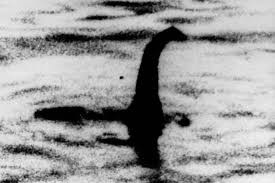
The scientific name Nessiteras rhombopteryx may look more or less like any other. As with many Linnaean labels, the species name rhombopteryx references the creature’s overall appearance — in this case, its diamond-shaped fins. But there’s one key difference here: The creature it describes doesn’t exist (probably). Nessiteras rhombopteryx, or “Ness monster with diamond-shaped fins,” is the proposed taxonomic moniker of the Loch Ness monster, also known as Nessie. As a brief cryptozoology refresher, Nessie is a fabled reptilian monster believed to reside in a lake called Loch Ness in the Scottish Highlands. For nearly a century, people have scoured the lake with binoculars, sonar, and other equipment, hoping to glimpse this anachronistic plesiosaur. Although “confirmed sightings” number more than a thousand, no specimen has ever been captured and cataloged.
And that last part is important. Usually, for a species to receive a scientific name, scientists must have a “voucher specimen” in hand for future reference. However, in a non-peer-reviewed article in the December 1975 issue of Nature, U.S. researcher Robert Rines and British naturalist Sir Peter Scott put forward the name Nessiteras rhombopteryx based on only photographs and sonar data. In the article, the authors argued that “recent British legislation makes provision for protection to be given to endangered species; to be granted protection, however, an animal should first be given a proper scientific name.” In other words, the scientists had to give Nessie a name to save it (if “it” exists at all).
Although the legend of Nessie is beloved throughout Scotland (bringing in tourist dollars never hurts), not everyone was sold on giving the mythical elusive plesiosaur an air of scientific credibility. About a week after the name’s announcement in December 1975, a Scottish MP rebuffed the pseudo-scientific endeavor, saying there just might be a reason why “Nessiteras rhombopteryx” is an anagram for “Monster Hoax by Sir Peter S.”
-

Have you ever had a sneaking suspicion that you’re experiencing a scenario that’s already happened? Then you’ve dealt with déjà vu. The term is (as you may have guessed) French, and the literal translation means “already seen.” But in everyday life, déjà vu refers to the weird feeling you get when you’re in a situation that feels like you’ve already lived it, and are somehow living it again.
Research shows that there’s a direct relation between déjà vu and seizures. Specifically, the phenomenon is linked to temporal lobe epilepsy and has been described in people with a known medical history of the condition.
But plenty of people have experienced déjà vu who don’t have a history of epilepsy or seizures. In healthy people, déjà vu is believed to be caused by a memory mismatch, where a new experience is stored in long-term memory and completely bypasses the short-term memory. In this scenario, you have that weird sensation that you’ve been through an experience before when in reality, it’s just your brain’s memory system having a glitch.
There are also other causes of déjà vu that might have more to do with your daily habits than your medical history. One of the most common causes of déjà vu is being overly distracted. Sleep deprivation is another. If you’re walking through life in a perpetual sleep-deprived haze, you might feel like you’re reliving experiences when in truth, you’re just too exhausted to parse reality from dreams.
-

By 1944, 40% of U.S. produce came from victory gardens.
In the spring of 1942, a new problem was emerging in wartime America: food shortages. Most commercial crops were sent overseas to the troops, and anything left over couldn’t be distributed to civilians around the country due to wartime supply chain complications. Food rationing was implemented to remedy the situation, but it did little to curb the hunger pangs of millions of Americans, who turned to a food production plan that had emergeddecades earlier during World War I. In March 1917, the National War Garden Commission encouraged private citizens to “sow the seeds of victory” and grow produce to feed people at home and abroad. School grounds, vacant lots, and backyards were transformed into bountiful gardens, which became known as “victory gardens.”
Victory gardens came back bigger and better than ever during WWII, succeeding thanks to the cooperation of schools, government agencies, businesses, and private civilians. The movement was heavily promoted by the government through propaganda posters and messages, and although victory gardens weren’t mandated, many Americans embraced the idea as a patriotic duty. It didn’t take long for millions of victory gardens to sprout up around the country, producing bushels of carrots, kale, lettuce, beans, cabbage, and other veggies. The gardens came in all shapes and sizes, from tiny window boxes to grow a few tomato plants to large community plots that could feed several families — every bit helped. By 1944, a year before the end of the war, an estimated 20 million victory gardens had produced around 8 million tons of food for U.S. troops and civilians. Even First Lady Eleanor Roosevelt planted one right on the White House lawn.


 Esoteric Meandering Shouting Into the Void
You must be logged in to post a comment.