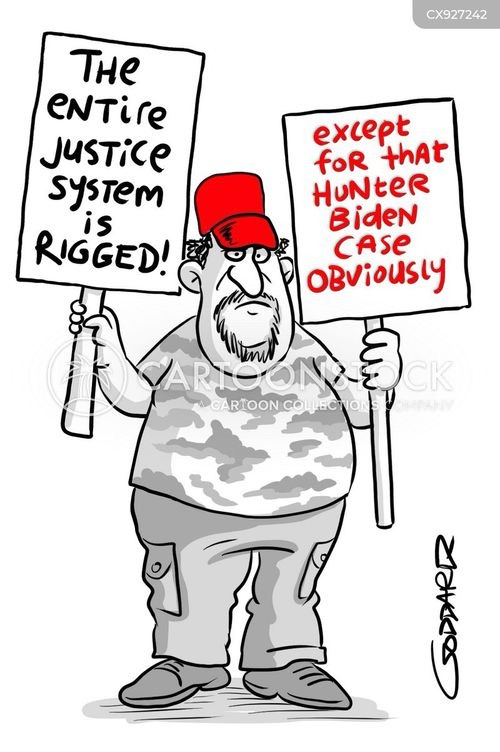
The GOP is pearl clutching over President Biden pardoning his son Hunter from chargers that the same GOP would never have brought against anyone unless their name was Biden, Clinton, or Obama. Faux (Fox) news will not bring to light the pardons Trump doled out when he was in office before, which included murderers, corporate thieves, I could keep going but there really isn’t any point. The party that wants every person to have a gun charged Hunter with filling out a form saying we was not on drugs when purchasing a gun, which he returned unused 11 days later. What is even worse is that they brought the charges after discovering this information from Hunters book… they didn’t find out because a crime was committed with said gun, the got the info from an admission to the egregious crime in his own book.
I really want every crime to be acknowledged and propagandized that the Trump administration takes part in by the Democrats for the next 4 years… what’s good for the goose .
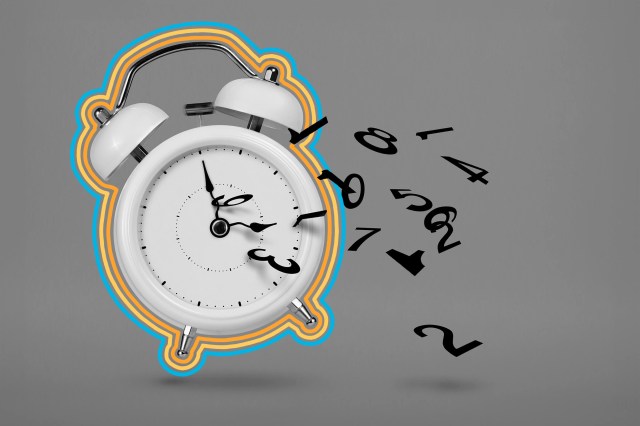
When we’re younger, time tends to feel as if it drags on forever. Think of those long, lazy summers that seemed never-ending, or how it could feel like an eternity watching the clock tick away and waiting for the final school bell to finally ring. But as we grow older, many of us feel like time is moving more quickly. This curious phenomenon has nothing to do with any change in the measurement of time, of course; a minute today is the same length it was 50 years ago. According to some scientific theories, this sensation actually has to do with how our brains process the experiences around us, which changes as we age, leading.
Experiments Have Revealed How We Perceive Time Differently
In the 1960s, psychologist Robert Ornstein conducted a series of experiments leading up to the publication of his 1969 work On the Experience of Time. Two tests were particularly notable: In the first experiment, Ornstein showed subjects two diagrams — one with a complicated design and another featuring a comparatively simple pattern. Subjects were presented with each image for an identical period of time, but when asked which one had appeared for longer, test subjects chose the more complex diagram.
Ornstein also conducted a second experimentwith audio files featuring clicking sounds and basic household noises. Some of the recordings were more intricate, containing more clicks produced at a quicker frequency. When Ornstein asked his subjects to tell him which audio file was longer, they chose the more complex one with the greater number of sounds.
Ornstein concluded that across the board, people’s perception of time appeared to slow down when they were presented with greater amounts of new and complex information. He posited that our brains require extra time to process unfamiliar experiences, resulting in a feeling of time essentially moving in slow-motion.
Childhood vs. Adulthood
So what do Ornstein’s experiments have to do with time slowing down as we age? Well, when we’re young, our days are filled with first-time experiences rife with complex and often novel information that our brains work hard to process. There are countless new lessons to learn, new locations to explore, and new sensations to feel. In the context of Ornstein’s experiments, these are akin to seeing the more complex diagrams or hearing those more detailed audio files.
When we’re younger, it takes time for our brains to take in and process all the sights and sounds we’ve never experienced before. This overwhelming flood of knowledge may contribute to the sensation of time moving more slowly. As we grow older, however, we often find ourselves falling into familiar routines. Days, weeks, or even months can pass in which our lives remain largely unchanged. Our brains aren’t working as hard on a daily basis to process and analyze new experiences, so time can feel to be moving faster.
This is all subjective, of course, as some older people may actively seek out stimulating activities that keep the brain active and therefore help “slow things down.” But generally speaking, time tends to blend together more and more as we age, when it isn’t broken up by fresh, original experiences as frequently as in our younger years.
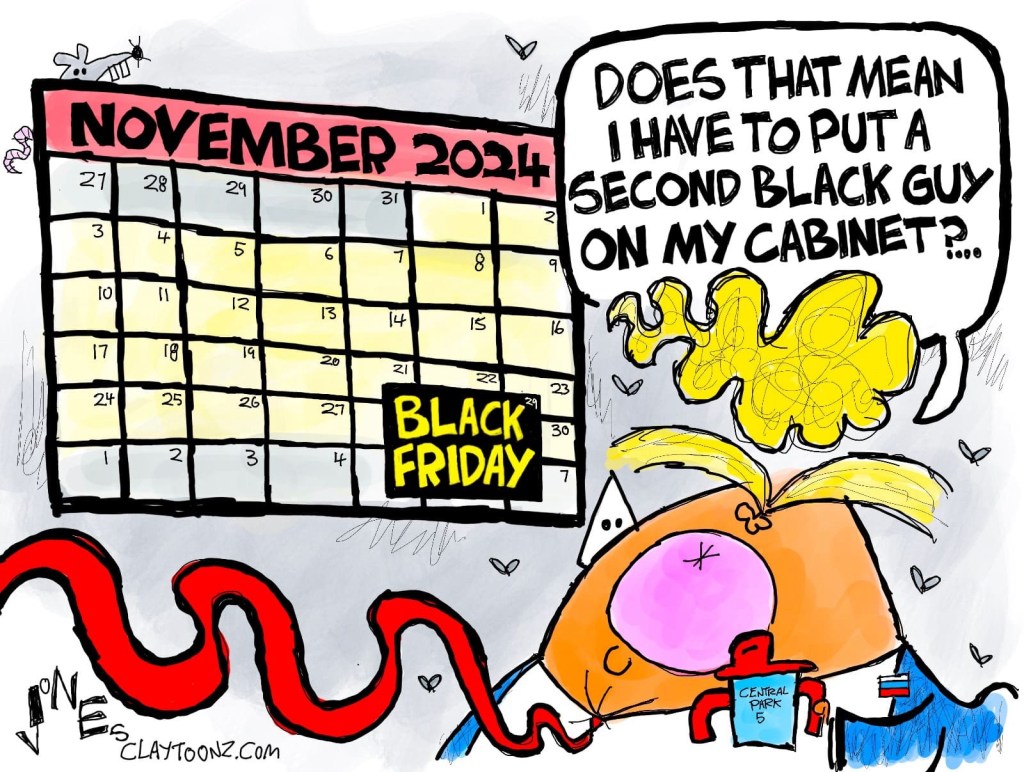
Still trying to wrap my head around those that cast their ballots based on inflation and the economy but record travel and retailers having huge numbers for Black Friday. I am really starting to believe that all the crying was complete BS.
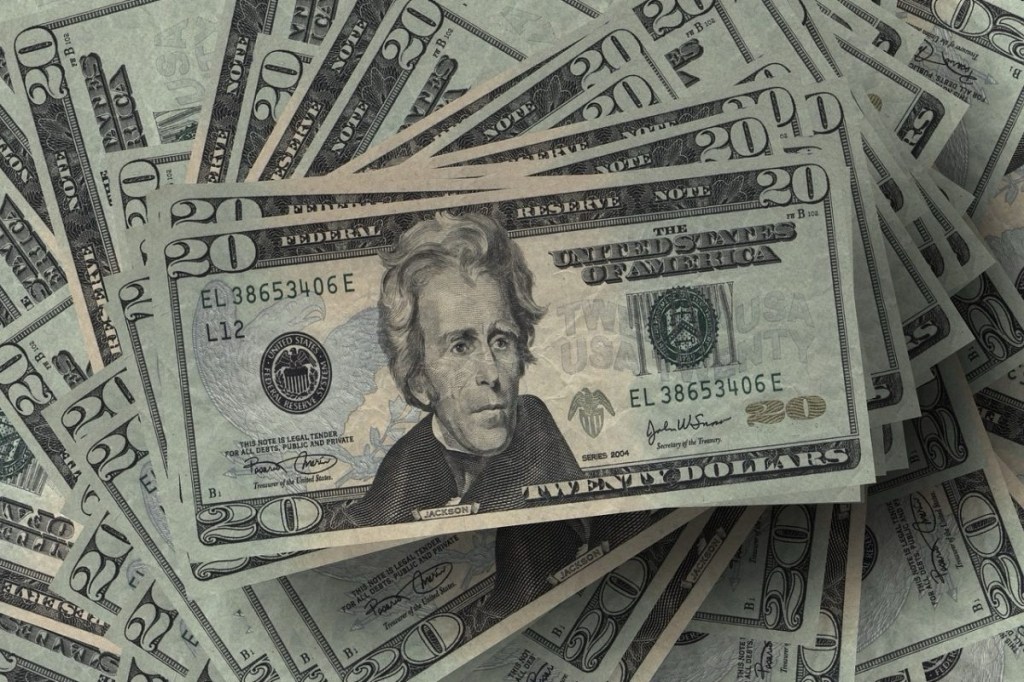
Music lovers today know that many live shows are a luxury expense or even out of reach — an average concert ticket costs well over $100. But in 1980, $20 could snag you two tickets to see some of the top acts of the day, including Peter Gabriel, Bob Seger, or the Grateful Dead. Today, meanwhile, it might be able to get you a drink at big arena shows.
For kids (or collectors), brand-new Transformers toys at the peak of their popularity in the ’80s were typically priced at about $10; for a more deluxe figure, $20 was the norm. And while $20 doesn’t go very far in the fast-food realm today, in the 1980s, it bought a lot: A McDonald’s value meal deal cost a mere $2.59, meaning $20 could feed a family of seven — or a family of five with money left over for ice cream afterward.
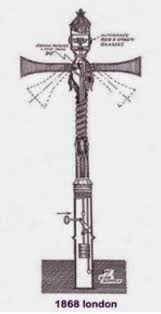
A lthough modern traffic lights are inextricably linked with the automobile, the world’s first traffic light existed nearly 20 years before German inventor Karl Benz patented the first modern car. On December 9, 1868, a 20-foot-tall traffic light was installed at the intersection of Bridge Street and Great George Street outside the Palace of Westminster in London, as a way to control the flow of carriage and pedestrian traffic. An adaptation of the signaling system used by railroads, the light used pivoting “arms” (known as semaphore arms) to communicate “stop” and “go” during the day, and gas-powered red and green lights at night. (Unfortunately, relying on gas proved to be a serious problem when the traffic light exploded less than a month later.)
Surprisingly, this complex signaling system predated the idea of a simple stop sign by nearly 30 years. Stop signs originated in response to appeals for some sort of safety signage to tame the chaotic streets of early 20th-century America, which lacked speed limits, directional signs, or any traffic laws. In the year 1900, New York businessman William Phelps Eno (considered the father of U.S. traffic law, though he never drove a car himself) wrote an article suggesting stop signs be placed at intersections. It took another 15 years, but the first stop signs were installed in Detroit, Michigan — the heart of the U.S. automotive industry — and the idea was soon exported to the rest of the country and around the world.
On October 11, 1910, former President Theodore Roosevelt took to the skies above St. Louis, Missouri, aboard a Wright Company aircraft. This unprecedented event, which took place roughly 19 months after Roosevelt left office, made Roosevelt the first U.S. president to fly in an airplane. The decision to fly was off the cuff: Roosevelt was visiting Missouri to support state Republicans in their election campaign when he was invited to hop aboard the airplane by aviator Arch Hoxsey. He initially declined, but then changed his mind and climbed aboard. The plane took Roosevelt to “a height of less than one hundred feet,” according to a New-York Tribune article, and covered 3 miles over the span of 3 minutes and 20 seconds. Roosevelt was described by a reporter from the United Press as having “defied death” in front of 10,000 breathless onlookers, and emerged saying, “That was the bulliest experience I ever had.”
Teddy wasn’t the only Roosevelt to make aviation history. In 1932, his fifth cousin Franklin Delano Roosevelt flew from New York to the Democratic National Convention in Chicago to accept the party’s presidential nomination. FDR later became the first president to fly on a plane on January 13, 1943, when he flew to Morocco to meet with British Prime Minister Winston Churchill. The journey was more than 15,000 miles total, as the plane made refueling stops in Trinidad, Brazil, and the Gambia on the way. The president would have normally taken a boat, but doing so was far too risky given the German submarine activity in the Atlantic Ocean at the time.
Oil rigs around the world are habitats for marine species. When they stop producing oil, should they be removed or allowed to stay?
To Remove or to Reef
Defunct oil rigs off the coast of California are slated to be removed by the end of the decade. But one biologist is arguing that some parts of them should remain, journalist Asher Radziner reports in our December issue. The reason? The underwater bases of the rigs have become home to a thriving assortment of ocean life, effectively making them artificial reefs. The idea—colloquially called “rigs to reefs”—has been shown to bolster fish populations elsewhere, particularly in the Gulf of Mexico. Not everyone is sold on the idea, with some experts and advocates saying it lets oil and gas companies off the hook for environmental damage and that the seafloor should be restored to its natural state.
How it works: First, oil wells are plugged and sealed. Experts conduct an environmental review of the site. If a rig is selected to become an artificial reef, the portions of the rig above the surface and up to a certain depth below the water are removed to prevent damage to passing ships. The rest of the rig is left to the fish, mussels, sea anemones and other creatures that have latched on to the structure.
What the experts say: “As a biologist, I just give people facts. But I have my own view as a citizen, which is: I just think it’s criminal to kill huge numbers of animals because they settled on a piece of steel instead of a rock,” says Milton Love, a biologist at the Marine Science Institute at the University of California, Santa Barbara. — Andrea Thompson
Myth: Thanksgiving Has Been Celebrated Since the 1600s
Americans haven’t continuously celebrated Thanksgiving since its first iteration in 1621. In fact, there are few surviving details of the earliest Thanksgiving celebration; according to some historians, that’s because colonists didn’t view the meal as a new tradition. While Thanksgiving-like events occasionally occurred in the century after, it wasn’t until 1789 that George Washington began the trend of Presidents declaring official days of autumnal celebration. Even then, Thanksgiving didn’t become a national holiday until 1863, when a campaign for its recognition was supported by President Abraham Lincoln.
Myth: Colonists Who Arrived on the Mayflower Were Called Pilgrims
“Pilgrim” is the term we commonly use today to refer to the European settlers who ventured across the Atlantic, though that’s not what passengers on the Mayflower went by. Those who boarded the ship to start a new life in North America referred to themselves as “saints” or “separatists” because of their division from the Church of England. Later on, the colonists would be called “first-comers” or “forefathers,” until around 1800, when the term “pilgrim” emerged, and stuck.
Myth: Thanksgiving Has Always Been Held in November
The earliest national observances of Thanksgiving didn’t follow a pattern; instead of occurring on a predictable date, the timing of the holiday was left up to the President. As noted above, George Washington was the first President to acknowledge Thanksgiving, designating Thursday, November 26, 1789, as a day of prayer and gratitude. However, Thomas Jefferson refused to declare a date, citing a conflict of church and state. And in 1815, fourth President James Madison set Thanksgiving for April of that year. While November celebrations were typical, Thanksgiving didn’t get its official designation as the fourth Thursday of the month until 1941.



 Esoteric Meandering Shouting Into the Void
You must be logged in to post a comment.