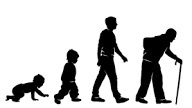
The concept of time has been described as many things: an arrow, a river, a march, anything that moves inextricably forward at a constant, unalterable rate. However, aging doesn’t flow at such a uniform speed. Instead, humans age in fits and starts. A 2024 Stanford University study shows that our bodies age faster around our mid-40s and early 60s than during other stages of life.
The study analyzed data from 108 people who donated blood and other biological samples over several years. By tracking 135,000 different molecules, creating 250 billion data points, scientists discovered that roughly 81% of the studied molecules showed age-related fluctuations, and those moments of rapid aging tended to coalesce around the ages of 44 and the early 60s. According to the scientists, the most surprising data point was rapid aging in the mid-40s. At first, they theorized that menopause or perimenopause could be playing a role in these changes, but they found the molecular changes impacted men just as much as women.
The affected molecules also differed between those two aging periods. Both age groups reported changes in molecules related to cardiovascular disease, caffeine metabolism, and skin and muscle growth, but the mid-40s cohort also recorded increased alterations in alcohol metabolism, while people in their early 60s underwent changes to immune regulation and kidney function. Of course, a lifetime of healthy eating, exercise, and plentiful sleep can curtail some of the effects of these periods of aging, so it may be worth paying extra close attention to your health when those milestones arrive.
It’s time again to turn the calendar, it’s hard for me to project a ‘happy’ year coming. All I can do is reflect ln the past year and hold my head up and hope that things don’t get worse. 2024 was a disappointment in so many ways , I lost a cousin that was way to young to leave this mortal coil… I hope his young son has only fond memories of his father.
As a country we has put our future back in the hands of a man that did his best to dismantle our democracy from 2016-2020 and I hope was can survive as a nation until we can change the direction of entitlement and hate that we are currently experiencing.
My goal for myself is to improve me, touch the lives directly around me, maybe, just maybe enough of us can do that and that will in itself effect the change we all need.
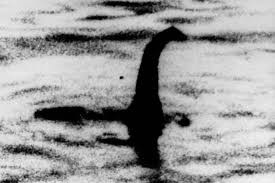
The scientific name Nessiteras rhombopteryx may look more or less like any other. As with many Linnaean labels, the species name rhombopteryx references the creature’s overall appearance — in this case, its diamond-shaped fins. But there’s one key difference here: The creature it describes doesn’t exist (probably). Nessiteras rhombopteryx, or “Ness monster with diamond-shaped fins,” is the proposed taxonomic moniker of the Loch Ness monster, also known as Nessie. As a brief cryptozoology refresher, Nessie is a fabled reptilian monster believed to reside in a lake called Loch Ness in the Scottish Highlands. For nearly a century, people have scoured the lake with binoculars, sonar, and other equipment, hoping to glimpse this anachronistic plesiosaur. Although “confirmed sightings” number more than a thousand, no specimen has ever been captured and cataloged.
And that last part is important. Usually, for a species to receive a scientific name, scientists must have a “voucher specimen” in hand for future reference. However, in a non-peer-reviewed article in the December 1975 issue of Nature, U.S. researcher Robert Rines and British naturalist Sir Peter Scott put forward the name Nessiteras rhombopteryx based on only photographs and sonar data. In the article, the authors argued that “recent British legislation makes provision for protection to be given to endangered species; to be granted protection, however, an animal should first be given a proper scientific name.” In other words, the scientists had to give Nessie a name to save it (if “it” exists at all).
Although the legend of Nessie is beloved throughout Scotland (bringing in tourist dollars never hurts), not everyone was sold on giving the mythical elusive plesiosaur an air of scientific credibility. About a week after the name’s announcement in December 1975, a Scottish MP rebuffed the pseudo-scientific endeavor, saying there just might be a reason why “Nessiteras rhombopteryx” is an anagram for “Monster Hoax by Sir Peter S.”
Have you ever had a sneaking suspicion that you’re experiencing a scenario that’s already happened? Then you’ve dealt with déjà vu. The term is (as you may have guessed) French, and the literal translation means “already seen.” But in everyday life, déjà vu refers to the weird feeling you get when you’re in a situation that feels like you’ve already lived it, and are somehow living it again.
Research shows that there’s a direct relation between déjà vu and seizures. Specifically, the phenomenon is linked to temporal lobe epilepsy and has been described in people with a known medical history of the condition.
But plenty of people have experienced déjà vu who don’t have a history of epilepsy or seizures. In healthy people, déjà vu is believed to be caused by a memory mismatch, where a new experience is stored in long-term memory and completely bypasses the short-term memory. In this scenario, you have that weird sensation that you’ve been through an experience before when in reality, it’s just your brain’s memory system having a glitch.
In the spring of 1942, a new problem was emerging in wartime America: food shortages. Most commercial crops were sent overseas to the troops, and anything left over couldn’t be distributed to civilians around the country due to wartime supply chain complications. Food rationing was implemented to remedy the situation, but it did little to curb the hunger pangs of millions of Americans, who turned to a food production plan that had emergeddecades earlier during World War I. In March 1917, the National War Garden Commission encouraged private citizens to “sow the seeds of victory” and grow produce to feed people at home and abroad. School grounds, vacant lots, and backyards were transformed into bountiful gardens, which became known as “victory gardens.”
Victory gardens came back bigger and better than ever during WWII, succeeding thanks to the cooperation of schools, government agencies, businesses, and private civilians. The movement was heavily promoted by the government through propaganda posters and messages, and although victory gardens weren’t mandated, many Americans embraced the idea as a patriotic duty. It didn’t take long for millions of victory gardens to sprout up around the country, producing bushels of carrots, kale, lettuce, beans, cabbage, and other veggies. The gardens came in all shapes and sizes, from tiny window boxes to grow a few tomato plants to large community plots that could feed several families — every bit helped. By 1944, a year before the end of the war, an estimated 20 million victory gardens had produced around 8 million tons of food for U.S. troops and civilians. Even First Lady Eleanor Roosevelt planted one right on the White House lawn.
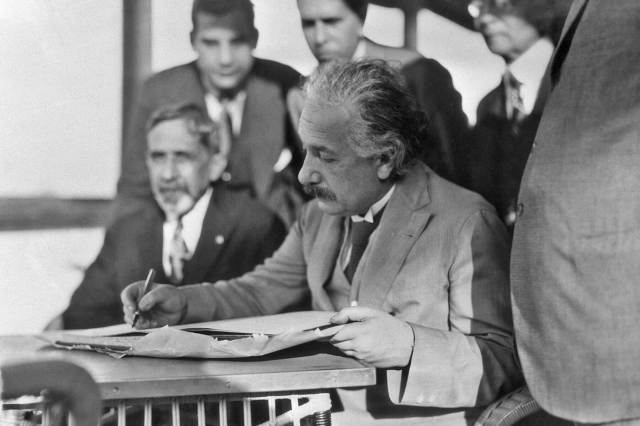
German-born physicist Albert Einstein (1879-1955) was so influential, his very name has become synonymous with genius. While working as a patent clerk in 1905 at the age of 26, Einstein submitted four papers to the German journal Annalen der Physik that changed humanity’s perception of time, gravity, and light. Today, historians mark the year as Einstein’s annus mirabilis, or “miracle year” — and he was just getting started.
Advertisement
Much of Einstein’s work is famously dense. Few people other than physicistsneed to fully comprehend the mind-bending ideas behind the general theory of relativity and Einstein’s other theories, but these discoveries form the bedrock of technologies the rest of us enjoy every day. Here are five ways Einstein’s ideas changed the world, and continue to provide a roadmap for humanity’s future.
GPS Would Be Impossible Without the General Theory of Relativity
Some 10,900 nautical miles above our heads, 31 satellites orbit Earth as part of the Global Positioning System (GPS) — but if it wasn’t for Einstein, those satellites would be little more than space junk. The very foundation of GPS is accurate timekeeping, as satellites need to keep time to correctly log the distance from a ground-based receiver (such as your smartphone). GPS satellites are so precise, the atomic clocks on board are accurate to within three-billionths of a second, a feat impossible without Einstein’s special and general theories of relativity. The special theory of relativity states that time flows differently depending on velocity. Because satellites travel at 8,700 miles per hour, they “lose” 7 microseconds per day compared to Earth-based receivers. Additionally, Einstein’s general theory of relativity — an idea published in 1915 that basically elaborates on his previous theory by throwing gravity in the mix — similarly states that distance from a source of mass, in this case the Earth, also affects the flow of time. This means that technically speaking, your head ages slightly faster than your feet because your feet are closer to the Earth (on time scales that are ultimately negligible). Today, GPS takes into account this “time dilation,” so satellites always know where you are when you open Google Maps.
The Explanation of Photoelectric Effect Helped Make Modern Solar Power Possible
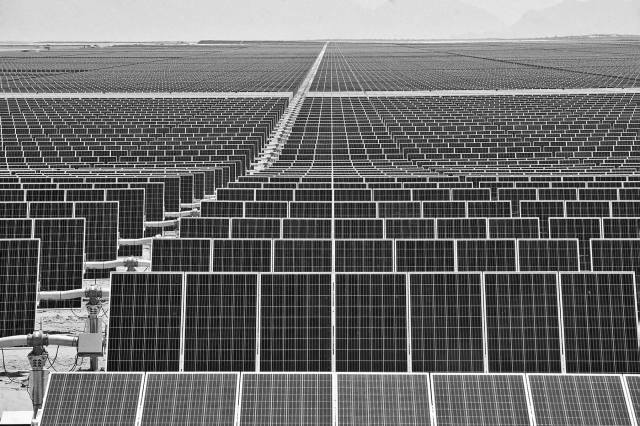
It probably comes as no surprise that Einstein won the Nobel Prize for physics in 1921, but what many people don’t realize is that the award wasn’t honoring the wunderkind’s groundbreaking general theory of relativity, but rather his revolutionary yet often overlooked explanation of the photoelectric effect. The initial discovery of the photoelectric effect came in 1887 from German physicist Heinrich Rudolf Hertz (yes, that Hertz), who noticed that when ultraviolet light hit a metal plate, it created sparks. What was puzzling was that different metals required different frequencies to produce the same effect. Then, in 1905, 26-year-old Einstein solved this conundrum by introducing a new conception of light, which he published in his first paper submitted to Annalen der Physik. He argued that light wasn’t just a wave, as some scientists suggested, but also a stream of particles, later known to science as “photons.” Einstein posited that these photons contained a fixed amount of energy depending on their frequency, and his theory — though derided for years — successfully explained the photoelectric phenomenon. Though solar cells predated Einstein’s discovery by dozens of years, it wasn’t until Einstein’s theory that scientists understood why they worked, which helped make solar panels even more efficient.
Lasers Were Developed Thanks to Einstein’s Quantum Theory of Radiation
Lasers (an acronym for “Light Amplification by Stimulated Emission of Radiation”) scan your groceries at the supermarket, make self-driving cars possible, and form the backbone of optical communication. And yes, we can thank Einstein for this one, too. In 1917, Einstein published a paper detailing his quantum theory of radiation. The theory basically states that atoms can be stimulated to change energy levels when hit with a specific frequency. If that excited atom is hit with another photon of the same frequency, it’ll produce two coherent photons (traveling in the same direction) while the atom’s electron returns to its ground state. This means you can artificially create a sudden burst of coherent light as atoms discharge in a chain reaction, otherwise known as “stimulated emission of radiation” (the “ser” in “laser”). It wasn’t until after World War II that scientists found a use for Einstein’s discovery; the laser was developed by using mirrors to create light amplification.
Photo credit: MPI/ Archive Photos via Getty Images
The E=MC2 Equation Formed the Scientific Basis for the Nuclear Bomb
The final discovery of Einstein’s “miracle year” was the concept that light and energy are equivalent, and that their relationship can be explained with the elegantly simple equation E=MC2, meaning energy equals mass times the speed of light squared. Describing mass as essentially super-dense energy, Einstein’s equation shows how even small amounts of mass at atomic levels can produce a tremendous amount of energy when multiplied by the speed of light squared — and you probably see where this is going.
This process explains how a neutron fired from a uranium atom splits it into smaller atoms while releasing a tremendous amount of energy. It’s known as nuclear fission, and when the process is controlled, it provides low-emission nuclear energy. When released in an uncontrolled state, it can be used to produce an atomic bomb. Einstein himself never worked on the Manhattan Project, the secret government program to make the first nuclear bomb, but he rubber-stamped the idea in a 1939 letter to Franklin D. Roosevelt that argued for the U.S. to make the bomb before Nazi Germany. Einstein later regarded that letter as the “one great mistake in my life.”
The E=MC2 Equation Could Point to the Future of Energy
As previously described, nuclear fission works by breaking apart an element such as a heavy uranium-235 atom into two smaller atoms (krypton and barium). However, something interesting also occurs: If two light nuclei (i.e., hydrogen) can overcome electrostatic repulsion, theyfuse together to form a heavy helium-4 atom — sort of like fission but in reverse. Similarly, following the E=MC2 equation, this process produces a tremendous amount of energy and heat. This is known as nuclear fusion, and it’s the atomic science that is the energy-producing engine of stars.
On paper, nuclear fusion could provide the answer to humanity’s expanding energy needs. There’s no enriched material involved; nuclear proliferation with fusion reactors isn’t a worry; a meltdown is scientifically impossible; there’s no radioactive material produced as a byproduct; it’s completely carbon-free; and fusing atoms together releases 4 million times more energy than the chemical process of burning coal. There’s just one catch: Building a fusion reactor is immensely complicated. That’s never stopped people before, though. An international coalition of scientists and agencies is hard at work creating the International Thermonuclear Experimental Reactor, or ITER, which is set to go online in 2025.
Given that the United States was born amid an anti-monarchical fervor, it’s fitting that the sole royal palace within its confines is located more than 4,700 miles from the nation’s capital. There, amid the high rises and palm trees of downtown Honolulu, stands Iolani Palace, the home of Hawaii’s 19th-century royal dynasty.
After King David Kalākaua rose to power in 1874, he elected to tear down the deteriorating coral block building that housed his predecessors and erect an ostentatious new home in a style that reflected the grand palaces he had visited while touring Europe some years prior. The “Merrie Monarch” went through three architects to get the residence he craved, winding up with a concrete-facing brick structure marked by six towers and open-air verandas stretching around all sides. The interior featured the lavish Throne Room, State Dining Room, and Blue Room to entertain dignitaries, along with a massive koa wood staircase to the private chambers of the second floor. Additional luxuries like indoor plumbing and a telephone pushed the final bill into the neighborhood of $350,000 before the palace opened in 1879, and that was beforeelectricity was installed in the late 1880s.
Unfortunately, this display of extravagance served Hawaii’s rulers for just over a decade. Kalākaua’s sister and successor, Lili’uokalani, was deposed in an 1893 couporchestrated by American businessmen, and the palace became the offices of the provisional, territorial, and then state governments until 1969. Reopened to the public as a museum in 1978, Iolani Palace serves as a reminder of Hawaii’s days as a sovereign nation, as well as America’s complicated history with monarchies.
The rare, magical unicorn was once thought of as native to India, although it also appears in Chinese myths and Mesopotamian artwork. The first Western account of the unicorn comes from the Greek writer Ctesias, who wrote a book on India based on stories he had heard from traders and other visitors to the Persian court. His book described a creature with a white body, purple head, and blue eyes, plus a long horn of red, white, and black. In later accounts, the unicorn is described as the size of a goat, with a beard, spiraled horn, and lion’s tail. Although no fossils of any unicorn-like creatures have been found, they were apparently real animals to ancients like Pliny the Elder, who wrote in detail about their supposed behavior and characteristics.
By the Middle Ages, unicorns were the subject of an elaborate body of folklore. They were said to be pure white and to dwell in forests, where flowers sprung up wherever they grazed. Because of their purity, they were associated with both the Virgin Mary and Jesus Christ. A unicorn’s horn — called an alicorn — was powerful medicine, able to purify water and detect poison. Royals drank from cups supposedly made from unicorn horns, but in fact often made from narwhal tusks sold by enterprising Viking traders. (At one point, the King of Denmark believed he had a unicorn-horn throne, but later scholars think it, too, was made from narwhal tusks.) Powdered unicorn horn was also a popular item in apothecary shops.
Because they were symbols of strength and nobility as well as purity, unicorns also frequently appeared on heraldic crests. In fact, the unicorn is the national animal of Scotland, where it has been part of the royal coat of arms since the 1500s. Another famous unicorn depiction is in the unicorn tapestries of France, which were produced in the late Middle Ages and still fascinate scholars today.






 Esoteric Meandering Shouting Into the Void
You must be logged in to post a comment.