Dwain Northey (Gen X)
https://www.cbsnews.com/news/naacp-travel-advisory-florida-says-state-hostile-to-black-americans/
Remember the good old days when there were only travel advisories and or ban for, what some would call, third word countries? Well now because of the vile vitriol of one Governor Ron DeSantis the state of Florida, a vacation destination, has received a travel advisory by the NAACP.
The wannabe future President has made the climate so venomous in Florida the anyone who is a part of any minority group does not feel safe in the state. Black, Brown, LGTBQ+, these are all groups that are under attack in the Sunshine State. The majority Republican legislature and their fearful leader has passed laws that make almost everything a jailable offence and the fact that the state has very loose gun laws and a stand your ground law makes it more dangerous than being a blonde female in central America.
Florida residents are able to carry concealed guns without a permit under a bill signed into law by Republican Gov. Ron DeSantis. The law, which goes into effect on July 1, means that anyone who can legally own a gun in Florida can carry a concealed gun in public without any training or background check. This with their ridiculous stand your ground law, ‘Florida’s “Stand-Your-Ground” law was passed in 2005. The law allows those who feel a reasonable threat of death or bodily injury to “meet force with force” rather than retreat. Similar “Castle Doctrine” laws assert that a person does not need to retreat if their home is attacked.’ Makes it really sketchy to go there.
This in top of the don’t say gay rule and the new trans ruling that just passed.
“Florida lawmakers have no shame. This discriminatory bill is extraordinarily desperate and extreme in a year full of extreme, discriminatory legislation. It is a cruel effort to stigmatize, marginalize and erase the LGBTQ+ community, particularly transgender youth. Let me be clear: gender-affirming care saves lives. Every mainstream American medical and mental health organization – representing millions of providers in the United States – call for age-appropriate, gender-affirming care for transgender and non-binary people.
“These politicians have no place inserting themselves in conversations between doctors, parents, and transgender youth about gender-affirming care. And at the same time that Florida lawmakers crow about protecting parental rights they make an extra-constitutional attempt to strip parents of – you guessed it! – their parental rights. The Human Rights Campaign strongly condemns this bill and will continue to fight for LGBTQ+ youth and their families who deserve better from their elected leaders.”
This law makes it possible for anyone to just accuse someone of gender affirming care to have their child taken from them this would include someone traveling from out of state. This alone justifies a travel ban to the Magic Kingdom for families.
Oh, and I haven’t even mentioned DeSantis holy war with Disney, the largest employer in the state. I really hope the Mouse eats this ass holes lunch.
Well that’s enough bitching, thanks again for suffering though my rant.
-
Was the Trojan Horse real?

The tale of the Trojan Horse has been recounted countless times — including with a giant rabbit in the film Monty Python and the Holy Grail — and a wooden replica used in the 2004 film Troy now stands in Çanakkale, Turkey, near the site of ancient Troy. The timely legend even sparked the saying, “Beware of Greeks bearing gifts.” Yet historians still aren’t certain whether the story is factual or, more likely, an elaborate myth with some roots in reality. Some have theorized that the horse was a metaphor for whatever did destroy the city of Troy, such as a natural disaster or an enemy ship. But the prevailing theory is that the clever structure may have been based on ancient siege engines, such as battering rams, which were often covered with wet horse hides. The damp hides helped protect the wooden siege engines (and the soldiers using them) from flaming arrows, which may have been the inspiration for the legendary ruse.
-
Already have the job
What job would you do for free?

Not just doing it for free actually cost me $$…
-
Shit Rich People Do.
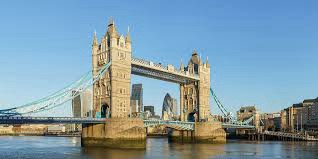
In 1968, an American bought the old London Bridge and moved it to Arizona.
If you want to see the 19th-century version of London Bridge, don’t travel to London — or even England, for that matter. Instead, head to Lake Havasu, Arizona, where a U.S. businessman by the name of Robert McCulloch moved the bridge after buying it in 1968. That the landmark structure was even for sale was the result of English officials realizing the bridge was sinking, albeit at the relatively slow pace of 1 inch every eight years. And so, after a tenure of some 130 years — a bit shabby, when you consider that its medieval predecessor stood for more than 600 — that iteration of London Bridge was put on the market after London City Councilor Ivan Luckin convinced his colleagues that he could persuade someone in America to buy it.
He was right, of course, and it made sense that McCulloch would be the one to purchase it. An eccentric industrialist who once attributed his success to “booze and broads,” McCulloch jumped at the opportunity to bring a piece of history to a patch of land he was hoping to turn into a haven for tourists. Buying the bridge for the princely sum of $2.46 million was the easy part — it was disassembling and moving it, granite brick by granite brick, that turned out to be a logistical nightmare. Three years and another $7 million later, London Bridge settled in its (apparently) final resting place on October 10, 1971. Today, it’s one of Arizona’s top attractions.
-
Go fast games
What Olympic sports do you enjoy watching the most?

I tend to watch the Summer Olympics more than the Winter… I like the sprint track events and the swimming events, you know the short attention span competitions 🤣
-
Circus of Idiots
Lyle Northey (Silent/Boomer)

The world of politics has turned into an absolute circus of idiots. Trump is getting breaks from the courts for reasons no one with a brain can figure out. The dole wagon never stops running because someone is always on the net or the phone with their hand out telling you how it is imperative for you to donate, donate and donate.
Then along comes someone with a story about a satanic cult in the White House. This comes from a conservative senator and it is guess what he puts in his coffee, bet it isn’t sugar. At any rate the far right has to run up the flag of yet another evil that is putting all conservatives at risk. The rest of us are doing just fine but the bunch that is passing restrictive laws, burning books, closing libraries and attempting to turn back the clock are fearful of an imagined cult in the WH.
How did we get to this point where everything is upside down? We have lived for years with the apathy of society and a wish not to get involved. As a result we have had minority rule on many things that the majority would not have allowed to happen if they had taken the time to pay attention and get involved.
Our government has been run by the minority party for years because they find ways to make it possible to get their people elected and the opposition to be kept out. Once they have the upper hand they fill the supreme court with people that have the same views as themselves. As for things in the world of everyday life it is the squeaking wheel that gets the grease, be it on a college campus or in a workplace situation.
Now we are hearing about MAGA Soldiers that will be at polling places to ensure that there are not problems with the voting. More likely they will be there to harass and cause problems with people that they feel are not voting the way the Man wants them to. Will they be at the voting places in districts that are primarily Republican or Democrat, I’m guessing in the latter and the function to carry out will be to get those voters to leave before they can vote. The fact that they show up just to intimidate should be enough to get them arrested and possibly to get their candidate removed from the ballot.
The nation has had enough of the bully boy faction and we need to go back to being civil to one another. All the hate speech and negative attitudes along with the rise in the purchase of weapons and we don’t go a day without someone dying because someone else did not like what was said, or how they were looked at, or some other imagined slight and they reach for the gun and start shooting.
The days of the snake oil salesman have not passed, they are no longer working out of the back of a covered wagon. Today they are working from very fine offices located in buildings belonging to all sorts of industries and in government buildings as well. The constant stream of lies that have been fed to the public make it hard to tell the truths from the fictional information and trust becomes a problem. Big Pharm will tell you they have cure for something and yet that cure requires that you continue to buy their pill or salve to make the cure work. Cars are being built that can drive themselves, and yet that has proven to be less than true. Each of us needs to look at every situation, promise or whatever and consider if what we are being told makes sense before we jump into the pond and get eaten by whatever lives in that pond.
-
Front Porch
How would you improve your community?

Go back to having front porches and yards that invite everyone to get to know each other. Today the houses are built with the garage being the main entrance to each home which is not inviting at all. Most people come home pull into the garage and close the door and that is the extent of their involvement with their community.😢
-
Sad News for Flat Earthers

“In 1492, Columbus sailed the ocean blue” in an effort to prove to European naysayers that the world was round, right? Not at all. In fact, Italian explorer Cristoforo Colombo (his real name), his European contemporaries, and basically all educated humans dating back to the ancient Greeks knew the Earth was a sphere. Famous mathematician Pythagoras of Samos (of a2 + b2 = c2 fame) figured out as much around 500 BCE, and 260 years later, another Greek mathematician named Eratosthenes accurately measured the Earth’s circumference. But defying the status quo and risking a deathly plunge into the vacuum of space certainly adds some dramatic tension, which is probably why Washington Irving invented this fictional flourishfor his 1828 biography The Life and Voyages of Christopher Columbus. Although he was known for his inventive works of fiction, such as Rip Van Winkle and The Legend of Sleepy Hollow, Irving’s creative history of Colombo became one of the most persistent myths of the Age of Exploration.
-
A Christmas Carol Explained
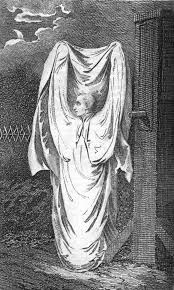
Charles Dickens is known for a good ghost story. Some of his most famous works, including the 1843 novella A Christmas Carol, revolve almost entirely around the supernatural. The English author’s interest in spirits even extended beyond the written word: He was an original member of the Ghost Club in London, an exclusive group interested in dissecting all things otherworldly.
The Ghost Club claims to be the oldest society of its kind. It was formally founded in 1862, although its history dates back to informal gatherings of Cambridge University academics in the mid-1850s. Along with Dickens, the group has counted such literary luminaries as W.B. Yeats, Siegfried Sassoon, and Arthur Conan Doyle among its members. Spiritualism was a hot topic in Victorian-era England, and the curiosity and discussion around it was widespread: Physicists, philosophers, biologists, and more were found among the early Ghost Club members. The club kept minimal records, and little is known about specific investigations at the time of Dickens’ membership, but research suggests that ghostly encounters, clairvoyance, and exposing frauds working as mediums were all on the table.
Dickens, for all his obvious spiritual inclinations — including dabbling in hypnosis — was also healthily skeptical. “All such narratives must be received with the greatest circumspection, and sifted with the utmost care,” he wrote in an 1853 article about haunted houses. “Nothing in them must be taken for granted, and every detail proved by direct and clear evidence, before it can be received.” Dickens died in 1870 and the Ghost Club later disbanded, although not for long. It was revived in 1882, and despite fluctuations in activity, the club endured, and remains an active organization today.
-
Adapting to COVID

Personally I do the same things I have always done, wash my hand, cover my mouth when I cough or sneeze. I worked in health care for years so having the courtesy to wear a mask when I am not feeling well was and is not an issue. All the pandemic did was alert me to the number of people who are not safe and really don’t care about the health and safety of others.
-
Day in the life
What are your morning rituals? What does the first hour of your day look like?
I read the news today, oh boy
About a lucky man who made the grade
And though the news was rather sad
Well, I just had to laugh
I saw the photographHe blew his mind out in a car
He didn’t notice that the lights had changed
A crowd of people stood and stared
They’d seen his face before
Nobody was really sure if he was from the House of LordsI saw a film today, oh boy
The English Army had just won the war
A crowd of people turned away
But I just had to look
Having read the book
I’d love to turn you onWoke up, fell out of bed
Dragged a comb across my head
Found my way downstairs and drank a cup
And looking up, I noticed I was late
Found my coat and grabbed my hat
Made the bus in seconds flat
Found my way upstairs and had a smoke
And somebody spoke and I went into a dreamI read the news today, oh boy
Four thousand holes in Blackburn, Lancashire
And though the holes were rather small
They had to count them all
Now they know how many holes it takes to fill the Albert Hall
I’d love to turn you onSource: LyricFind
Songwriters: John Lennon / Paul McCartney
COULDN’T HELP MYSELF


You must be logged in to post a comment.