Dwain Northey (Gen X)
https://www.cbsnews.com/news/naacp-travel-advisory-florida-says-state-hostile-to-black-americans/
Remember the good old days when there were only travel advisories and or ban for, what some would call, third word countries? Well now because of the vile vitriol of one Governor Ron DeSantis the state of Florida, a vacation destination, has received a travel advisory by the NAACP.
The wannabe future President has made the climate so venomous in Florida the anyone who is a part of any minority group does not feel safe in the state. Black, Brown, LGTBQ+, these are all groups that are under attack in the Sunshine State. The majority Republican legislature and their fearful leader has passed laws that make almost everything a jailable offence and the fact that the state has very loose gun laws and a stand your ground law makes it more dangerous than being a blonde female in central America.
Florida residents are able to carry concealed guns without a permit under a bill signed into law by Republican Gov. Ron DeSantis. The law, which goes into effect on July 1, means that anyone who can legally own a gun in Florida can carry a concealed gun in public without any training or background check. This with their ridiculous stand your ground law, ‘Florida’s “Stand-Your-Ground” law was passed in 2005. The law allows those who feel a reasonable threat of death or bodily injury to “meet force with force” rather than retreat. Similar “Castle Doctrine” laws assert that a person does not need to retreat if their home is attacked.’ Makes it really sketchy to go there.
This in top of the don’t say gay rule and the new trans ruling that just passed.
“Florida lawmakers have no shame. This discriminatory bill is extraordinarily desperate and extreme in a year full of extreme, discriminatory legislation. It is a cruel effort to stigmatize, marginalize and erase the LGBTQ+ community, particularly transgender youth. Let me be clear: gender-affirming care saves lives. Every mainstream American medical and mental health organization – representing millions of providers in the United States – call for age-appropriate, gender-affirming care for transgender and non-binary people.
“These politicians have no place inserting themselves in conversations between doctors, parents, and transgender youth about gender-affirming care. And at the same time that Florida lawmakers crow about protecting parental rights they make an extra-constitutional attempt to strip parents of – you guessed it! – their parental rights. The Human Rights Campaign strongly condemns this bill and will continue to fight for LGBTQ+ youth and their families who deserve better from their elected leaders.”
This law makes it possible for anyone to just accuse someone of gender affirming care to have their child taken from them this would include someone traveling from out of state. This alone justifies a travel ban to the Magic Kingdom for families.
Oh, and I haven’t even mentioned DeSantis holy war with Disney, the largest employer in the state. I really hope the Mouse eats this ass holes lunch.
Well that’s enough bitching, thanks again for suffering though my rant.
-
Cosmic naming rights
Dwain Northey (Gen X)
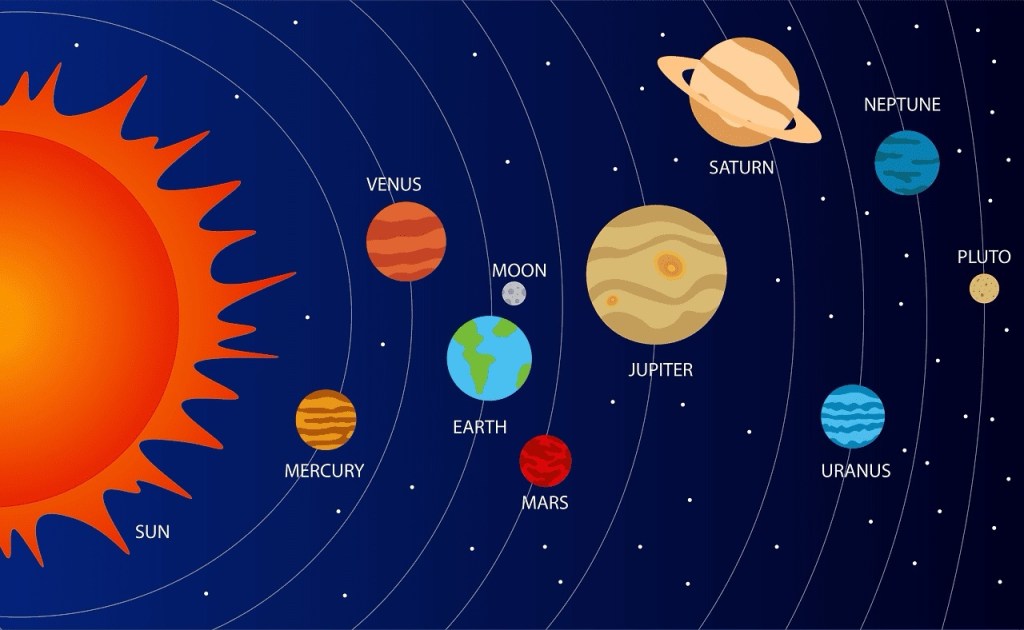
Before telescopes pierced the darkness, before rockets left Earth’s atmosphere, before a single human being set foot beyond our own world, we had already done something remarkable: we named everything.
Mercury. Venus. Earth. Mars. Jupiter. Saturn. Uranus. Neptune.
But here’s the question that keeps nagging at me: Who gave us the authority to do that?
Who granted humanity dominion over an entire solar system?
We often talk about naming things as though it is the most natural act in the world. Parents name children. Scientists name newly discovered species. Explorers have historically named mountains and rivers—often ignoring the names that indigenous people had used for thousands of years. Naming has always been one of humanity’s quiet ways of claiming ownership.
The planets are no different.
Our names come largely from Roman mythology. Mercury, the swift messenger. Venus, the goddess of love. Mars, the god of war. Jupiter, king of the gods. Saturn, the ancient titan. Uranus traces back to Greek mythology, and Pluto continued the tradition when it was discovered. Yet sitting quietly among these mythological figures is one glaring exception.
Earth.
Where did that come from?
It seems almost out of place. We have an entire family of worlds named after ancient gods, and then suddenly there’s… Earth. Not a deity. Not a mythological figure. Just a simple Germanic word that essentially means “the ground” or “the soil.”
I’ve always found that fascinating. We looked to the heavens and filled them with gods, but when it came to our own home, we simply called it dirt.
Perhaps that’s because ancient people weren’t standing on a planet in their minds—they were standing on the ground beneath their feet. They didn’t need a grand celestial name because Earth wasn’t just another object in the sky. It was home. Only later, when we realized it was another planet orbiting the Sun, did “Earth” become the odd one out among its mythological neighbors.
Watching John Carter made me think about this from a different perspective. The people of Mars don’t call their world Mars. They call it Barsoom. Earth is Jasoom. Suddenly you’re forced to realize something profound: names are a matter of perspective. If another civilization existed, why would they use our Roman mythology? Why would they care about Jupiter or Venus? To them, our carefully constructed map of the heavens would probably seem just as arbitrary as theirs would seem to us.
Imagine making first contact with an intelligent civilization.
“We come from Earth.”
“You mean… Jasoom?”
“No, Earth.”
“Never heard of it.”
Neither of you would be wrong. You would simply be using different labels for the same reality.
It raises an even bigger philosophical question. Humans often speak as though the solar system belongs to us. We talk about colonizing Mars, mining asteroids, harvesting the moons of Jupiter, and building bases on Saturn’s moons. We speak with astonishing confidence, as though someone handed us the deed to the neighborhood.
But who did?
Who decided this collection of planets, moons, comets, and asteroids belonged to one species that evolved on a single tiny rock orbiting an average star?
From a cosmic perspective, we’re newcomers. If the history of the universe were compressed into a single calendar year, humanity wouldn’t arrive until the final seconds before midnight on December 31. Yet in those few seconds we’ve already named every planet, drawn imaginary borders in space, and begun discussing which worlds we’ll someday possess.
That seems like extraordinary confidence.
Perhaps even extraordinary arrogance.
Maybe names aren’t ownership. Maybe they’re simply tools that help us communicate. There’s nothing inherently wrong with calling a planet Mars any more than there’s anything wrong with calling our own world Earth. Every language gives the universe its own vocabulary.
But vocabulary has a funny habit of becoming authority.
Once we name something, we often begin to believe we understand it. Once we map it, we begin to think it belongs to us. Once we plant a flag, we act as though the universe acknowledged our claim.
The universe, however, has remained conspicuously silent.
Perhaps that’s the lesson hidden in stories like John Carter. Every civilization sees the cosmos through the lens of its own culture. Every civilization has its own myths, its own languages, and its own maps of the heavens. Ours just happens to be rooted largely in Roman mythology—with one wonderfully ordinary exception.
Our home isn’t named after a god.
It’s named after the ground beneath our feet.
So the next time you hear someone casually refer to Mercury, Venus, Earth, Mars, Jupiter, Saturn, Uranus, or Neptune, it might be worth asking a simple question:
Are those the planets’ names… or are they merely humanity’s names?
Because those are two very different ideas.
And if we ever discover we’re not alone, we may find that our greatest surprise isn’t that someone else exists.
It may be discovering that, in the grand conversation of the cosmos, we’ve been calling the neighbors by the wrong names all along.
-
Retail therapy
What is the best purchase you have ever made?
I can’t honestly say that there’s anything I’ve ever bought that made an impact on my life. I’ve owned multiple homes within with my ex-wife. I’ve owned lots of cars lots of clothes, electronics equipment, but none of them were the best purchase I ever made. You would think that buying an engagement ring or something like that would be a significant purchase but when those relationships fall apart, it’s just just another item that’s got a memory, but it wasn’t significant or important.
-
Just say it…
Dwain Northey (Gen X)

Six years. Think about that for a moment. Six years after the 2020 election, nominees sitting before the United States Senate—people seeking to become attorneys general, cabinet secretaries, judges, or other high-ranking officials entrusted with interpreting and enforcing the law—still cannot answer one of the simplest factual questions imaginable:
Who won the 2020 presidential election?
Not, “What are your political opinions?” Not, “Who did you vote for?” Not even, “Do you support Joe Biden’s policies?”
Just one straightforward question: Who won?
And almost without fail, the answer comes wrapped in verbal gymnastics.
“Joe Biden was certified.”
“He served as president.”
“The electoral votes were counted.”
“The transition occurred.”
Those statements are all true, but none of them answer the actual question. It’s like asking who won the Super Bowl and getting the response, “Well, one team was awarded the Lombardi Trophy.” That’s not an answer. It’s an attempt to avoid saying the obvious.
The obvious answer is that Joe Biden won the 2020 election.
He won the Electoral College by 306 electoral votes to Donald Trump’s 232. He also won the national popular vote by more than seven million votes. Those aren’t opinions. They’re historical facts.
Yet six years later, intelligent, highly educated lawyers and political appointees continue acting as though acknowledging that fact will somehow summon the wrath of Donald Trump.
One recent exchange perfectly illustrated the absurdity. A nominee admitted that Joe Biden received more Electoral College votes, was certified, and became president. A senator simply followed up:
“So you’re saying he won the election?”
Silence. Deflection. More carefully crafted legal language.
Apparently, saying every fact surrounding the election is acceptable—except the conclusion that naturally follows from those facts.
Imagine trying that logic anywhere else.
“The Diamondbacks scored more runs.”
“They were awarded the victory.”
“They advanced to the next round.”
“But I refuse to say they won.”
It’s ridiculous.
What’s most troubling isn’t that Donald Trump continues to insist he was wronged. Politicians have always struggled to accept defeat. What’s disturbing is watching otherwise qualified public servants refuse to acknowledge objective reality because they’re afraid of hurting one man’s feelings—or provoking his political retaliation.
These are people asking the Senate to trust their judgment, uphold the Constitution, and faithfully execute the laws of the United States. Yet many won’t utter a sentence that every election official, every court, every state certification process, and every peaceful transfer of presidential power has already established as fact.
If someone cannot answer a factual question with a factual answer, what confidence should we have that they’ll apply facts honestly when the stakes are even higher?
This has never really been about 2020 anymore. It’s about whether truth itself has become negotiable inside our government.
The irony is impossible to ignore. The same people who demand absolute honesty from witnesses, who insist on “just following the facts,” suddenly become masters of semantic escape whenever one particular fact might offend Donald Trump.
Not because the evidence is unclear.
Not because history is unsettled.
Not because there is legitimate doubt.
But because acknowledging reality has become politically dangerous.
A democracy cannot function if elected officials and presidential nominees are afraid to state historical facts simply because those facts bruise the ego of a former president. At some point, loyalty to one individual cannot be allowed to outweigh loyalty to the truth.
The question isn’t difficult.
Who won the 2020 election?
Joe Biden.
It took one sentence to answer—a sentence that, six years later, far too many people in Washington still seem unwilling to say out loud.
-
Sitcom scenario
What’s the funniest misunderstanding you’ve ever been part of?
I couldn’t say that there’s been any really funny scenario that I’ve been involved with you know the old adage tragedy plus time equals comedy so a lot of times things happen that weren’t funny in the instant but when you look back at them 20 years later, they’re humorous. Basic training in 1987 wasn’t a lot of fun, but it looked like a lot of fun in retrospect so that’s how I feel this question is is I may have said something in a situation that was really mean at the time or misunderstood when you, but you looked back at it with hindsight and it’s humorous, but I can’t think of a time that I was involved in something that at the time the misunderstanding was funny
-
SAVE Act
Dwain Northey (Gen X)

One of the more fascinating political magic tricks of our time is watching a problem be identified, then immediately proposing a solution that has absolutely nothing to do with that problem.
Last Thursday, Donald Trump once again complained that America’s elections are vulnerable to foreign interference. If that is truly the concern, then let’s have that conversation. Election cybersecurity, foreign influence campaigns, hacking attempts, disinformation operations, and protecting election infrastructure are legitimate issues that deserve serious attention.
But then comes the punchline.
The proposed solution is the SAVE Act.
Unless someone can explain the logic that has escaped the rest of us, restricting voter registration for American citizens has absolutely nothing to do with preventing Russia, China, Iran, or any other foreign actor from attempting to influence an election.
Foreign interference isn’t accomplished by millions of undocumented immigrants secretly voting. Every investigation over the last several election cycles has shown that such cases are extraordinarily rare. Foreign interference happens through cyberattacks, propaganda, fake social media accounts, disinformation campaigns, ransomware attacks, and attempts to sow distrust in democratic institutions.
The SAVE Act addresses none of those things.
It doesn’t harden voting machines.
It doesn’t strengthen cybersecurity.
It doesn’t stop foreign troll farms.
It doesn’t prevent hacking.
It doesn’t stop deepfakes.
It doesn’t combat online propaganda.
Instead, it makes it more difficult for American citizens to register to vote by requiring additional documentation that many eligible voters don’t readily have available or that may not perfectly match their current legal names or circumstances.
That’s not stopping foreign interference.
That’s changing who has an easier time participating in American elections.
Now Senator Markwayne Mullin has escalated the rhetoric by threatening states that refuse to adopt these policies, suggesting legal consequences for election officials and state leaders who don’t comply. Think about how extraordinary that is. Instead of presenting evidence that these policies stop foreign interference, the conversation shifts toward threatening the very people responsible for administering elections.
If your stated problem is cyber warfare, why are your targets election clerks?
If your stated concern is foreign governments, why are you threatening county election workers?
If your stated fear is international interference, why is every proposed remedy aimed squarely at American voters?
Those questions deserve answers.
Because either the problem has been misunderstood, or the proposed solution was never really about the stated problem in the first place.
History teaches us that whenever governments claim they’re protecting democracy by making it harder for citizens to participate in democracy, skepticism isn’t cynicism—it’s civic responsibility.
If there truly is foreign interference, then invest in cybersecurity. Protect election systems. Strengthen intelligence sharing. Hunt down foreign influence operations. Work with technology companies to expose propaganda networks. Increase funding for election security experts.
Those are solutions that actually address the problem being described.
But if the answer to every election concern somehow always ends with making it harder for American citizens to vote, then eventually people are going to stop asking whether the solution fits the problem and start asking whether the problem was simply being used to justify the solution all along.
In any other field, we’d call that solving the wrong problem.
In politics, apparently, we’re expected to call it election integrity.
-
App usage
What app eats up most of your screen time — and do you even feel bad about it?
I would say the app that uses the most of my time is the Uber app because I drive for Uber 6 to 8 hours a day seven days a week so that is the app that is generally on and it is my main source of income so I’m very thankful for that level of technology.
-
Lesson in sportsmanship
Dwain Northey (Gen X)

For one month, the world came to America, and perhaps the greatest lesson wasn’t about soccer at all.
Yesterday, Spain lifted the World Cup trophy in New Jersey, capping off a tournament that showcased incredible talent, passion, and sportsmanship. Congratulations to Spain—they earned every bit of that championship. But as impressive as the football on the pitch was, what happened in the stands may have been even more remarkable.
Millions of fans from every corner of the globe descended on the United States. They wore outrageous costumes, painted their faces, sang for ninety minutes without stopping, hugged complete strangers wearing the same colors, and transformed stadiums into celebrations of culture rather than battlegrounds. Rival supporters stood shoulder to shoulder before the match, shared food and drinks, traded scarves afterward, and, more often than not, left the stadium respecting one another regardless of the final score.
It was a master class in what being a sports fan can actually look like.
Contrast that with too much of American sports culture. We have all seen it. A team loses, and people overturn cars, smash storefront windows, or set couches on fire. A team wins…and somehow people overturn cars, smash storefront windows, and set couches on fire anyway. Apparently, in some cities, the only difference between victory and defeat is which direction the flames are blowing.
That has always struck me as bizarre.
If your team wins the championship, shouldn’t that be the happiest day of the season? Why celebrate by destroying your own neighborhood? And if your team loses, why punish businesses and neighbors who had absolutely nothing to do with the outcome? The athletes walk away with multimillion-dollar contracts. The only people paying for the broken windows are local shop owners and taxpayers.
World Cup supporters showed another way.
They were loud. They were emotional. They celebrated every goal as though it were the greatest moment of their lives. They cried when they lost. They danced when they won. But for the overwhelming majority, the emotion stayed exactly where it belonged—inside the stadium and among fellow fans. The passion wasn’t diminished by good sportsmanship. In fact, it was enhanced by it.
Maybe that’s because soccer supporters understand something fundamental: the game is supposed to bring people together. The competition is fierce, but it is still a game. Ninety minutes of football should create memories, not emergency room visits or insurance claims.
America loves to think of itself as the home of the greatest sporting events on Earth, and in many ways it is. But during this World Cup, the rest of the world gave us a lesson worth paying attention to. They demonstrated that you can be fiercely loyal without being destructive, passionate without being violent, and competitive without losing your humanity.
Congratulations again to Spain for becoming world champions. But perhaps the biggest victory belonged to the fans themselves. They reminded us that the loudest crowd isn’t necessarily the most dangerous one. Sometimes it’s simply the one enjoying the beautiful game exactly as it was meant to be enjoyed—with joy, respect, and a celebration that ends with songs instead of sirens.
-
Happiness index
Dwain Northey (Gen X)

One of the greatest ironies in modern American politics is that there are countries the American right loves to dismiss as “socialist hellholes” that consistently rank among the happiest places on Earth.
Take Denmark. Take the Netherlands. Year after year, they sit near the top of global happiness rankings. Their citizens enjoy universal healthcare, affordable higher education, generous parental leave, strong labor protections, lower poverty rates, and high levels of trust in both their neighbors and their public institutions. They also pay significantly higher taxes than Americans.
According to much of the MAGA movement, this should be impossible.
For decades we’ve been told that high taxes destroy freedom, that government investment kills innovation, that helping your fellow citizens creates laziness, and that the only path to happiness is unfettered capitalism with as little government involvement as possible. Yet reality keeps refusing to cooperate with the talking points.
The countries most often ridiculed as “socialist” consistently report happier populations than many of the countries that pride themselves on having the freest markets.
That doesn’t mean these nations are perfect. No country is. They face immigration debates, housing shortages, inflation, and political disagreements just like everyone else. But when independent researchers repeatedly ask people around the world how satisfied they are with their lives, these countries continue to score remarkably well.
That documented reality seems to irritate some conservatives far more than it should.
It’s almost as if the existence of successful social democracies undermines the narrative that every public investment is a step toward tyranny. If citizens can have vibrant capitalist economies while also enjoying universal healthcare, affordable education, paid family leave, and strong worker protections—and still report some of the highest life satisfaction in the world—it becomes much harder to argue that every government program is inherently evil.
Instead of asking, “What are they doing right?” the conversation often devolves into insisting that the rankings must be meaningless, that those countries aren’t really free, or that Americans simply value freedom more.
But here’s the uncomfortable question: What is freedom if you’re one medical emergency away from bankruptcy? What is freedom if higher education leaves you buried in debt? What is freedom if missing a paycheck means losing your home? Freedom isn’t simply the absence of taxes. For many people, genuine freedom also means having enough security to build a life without constant fear that one stroke of bad luck will destroy everything.
Perhaps that’s why these countries routinely score so highly. Their citizens know they’ll receive healthcare if they get sick. They know they won’t lose everything because they become parents. They know education won’t saddle them with decades of debt. They know unemployment doesn’t automatically become homelessness.
Ironically, those policies don’t eliminate capitalism. Denmark and the Netherlands remain market economies with thriving private businesses, entrepreneurs, multinational corporations, and innovation. They simply made a different decision about where some of their tax dollars should go.
Americans often frame the discussion as an all-or-nothing choice: either complete capitalism or complete socialism. The countries consistently topping the happiness charts rejected that false choice decades ago. They embraced capitalism while recognizing that markets work best when citizens aren’t constantly living on the edge of catastrophe.
Maybe that’s the lesson many in MAGA find so frustrating. It’s harder to argue that compassion is economically impossible when entire nations have demonstrated that strong markets and strong social safety nets can coexist.
The happiest countries in the world aren’t utopias. They’re simply proof that investing in your people doesn’t automatically destroy prosperity. Sometimes, it helps create it.
-
Travel Books?
What’s a movie or book that inspired you to travel?
I’ve traveled a lot with the military. I don’t think there was ever a book that inspired me to go anywhere. I know I’ve spent time on beaches reading books that I picked up, but whether it was inspired me to go I would say that’s probably never happened. no, no movie is it? Hey, let’s go to Tahiti but it seems like an odd question. I’ve read lots of books on the beach. I’ve read lots of books in on airplanes, but none of them ever inspired me to go anywhere.
-
Prophecies
Dwain Northey (Gen X)

One of the arguments I hear over and over from some Christians is, “You can’t deny Jesus was the Messiah because He fulfilled every Old Testament prophecy.”
Really?
That’s presented as though it’s the end of the conversation, when in reality it’s the beginning of one.
As someone who enjoys writing, I know one simple truth about storytelling: you don’t start writing without knowing where you’re going. Every good author writes toward a conclusion. Characters are introduced because they’ll matter later. Details are planted because they’ll pay off in the final act. Foreshadowing only works because the author already knows the ending.
So when someone tells me the New Testament proves Jesus was the Messiah because it quotes prophecy after prophecy, I can’t help but ask a simple historical question: who chose those prophecies, and when?
The books that eventually became the Christian Bible were not bound together during Jesus’ lifetime. The canon developed over centuries through debates, disagreements, and church councils. The New Testament itself was written decades after Jesus’ death by authors who believed He was the Messiah and were writing to convince others of that conclusion. They naturally interpreted the Hebrew Scriptures through that lens.
That isn’t an insult. It’s simply how literature and theology work.
The Hebrew Bible itself is also the product of centuries of writing, editing, and compilation. Christians refer to it as the Old Testament, but Judaism understands those same texts as part of the Tanakh, interpreted within a much broader tradition that includes centuries of rabbinic scholarship. Christians and Jews often read the very same passages and arrive at very different conclusions—not because one side is stupid, but because they begin with different assumptions and different interpretive traditions.
Which raises another obvious question.
If the prophecies are supposedly so overwhelming and so undeniable, why are there millions of deeply religious Jews—people who have spent their entire lives studying these scriptures in their original languages—who do not accept Jesus as the Messiah?
It’s not because they’ve never heard the argument.
It’s because they read the same texts differently. Many point to messianic expectations that they believe were not fulfilled, such as universal peace, the gathering of all exiles, and a transformed world. They don’t simply ignore Christian claims; they evaluate them through a different theological framework.
That doesn’t automatically make Christianity false, nor does it make Judaism false.
It simply means the issue is far more complex than a bumper sticker apologetic.
Yet some Christians act as though anyone who disagrees must either be ignorant or deliberately rejecting obvious truth. That’s an astonishing level of confidence considering most of them have never read the Hebrew Bible outside the passages selected for Sunday sermons, let alone explored Jewish commentaries or the broader body of ancient Jewish literature.
Many Christians proudly proclaim, “The Old Testament proves the New Testament.”
Of course it does—if you’re reading it through the interpretive framework established by the New Testament.
That’s circular reasoning.
It’s like reading the final chapter of a mystery novel first and then declaring every clue in the earlier chapters obviously points to the killer. Well, yes. The author knew the ending before writing the beginning.
Faith doesn’t require pretending history is simpler than it is.
Belief doesn’t require dismissing centuries of Jewish scholarship.
And intellectual honesty certainly doesn’t require claiming that every question has already been answered.
If your faith is true, it should be able to withstand historical inquiry, textual criticism, and difficult questions. It shouldn’t depend on pretending there is only one way to read ancient texts or that every scholar who disagrees simply hasn’t “accepted the truth.”
Perhaps the greatest irony is that the same Christians who tell everyone else to “read the Bible” often have little curiosity about the scriptures, traditions, and historical context from which their own Bible emerged. They are content with the verses that support the conclusion they already believe, while dismissing the broader conversation that has existed for more than two thousand years.
Faith is a choice.
History is an investigation.
Confusing one for the other doesn’t strengthen either.


You must be logged in to post a comment.