Dwain Northey (Gen X)
https://www.cbsnews.com/news/naacp-travel-advisory-florida-says-state-hostile-to-black-americans/
Remember the good old days when there were only travel advisories and or ban for, what some would call, third word countries? Well now because of the vile vitriol of one Governor Ron DeSantis the state of Florida, a vacation destination, has received a travel advisory by the NAACP.
The wannabe future President has made the climate so venomous in Florida the anyone who is a part of any minority group does not feel safe in the state. Black, Brown, LGTBQ+, these are all groups that are under attack in the Sunshine State. The majority Republican legislature and their fearful leader has passed laws that make almost everything a jailable offence and the fact that the state has very loose gun laws and a stand your ground law makes it more dangerous than being a blonde female in central America.
Florida residents are able to carry concealed guns without a permit under a bill signed into law by Republican Gov. Ron DeSantis. The law, which goes into effect on July 1, means that anyone who can legally own a gun in Florida can carry a concealed gun in public without any training or background check. This with their ridiculous stand your ground law, ‘Florida’s “Stand-Your-Ground” law was passed in 2005. The law allows those who feel a reasonable threat of death or bodily injury to “meet force with force” rather than retreat. Similar “Castle Doctrine” laws assert that a person does not need to retreat if their home is attacked.’ Makes it really sketchy to go there.
This in top of the don’t say gay rule and the new trans ruling that just passed.
“Florida lawmakers have no shame. This discriminatory bill is extraordinarily desperate and extreme in a year full of extreme, discriminatory legislation. It is a cruel effort to stigmatize, marginalize and erase the LGBTQ+ community, particularly transgender youth. Let me be clear: gender-affirming care saves lives. Every mainstream American medical and mental health organization – representing millions of providers in the United States – call for age-appropriate, gender-affirming care for transgender and non-binary people.
“These politicians have no place inserting themselves in conversations between doctors, parents, and transgender youth about gender-affirming care. And at the same time that Florida lawmakers crow about protecting parental rights they make an extra-constitutional attempt to strip parents of – you guessed it! – their parental rights. The Human Rights Campaign strongly condemns this bill and will continue to fight for LGBTQ+ youth and their families who deserve better from their elected leaders.”
This law makes it possible for anyone to just accuse someone of gender affirming care to have their child taken from them this would include someone traveling from out of state. This alone justifies a travel ban to the Magic Kingdom for families.
Oh, and I haven’t even mentioned DeSantis holy war with Disney, the largest employer in the state. I really hope the Mouse eats this ass holes lunch.
Well that’s enough bitching, thanks again for suffering though my rant.
-
Unfortunately None
Write about a few of your favorite family traditions.

When my dad went back into the military in 1980 we moved away from paternal family and any loose traditions dissolved. I have been away from my family since college and never had a desire to participate in any gatherings. When I was married I did spend more time participating in my wife’s families events but now divorced those things have been forgotten. I am trying to start a father son tradition of going to a Green Bay Packers game every year but due to finances that hasn’t happened yet but hopefully it will, we started by going to a game for my sons 18th birthday and I hope it will be an annual event.
-
5 Key Moments in the History of Rock ‘n’ Roll
It’s hard to say precisely when rock ’n’ roll began, though the genre has its roots in African American music such as jazz, rhythm and blues, boogie-woogie, and gospel, as well as country music. Ask a room full of music historians what the first rock ’n’ roll record was and you’ll likely receive a number of different answers. Was it Sister Rosetta Tharpe’s “Strange Things Happening Every Day” in 1944? Or perhaps “Rocket 88,” first recorded in Memphis by Jackie Brenston & His Delta Cats in 1951? Or Bill Haley & His Comets’ 1955 single “Rock Around the Clock?” It’s hard to say for sure.
What we do know is that rock ’n’ roll became a defined mainstream genre during the 1950s, when the sound and the image coalesced around one man: Elvis Presley. Elvis took rock music to new and giddy heights, bringing about a seismic shift in popular culture — and causing deep concern among certain sections of society that considered rock the “devil’s music.” Once unleashed, however, there was no going back: Rock ’n’ roll was here to stay. Here are some of the most defining moments in the history of the genre, from the King himself to the rise of MTV.

Photo credit: Michael Ochs Archives via Getty Images Elvis on Ed Sullivan
On September 9, 1956, Elvis Presley made his first appearance on The Ed Sullivan Show. At this point, Elvis had already put out a number of successful singles, and his debut album, Elvis Presley, released in March 1956, was the first rock ’n’ roll album to make it to the top of the charts. Elvis had yet to cement his status as the “King of Rock ’n’ Roll,” but his first performance on Ed Sullivan can be seen as his coronation. He performed a number of songs — including “Don’t Be Cruel,” “Hound Dog,” and “Love Me Tender” — in front of screaming audience members at the studio and watching from home. Despite ongoing fears that his hip-shaking gyrations would corrupt the nation’s youth, viewers were given full head-to-toe shots of the 21-year-old singer’s performance. The show was a massive success, as 60 million people — 82.6% of the entire television audience at the time — tuned in to watch the then-21-year-old perform.
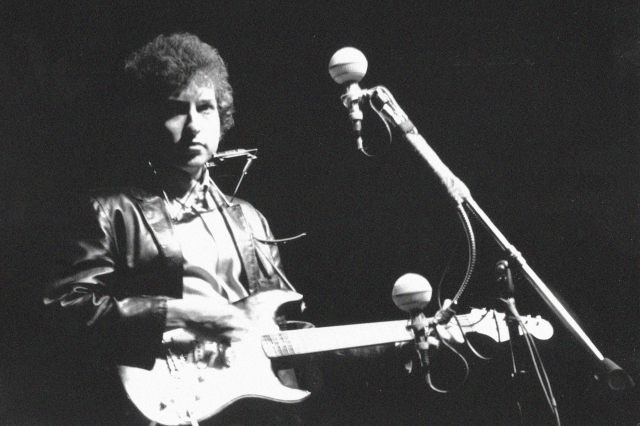
Photo credit: Alice Ochs/ Michael Ochs Archives via Getty Images Dylan Goes Electric
Rock historians aren’t in total agreement as to what precisely went down when Bob Dylan took the stage at the Newport Folk Festival on July 25, 1965. They all agree, however, that it was a hugely significant night for rock music. Dylan was the champion of the folk music revival of the early 1960s — a traditionally all-acoustic movement. So, when he strode onto the stage carrying a Fender Stratocaster rather than his more familiar acoustic guitar, the crowd was not pleased.
At the time, Dylan’s now-classic single “Like a Rolling Stone” was hugely popular on the radio, but folk purists didn’t like the song’s mix of electric blues and rock ’n’ roll. When Dylan and his accompanying backing band — some also wielding electronic instruments — started playing, sections of the crowd began booing. Accounts vary as to the intensity of the crowd’s reaction, but Dylan played only three songs before leaving the stage. When he returned, he performed two songs on acoustic guitar — “Mr. Tambourine Man,” followed by “It’s All Over Now, Baby Blue” — and then left for good. It was an edgy night by most accounts, but a pivotal moment in the development of folk rock, expanding the bounds of rock ’n’ roll.

Photo credit: Science & Society Picture Library via Getty Images The Beatles Release “Sgt. Pepper’s Lonely Hearts Club Band”
In 1967, Paul McCartney played the Beatles’ latest album, “Sgt. Pepper’s Lonely Hearts Club Band,” to Bob Dylan. Dylan’s response: “Oh, I get it, you don’t want to be cute anymore.” He was right — the Fab Four had turned a creative corner. Deciding that live performances and screaming fans weren’t enough, they wanted to become a serious studio band, and with “Sgt. Pepper’s,” the Beatles announced to the world that they were true artists. The album was revolutionary. Regarded by many as the first concept album, it is bursting with creativity and musical innovation, featuring French horns, tape loops, bass harmonicas, harpsichords, sitars, and more. The album changed not only rock music, but pop culture itself.
Related:Revealing Facts About 5 Celebrated Painters
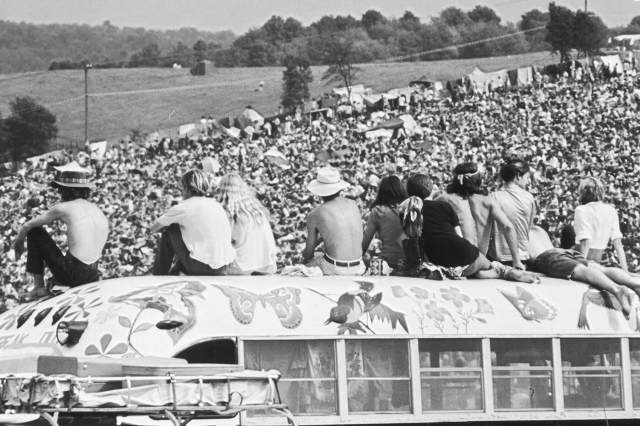
Photo credit: Archive Photos/ Archive Photos via Getty Images Woodstock
On August 15, 1969, 32 acts and more than 400,000 attendees arrived at Max Yasgur’s dairy farm in Bethel, New York, for three days of peace, love, drugs, and, most importantly, rock ’n’ roll. It was immediately obvious that the festival was going to be big, but no one knew just how iconic Woodstock would become. Despite various technical difficulties, food shortages, and bad weather, the festival became a living embodiment of the 1960s counterculture. As for the lineup, it was quite something: The Who, Carlos Santana, Jefferson Airplane, Janis Joplin, Sly and the Family Stone, the Grateful Dead, The Band, Creedence Clearwater Revival, Joan Baez, and Crosby, Stills, Nash & Young, to name but a few. And then there was Jimi Hendrix, who gave arguably the most iconic performance of the entire festival with his stirring, feedback-fueled rendition of “The Star-Spangled Banner.”
Photo credit: Michael Ochs Archives via Getty Images The Launch of MTV
Just after midnight on August 1, 1981, MTV — the world’s first television channel devoted to showing music videos — launched with the announcement, “Ladies and gentlemen, rock and roll,” as the station went on air. The first video broadcast on the fledgling channel was, fittingly, “Video Killed the Radio Star” by the Buggles. Despite some initial hype and interest, MTV struggled in its early years, in part due to a lack of music videos. But as it expanded its programming, MTV took off in a major way. By the mid-1980s, it was having a major cultural impact not only on music and TV but also on movies and advertising. Record companies began noting video’s effect on record sales, and soon the channel was launching the careers of newcomers such as Prince, Cyndi Lauper, and Duran Duran, and turning the likes of Madonna and Michael Jackson into global superstars. Music videos became big business, and MTV’s adoption of grunge and rap in the 1990s brought about a major shift in popular music.
-
Root of All (?)
Lyle Northey (Silent/Boomer)
Reading a book about the harm religion has done and one of the stories is about a young lady that decided to join the Muslim religion. In this story she is being very close to an inman and he finally decides to make her a wife. Not in the sense of a wife you go home to or support or any of that just one you have sex with. According to the teachings this is okay as a man can have up to 4 wives and keep 3 of them out of the picture and unknown to his 1st wife.
It occurred to wonder if these shadow wives can have regular husbands and additional shadow husbands. That is probably not possible as women have no rights under that faith. The fact that a convenient way for a man to have multiple sex partners with no religious guilt is another indicator that men write the book and make up the story.
All of it, no matter what name you attach, is a cock and bull story that was dreamed up by one guy or a group of guys that were trying to control others and make a profit doing it. Every religious text has numerous pot holes in the story line that just scream to be recognized to be bs statements and nonsense. If you insist on believing then do not try to shove your beliefs up others’ tailpipes.
Every faith seems to take the view that they have a leg up on some other faith. Islam claims to have the highest ranking disciple as he came after all the others. The entire book is written to give a mortal the wisdom of the ages and the sages and yet nothing could be further from the truth, except perhaps Donald Trump.
Radical ideas to say the least. Teach and preach a document that forbids just about everything you can think of and that includes having sex outside of marriage and then create a loophole that makes it possible at least for the inman.
Being involved with a church that forbids the use of computers and scorns TV and basically attempts to keep everyone in the dark ages. Where do we find these ideas in any religious work? Apparently it is possible to find almost anything in a religious text if you twist it around to make it follow a certain line of reason.
Just like the law enacted by an all benevolent legislation that now allows for people in Kentucky to kill the homeless with nothing more than the suspension that they might be on your property to camp, rob or in some way interfere with the property owner. Are we a thoughtful nation or what?
-
Leisure Time
What do you enjoy doing most in your leisure time?

That’s hilarious, leisure time is like spare change I don’t have either one.
-
Grand Canyon
Name an attraction or town close to home that you still haven’t got around to visiting.

Have lived in Arizona for 13 years and haven’t yet been to the Grand Canyon.
-
Did George Washington know about Dinosaurs?
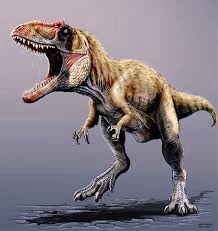
Did George Washington know about dinosaurs? Most likely, no. Today, the existence of dinosaurs may seem like an immutable fact, but our knowledge of these ancient creatures is a relatively modern development. In fact, the very concept of dinosaurs is so recent that many of the founders of the United States lived most if not all of their lives without knowing that dinos existed. English naturalist Robert Plot described the very first fossilized evidence of dinosaurs, what we now know to be the femur of a megalosaurus, in 1677. But with no concept of dinosaurs in the mid-17th century, Plot theorized that the bone must have belonged to some ancient forgotten race of giant humans.
It’s likely that George Washington died in 1799 believing that such giant humans existed in the distant past. It wasn’t until the 1820s that geologists began to reexamine this theory and proposed that the mysterious bones belonged to an ancient reptile rather than a mammal. Even then, it took until 1842 for English paleontologist Richard Owen to offer up the word “dinosaur,” based on the Greek words for “terrible lizard,” to describe the ancient beasts (not entirely accurate, but close enough). This etymological creation arrived a full decade after Charles Carroll, the longest-surviving signer of the Declaration of Independence, died at the age of 95. The story of the dinosaurs is long and ancient, but our knowledge of them certainly isn’t.
-
Fun…
List five things you do for fun.
Can’t say at the moment I do anything for fun, I write for catharsis and mental clarity, not fun. I enjoy driving but it’s a necessity that I don’t mind doing. I don’t have a bunch of people around me that I participate in events with or have hobbies that would be fun, I unfortunately exist day to day and fun hasn’t been a factor in my life for a long time.
-
Uncle Sam

E very country needs a national symbol to represent its noble struggle, and the United States has one of the most recognizable: Uncle Sam, who is said to be named after a New York meat merchant. Samuel Wilson of Troy, New York, was himself known as Uncle Sam, an affectionate nickname that became familiar to millions of Americans after he supplied thousands of barrels of beef and pork to hungry troops during the War of 1812. The barrels had “U.S.” stamped on them to indicate that they were government property, but the initials came to be associated with Uncle Sam among grateful soldiers.
The name took off, and before long illustrations of Uncle Sam began appearing in print. Cartoonists such as Thomas Nast and Joseph Keppler depicted the patriotic figure as a thin and bearded older man with a top hat and coattails, popularizing the image we recognize today. The origin of the name “Uncle Sam” remains disputed, however, and some historians have noted that references to the name appeared in newspapers before Wilson ever stamped “U.S.” on his meat barrels. Still, the legend is widely accepted, and Congress even passed a resolution in 1961 recognizing Wilson as Uncle Sam’s namesake. Today, the figure is inextricably linked with America, but he wasn’t the first personification of the country. He was preceded by Brother Jonathan, a rustic but good-natured character who originated in New England during the American Revolution.
-
We have more to learn from them
If you could make your pet understand one thing, what would it be?

We have far more to learn from our pets they they do from us… I wish we could love as unconditionally as our pets do and I feel that they understand us more than we want to admit.
-
4 legged allies in the Great War

T he Great War was such a difficult time, some soldiers sought out the assistance and comfort of four-legged friends — including cats, who were used in the trenches to boost morale. Dogs, homing pigeons, foxes, goats, lion cubs, and even raccoons also served their countries as pets and mascots throughout the “war to end all wars,” and some even carried out official duties. Cats did a bit of both: Though most kitties simply kept their compatriots in good spirits by providing them with loyal companionship (and fending off rats), some also used their heightened sense of atmospheric pressure to detect bombs in advance.
Not all feline soldiers’ deeds have gone unnoticed. Among the 75 animals who have received the PDSA Dickin Medal, which was established in 1943 to honor the military service of animals, is a cat named Simon. He served aboard the HMS Amethyst from 1948 to 1949 and received the medal for “disposing of many rats though wounded by shell blast. Throughout the incident his behaviour was of the highest order, although the blast was capable of making a hole over a foot in diameter in a steel plate.” In a newsreel of the ship returning home, Simon is rightly referred to as “a hero in his own right.”


You must be logged in to post a comment.