Dwain Northey (Gen X)
https://www.cbsnews.com/news/naacp-travel-advisory-florida-says-state-hostile-to-black-americans/
Remember the good old days when there were only travel advisories and or ban for, what some would call, third word countries? Well now because of the vile vitriol of one Governor Ron DeSantis the state of Florida, a vacation destination, has received a travel advisory by the NAACP.
The wannabe future President has made the climate so venomous in Florida the anyone who is a part of any minority group does not feel safe in the state. Black, Brown, LGTBQ+, these are all groups that are under attack in the Sunshine State. The majority Republican legislature and their fearful leader has passed laws that make almost everything a jailable offence and the fact that the state has very loose gun laws and a stand your ground law makes it more dangerous than being a blonde female in central America.
Florida residents are able to carry concealed guns without a permit under a bill signed into law by Republican Gov. Ron DeSantis. The law, which goes into effect on July 1, means that anyone who can legally own a gun in Florida can carry a concealed gun in public without any training or background check. This with their ridiculous stand your ground law, ‘Florida’s “Stand-Your-Ground” law was passed in 2005. The law allows those who feel a reasonable threat of death or bodily injury to “meet force with force” rather than retreat. Similar “Castle Doctrine” laws assert that a person does not need to retreat if their home is attacked.’ Makes it really sketchy to go there.
This in top of the don’t say gay rule and the new trans ruling that just passed.
“Florida lawmakers have no shame. This discriminatory bill is extraordinarily desperate and extreme in a year full of extreme, discriminatory legislation. It is a cruel effort to stigmatize, marginalize and erase the LGBTQ+ community, particularly transgender youth. Let me be clear: gender-affirming care saves lives. Every mainstream American medical and mental health organization – representing millions of providers in the United States – call for age-appropriate, gender-affirming care for transgender and non-binary people.
“These politicians have no place inserting themselves in conversations between doctors, parents, and transgender youth about gender-affirming care. And at the same time that Florida lawmakers crow about protecting parental rights they make an extra-constitutional attempt to strip parents of – you guessed it! – their parental rights. The Human Rights Campaign strongly condemns this bill and will continue to fight for LGBTQ+ youth and their families who deserve better from their elected leaders.”
This law makes it possible for anyone to just accuse someone of gender affirming care to have their child taken from them this would include someone traveling from out of state. This alone justifies a travel ban to the Magic Kingdom for families.
Oh, and I haven’t even mentioned DeSantis holy war with Disney, the largest employer in the state. I really hope the Mouse eats this ass holes lunch.
Well that’s enough bitching, thanks again for suffering though my rant.
-
Struck a cord
Dwain Northey (Gen X)

There’s something strange about music.
You can hear the same song a hundred times—maybe a thousand—and it can mean absolutely nothing to you on Tuesday. Then, for no particular reason, you hear it again on Wednesday and suddenly it’s like the song has been waiting years to say something to you.
I think that’s because the song doesn’t really change.
We do.
Songs like Cat’s in the Cradle have always hit me a certain way. American Pie can do the same thing. There are songs that seem permanently attached to certain memories, certain people, certain versions of ourselves. You hear the first few notes and you’re not listening to music anymore. You’re standing somewhere you haven’t been in thirty years.
But then there are the random ones.
The songs you’ve heard a million times without really hearing them.
And then, one day, they find you.
Today, it was A Long December by Counting Crows.
I’ve heard that song more times than I could possibly count. I know the melody. I know the words. I know exactly where the song is going before it gets there.
But today, one line landed differently:
“It’s been a long December, and there’s reason to believe maybe this year will be better than the last.”
Maybe it’s because I’m 59 now.
Maybe it’s because I’ve accumulated enough Decembers to understand what a long one actually feels like.
Time has a way of becoming more tangible as you get older. When you’re twenty, tomorrow seems almost infinite. Thirty years seems like something that happens to other people. You assume there’s always another year, another opportunity, another version of yourself waiting around the corner.
Then one day you realize that time isn’t something you’re standing beside.
You’re moving through it.
And it doesn’t stop.
That’s the part that gets me.
We talk about tomorrow as though tomorrow is guaranteed. We make plans for next year. We say, I’ll do that someday. We put off phone calls, trips, apologies, dreams, conversations, living.
Because surely there’s always tomorrow.
Except there isn’t.
There is only the assumption of tomorrow.
And somewhere along the way, I’ve found myself repeating that line from A Long December almost like a personal mantra:
Maybe next year will be better than the last.
Except lately, I’m not sure I believe it anymore.
Because I’ve had a lot of Decembers.
And if I’m being completely honest with myself, the years haven’t necessarily gotten better. They’ve mostly gotten different.
Some were harder.
Some were quieter.
Some brought things I never expected.
Some took things I thought would always be there.
And some years didn’t seem to accomplish much of anything at all. They just passed.
That’s perhaps the most unsettling realization of getting older: sometimes you look back and realize you weren’t really moving forward.
You were just moving.
The calendar changed.
The birthdays came.
The seasons passed.
People grew older.
Children became adults.
Rooms became empty.
People you thought would always be part of your life became memories.
And somehow, through all of it, you kept telling yourself:
Maybe next year.
Maybe next year I’ll be happier.
Maybe next year I’ll have more money.
Maybe next year I’ll travel.
Maybe next year I’ll finally get my shit together.
Maybe next year things will make sense.
Maybe next year will be better.
And then next year arrives, and you discover that it’s just another year.
Maybe that’s what A Long December meant to me today that it didn’t mean before.
It’s not really a song about December.
It’s a song about hope in the face of accumulated disappointment.
It’s about looking at everything behind you and still trying to convince yourself that something better might be ahead.
And I think that’s one of the most human things we do.
We keep hoping.
Even when experience tells us otherwise.
We wake up and try again.
We make another plan.
We tell ourselves that the next chapter might be different.
And maybe that’s enough.
Because perhaps life isn’t actually divided into good years and bad years. Maybe it’s divided into moments that matter and moments we didn’t realize mattered until they were gone.
Maybe that’s why music hits differently as we get older.
The song stayed the same.
But I didn’t.
And today, a song I’ve heard a thousand times suddenly reminded me that time isn’t waiting for me to figure everything out.
It’s already moving.
And maybe the goal isn’t to keep waiting for a better year.
Maybe the goal is to make sure that somewhere inside this one, there are a few moments worth remembering.
-
Travel log
What’s the best and worst airport you’ve been to?
Airports and airport experiences are completely subjective. I’ve been in Orlando International Airport, BWI national Airport Phoenix international Denver, Seattle Heathrow airport Frankfurt airport all those airports have their goods and bats Chicago O’Hare it all just depends on what’s going on that day. I think if you’re having a crappy day the airport seems terrible if you’re happy and you’re going on vacation airport seems great. I had a great experience in Honolulu when I arrived and it was terrible when I left because it’s the end of your vacation and you don’t wanna go so it’s hard to say usually that pick up and drop off parts of airports or package claim or what are the most frustrating in any airport especially international airports that have customs and border issues.
-
Labor Day
Dwain Northey (Gen X)
Happy Labor Day, Now Get Back to Work
Ah, Labor Day.
That magical three-day weekend when America collectively remembers that workers exist.
We barbecue. We buy mattresses. We sit in traffic. We watch football. We complain that summer is over. We take one last trip to the lake before everything becomes pumpkin spice and Christmas decorations in approximately 11 minutes.
And somewhere between the hot dogs and the retail sales, we are reminded that Labor Day is supposed to be about labor.
You know… workers.
The people who actually make the economy happen.
Which makes the modern celebration of Labor Day just a little fucking ironic.
Because some of the loudest people celebrating the holiday are the same people who seem to have developed a profound philosophical objection to the concept of organized labor.
Labor Day wasn’t invented because somebody thought Americans needed an extra Monday to recover from drinking beer on Sunday.
It came out of the labor movement.
In the late 19th century, American workers were putting in brutal hours under dangerous conditions for wages that barely kept families alive. Twelve-hour days weren’t unusual. Six-day workweeks were normal. Child labor was commonplace. Workplace safety was basically a charming suggestion.
And if workers didn’t like it?
Well, there were plenty of other workers waiting outside the factory gate.
That’s the part of American history we tend to polish up a little.
We like to tell ourselves that American prosperity simply appeared because Americans were exceptionally industrious and our entrepreneurs were exceptionally brilliant.
But workers had something to do with it.
They organized.
They went on strike.
They demanded shorter hours, better wages, safer workplaces and the ability to collectively bargain.
And sometimes the response from management and government wasn’t exactly, “Thank you for bringing these concerns to our attention.”
It was police.
Private security forces.
Pinkertons.
National Guard troops.
Arrests.
Violence.
People died fighting for things we now consider completely fucking normal.
The eight-hour workday didn’t descend from heaven on a golden tablet.
Workers fought for it.
The weekend didn’t just happen because somebody in Washington decided Americans deserved more leisure.
Workers fought for it.
Overtime protections, workplace safety regulations, minimum wages, child-labor restrictions, paid leave in many workplaces, the right to collectively bargain—all of these things exist in a historical landscape where workers organized because individual workers had virtually no bargaining power against enormous companies.
And here’s where the modern version of the American workweek gets particularly fucking interesting.
We’ve technically decided that forty hours is enough.
Forty hours.
That’s the line.
Work more than that and, under federal overtime law, you’re generally supposed to receive overtime pay if you’re a covered nonexempt employee.
Sounds pretty reasonable.
Except somewhere along the way, we forgot to make forty hours of work actually sufficient to live a reasonably secure life.
We’ve built an economy where the theoretical full-time workweek and the practical full-time workweek aren’t necessarily the same fucking thing.
Forty hours might be the legal baseline, but for a growing number of working people, it doesn’t cover the baseline of life.
Rent.
Utilities.
Food.
Transportation.
Insurance.
Healthcare.
Childcare.
Student loans.
Credit cards.
The endless parade of shit you need simply to remain alive and functional in modern America.
So what happens?
You work more.
Fifty hours.
Sixty.
Seventy.
You pick up overtime.
You get a second job.
You drive for an app after your regular shift.
You work weekends.
You answer emails after dinner.
You take work home.
You sacrifice sleep.
You sacrifice family time.
You sacrifice the very leisure that the labor movement spent generations fighting to create.
And then we have the audacity to call that freedom.
Because technically, nobody is forcing you to work seventy hours.
You’re choosing to.
Of course, when the alternative is eviction, homelessness, unpaid medical bills or an empty refrigerator, that’s a fascinating definition of choice.
It’s the same kind of freedom as telling somebody they’re free to leave their job while knowing damn well their mortgage payment is due on Friday.
The eight-hour day was supposed to mean something.
Eight hours of work.
Eight hours of rest.
Eight hours for yourself.
That was the idea.
Not eight hours of work followed by two hours commuting, another hour answering messages, three hours of side-hustle work and whatever sleep you can squeeze into the remaining space between obligations.
We didn’t necessarily repeal the eight-hour workday.
We simply made it economically insufficient.
And perhaps that’s one of the greatest ironies of modern Labor Day.
We celebrate the victory of workers who fought to reduce the workweek while simultaneously building an economy where millions of people need to work more than that just to maintain a basic standard of living.
We didn’t abolish the twelve-hour workday.
We just made it optional.
“Nobody is making you work twelve hours.”
Right.
And nobody is making the rent increase faster than wages.
Nobody is making groceries cost more.
Nobody is making healthcare expensive.
Nobody is making childcare cost more than a car payment.
Nobody is making housing unaffordable.
Nobody is making wages fail to keep pace with the cost of living.
It’s all just one enormous coincidence.
And if you’re exhausted because you’re working sixty hours a week to afford the privilege of being alive, apparently the problem is your attitude.
Maybe you need better time management.
Maybe you need a side hustle.
Maybe you need to “work smarter.”
Because apparently the solution to an economy that requires people to work more hours is… more work.
Which brings us to today.
Because somehow we’ve managed to turn Labor Day into a celebration of labor while simultaneously spending decades telling workers that unions are evil.
We’re told unions are greedy.
We’re told unions are corrupt.
We’re told unions destroy businesses.
We’re told workers should simply negotiate individually with their employer.
Which sounds fantastic until you remember that “individual negotiation” between a person who needs a paycheck to keep a roof over their head and a corporation with lawyers, accountants, executives and a human-resources department isn’t exactly an even playing field.
It’s like telling a guy with a butter knife that he should negotiate individually with a tank.
“Just know your worth, bro.”
Meanwhile, some of the same politicians who will be standing in front of an American flag this weekend wishing everyone a Happy Labor Day have spent their careers supporting policies designed to weaken organized labor.
They’ll celebrate the American worker while opposing the mechanism through which American workers have historically gained power.
They’ll praise the middle class while supporting policies that make it harder for workers to organize.
They’ll talk about “hard-working Americans” while complaining about workers demanding higher wages.
And they’ll tell you that unions are unnecessary because workers are free to leave.
Sure.
And you’re free to leave your apartment if your landlord raises the rent.
You’re free to leave your health insurance if the premiums become unaffordable.
You’re free to leave your job if your boss decides your paycheck isn’t worth what it used to be.
Freedom is a wonderful thing when you have options.
For millions of workers, the choice isn’t between a shitty job and a better job.
It’s between a shitty job and unemployment.
And that’s precisely why collective bargaining mattered.
Labor Day is also a reminder of something we’ve become remarkably good at forgetting:
The economy isn’t a machine. It’s people.
Corporations don’t stock shelves.
Corporations don’t drive trucks.
Corporations don’t pour concrete.
Corporations don’t teach kindergarten.
Corporations don’t nurse your mother back to health.
Corporations don’t repair power lines at two in the morning during a monsoon.
People do.
Workers do.
And somehow we’ve spent decades convincing ourselves that celebrating the people who actually perform the work is somehow an attack on the people who own the company.
It isn’t.
There’s nothing inherently anti-business about believing the people generating the value should receive a reasonable share of it.
In fact, you could argue that’s one of the most fundamentally American ideas imaginable.
Because here’s the thing about capitalism:
Capitalism doesn’t require workers to be poor.
It doesn’t require executives to be obscenely wealthy.
It doesn’t require a company to squeeze every last penny out of its employees simply because it can.
Those are choices.
And we’ve spent a remarkable amount of time pretending they’re laws of nature.
So this Labor Day, by all means, enjoy the three-day weekend.
Fire up the grill.
Drink something cold.
Watch some football.
Take the kids somewhere.
Buy the ridiculously overpriced mattress that has apparently been “70% off” since 1987.
Enjoy the last unofficial weekend of summer.
But maybe take a second to remember what we’re actually celebrating.
We’re celebrating workers.
We’re celebrating people who stood up and said, Maybe working twelve hours a day until we’re dead isn’t actually the American Dream.
We’re celebrating people who understood that one worker has very little power—but workers together have a voice.
And maybe, just maybe, we should be a little suspicious of the people who suddenly become enormous fans of labor every September while spending the other 364 days explaining why labor shouldn’t have any power.
Because if your idea of Labor Day is:
“Thank you, workers! Now get back to work.”
…you may have missed the fucking point.
Happy Labor Day.
Enjoy your three-day weekend.
You know, the one workers had to fight for.
-
Preach…
Dwain Northey (Gen X)
Equality Isn’t a Pie
Apparently, we’re having the conversation again.
You know the one. The conversation about women’s rights, equality, civil rights, who deserves what, who had it harder, who is supposedly taking something away from whom, and the apparently revolutionary concept that maybe—just maybe—every human being should be treated like a human being.
And somehow, after all these decades, we still have people who hear “women should have equal rights” and translate that into “women should take over the world and men should live in caves.”
Because apparently equality is a zero-sum game.
Apparently, if someone else gets more rights, dignity, opportunity, representation, or freedom, there must be a corresponding deduction from my personal account.
Congratulations! Someone you don’t know just received equal pay. Your freedom balance has been reduced by 14 points.
That’s not how this works.
Gloria Steinem wasn’t arguing that women should become the new ruling class. The women’s movement wasn’t fundamentally about replacing one hierarchy with another. It was about challenging the idea that gender should determine what opportunities you’re allowed to have, what you’re allowed to do with your life, what you’re paid, how you’re treated, or how much control you have over your own existence.
And that’s really no different from what Martin Luther King Jr. was fighting for.
He wasn’t asking America to give Black Americans some special collection of rights that white Americans didn’t have. He was asking America to stop pretending that the rights it claimed were universal somehow came with an asterisk.
Equal rights means equal rights.
That’s the part that seems so remarkably difficult for some people to understand.
If I’m a middle-aged white guy—and I happen to be one—my rights don’t become smaller because a Black woman has the same rights I do.
My freedom doesn’t diminish because a gay man can marry the person he loves.
My citizenship doesn’t become less valuable because an immigrant becomes an American.
My voice doesn’t become quieter because another person finally gets a microphone.
And my manhood certainly doesn’t become threatened because a woman doesn’t need my permission to determine what happens to her own life.
Rights aren’t a pizza.
There isn’t a finite number of slices sitting on the table with a bunch of minorities standing around waiting for their piece. If somebody gets another slice, I don’t suddenly have less pizza.
That’s the bizarre psychological trap we’ve created around equality: the assumption that fairness must mean somebody is losing.
But that’s only true if the original arrangement was inherently unfair.
And perhaps that’s the uncomfortable part.
If you’ve spent your entire life benefiting from a system that automatically gave you certain advantages because of the color of your skin or the sex you were born with, equality can sometimes feel like discrimination.
Not because you’re actually being oppressed.
Because you’re no longer receiving the automatic head start.
There is a difference.
And here’s another inconvenient historical fact: many of the people who have fought for equality weren’t asking for domination. They were asking to be included in the promise America had already made.
Life, liberty, equality, justice.
Those aren’t supposed to be members-only benefits.
And this is where the whole conversation gets particularly strange when people wrap themselves in Christianity while simultaneously arguing that equality somehow threatens them.
Because the guy they’re supposedly trying to follow wasn’t exactly a wealthy white American businessman.
Jesus was a Middle Eastern Jew living under Roman occupation.
He spent an extraordinary amount of his time talking about compassion, humility, helping the marginalized, caring for the poor, loving your neighbor and treating other people as you would want to be treated.
He didn’t spend much time explaining how important it was for the people at the top to make absolutely certain nobody below them accidentally received the same rights.
Which makes the modern interpretation of Christianity occasionally fascinating.
Apparently Jesus said, love your neighbor.
And somewhere along the way, we translated that into:
Yes, but only if your neighbor looks, thinks, votes, worships and lives exactly like you do.
That’s quite an editorial revision.
The truth is, equality doesn’t require me to surrender anything that was legitimately mine.
It requires me to surrender the idea that something belongs to me simply because someone else was denied it.
That’s a completely different proposition.
I don’t lose my humanity when another person gains theirs.
I don’t become less free because somebody else becomes freer.
And I don’t need to be afraid of equality unless the thing I’m afraid of losing is inequality.
That’s the uncomfortable question worth asking.
When someone says, “If they get equal rights, what happens to me?”
My answer is pretty simple:
Nothing.
You still get to be you.
You still get your rights.
You still get your freedom.
You just don’t get extra rights because you happened to be born with less melanin in your skin or with a particular collection of chromosomes.
And honestly, as a middle-aged white guy, I’m perfectly comfortable with that.
Because I’ve never believed my rights were valuable because somebody else had fewer.
I’ve always thought they were valuable because they’re supposed to belong to everybody.
That’s the whole fucking point.
Equality isn’t about taking something from me.
It’s about finally admitting that it was never mine to own in the first place.
-
Miss characterization
What’s the most annoying trope in books or movies?
A frustrating, trope, or characterization of characters in movies I’ve gotten better, but it’s always the distraught female who needs your help. The avengers movies tried to kick that to the curb with Scarlett Johansson‘s character that she would be idiot men into giving her information by acting demure or hurt, but that trope has been perpetuated infinite item for 100 years or hundreds of years in books and movies and TV shows and you name it that the women are the weaker sex when anybody who’s been married or lived with a woman knows that that’s not true.
-
Big Bang vs Creation
Dwain Northey (Gen X)
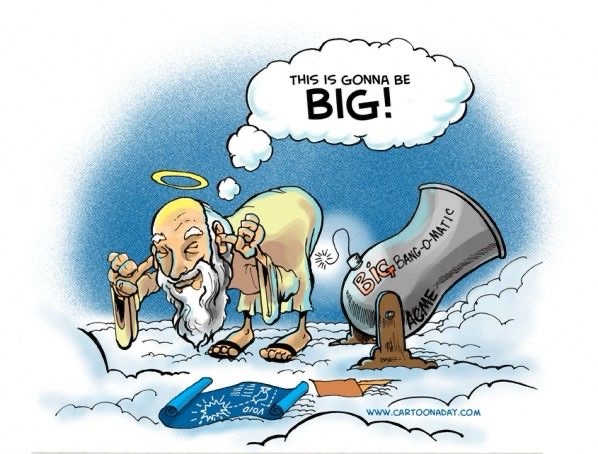
Magic Is Just Science We Haven’t Explained Yet
I’ve always liked the idea that magic is just science we haven’t explained yet.
Think about that for a moment. There was a time when lightning was terrifying. Thunder was the voice of gods. An eclipse was an omen. Disease was punishment. A woman who knew which plants could heal you might be considered a witch. A person who understood something the rest of the village didn’t could very easily be accused of possessing supernatural powers.
Why?
Because we have a deeply human need to explain things.
When we don’t understand something, we don’t like leaving the question unanswered. So we fill in the blank.
And historically, the explanation was often magic.
Today, we call that process science.
The difference is that science is willing to say, “I don’t know yet.”
That may actually be one of the most important differences between science and religion.
Science doesn’t require us to have an answer before we have the evidence. It starts with a question: What happened? How did this happen? What evidence can we gather? Can we test it? Can somebody else reproduce the result? And if we’re wrong, what would prove us wrong?
The Big Bang theory is a perfect example.
The Big Bang doesn’t say, “A magical explosion happened because science says so.”
It is an explanation, based on enormous amounts of evidence, for how the universe evolved from an extremely hot, dense early state. We can observe galaxies moving apart. We can detect the cosmic microwave background. We can measure the abundance of elements. We can observe the large-scale structure of the universe.
And after all of that, scientists still have the intellectual humility to say:
We don’t know everything.
We don’t know exactly what, if anything, preceded the earliest moment we can currently describe. We don’t know why there is something rather than nothing. We don’t have a complete explanation for the nature of dark matter or dark energy.
And that’s okay.
Because “I don’t know” isn’t a failure of science.
It’s an invitation.
Religion often approaches the same unanswered questions differently.
Where science says, “We don’t know yet,” religion can say, “God did it.”
And for some people, that’s enough.
The universe exists?
God created it.
Life exists?
God created it.
Humans exist?
God created them.
We don’t understand something?
God works in mysterious ways.
It’s an extraordinarily convenient answer because it cannot really be disproven. Whatever remains unexplained becomes another place for God to live.
And that’s where I have trouble with the argument that the universe must have been created exactly as described in an ancient religious text because we don’t yet understand every detail of its origin.
That’s essentially saying:
“I don’t understand this, therefore my preferred supernatural explanation must be correct.”
But that’s not an explanation.
That’s an assumption wearing an explanation’s clothes.
The irony is that humanity has been doing this forever.
The ancient Greeks attributed lightning to Zeus.
Norse mythology gave us Thor and his hammer.
People once believed illness could be caused by demons, curses, or supernatural punishment. People were executed for witchcraft because their neighbors couldn’t explain why crops failed, why someone became sick, or why something terrible happened.
Then we learned about electricity.
We learned about bacteria and viruses.
We learned about weather systems.
We learned about genetics.
We learned about chemistry.
The magic didn’t disappear.
Our understanding did.
That woman who knew which herbs could treat an illness wasn’t necessarily a witch. She may have simply understood something about plants that the people around her didn’t.
The person who could predict an eclipse wasn’t necessarily communicating with the gods. They understood astronomy.
The person who could navigate by the stars wasn’t performing magic. They understood the sky.
The phenomenon didn’t change.
Our explanation changed.
And that’s the part that fascinates me about the argument between creationism and science.
Creationism often seems to demand that we stop at the mystery.
Science says, keep going.
There is something almost beautiful about admitting that the universe is vastly more complicated than we are.
We’re a species that has existed for a microscopic fraction of cosmic history, sitting on one little planet orbiting one ordinary star, trying to understand an observable universe containing billions of galaxies.
And somehow we occasionally arrive at the conclusion that because we can’t explain everything, we must already have the answer.
Apparently the universe needs a celestial landlord with a white beard.
And somehow we’ve decided we know his personality, his preferences, what makes him angry, what he wants us to eat, who he’s disappointed in, what clothes he approves of, who he’s going to punish, and exactly what he thinks about human sexuality.
That’s quite a leap from “I wonder how the universe began.”
There’s nothing wrong with faith. People are entitled to believe whatever gives their lives meaning. Faith can provide comfort, community, morality, tradition and a sense of purpose.
But faith and evidence aren’t the same thing.
And saying “science can’t explain everything” is not an argument against science.
Science has never claimed to explain everything.
In fact, science is built around the realization that we don’t know everything.
Every answer creates another question.
Every discovery opens another door.
That’s not a weakness.
That’s the whole fucking point.
The history of humanity is, in many ways, the history of turning magic into knowledge.
Lightning became electricity.
Stars became nuclear furnaces.
Disease became biology.
Inheritance became genetics.
The movement of planets became physics.
And perhaps someday, questions that currently seem almost incomprehensible will become ordinary knowledge.
Maybe we’ll understand exactly what happened at the beginning of our universe.
Maybe we’ll understand what came before the earliest moment we can currently observe.
Maybe we’ll discover something so strange that our current understanding of reality will look primitive.
And when that happens, I’d rather be the person saying:
“Holy shit. That’s amazing. How does it work?”
than the person saying:
“Don’t investigate it. I already have the answer.”
Because maybe magic really is just science we haven’t explained yet.
And perhaps the greatest mistake humanity can make isn’t believing in magic.
It’s deciding that we’ve already explained it.
-
Know better, Do better
Dwain Northey (Gen X)
There’s an old phrase that has always stuck with me: “If you know better, do better.”
It sounds simple. Almost obvious. The idea is that knowledge should change us. Once we understand that something is wrong, harmful, cruel, or simply unnecessary, we have a responsibility to do something differently.
But lately, I’ve started wondering about the first half of that sentence.
What if people don’t know better?
We live in an age where information is literally in our hands. We can learn about history, science, other cultures, other perspectives, and the consequences of our decisions in seconds. There is almost no excuse for ignorance when knowledge is more accessible than it has ever been.
And yet, somehow, ignorance has become something people defend.
People don’t just refuse to learn. They proudly announce that they don’t need to. They choose the information that makes them comfortable, surround themselves with people who agree with them, and dismiss anything that challenges what they already believe.
So perhaps the problem isn’t that people know better and refuse to do better.
Perhaps the more frightening problem is that they don’t want to know better.
Because knowing better comes with responsibility. Once you understand that your words hurt someone, that your assumptions are wrong, that your history is incomplete, or that your actions have consequences, you can’t pretend you didn’t know.
Ignorance can be innocent.
Choosing ignorance is not.
“If you know better, do better” was never really about being perfect. It was about being willing to grow. To admit you were wrong. To learn something new. To look at the world with enough humility to realize that you don’t know everything.
Maybe that’s what we’re missing.
Not information.
Humility.
Because before we can do better, we have to be willing to know better.
And these days, I’m not entirely convinced we’re interested in either.
-
Do over
If you could relive one year of your life, which one would it be?
I would probably go back and relive 2012 2013 and try to figure out what happened with my marriage and why my now ex decided to step out on me and and our marriage
-
Unwitnessed bravery
What’s the bravest thing you’ve ever done when no one was watching?
This seems like a silly prompt if you did something without someone noticing it, I don’t know how that would be classified as brave you know, rescuing a pet from a animal from a tree or pulling a kitten out of a gutter or something like that I don’t know if that’s bravery or just kindness or helping a child. Find their parents when they get lost in a grocery store or something like that that’s just kindness. It’s not really bravery so I don’t know how to answer that question.
-
Rights? Really?
Dwain Northey (Gen X)
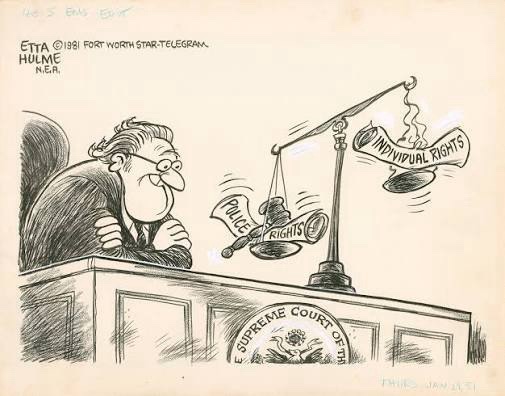
There is a strange American habit of treating rights as though they come with an asterisk.
We like to talk about our rights in very grand language. We have freedom of speech. We have the right to vote. We have the right to bear arms. We have freedom of religion. We have due process. We have all these beautiful constitutional promises that supposedly separate us from the old world of kings, emperors and authoritarian rulers.
And then, somewhere along the way, we quietly add: “Well, unless…”
Voting is a right—unless your state makes it unnecessarily difficult to register, limits when and how you can vote, removes you from the rolls, closes polling places in your neighborhood, or decides that your particular circumstances make exercising that right inconvenient.
Meanwhile, owning a gun is treated by some people almost as though it were handed down on stone tablets from Mount Sinai.
The Second Amendment says the right of the people to keep and bear arms shall not be infringed. Fine. But apparently even that right has historically come with an asterisk. When the Black Panthers legally carried firearms into the California State Capitol in 1967 to protest proposed gun-control legislation, Ronald Reagan—then governor of California and a strong supporter of gun rights—supported legislation restricting the carrying of loaded firearms in public. The Mulford Act followed.
And there is the uncomfortable lesson buried in that history: sometimes our passionate defense of a “right” becomes considerably less passionate when the people exercising it are people we don’t particularly like.
Funny how that works.
We supposedly believe in freedom of speech, too.
The First Amendment doesn’t say, “Congress shall make no law abridging freedom of speech, unless the person speaking is saying something the president doesn’t like.”
It doesn’t say, “You may criticize the government, provided the government appreciates your criticism.”
It doesn’t say, “Freedom of the press shall be protected unless the press becomes annoying.”
Yet we increasingly hear political rhetoric that treats constitutional rights as conditional privileges. You can speak—unless you’re saying the wrong thing. You can protest—unless you’re protesting the wrong person. You can publish—unless the government decides you’re dangerous, disloyal, inconvenient or sufficiently irritating.
And that’s where the whole concept begins to fall apart.
Because a right that exists only when the person in power approves of how you exercise it isn’t really a right.
It’s permission.
And permission is something fundamentally different.
A monarch can give you permission to speak. An authoritarian government can give you permission to vote. A dictator can allow you to worship whatever god you want. A government can even allow you to own a firearm.
But if all of those things disappear the moment you challenge the person holding power, then what you possess isn’t a constitutional right. You possess a temporary privilege granted by someone who has decided you’re sufficiently obedient to deserve it.
That’s not liberty.
That’s compliance with better marketing.
This is where Americans sometimes confuse having rights with being allowed to exercise them.
We love the mythology of American exceptionalism because it makes the story wonderfully simple. America is the land of the free. We fought a revolution against a king. We wrote a Constitution. We created a government of the people, by the people and for the people.
And then we spend an astonishing amount of time arguing about which people deserve the “of the people” part.
The real test of a constitutional democracy isn’t whether the government protects the rights of people who agree with it.
That’s easy.
The real test is whether the government protects the rights of people it absolutely fucking despises.
The protester.
The dissenter.
The journalist.
The political opponent.
The minority.
The unpopular religious group.
The person whose opinion makes you want to put your head through drywall.
That’s the point of rights.
If I only have freedom of speech when I’m saying something you agree with, then you don’t believe in freedom of speech. You believe in agreement.
If voting is sacred only when the people voting produce the outcome you want, then you don’t believe in democracy. You believe in winning elections.
If the Second Amendment protects gun ownership only when the people carrying guns look, think and vote like you do, then you don’t believe in a universal right. You believe in a privilege for your tribe.
And if constitutional protections disappear whenever someone becomes politically inconvenient, then we’re no longer discussing rights at all.
We’re discussing power.
That’s the uncomfortable question America has never completely answered:
Where exactly do our rights come from?
Do they come from the government?
If so, the government can take them away.
Do they come from whoever happens to control Congress?
Then congratulations, your liberty has a six-year expiration date.
Do they come from the president?
Then we haven’t built a constitutional republic. We’ve built a monarchy with elections.
The entire philosophical premise of American constitutionalism is that certain rights exist before government. Government doesn’t create them. Government is supposed to protect them.
That’s why the Constitution is supposed to restrain government rather than merely instruct citizens.
And that’s why the phrase “you have that right, but…” should make every American uncomfortable.
Because sometimes the “but” is where authoritarianism begins.
It rarely arrives wearing a black uniform and announcing, “I am now your dictator.”
It usually arrives much more politely.
We’re just going to make this one exception.
We’re only doing this because of an emergency.
We’re only restricting these people.
We’re only silencing dangerous speech.
We’re only preventing the wrong people from voting.
We’re only enforcing the law against people who deserve it.
And eventually somebody discovers that “the wrong people” can be expanded to include anyone who gets in the way.
That’s how rights become privileges.
That’s how privileges become permissions.
And that’s how permissions become obedience.
The difference between a free society and an authoritarian one isn’t necessarily whether the government allows you to do things.
Authoritarian governments allow people to do plenty of things.
The difference is whether the government recognizes that there are things it is not allowed to take away from you simply because it doesn’t like you.
That’s the entire fucking point.
Rights aren’t supposed to be rewards for good behavior.
They’re not participation trophies handed out to citizens who stay on the approved path.
They’re protections precisely for the moments when you leave the approved path.
So perhaps the better question isn’t “What rights do Americans have?”
It’s this:
What rights are we willing to defend when we hate the person exercising them?
Because that’s where the rubber meets the road.
It’s easy to defend my freedom.
It’s considerably harder to defend yours when you think you’re an asshole.
But if I only defend freedom when it’s convenient, then I haven’t defended freedom.
I’ve defended myself.
And eventually, if we keep treating constitutional rights as privileges that can be revoked whenever someone crosses an invisible line established by whoever happens to hold power, we may wake up one morning and discover that the American promise didn’t disappear in some dramatic coup.
We simply gave it away, exception by exception, while insisting that everything was perfectly constitutional.
A right isn’t a right because the government lets you have it.
It’s a right because the government isn’t supposed to be able to decide whether you’re worthy of having it.
And if our rights depend on obedience, political affiliation, skin color, popularity, ideology or the current occupant of the White House, then maybe we should stop congratulating ourselves for living in the land of the free.
Because at that point, we’re not free.
We’re just well-behaved.


You must be logged in to post a comment.