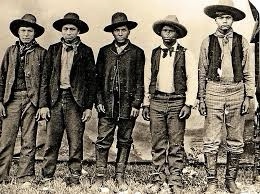
John Wayne, Gary Cooper, James Stewart, Clint Eastwood — think of nearly any actor known for starring in classic Westerns and they have one thing in common: They’re all white. The popular narrative, however, doesn’t tell the full story. Historians estimate that as many as one in four American cowboys were Black, as many formerly enslaved African Americans found work on the ranches out West in the wake of the Civil War. What’s more, the cowboy culture didn’t even originate in the United States; it came from a style of ranching introduced by Spanish colonists in the 16th century and adopted originally in Mexico, where cattle ranchers and herders were known as “vaqueros.” By the late 19th century, as many as one in three cowboys were Mexican.
If you could be a character from a book or film, who would you be? Why?
I would want to be Thanos but my snap would eliminate the concept of boarders and racism from reality. And if I could reverse climate change back to before the advent of the industrial age that would be good too.
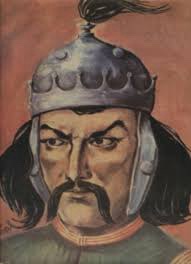
Almost everything about Attila the Hun’s life was remarkable, including his death. Though some details of the story remain unknowable — this was the year 453 CE, after all — we do know that the leader of the Hunnic Empire married a beautiful young woman named Ildico just as he was preparing his latest attack on the Eastern Roman Empire, then ruled by Marcian. The celebration lasted all night, with Attila leading the way by drinking and feasting to his heart’s content. But his guards became nervous when he didn’t wake at the normal time the following morning. Breaking down the door to the bridal chamber, they found their leader dead and his new wife sobbing at his side.
Attila had no visible wounds; according to an account from Byzantine historian Priscus (a diplomat who had dined with Attila), the Hunnic leader had choked to death on his own blood after suffering a drunken nosebleed. Though some later theories suspected Ildico of foul play, and others thought Marcian was somehow behind it, no proof has ever emerged for either theory. Attila is far from the only world leader to depart this mortal coil under strange circumstances, of course. King Adolf Frederick of Sweden ate himself to death after consuming everything from lobster and caviar to champagne and a sweet roll called “semla.” Greece’s King Alexander I, meanwhile, was done in by an infected monkey bite, and Greek philosopher Chrysippus is thought to have died of laughter after seeing a donkey eat his figs.
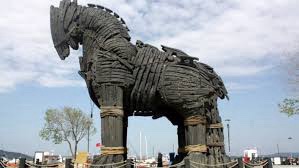
The tale of the Trojan Horse has been recounted countless times — including with a giant rabbit in the film Monty Python and the Holy Grail — and a wooden replica used in the 2004 film Troy now stands in Çanakkale, Turkey, near the site of ancient Troy. The timely legend even sparked the saying, “Beware of Greeks bearing gifts.” Yet historians still aren’t certain whether the story is factual or, more likely, an elaborate myth with some roots in reality. Some have theorized that the horse was a metaphor for whatever did destroy the city of Troy, such as a natural disaster or an enemy ship. But the prevailing theory is that the clever structure may have been based on ancient siege engines, such as battering rams, which were often covered with wet horse hides. The damp hides helped protect the wooden siege engines (and the soldiers using them) from flaming arrows, which may have been the inspiration for the legendary ruse.
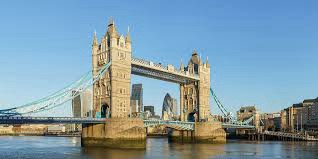
If you want to see the 19th-century version of London Bridge, don’t travel to London — or even England, for that matter. Instead, head to Lake Havasu, Arizona, where a U.S. businessman by the name of Robert McCulloch moved the bridge after buying it in 1968. That the landmark structure was even for sale was the result of English officials realizing the bridge was sinking, albeit at the relatively slow pace of 1 inch every eight years. And so, after a tenure of some 130 years — a bit shabby, when you consider that its medieval predecessor stood for more than 600 — that iteration of London Bridge was put on the market after London City Councilor Ivan Luckin convinced his colleagues that he could persuade someone in America to buy it.
He was right, of course, and it made sense that McCulloch would be the one to purchase it. An eccentric industrialist who once attributed his success to “booze and broads,” McCulloch jumped at the opportunity to bring a piece of history to a patch of land he was hoping to turn into a haven for tourists. Buying the bridge for the princely sum of $2.46 million was the easy part — it was disassembling and moving it, granite brick by granite brick, that turned out to be a logistical nightmare. Three years and another $7 million later, London Bridge settled in its (apparently) final resting place on October 10, 1971. Today, it’s one of Arizona’s top attractions.
What Olympic sports do you enjoy watching the most?
I tend to watch the Summer Olympics more than the Winter… I like the sprint track events and the swimming events, you know the short attention span competitions 🤣
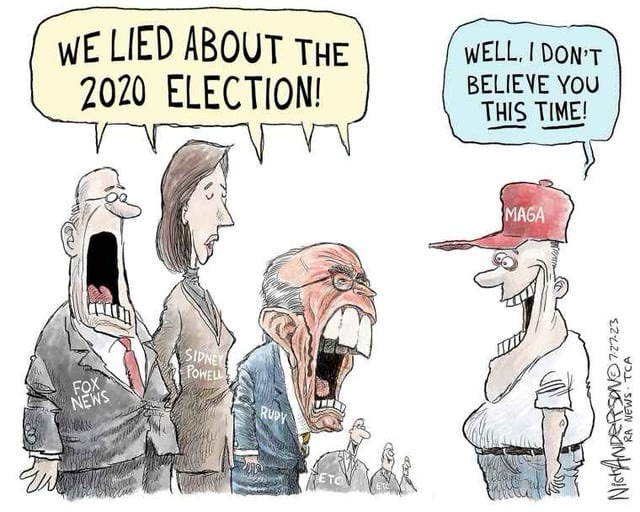
The world of politics has turned into an absolute circus of idiots. Trump is getting breaks from the courts for reasons no one with a brain can figure out. The dole wagon never stops running because someone is always on the net or the phone with their hand out telling you how it is imperative for you to donate, donate and donate.
Then along comes someone with a story about a satanic cult in the White House. This comes from a conservative senator and it is guess what he puts in his coffee, bet it isn’t sugar. At any rate the far right has to run up the flag of yet another evil that is putting all conservatives at risk. The rest of us are doing just fine but the bunch that is passing restrictive laws, burning books, closing libraries and attempting to turn back the clock are fearful of an imagined cult in the WH.
How did we get to this point where everything is upside down? We have lived for years with the apathy of society and a wish not to get involved. As a result we have had minority rule on many things that the majority would not have allowed to happen if they had taken the time to pay attention and get involved.
Our government has been run by the minority party for years because they find ways to make it possible to get their people elected and the opposition to be kept out. Once they have the upper hand they fill the supreme court with people that have the same views as themselves. As for things in the world of everyday life it is the squeaking wheel that gets the grease, be it on a college campus or in a workplace situation.
Now we are hearing about MAGA Soldiers that will be at polling places to ensure that there are not problems with the voting. More likely they will be there to harass and cause problems with people that they feel are not voting the way the Man wants them to. Will they be at the voting places in districts that are primarily Republican or Democrat, I’m guessing in the latter and the function to carry out will be to get those voters to leave before they can vote. The fact that they show up just to intimidate should be enough to get them arrested and possibly to get their candidate removed from the ballot.
The nation has had enough of the bully boy faction and we need to go back to being civil to one another. All the hate speech and negative attitudes along with the rise in the purchase of weapons and we don’t go a day without someone dying because someone else did not like what was said, or how they were looked at, or some other imagined slight and they reach for the gun and start shooting.
The days of the snake oil salesman have not passed, they are no longer working out of the back of a covered wagon. Today they are working from very fine offices located in buildings belonging to all sorts of industries and in government buildings as well. The constant stream of lies that have been fed to the public make it hard to tell the truths from the fictional information and trust becomes a problem. Big Pharm will tell you they have cure for something and yet that cure requires that you continue to buy their pill or salve to make the cure work. Cars are being built that can drive themselves, and yet that has proven to be less than true. Each of us needs to look at every situation, promise or whatever and consider if what we are being told makes sense before we jump into the pond and get eaten by whatever lives in that pond.






You must be logged in to post a comment.